
Simanaitis Says
On cars, old, new and future; science & technology; vintage airplanes, computer flight simulation of them; Sherlockiana; our English language; travel; and other stuff
A.I. TO REVOLUTIONIZE WEATHER PREDICTION
METEOROLOGISTS DESCRIBE IT AS “the ‘quiet revolution’: a gradual but steady improvement in weather forecasting.” Paul Voosen writes in AAAS Science, November 17, 2023, “Today the 6-day forecast is about as good as the 3-day forecast from 30 years ago. Rarely do severe storms or heat waves catch people unaware. This revolution has saved lives and money, but it also comes with a cost: billions of dollars’ worth of energy-hungry supercomputers that must run 24/7 just to produce a few forecasts a day.”
A.I. Weather on Desktops. By contrast, Voosen describes “Artificial intelligence (AI) is now spurring another revolution within numerical weather prediction, as the field is known. In mere minutes on cheap desktop computers, trained AI systems can now make 10-day forecasts that are as good as the best traditional models—and in some cases even better.”
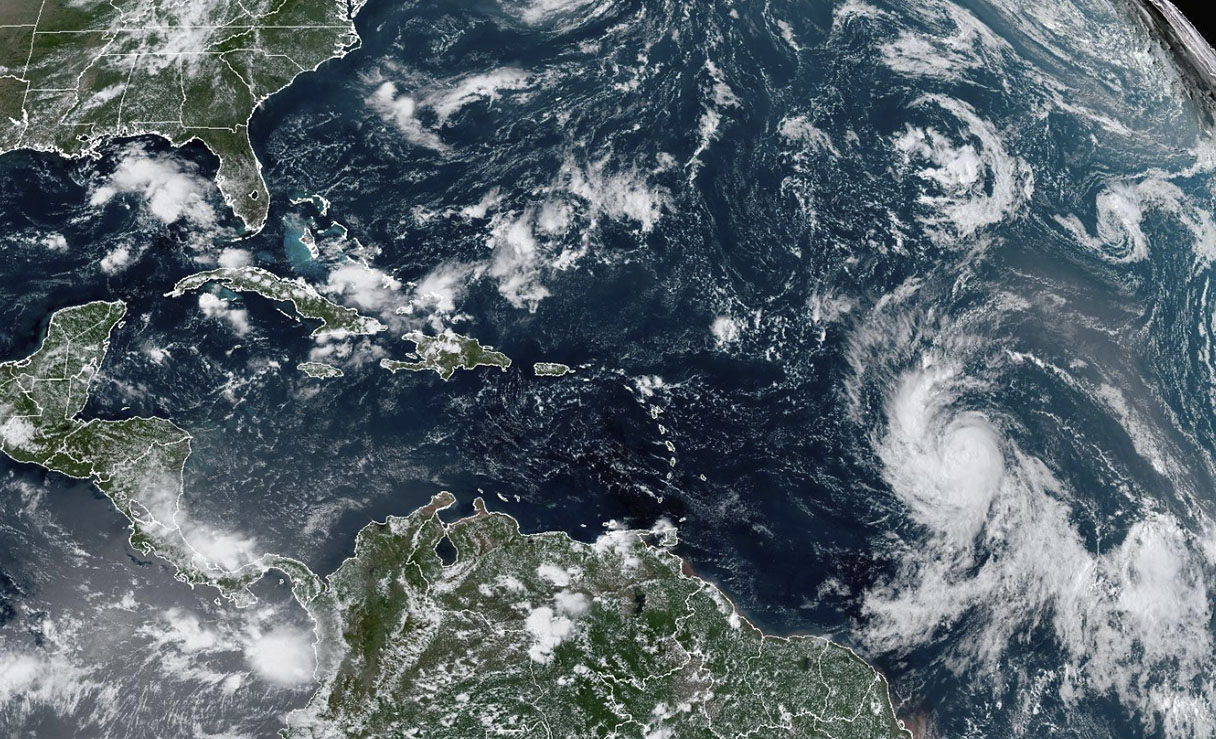
Image from AAAS Science, November 17, 2023.
“The world’s top weather agency, the European Centre for Medium-Range Weather Forecasts (ECMWF),” Voosen recounts, “has embraced the technology: Last month it began to generate its own experimental AI forecasts. The algorithms could enable more frequent forecasts and free up computing resources for other thorny problems. ‘It’s very, very exciting to know we can generate global predictions that are skillful, really cheaply,’ says Maria Molina, an AI-focused research meteorologist at the University of Maryland.”

Weather Data Scooping, Pre- and Post-A.I. “Traditional weather models,” Voosen explains, “start by feeding a snapshot of current conditions, based on observations from satellites, weather stations, and buoys, into a gridlike computer model that divides the atmosphere into millions of boxes. The snapshot is run forward in time by applying the physical laws of fluid dynamics to each box—at great computational expense. The models can take several hours to run on supercomputers with 1 million processors, and weather agencies typically produce updates just four times a day.”
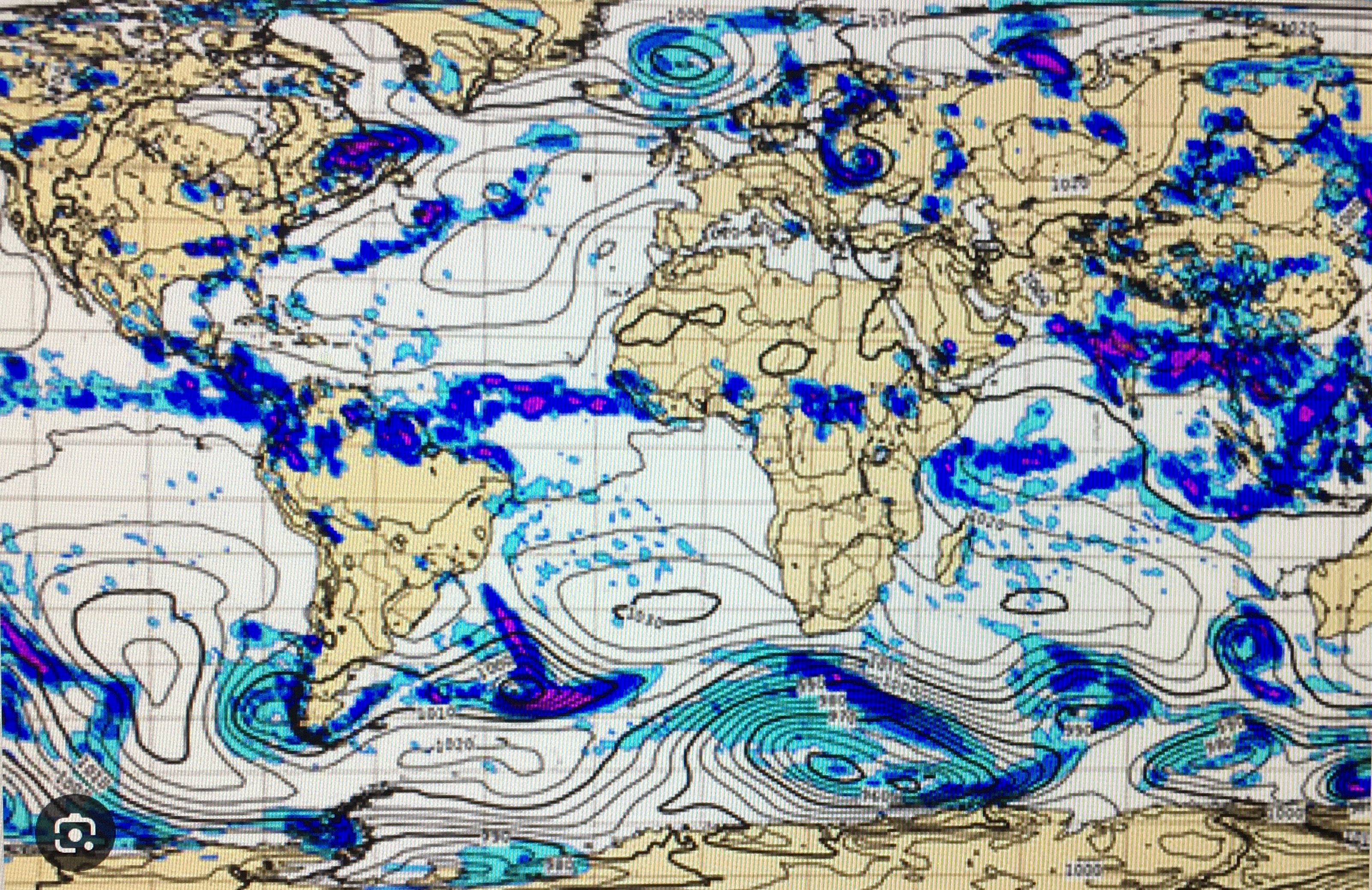
Voosen continues, “The new AI models skip the expense of solving equations in favor of ‘deep learning.’ They identify patterns in the way the atmosphere naturally evolves, after training on 40 years of ECMWF “reanalysis” data—a combination of observations and short-term model forecasts that represents modelers’ best and most complete picture of past weather. When fed a starting snapshot of the atmosphere based on the same combination of observations and modeling, GraphCast can outperform the ECMWF forecast out to 10 days on 90% of its verification targets, including hurricane tracks and extreme temperatures.”
Non-trivial A.I. Training; Big Payoff. A.I. doesn’t get its weather smarts cheaply, but Voosen writes, “Although it took 32 computers 4 weeks to train the AI model, the resulting algorithm is lightweight enough to work in less than 1 minute on a single desktop computer, says Rémi Lam, lead author of the GraphCast paper: ‘It is fast, accurate, and useful.’ ”
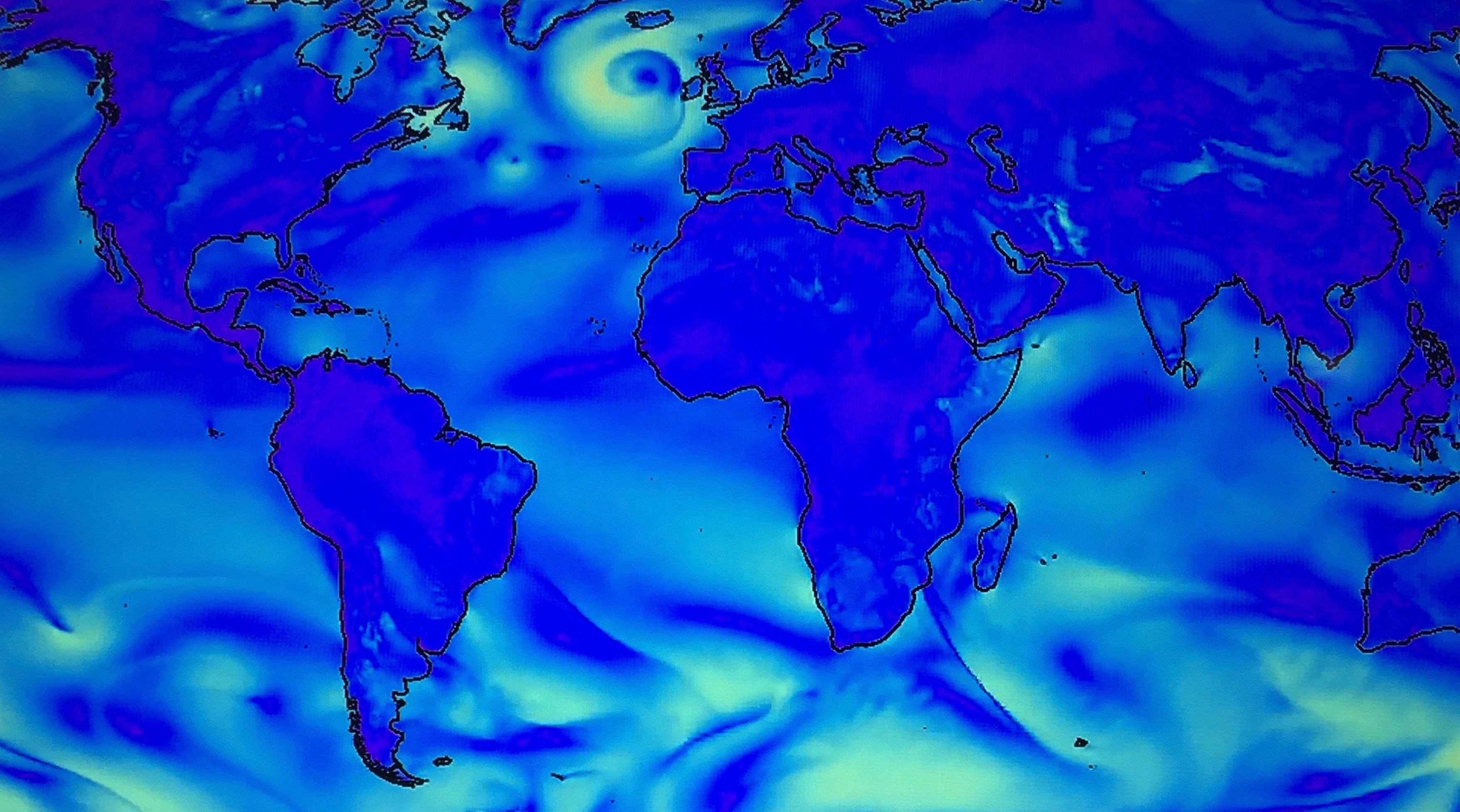
Image from GraphCast.
Reanalysis Replaced by Raw Data. “To improve further,” Voosen writes, “the AI models could be weaned off the reanalysis data, which carry the biases of traditional models. Instead, they could learn directly from the petabytes of raw observation data held by weather agencies, [physicist] Keisler says. Google’s short-term weather model already does so, training itself on data from weather stations, radar, and satellites.”
Black-box Resistance? Voosen notes, “Adoption might be slowed by unease about the black-box nature of the AI: Researchers often can’t say how such systems reach their conclusions.” But that concern can be overstated: One researcher tells Voosen that traditional models are also so complicated that “there’s a degree of opaqueness already built into them.”
Hallucinating Weather? Unlikely. The matter of A.I. hallucination is not discussed directly in this Science article, likely because its data acquisition is more selective than in general Large Language Models: Previous actual conditions or raw weather data are more precise than the usual L.L.M. GI scooping yielding the typical GIGO (Garbage In, Garbage Out). ds
© Dennis Simanaitis, SimanaitisSays.com, 2023
 Simanaitis Says
Short-term forecasts in the US (at least where I live) are updated twice a day, and since the old guys retired are limited mostly to summarizing the model results. Not much “local knowledge” being worked in any more. So the AI models might have some promise if they can also be scaled down to look at local conditions and microclimates.