
Simanaitis Says
On cars, old, new and future; science & technology; vintage airplanes, computer flight simulation of them; Sherlockiana; our English language; travel; and other stuff
R&T’S MOGGIE TRIKE TEST, MOTTA’S ILLO, AND MY BRIEF DRIVES
HERE’S A TRIO OF MORGAN TRIKE TIDBITS gleaned from several sources: R&T March 1957, R&T December 1965, SimanaitisSays May 4, 2013, and my own memory bank.
A Classic Trike. Back in the ’50s, R&T would gather data from earlier sources and assemble simulated tests of classic cars. Examples offered here at SimanaitisSays include the 1930 Bugatti Type 49 and 1932 Alfa Romeo 6C-1750.
In March 1957, R&T’s Classic Test No. 8 was the Morgan Super Sports trike: “H.F.S. Morgan has been building and selling his amazing three-wheeled vehicles for nearly two-score years, and the latest 1939 model, though improved, is basically the same design as the earliest machines.”
Technical Details. R&T noted, “In super-tuned form and running on fuel (alcohol) some of these machines have lapped the Brooklands track in England at over 100 mph. However, our test car was the more docile, more practical version powered by the big Matchless Twin, a V-type motorcycle engine.”
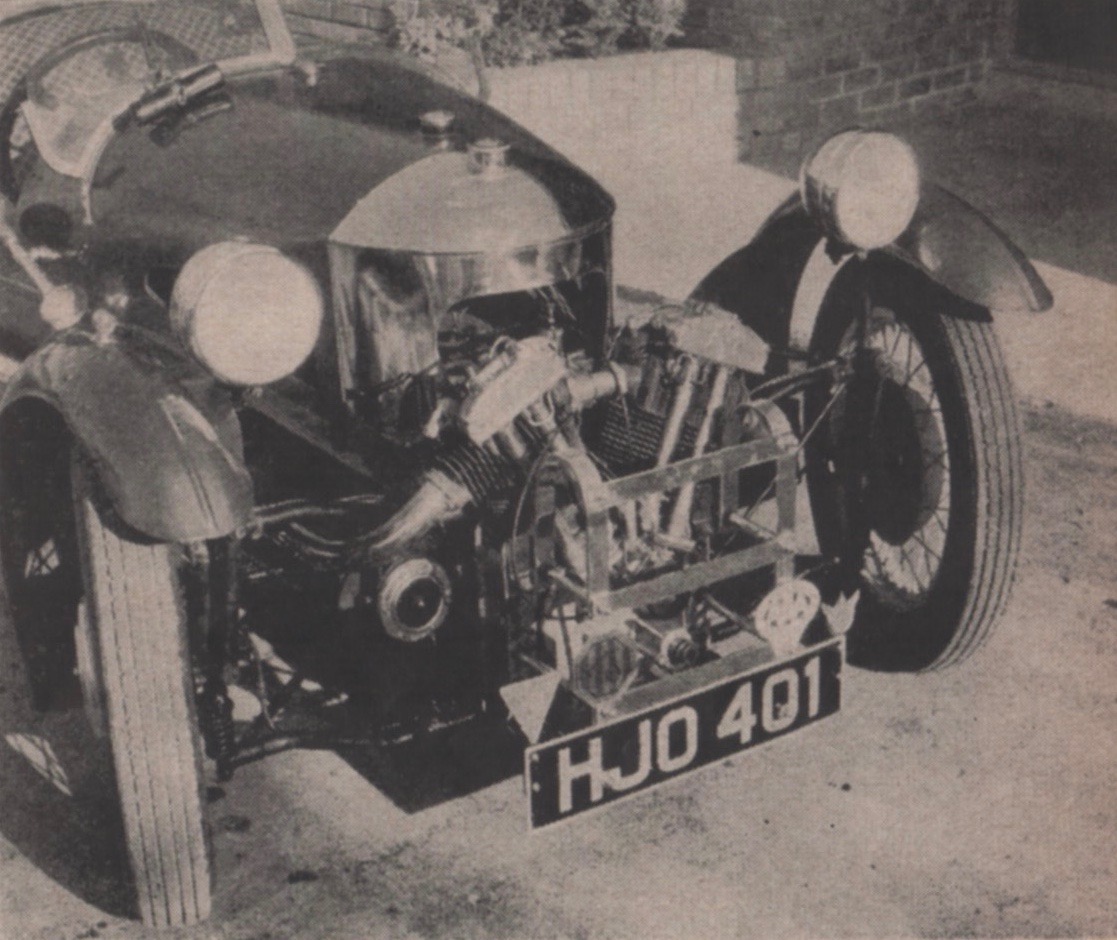
This and the following image from R&T March 1957.
“Behind this powerplant,” R&T recounted, “is a conventional clutch and a Ford ’10’ 3-speed and reverse transmission. The output shaft of the transmission drives a worm gear box which provides the necessary right-angle turn for a final drive by sprockets and chain to the single rear wheel.”
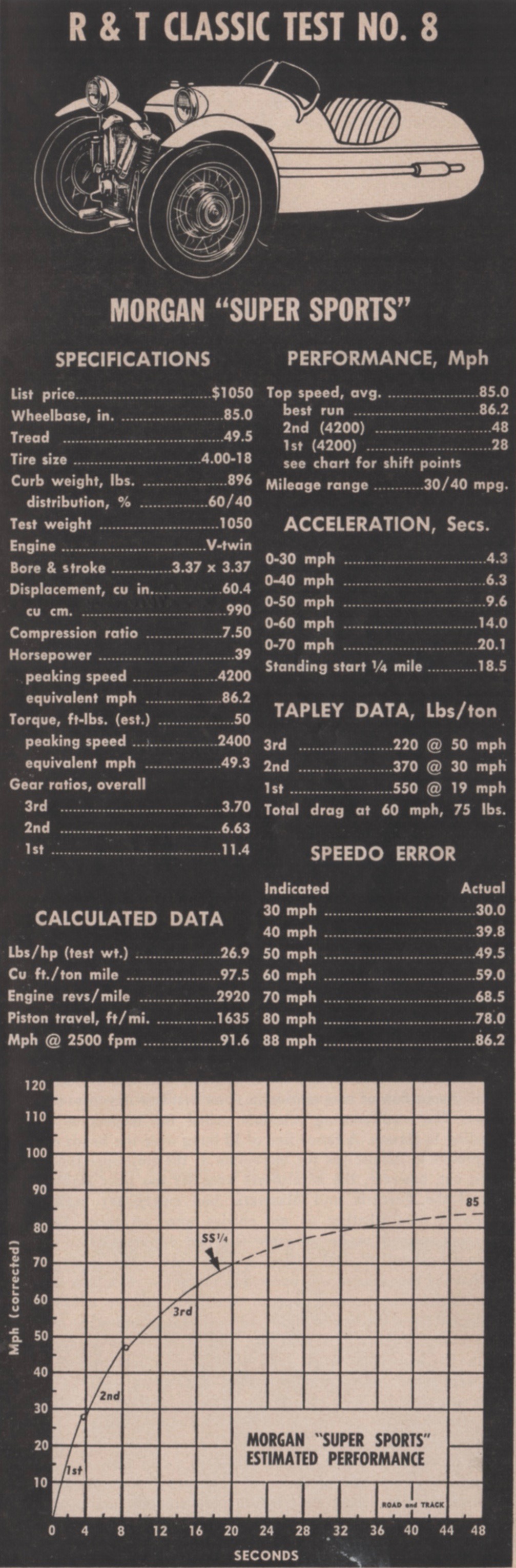
Note the 0-60 time of 14.0 seconds, quite quick for 1939.
“By passenger car standards,” R&T said, “the engine is not very docile, but with ignition retarded it will tick-tock along at as low as 15 mph in high gear. Above 20 mph it accelerates fairly easily without downshifting, and the normal comfortable cruising speed is about 55 mph. Above that speed there is some vibration and at over 70 mph the suspension feels too solid to be described as ‘firm.’ In truth the car leaps and hops, and 70 mph feels more like 100.”
Imagine piloting one at over the century!

A Morgan Super Sports poses for portraits by R&T’s Wm. A. Motta. This and the following image from R&T December 1965.
Better than a Cycle/Sidecar Combo, But…. “The cockpit of the Morgan,” R&T assessed, “is crowded for two adults, but offers (as compared to a motorcycle) the advantage of weather ‘protection.’ At first it seems very difficult to drive, with no foot accelerator and very heavy and ultra-fast steering (3/4 turns, lock to lock). However, the hand throttle has advantages including the ability to keep the right foot poised for instant braking. Also, one soon learns that proper use of the throttle on bends can almost steer the car, reducing steering effort considerably.”

The tall lever actuates cable front brakes; the pedal might well lock up the rear tire. One lever is the hand throttle; the other, spark advance.
My Brief Trike Drives. Spence Young and his Matchless-powered trike were regulars at the Monterey Historics. and it was he who gave me obligatory instruction leading to my first trike drive.

Spence prepares me for my solo drive around the Monterey paddock. This and the following images from SimanaitisSays May 4, 2013.
“The classic Morgan trike doesn’t have an accelerator;” I noted, “rather, there’s a thumb-actuated hand throttle that resembles the gear-change lever of a classic Raleigh 3-speed bicycle. You’d think steering and throttling would interfere with each other. However—given the quickness of trike steering—there’s no problem at all: Never does your right hand get beyond noon or six.” Nor does it ever get any break in the action.
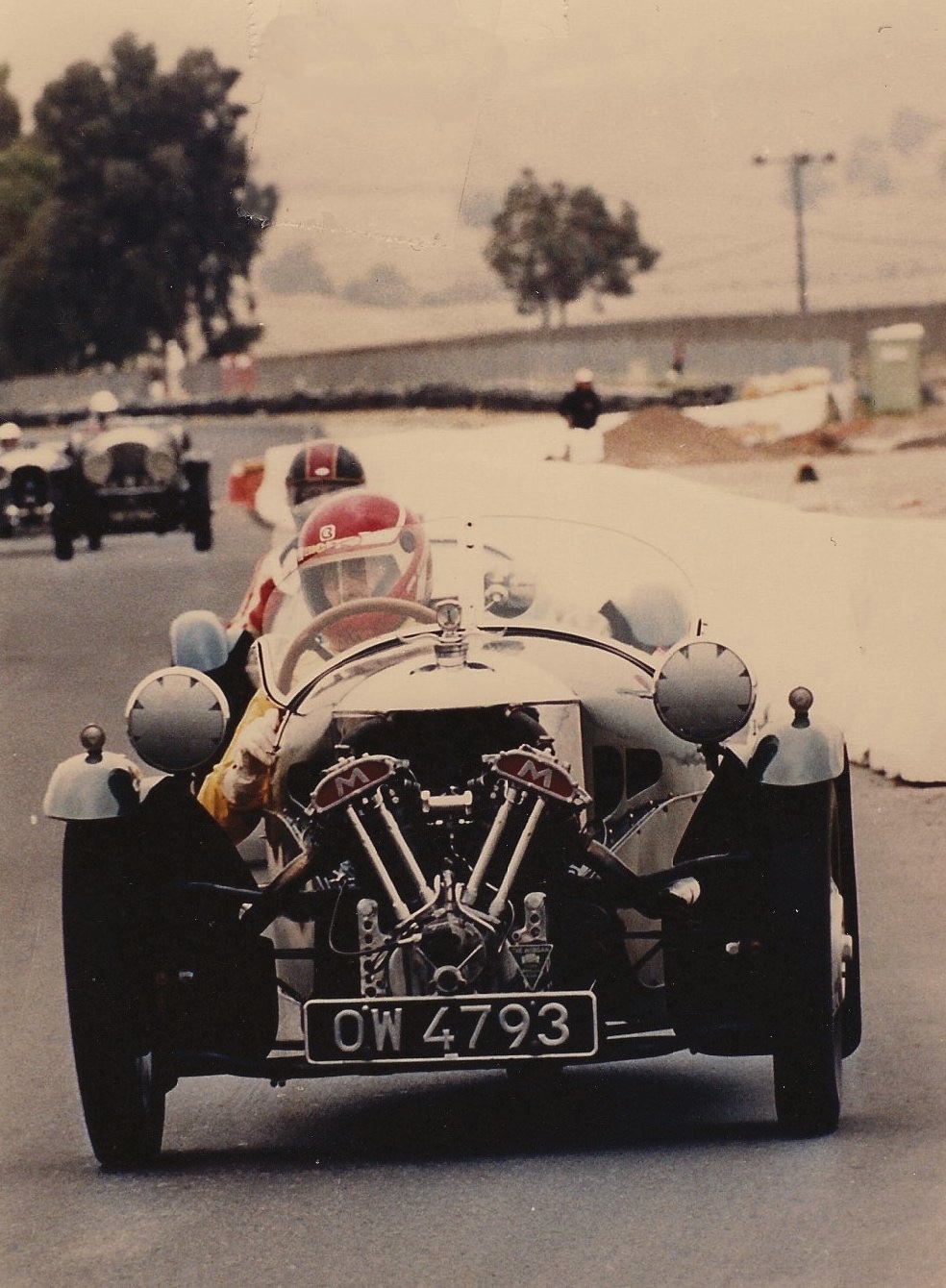
Spence and his trike at Monterey.
“Once underway,” I recounted, “acceleration is accompanied by separately felt thrumps of motorcycle exhaust. You begin to wonder who’s really being scammed, the Inland Revenue or the trike owner. But it’s all great fun. And it’s easy to imagine that Spence, rest his soul, always had a giant grin beneath that helmet visor.”
Later, I added a (Ford-powered) F-Type to my Morgan trike drives, this one around the Pittsburgh Vintage Grand Prix paddock.
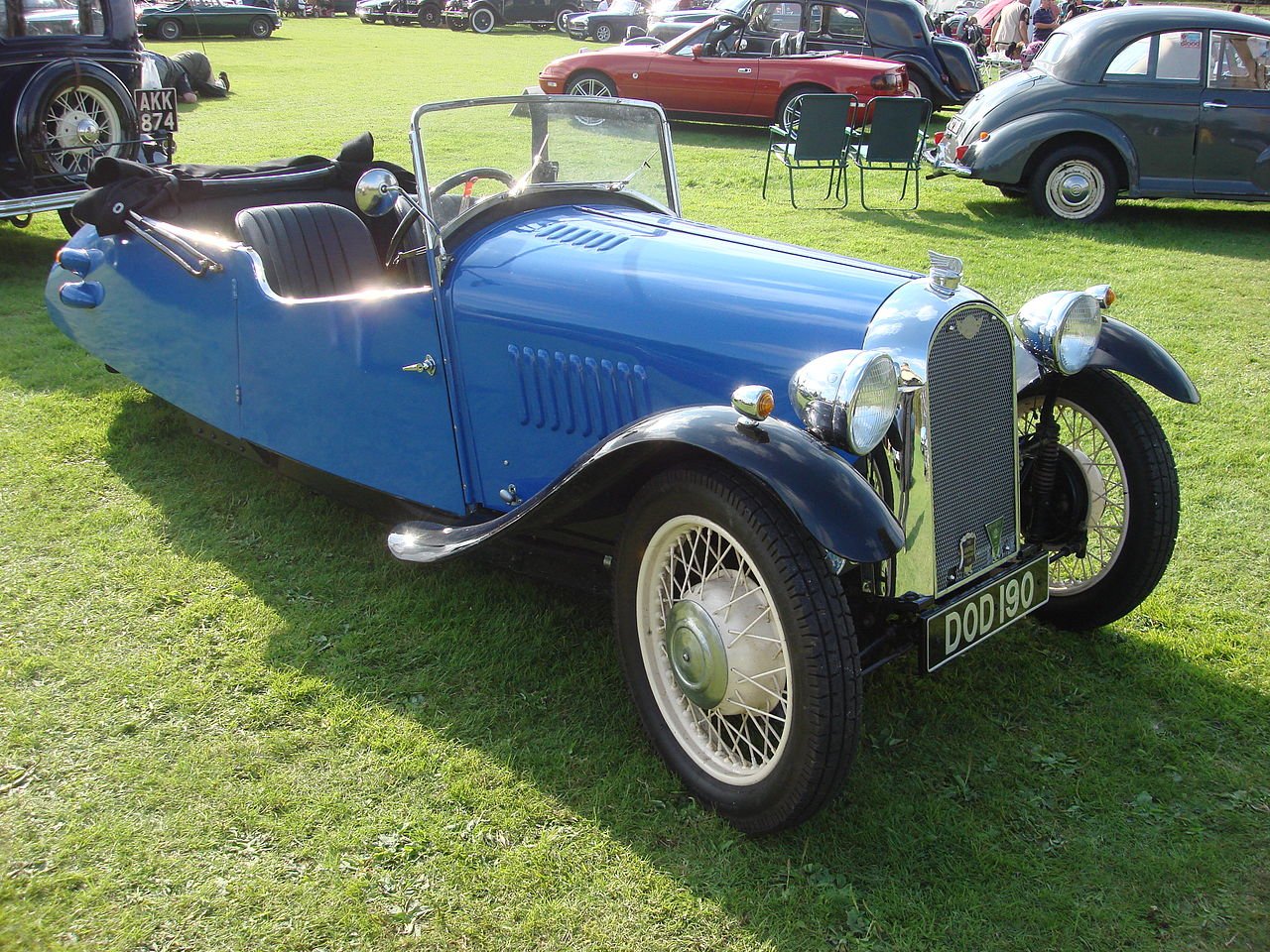
Morgan F-Type at Pittsburgh Vintage Grand Prix.
Malvern Link got around to producing a four-wheeled Morgan in 1936, logically enough called the 4-4, as in number of cylinders and number of wheels (or maybe the other way around). Morgan knew a good thing when they had it, though: The last F-Type didn’t leave Malvern Link until 1952. ds
© Dennis Simanaitis, SimanaitisSays.com, 2023
 Simanaitis Says
Interesting story, thanks Dennis! Given your love of Morgans, I’ve always wondered what you thought of the 21st century interpretations of the Morgan Trikes, i.e. the 3 Wheeler and now, Super 3.
I’ve never driven one. I admire the intent, though.