
Simanaitis Says
On cars, old, new and future; science & technology; vintage airplanes, computer flight simulation of them; Sherlockiana; our English language; travel; and other stuff
EARLY AIR MAIL SNAFUS PART 1
IT’S INTERESTING ENOUGH that a philatelic screwup complicated early U.S. air mail, so too did prenup nepotism. Here in Parts 1 and 2 today and tomorrow are tidbits especially focusing on the second aspect.
The “Inverted Jenny.” Already discussed here at SimanaitisSays was the mistake of the famous “Inverted Jenny,” its double-plate printing occurring less than two weeks before the May 15, 1918, inauguration of air mail service between Washington, D.C., and New York City.
The process required two separate engraved plates, one for the blue Jenny, the other for its dark-red frame. But going through the hand press twice didn’t go as planned.
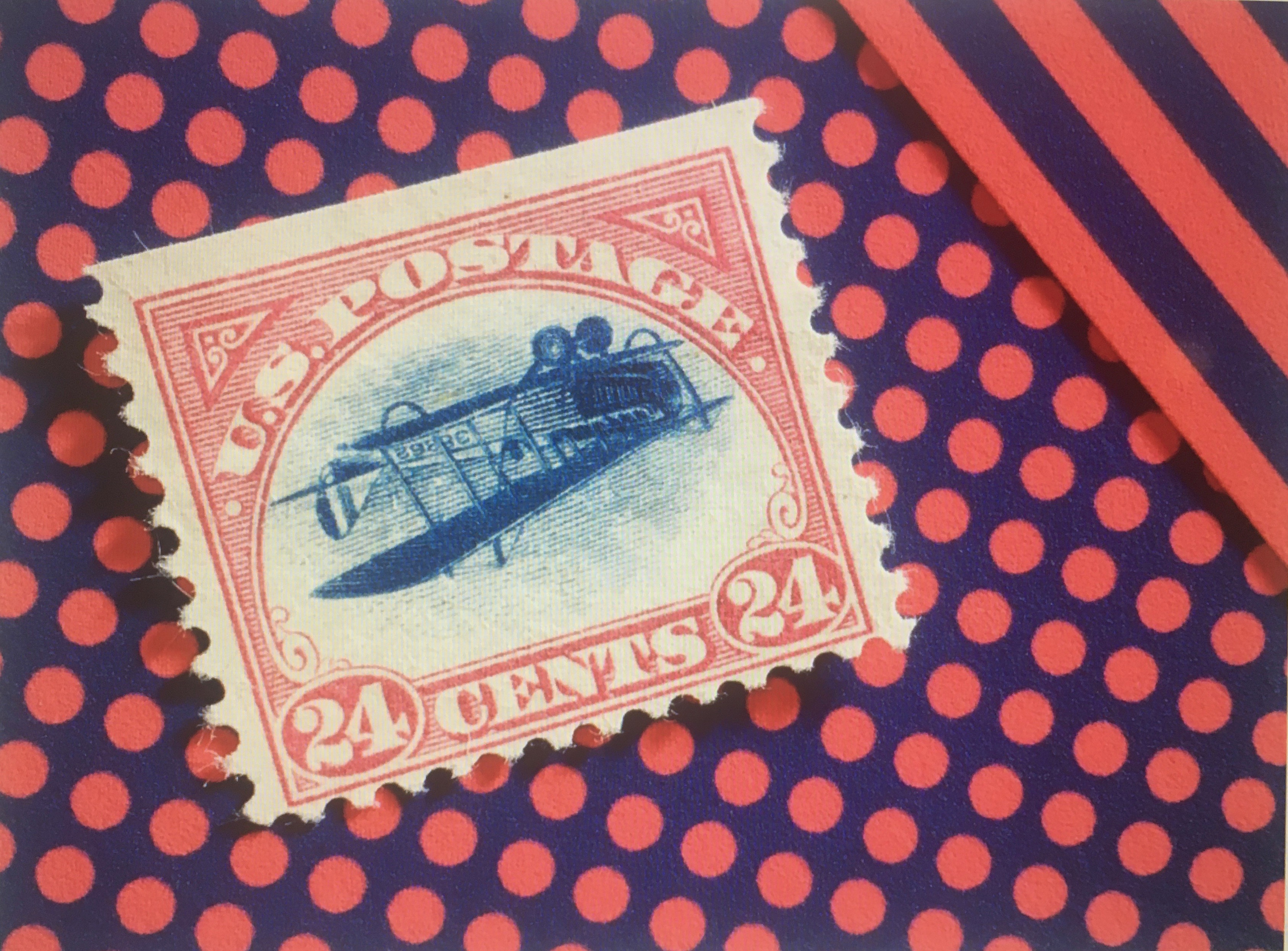
Image from “Why Collectors Fall Head Over Heels for the ‘Inverted Jenny’ Stamp,” by Meilan Solly, Smithsonian Magazine, December 2023.
Solly writes in Smithsonian, “The bureau made nine sheets of errors, each with 100 stamps depicting an upside-down plane. Staff found and destroyed eight of the erroneous sheets and shipped the other stamps to offices in Washington, New York and Philadelphia—the cities selected for the first airmail flights. But one sheet slipped through.”
To true philatelists, it wasn’t the Jenny that’s inverted, it’s the red frame, as shown by this block of four.

Note the identification number. Image from SimanaitisSays.
However defined, the rare 100 stamps have had a fascinating history: The entire sheet was originally bought for face value, $24, then within a week sold for $15,000, later sold for $20,000, then broken up into blocks of eight, four, and individual stamps.
Solly recounts that “The Inverted Jenny, meanwhile, retains its topsy-turvy allure: In 2021, a block of four Jennies sold at auction for a record $4.9 million. And earlier this week, Number 49, which resurfaced in 2018 after spending decades tucked away in a safe-deposit box, fetched more than $2 million at auction, making it the most expensive U.S. stamp ever sold.”
Wrong-way Boyle. Solly gives brief details of the fiasco of that inaugural Washington, D.C., to New York service. However, a full recounting comes in Nancy Pope’s wonderful “Wrong Way Boyle,” in Smithsonian National Postal Museum, May 13, 2015: “On a beautiful spring morning in 1918 thousands of people were on hand to view a pilot take off from Potomac Park, Washington, D.C. The pilot, Lieutenant George Leroy Boyle, would be carrying sacks of mail to begin the nation’s first regularly scheduled airmail service. Boyle was one of a handful of Army Air Corps pilots who were tapped to fly the mail for the Post Office Department that day.”
Boyle’s task was to fly the first stint to Philadelphia, some 125 miles to the northeast. “If the crowd wondered why young Lieutenant Boyle won the privilege of flying the first mail out of D.C. in front of the President, the presence of Interstate Commerce Commissioner Charles McChord at the event might have given them a clue. Boyle was engaged to his daughter Margaret, their marriage to take place in just a month.”

Major Reuben Fleet (in charge of coordinating the day’s flight), Lieutenant Boyle, an unidentified official and a woman who might be Boyle’s fiancé, Margaret McChord. Image from Pope’s article. By the way, San Diego’s Fleet Science Center honors the Major.
Tomorrow, we learn that perhaps Boyle may not have been the best choice for this or any flight. ds
© Dennis Simanaitis, SimanaitisSays.com, 2023
 Simanaitis Says
You may have heard this, but one on the airplanes sheets were sold in a rural PO. When the postmaster was asked if he did not notice the plane was upside downhe replied,”How should I know, I have never seen a plane.”John