
Simanaitis Says
On cars, old, new and future; science & technology; vintage airplanes, computer flight simulation of them; Sherlockiana; our English language; travel; and other stuff
HURRAH FOR THE WORD NERDS
ONE OF THE SPIFFS of The New York Times Book Review is learning just enough about a book so you won’t feel culturally deprived in not reading it. On the other hand, quite serendipitously Daughter Suz just gifted me with The Dictionary People: The Unsung Heroes Who Created the Oxford English Dictionary, which is also the subject of “Revenge of the Word Nerds,” by Dennis (familiar name, that!) Duncan, The New York Times Book Review, October 22, 2023. I shall read the book cover to cover.
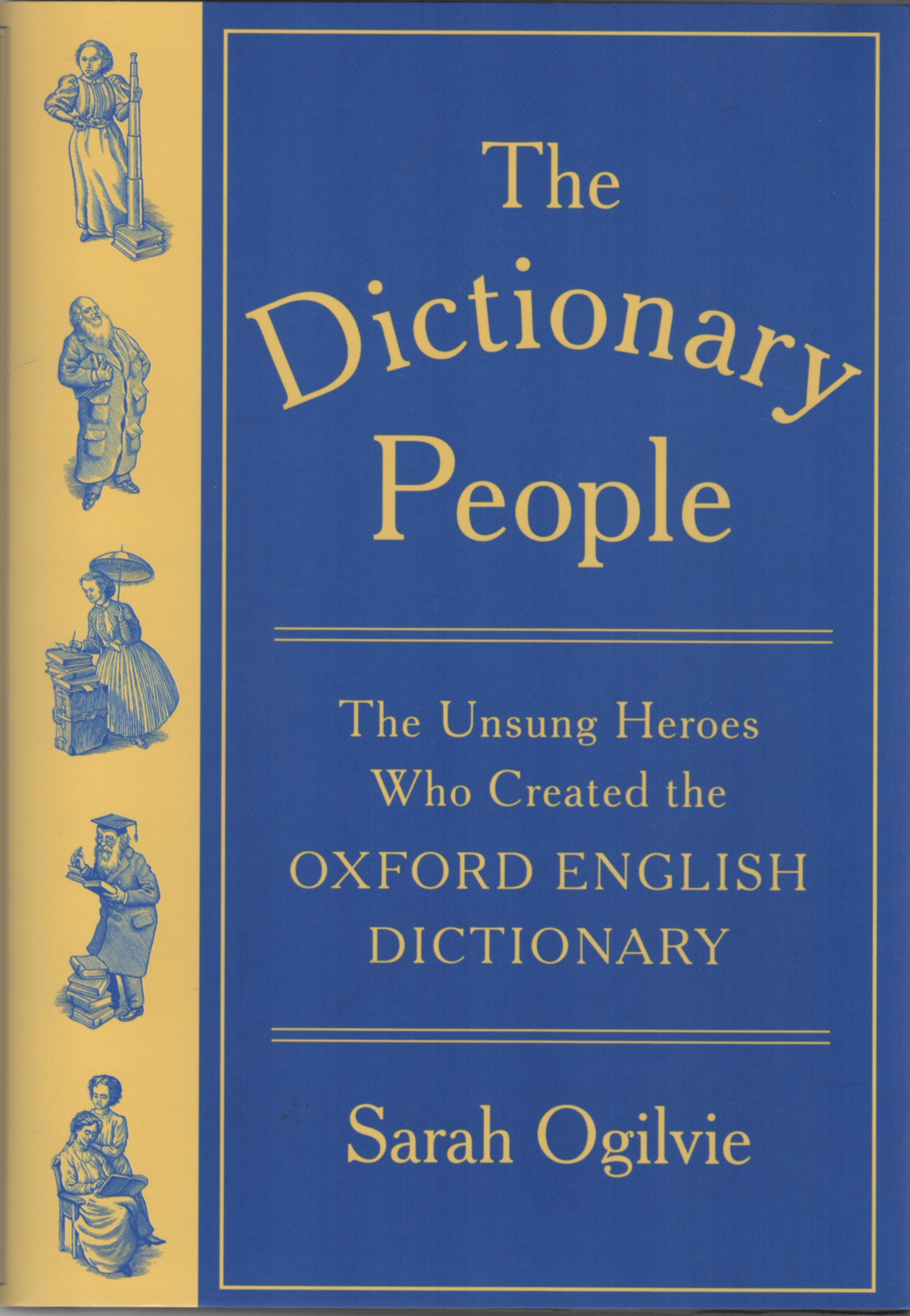
The Dictionary People: The Unsung Heroes Who Created the Oxford English Dictionary, by Sarah Ogilvie, Knopf, 2023.
“Sarah Ogilivie,” IndieBound notes, “is a linguist, lexicographer, writer, and technologist. Raised in Australia, she has lived and worked in both the United States, teaching at Stanford, and Britain. She currently teaches at Oxford University, where she develops and directs a new degree integrating humanities with technology.”
Duncan begins his online version “In the Beginning Were the Word Nerds” with “Sarah Ogilvie’s sprightly ‘The Dictionary People’ pays tribute to the explorers, suffragists, murderers and ordinary citizens who helped create the Oxford English Dictionary.”
How could one not read the entire book, if for no other reason than to learn more about this disparate bunch of people? Here are tidbits about The Dictionary People, together with a related recollection of my own on matters lexiphilic.
Descriptive, not Prescriptive. Duncan writes, “When the O.E.D. was conceived in 1857, the proposal that started the ball rolling declared that it should be ‘an historical monument, the history of a nation contemplated from one point of view.’ Unlike its predecessors, the new dictionary should be descriptive rather than prescriptive, including all the words of the language, current and archaic, highblown and vulgar. Moreover, it should trace their shifting meanings over the centuries, and always—crucially—support its assertions with the evidence of published quotations.”

Crowdsourced. “For this,” Duncan recounts, “the general public would be enlisted: The O.E.D. would be a crowdsourced project. Appeals were issued far and wide, with The New York Times remarking wryly that readers with ‘any superfluity of words about them’ should contact the British Philological Society.”
I have been accused of having “a superfluity of words.” Or is that praised for?
Murray’s Scriptorium. Duncan describes “the greatest and longest-serving of the Dictionary’s editors, an irrepressible autodidact by the name of James Murray.” Research was accomplished by receipt of a “quotation for every word that strikes you as rare, old-fashioned, new, peculiar or used in a particular way.” All of these slips were accumulated by Murray and his sub-editors working in their “Scriptorium,” an ice-cold shed in the back garden of Murray’s home on the outskirts of Oxford.
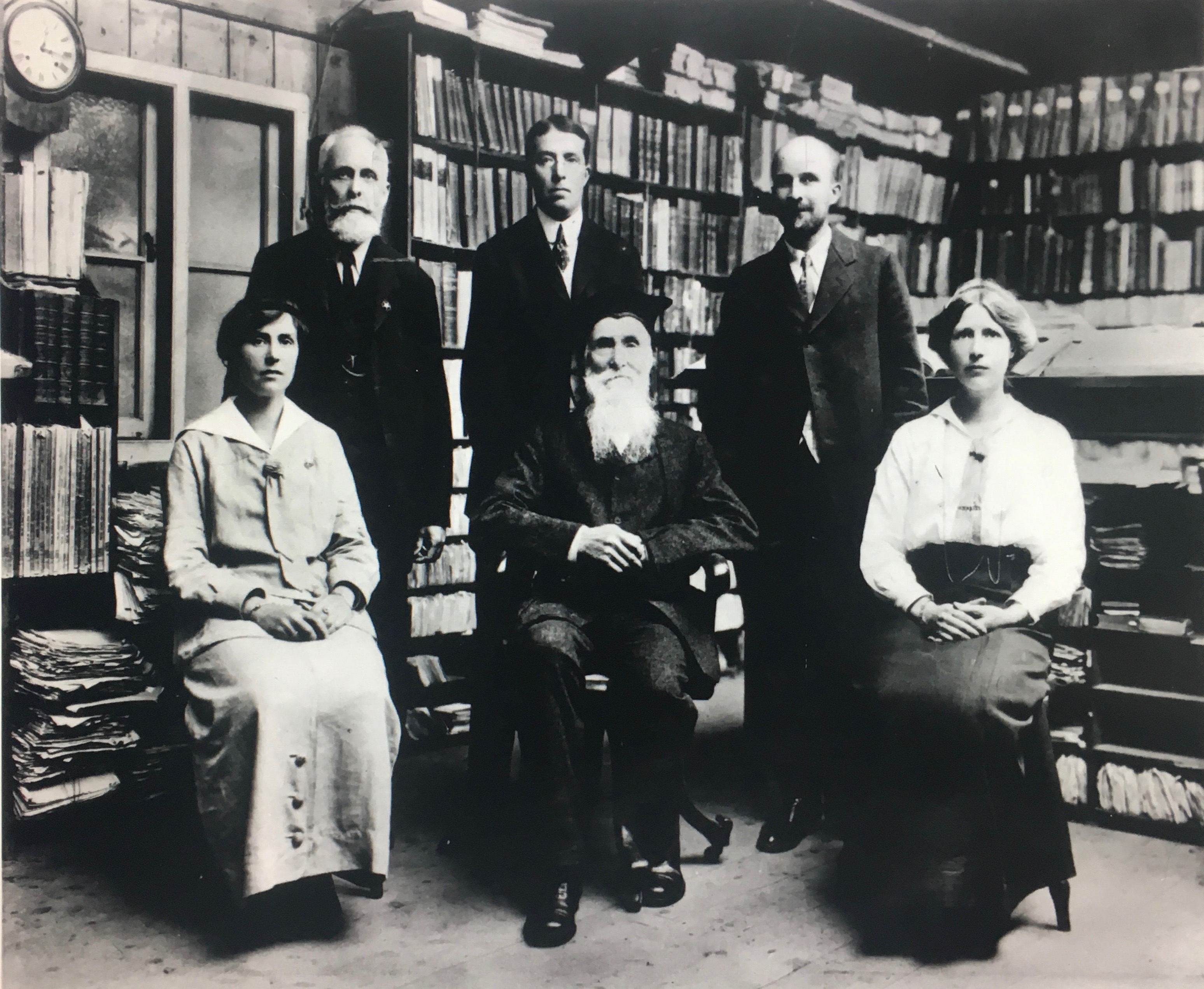
Sir James Murray, center, with his daughter, right, and volunteer staff in an undated photo. Image from Yale University Press appearing in The New York Times Book Review.
Duncan writes, “When Murray took the reins in 1879 he estimated that the O.E.D. would be completed within a decade. He was off by 40 years. Murray would not see further than the letter ’T,’ expiring as he did on a summer’s day in 1915, soon after writing his last definition, ‘twilight.’ ”
An Odd Bunch. Duncan recounts, “Readers of Simon Winchester’s 1998 best seller ‘The Professor and the Madman’ will remember the fragile, fragmented consciousness of William Chester Minor, one of Murray’s most prolific contributors, who was also a long-term inmate at Broadmoor asylum — having killed a man, likely while suffering paranoid delusions.”
“Here Ogilvie uncovers at least two other murderers lurking in Murray’s address book,” Duncan continues. “There are also a pornographer, an incestuous aunt-niece couple, a drug addict and an arctic explorer, not to mention readers trapped by limited horizons for whom the possibility of contributing to such a grand enterprise offered a lifeline.”
Amateurs and Academics. Duncan observes, “The overall picture we get from Ogilvie’s engrossing survey is of ‘amateurs collaborating alongside the academic elite,’ of a scholarly work force that spread far beyond the stolid, bearded men of Oxford. About one in six—far more than was previously thought—were women.”
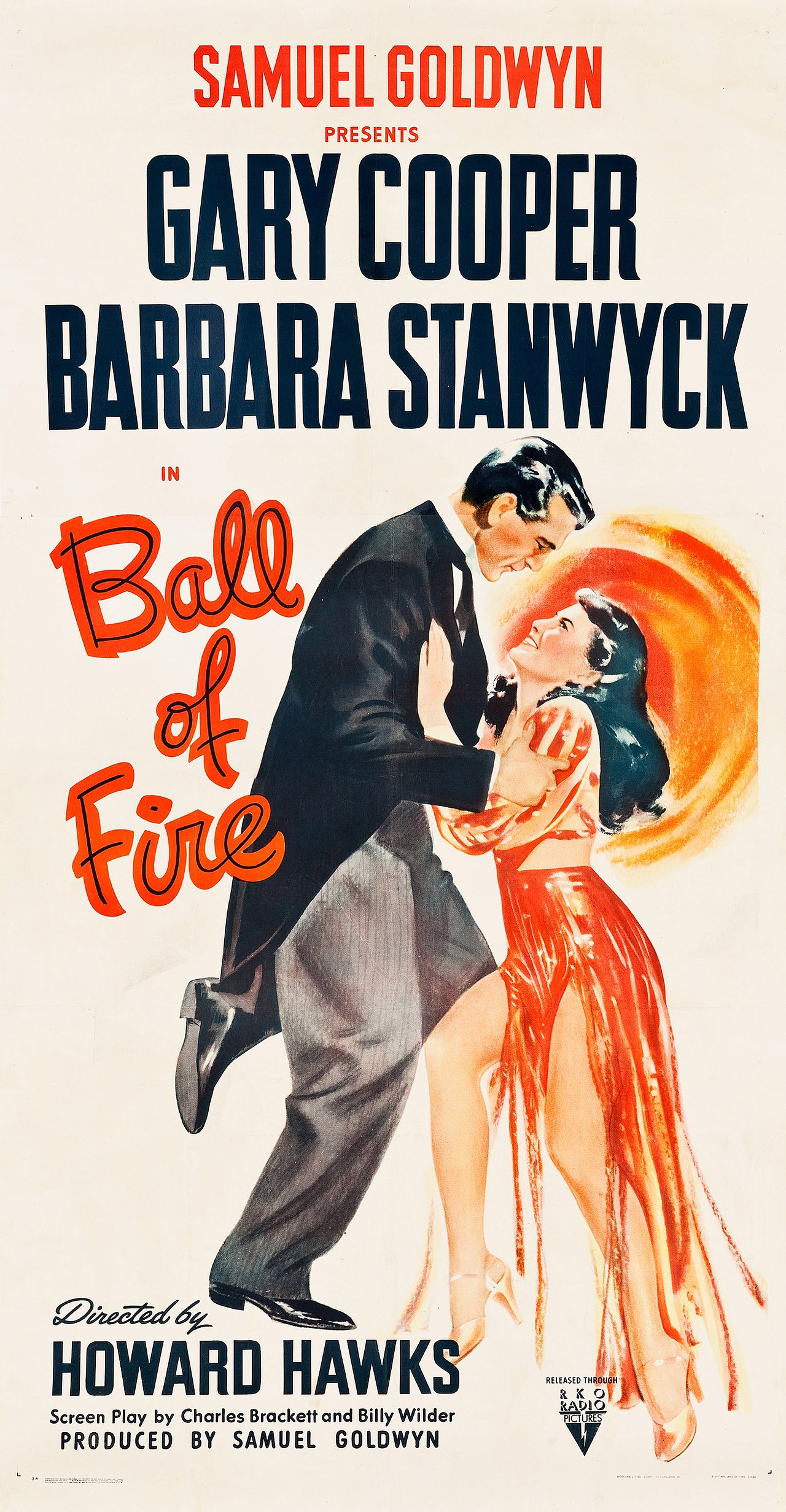
A Movie Recalled. The 1941 screwball comedy Ball of Fire comes to mind: Professor Bertram Potts, Grammarian (portrayed by Gary Cooper) is one of an eccentric group of lexicographers. Among them are Professor Gurakoff, Science (Oskar Homolka, who was also Dr. Brubaker in Seven Year Itch), Professor Jerome, Geography (Henry Travers, guardian angel in It’s a Wonderful Life), and Professor Magenbruch, Physiology (S.Z. Sakall, of Casablanca fame).
To become au courant with the latest slang, Potts befriends nightclub performer Katherine “Sugerpuss” O’Shea (Barbara Stanwyck, Oscar nominee for this flick).
Gee, I wonder if The Dictionary People’s tale could be transformed into a movie. As I enjoy more of this book, I’ll imagine the cast. ds
© Dennis Simanaitis, SimanaitisSays.com, 2023
 Simanaitis Says