
Simanaitis Says
On cars, old, new and future; science & technology; vintage airplanes, computer flight simulation of them; Sherlockiana; our English language; travel; and other stuff
YET ANOTHER MOKE
I WAS ABOUT TO CALL THIS my third Austin Mini Moke, what with my first (the St. Thomas one) appearing in the August 1973 R&T and my second driven “From Sea to Shining Sea” (June 1991 R&T and here at SimanaitisSays). But there’s also this fetching little model acquired awhile back.

Thus, this GMax rendering is my fourth, inspired by model builder extraordinaire Alistar Brookman and Classic & Sports Car’s Mick Walsh. Tidbits follow on its Mini Moke GMax rendering, including a couple puzzles of this wonderful time-gobbling hobby.

Design Rectilinearity. The Mini Moke is a stripped-down variant of the BMC Mini. Its multiplicity of flat surfaces made the real Mini Moke easy to fabricate; indeed, its only curved surface is a simple one, the bonnet.

In reality, the bodywork is formable on a sheet-metal brake; in GMax, a bunch of GMax Boxes and a half-Tube. The bonnet and its rubber T-clamps (not shown here) are coded F_Canopy.
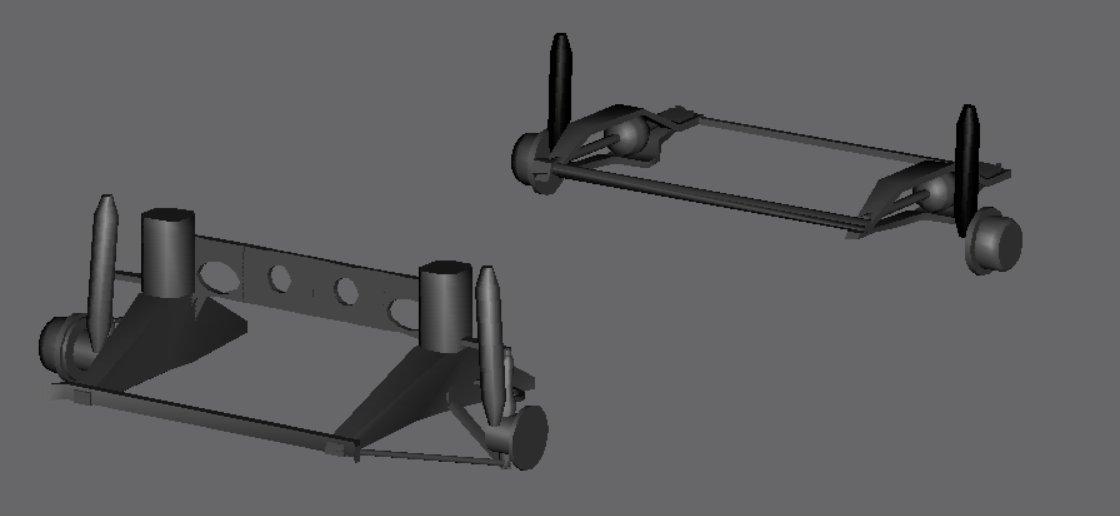
FWD and Air Suspension. To cite SimanaitisSays: Alex Issigonis and his team fit everything “within a box measuring 10 x 4 x 4 feet, with passengers getting 6 feet of the length. What’s more, the engine necessarily mounted transversely to fit, had to be an existing design.”
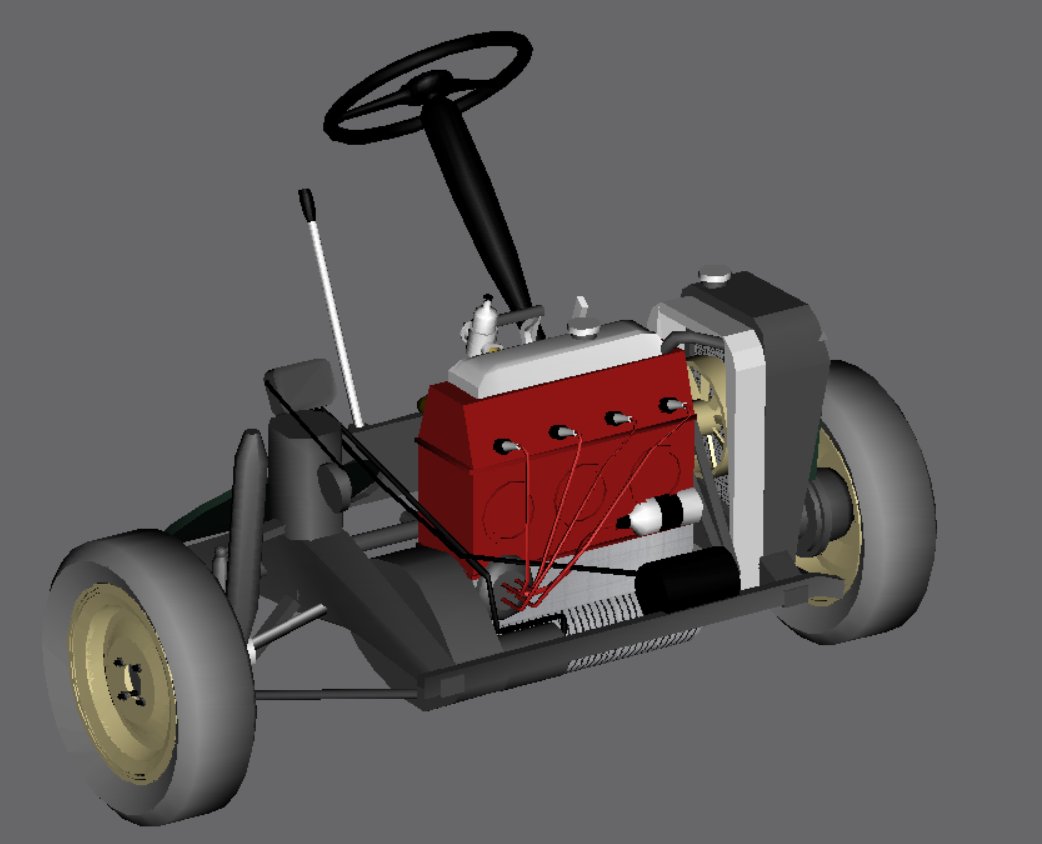

GMax articulations are designed for aircraft, not cars. However, its Landing Gear coding works fine for front and rear suspension movement, sans retraction, of course. GMax Rudder coding takes care of the steering.
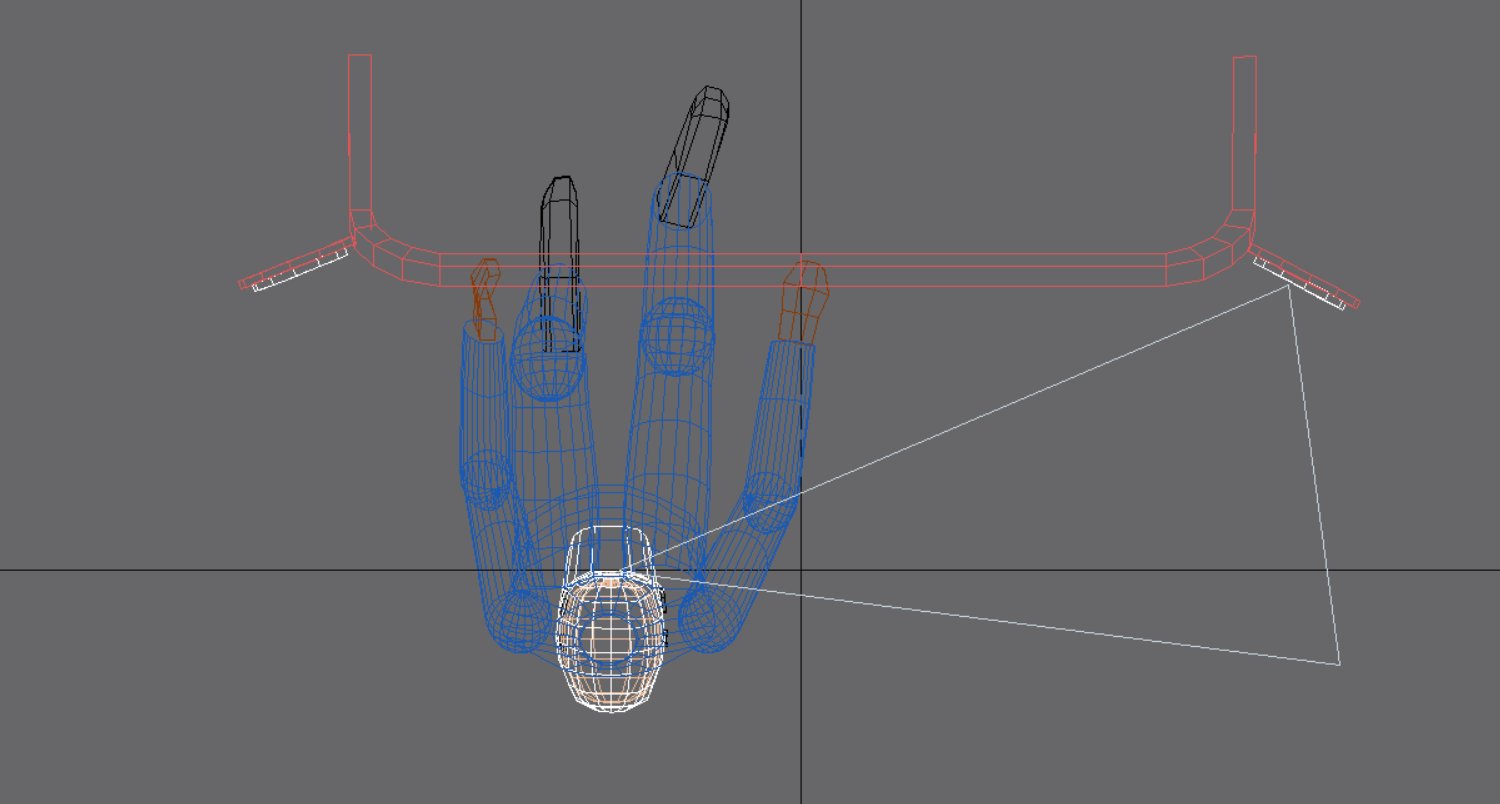
And Then There’s the Folding Top. I figured R_Canopy articulations would work for folding the top. However, GMax allows rotation and displacement, but no deformation. Thus, “folding” depends on dividing the top into sections which follow, sorta, articulation of the top bows.
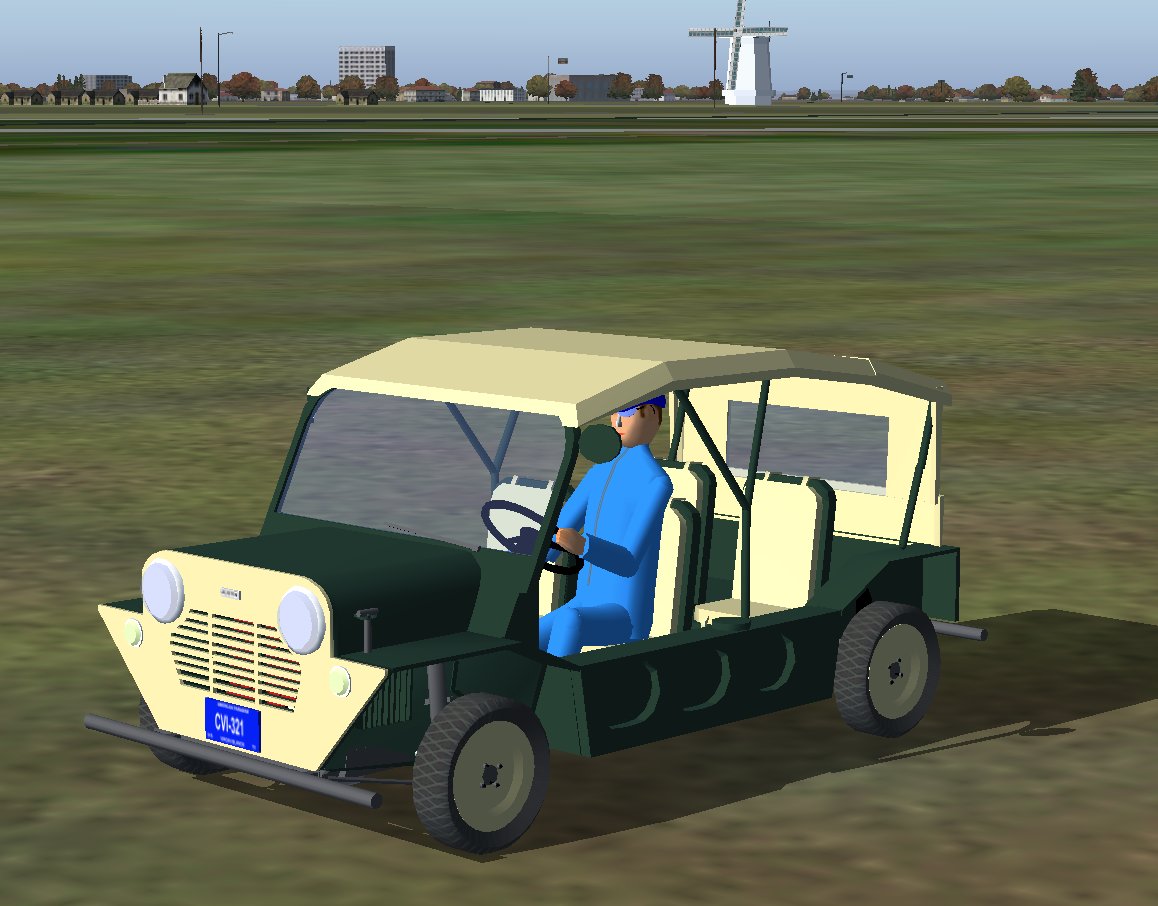
Alas, my initial rendering failed to “export,” i.e., to compile. Yet the modelu was far below parts-count limits encountered in other GMax craft, my Blériot Limousine and 125, for example.
A New-found GMax Constraint? For awhile there, I decided to forgo the articulated top and just make two separate Mokes, top up/top stowed.
Then I got GMax-wacko and decided to model the Moke’s large single-blade windscreen wiper. Obviously GMax coding doesn’t admit the existence of wipers, but—aha!—it does have Spoiler coding which gives me multiple sweeps with appropriate articulation.
Only, darn, my clever wiper design failed to compile as well.
Chapman’s Design Trick, in Reverse. It’s said Colin Chapman would selectively remove bits for lightness until the thing failed. Then he’d put the last bit back on.
I tried just the opposite with my wiper assembly: I took bits off selectively until it would compile.

Curiously, the culprit was a simple Cylinder, albeit miniscule in size. Indeed, it turns out that GMax doesn’t like accumulation of little bits, a problem that apparently doesn’t occur in its usual aircraft modeling.
Top Redesign. I also looked elsewhere in my GMax design for miniscule bits, especially those with linkages or articulation. The top bows, originally rendered as 12-sided Cylinders, were suspects, and I redid them with fewer sides. Also, the top fabric had linkage with the appropriate bows, which proved helpful in defining its articulation. Sans the linkages, identical articulation was possible, thus eliminating a lot of compilation.
WYSIWYG. “What you see is what you get” is a familiar goal in computer modeling. And, hitherto, GMax seemed to perform admirably.
Until, inexplicably, in modeling the aft portion of the Moke’s top: What appeared to be perfect match of surfaces in GMax translated upon export into slight misalignment in Microsoft Flight Sim. My workaround was a practical one: Nudge things (albeit out of matching) in GMax, but a compromise acceptable in the final rendering.
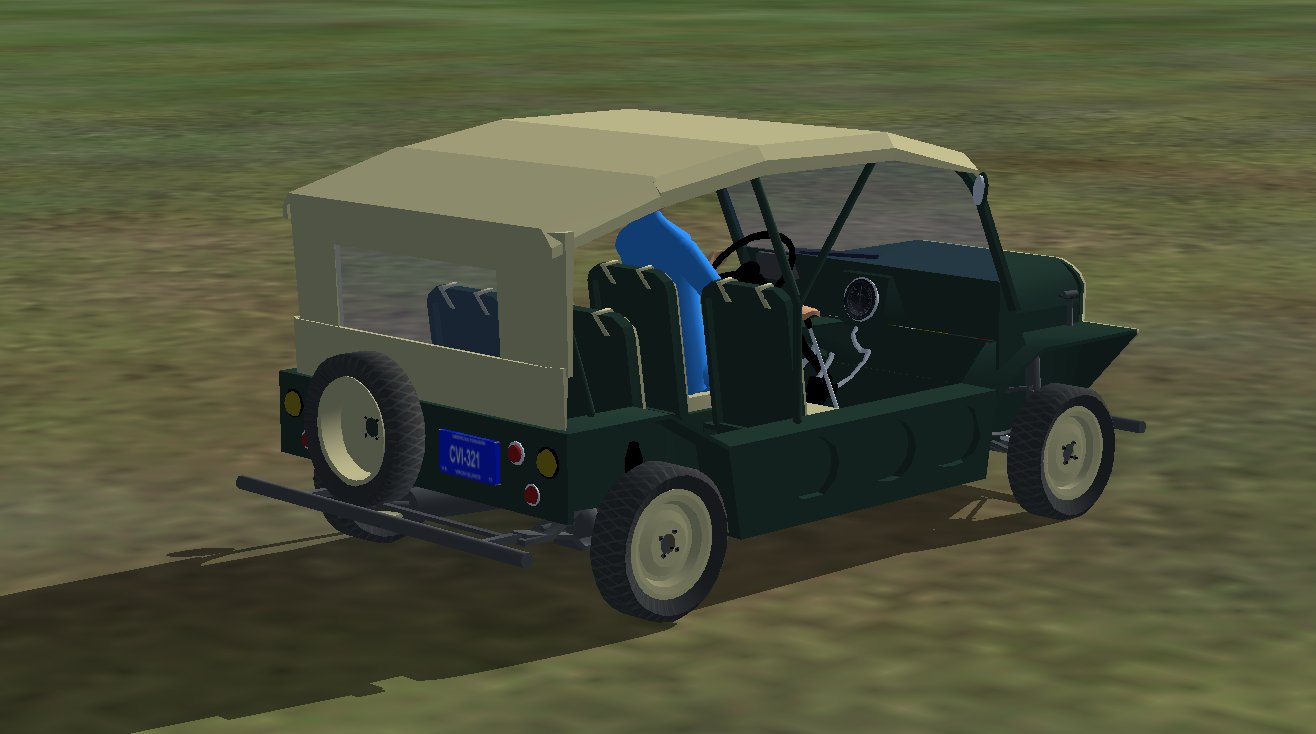
Good Fun in the Virtual Mode. I’m able to recall the fastest I’ve ever driven, or so it seemed at the time: 35 mph down a one-way street the wrong way in my STT Moke (chasing a motorcycle thief).

My Moke buzzes the Parliament with London Eye in view.
All in good GMax fun.
© Dennis Simanaitis, SimanaitisSays.com, 2023
 Simanaitis Says
Another wonderfully enjoyable column, thank you!
>
Thank you, Tom. Fact is, they’re all good fun to research and compose.
And in the “real” world, it’s back! As a low-speed EV this time. https://mokeamerica.com/
And thanks to reader Bob Storck for catching my faulty jr high shop memory of break/brake.– Dennis