
Simanaitis Says
On cars, old, new and future; science & technology; vintage airplanes, computer flight simulation of them; Sherlockiana; our English language; travel; and other stuff
A REALLY SOLID IDEA NEARING FRUITION
BACK IN APRIL 2022, SIMANAITISSAYS wrote “Solid-state Batteries” When? If? Whose?” Today, only 18 months later we can forgo the “if,” give the “when” a 2027-2028, and, as suggested, associate Toyota with the concept. Here are tidbits from Automotive News, October 2, 2023, and PC Magazine, November 11, 2022, and October 13, 2023.
Background: Solid, Not Liquid Electrolyte. As described by Emily Dreibelbis in PC, November 11, 2022, “Solid state batteries operate the same way as any other battery. They take energy in, store it, and release the power to devices—from Walkmen to watches and, now, vehicle motors. The difference is the materials inside.”
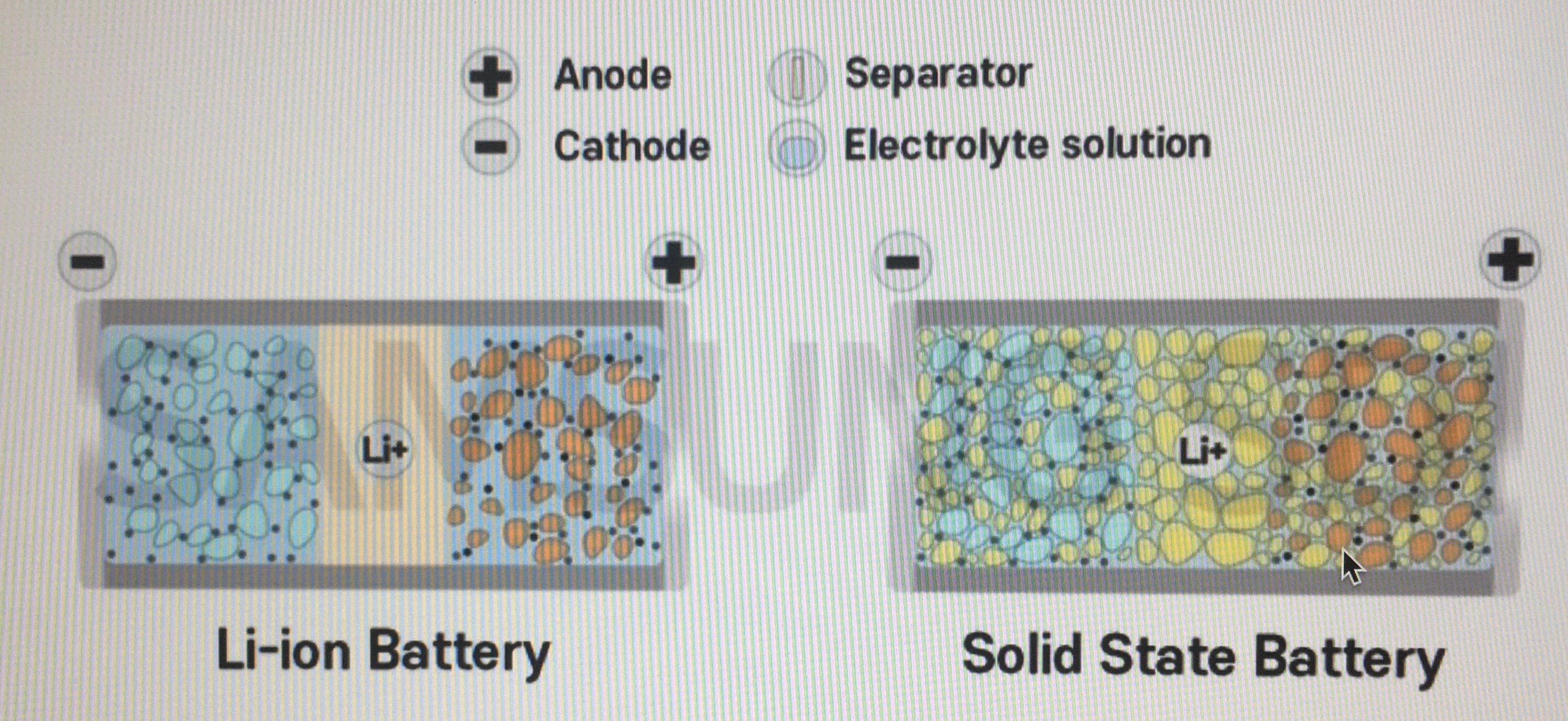
Image by Samsung from PC, November 11, 2022.
Dreibelbis recounted, “Lithium ion batteries, used in EVs today, have a liquid electrolyte solution sandwiched in between their cathodes and anodes (see the middle gap in the image above). Alternatively, solid state batteries use solid electrolytes. The increased density means solid state batteries can hold anywhere between two to 10 times the capacity of a lithium ion battery, AutoWeek reports.”
Smaller Solid States Already Here. “Solid state batteries already exist,” Dreibelbis wrote, “just in much smaller devices like smartwatches, pacemakers, and RFID tags. The barrier to using them in EVs is primarily that they’re expensive and difficult to produce in a larger size at scale, Vox explains.”
Toyota Takes Up the Challenge. Hans Greimel wrote in Automotive News, October 1, 2023, that solid-state batteries are one of the six radical steps being taken by Toyota with battery specialist Teiho. He cited, “The first of two versions will arrive around 2027 to 2028. Toyota targets a range of more than 621 miles, and the battery should recharge in about 10 minutes. Cost is still to be determined.”
Greimel explained, “When it comes to solid-state batteries, the trick will be stacking the layers of cathode-anode cells precisely and at high speeds. When affixing two layers as they spin off rollers, it is difficult to get them to line up exactly. But using its expertise in karakuri, a kind of mechanical manufacturing gadgetry that doesn’t use electricity, Toyota says it was able to overcome the problem of synchronizing the stacking.”
“Toyota engineers,” Greimel continued, “say they have cracked the code of solid-state battery materials. The next challenge will be speeding up output while maintaining quality and safety, they say.”
PC’s Latest Word. Emily Dreibelbis updates matters in PC, October 13, 2023, with “Toyota Inks Deal to Mass Produce Solid State EV Batteries With 932-Mile Range.” She describes, “Toyota has struck a deal with fellow Japanese company Idemitsu Kosan to mass produce ultra-high-range EVs with solid-state batteries. Idemitsu Kosan, Japan’s second-largest oil refiner, may seem like an unlikely partner for the EV space. But Toyota says Idemitsu has been working on developing the ‘elemental technologies’ for the batteries since 2001, five years before Toyota began pursuing them in 2006.”
We’ve seen plenty of fossil-industry ads hyping research of environmentally promising sorts, but this development is more than hype.
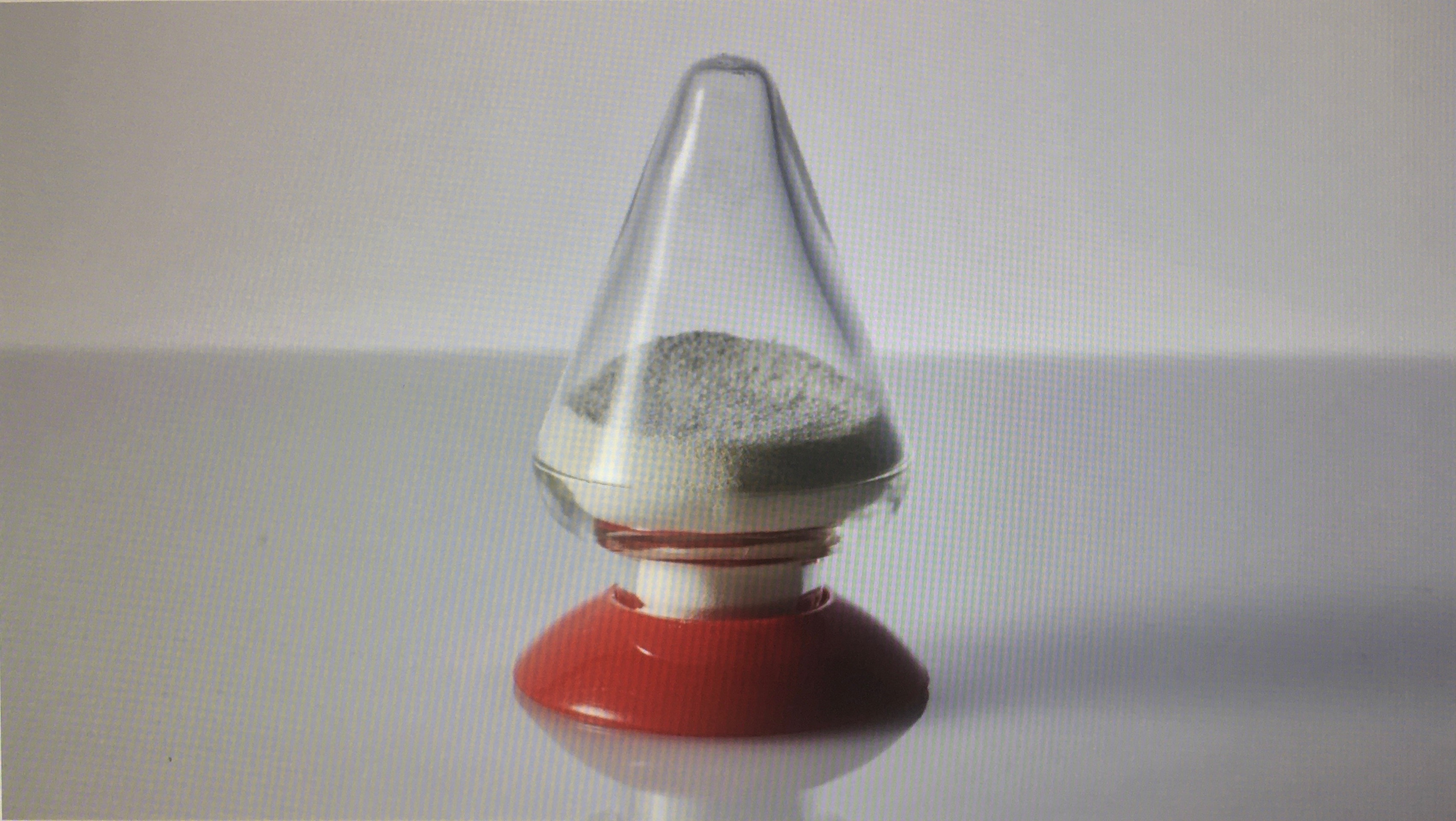
Solid electrolyte. Credit: Idemitsu Kosan. Image from PC, October 13, 2023.
Dreibelbis quotes Toyota: “This collaboration focuses on sulfide solid electrolytes, which are seen as a promising material to achieve high capacity and output for BEVs [battery electric vehicles]. Sulfide solid electrolytes are characterized by softness and adhesiveness to other materials, which is suitable for battery mass production.”
A Time Schedule. “Toyota,” writes Dreibelbis, “laid out a three-phase plan toward a goal of commercializing solid-state batteries by 2027-2028. However, that doesn’t mean solid-state EVs will be widely available at that time, as ‘full-scale mass production’ will begin after. It also remains to be seen what markets Toyota would launch them in, and how much they would cost. They are likely to be more expensive, and remain that way for years, Reuters predicts.”
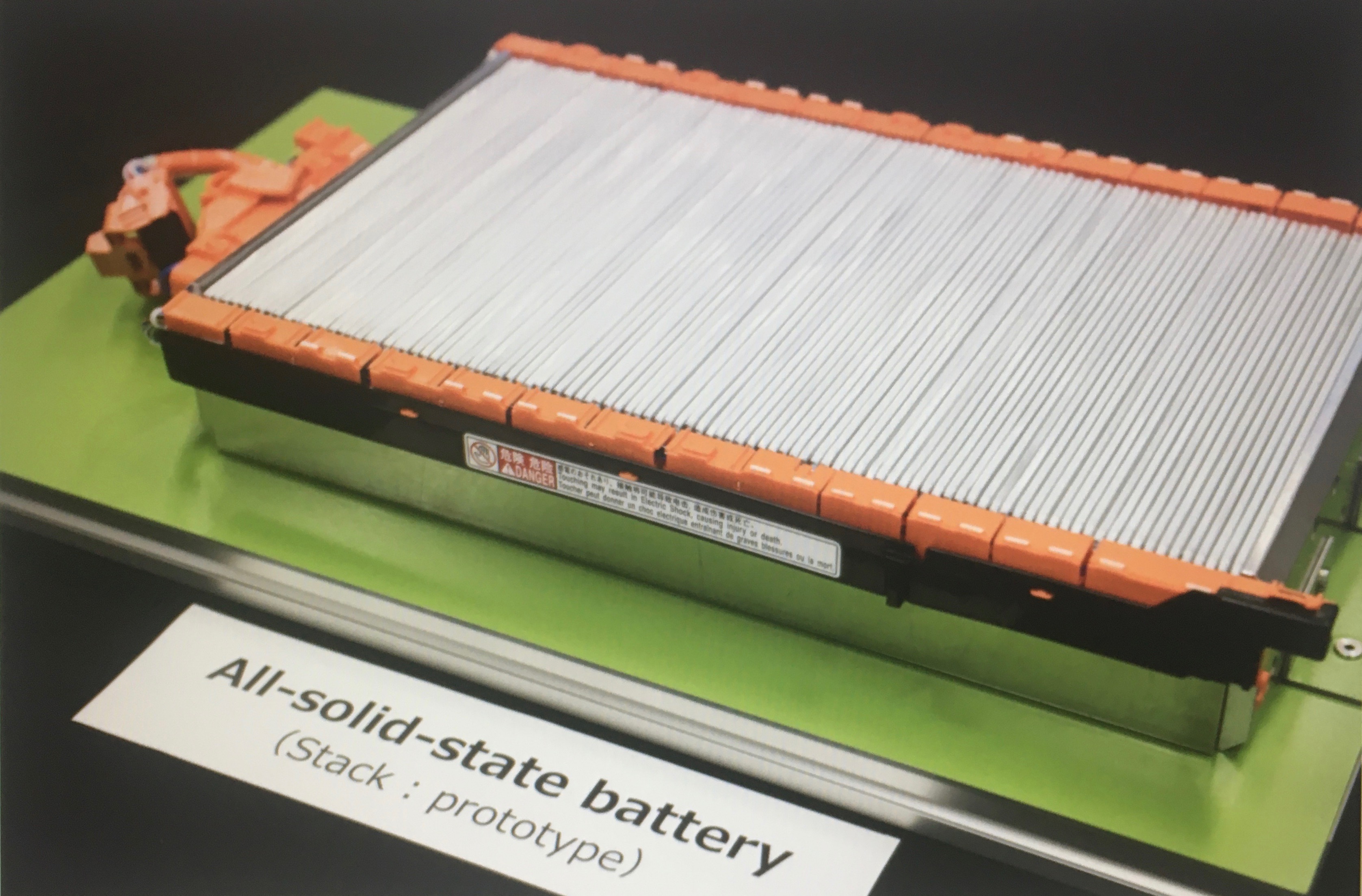
In the inevitable upscaling of such development, hybrids would seem the first Toyotas to use solid-state technology: Hybrid batteries interact with conventional engine power and thus are smaller with less heavy lifting than the BEV variety. ds
© Dennis Simanaitis, SimanaitisSays.com, 2023
 Simanaitis Says
Looks like at least one thing that has perpetually been the technology of (x) years from (whenever “now” is) may actually be acquiring a single-digit value for (x). That will be a useful change, even if it might take some years further to mass-produce the things at an affordable price. Li-ion itself took quite a few years to reach “commodity” pricing in units suitable for use in mass-market EVs, once it became available in the market.