
Simanaitis Says
On cars, old, new and future; science & technology; vintage airplanes, computer flight simulation of them; Sherlockiana; our English language; travel; and other stuff
AIRCRAFT CUTAWAYS—A VARIETY OF STYLES
THE PURPOSE OF A CUTAWAY, of course, is to reveal inner aspects of something by selectively omitting outer elements. The intent, though, depends on the audience: Is it a technical drawing explaining a design? Is it for the education or entertainment of enthusiasts? Does it exist as advertising to entice the public? Or is it just an entertaining byproduct of the medium in which it was produced? Here are tidbits of cutaways gleaned from a variety of sources. (I admire them all!)
Technical Illumination. Something as rare as a flying wing calls for a detailed description of its unorthodoxy. The Armstrong Whitworth A.W.52 is exemplary of this in 1950s British Classic Cutaways, supplement to Aeroplane magazine, January 2005.

This and the following image from 1950s British Classic Cutaways. (Click on the images to improve their sharpness.)
Artist J.H. Clark regularly contributed cutaways to Aeroplane. He also evidently knew his way around aircraft structures and dynamics. Note descriptions of laminar-flow exploitation via the craft’s boundary-layer suction system.
A Complex Aero Engine. The Bristol Centaurus is another Clark masterpiece. This engine was an 18-cylinder two-row sleeve-valve radial. Dating from 1945, the engine powered the Short Shetland flying boat.
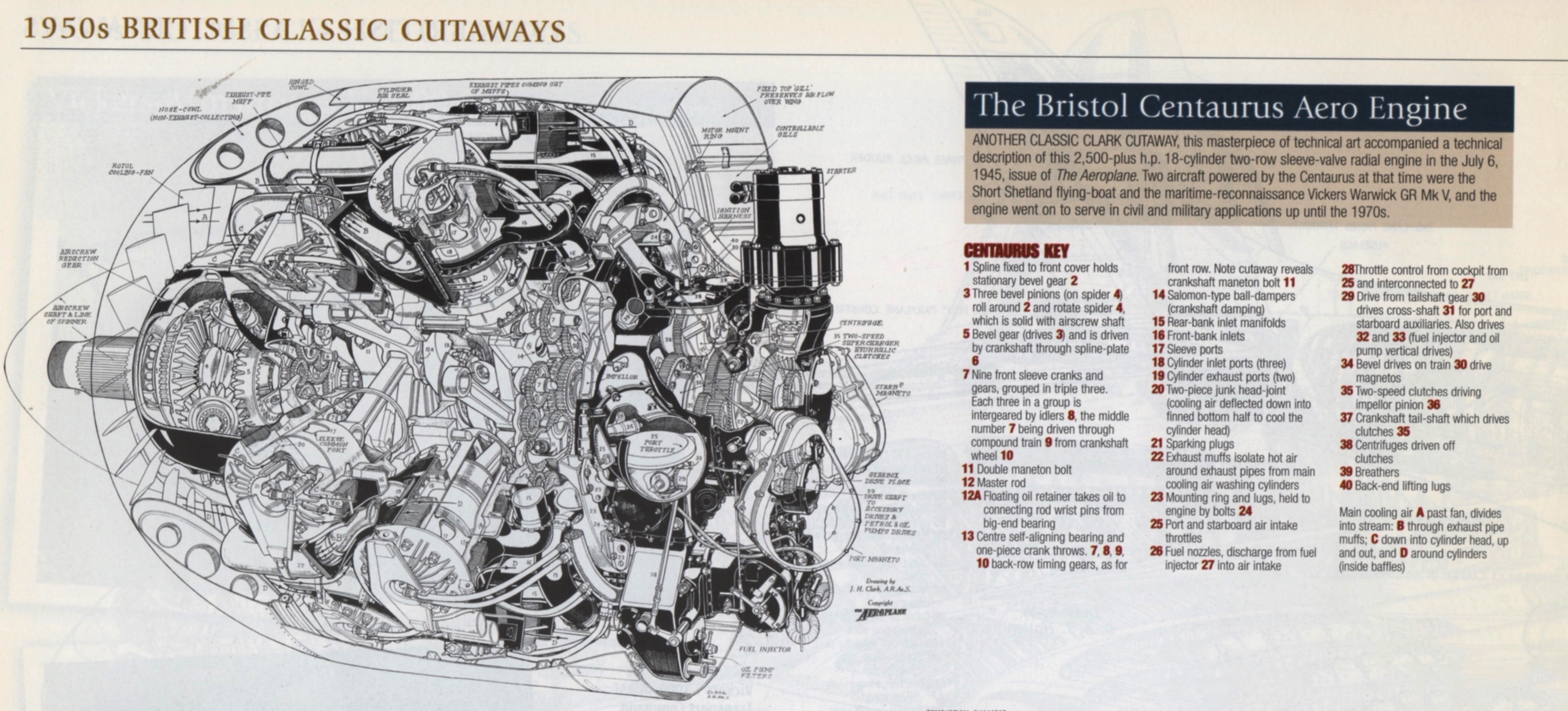
Bristol Centaurus.
Fundamental Components. A variation of the cutaway idea is identification of fundamentals showing only the elements required.

Piper Cherokee structure. This and following image from The Lore of Flight.
This second example from The Lore of Flight identifies actuation of control surfaces by a basic stick and rudder pedal system.

Simply for the Art of It. Several of the examples in Classic World War II Aircraft Cutaways are, in a sense, mood pieces capturing the spirit of the craft as well as its technical niceties. The Westland Lysander’s cutaway illustration suggests its SOE espionage adventures.
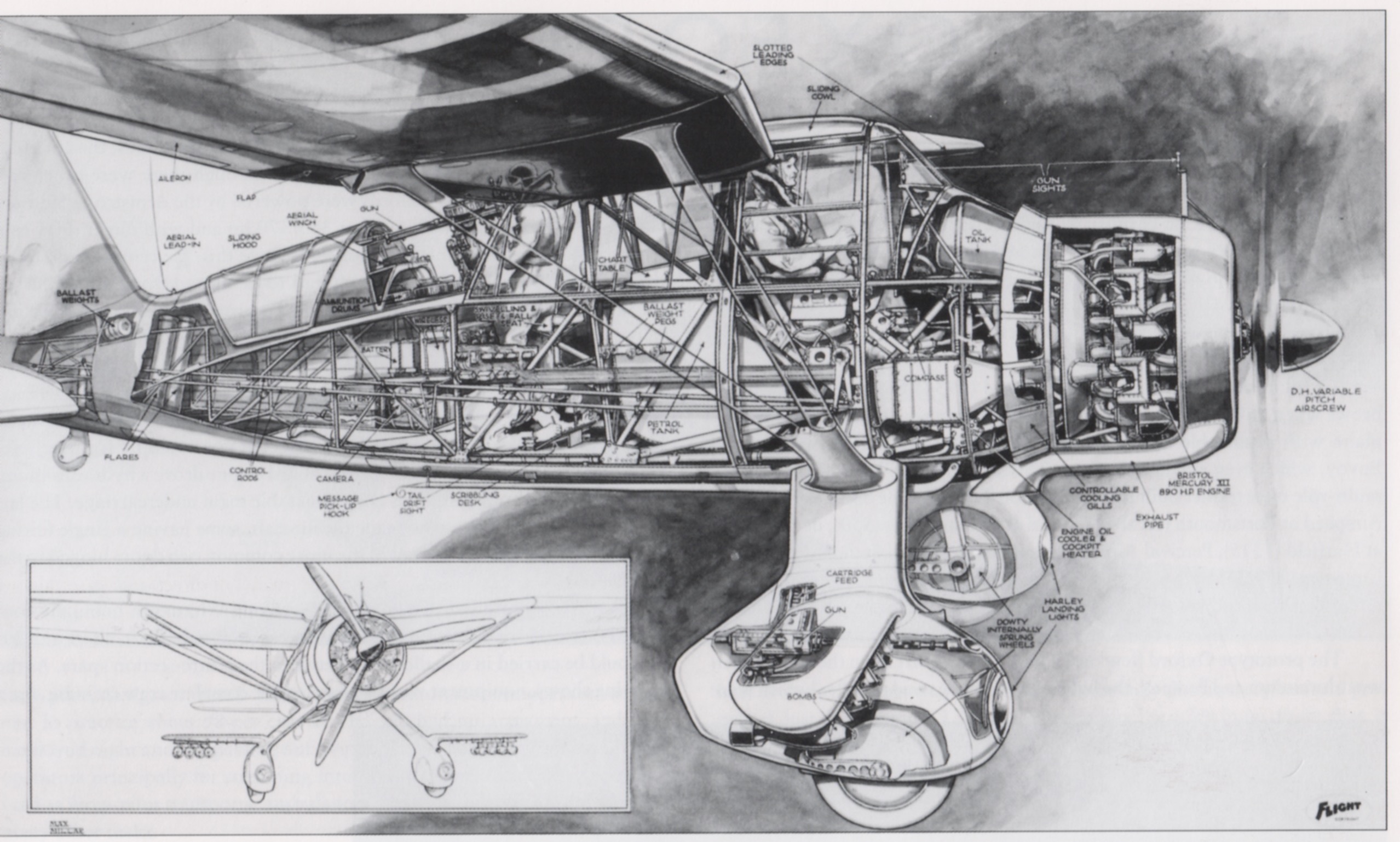
The Westland Lysander I. Image from Classic World War II Aircraft Cutaways.
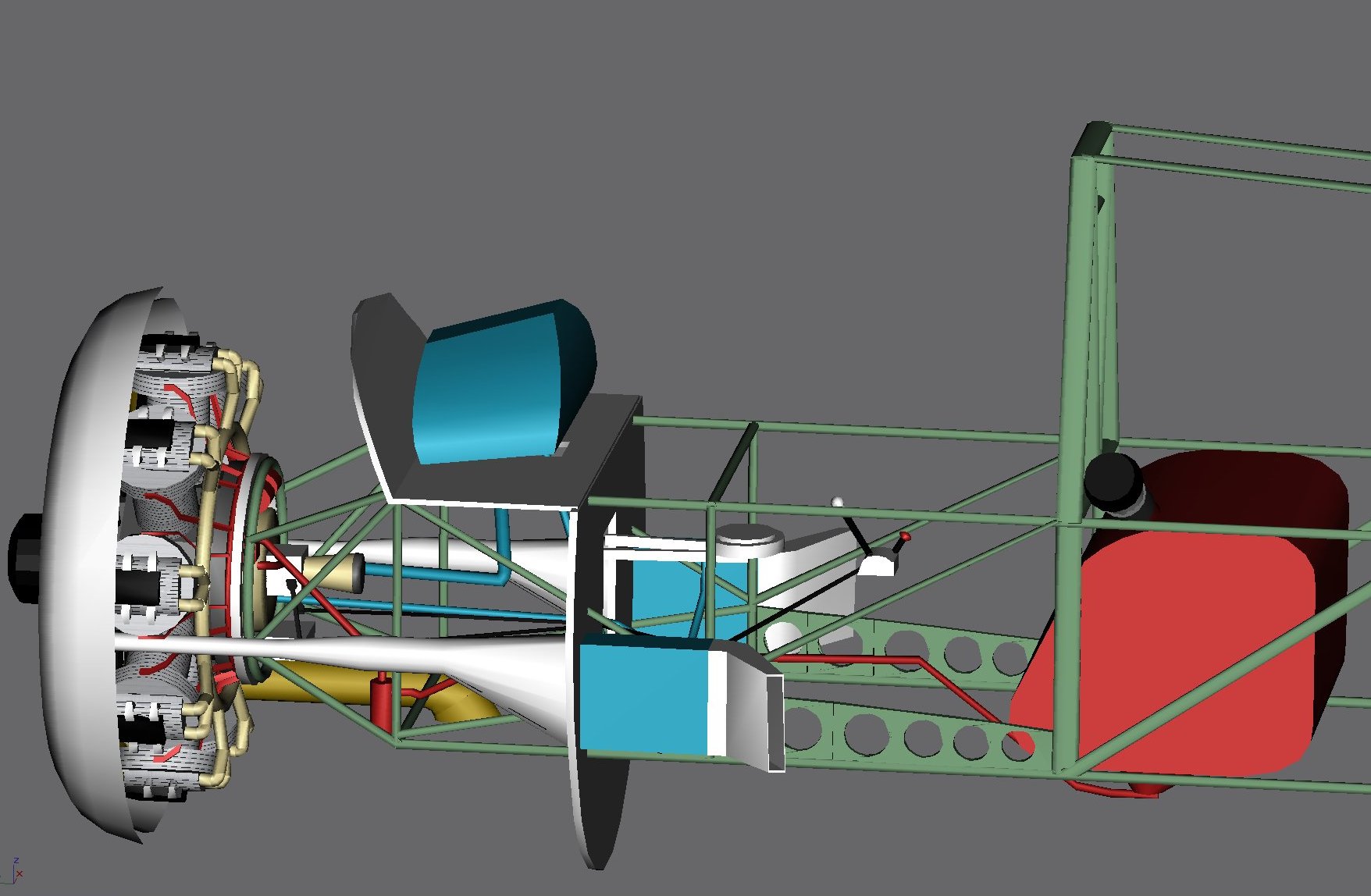
The “Lizzie” is one of my favorite aircraft, and one of my most ambitious GMax projects. Which leads me to another variation of the cutaway theme: GMax dissection.
GMax Cutaways. Once an aircraft rendering is completed, GMax cutaways are no more complex than parts deletion. I feel a bit embarrassed by simplicity of the process when I consider the immense work involved in an artist’s real cutaway.
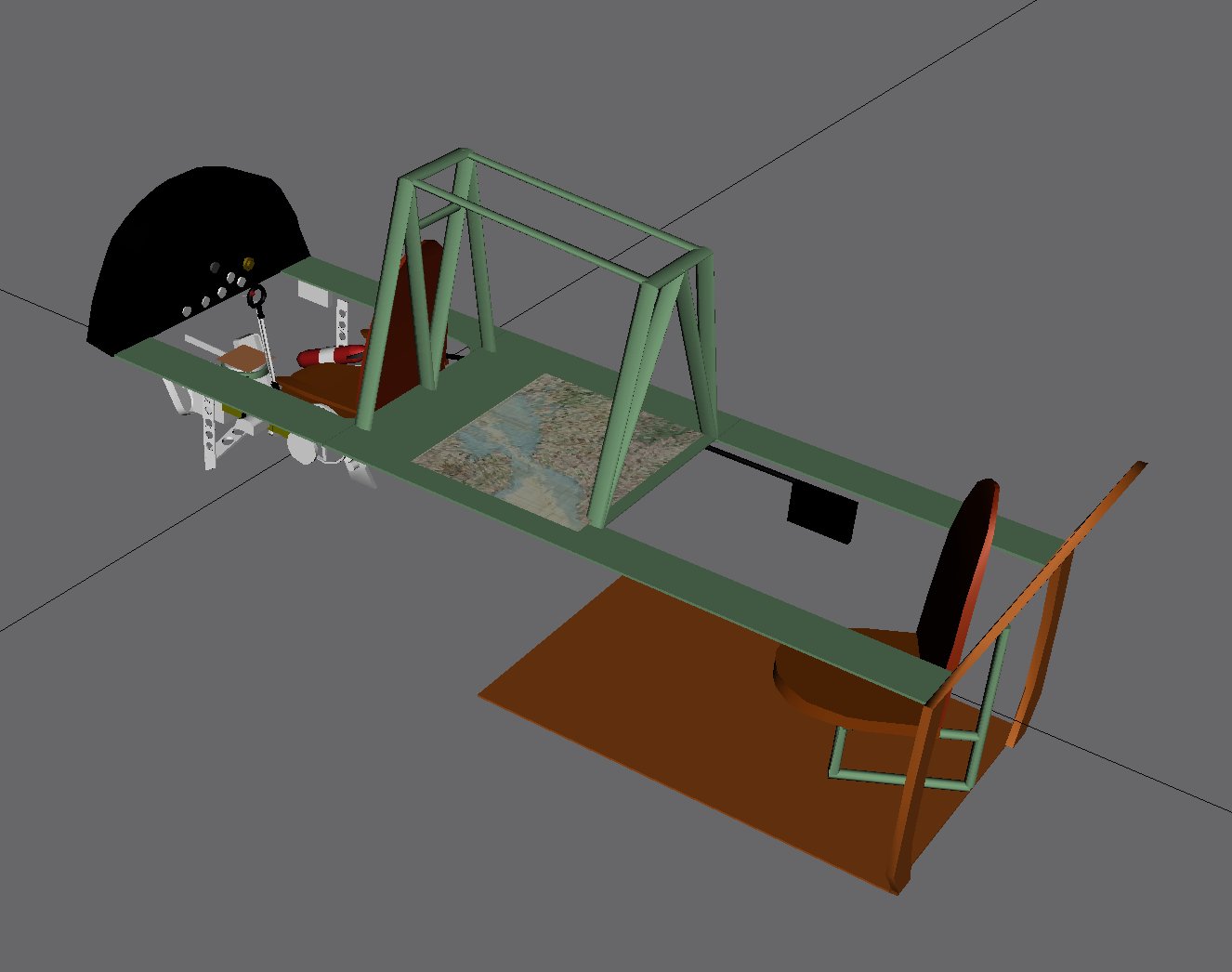
Above, my Lysander cabin in progress. Below, its propulsion hardware.
The Curtiss Condor T-32, “The world’s first sleeper plane,” was another GMax delight.
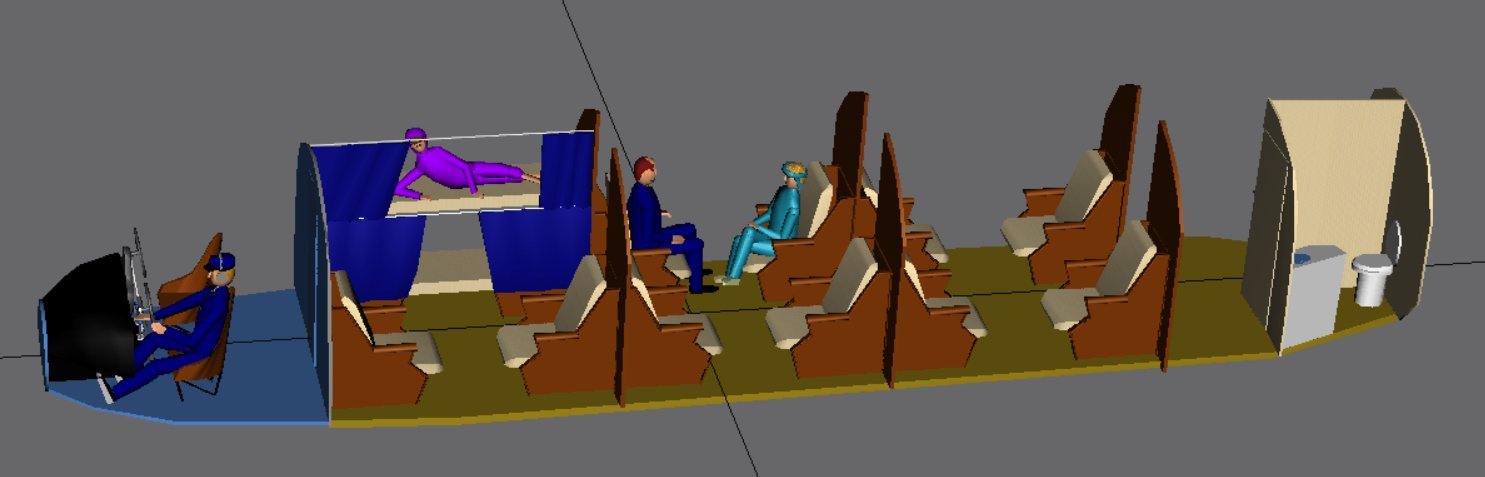
The Condor’s cabin, as seen from the left. Image from “Rendering a Curtiss Condor T-32.”
Go Traveling Now. The book Fly Now!: The Poster Collection of the Smithsonian National Air and Space Museum has many examples of advertising art related to air travel. Of course, many emphasize its glamor, but a few exhibit the technicalities of the adventure.
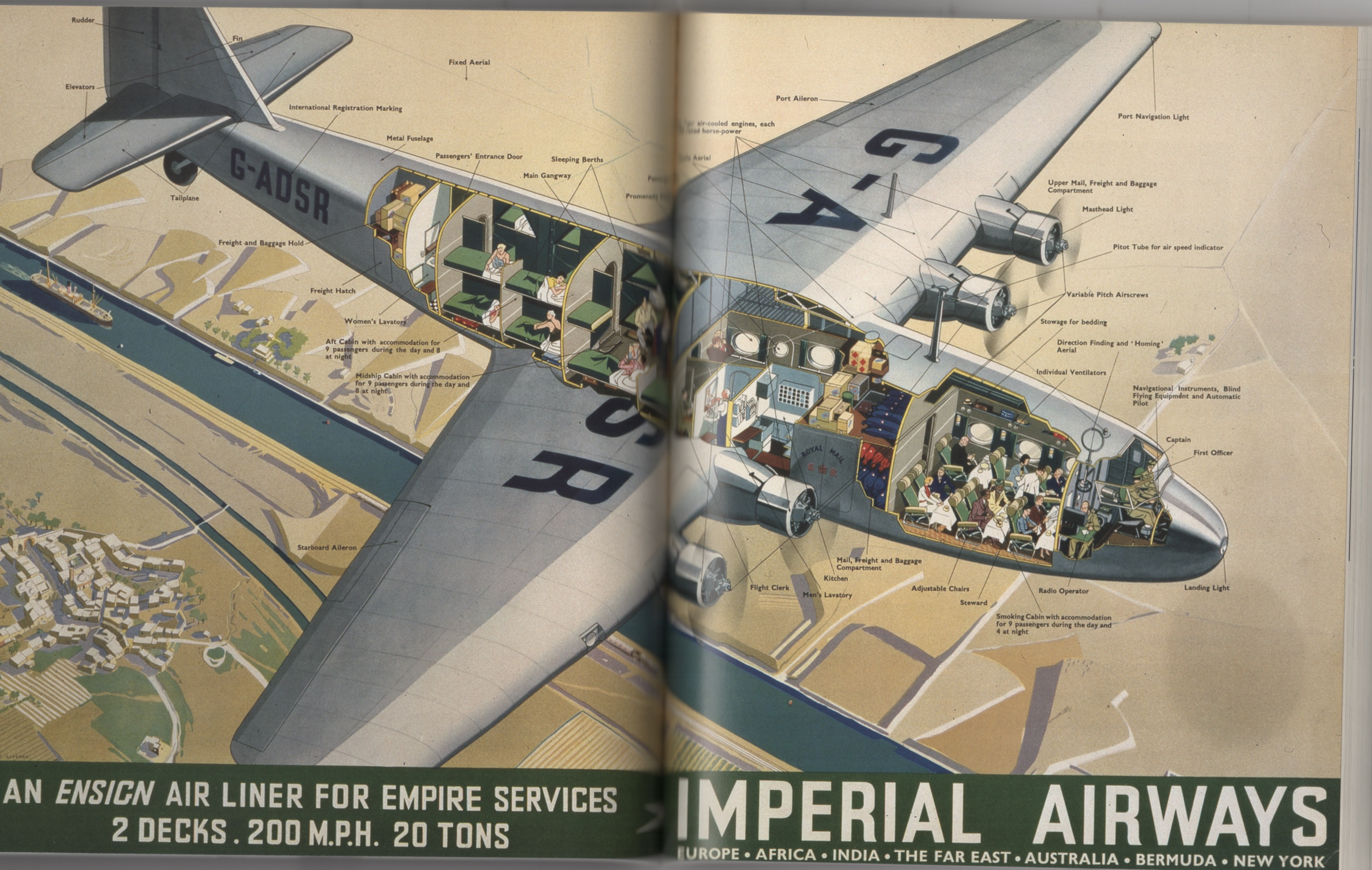
Image from Fly Now!
The Armstrong Whitworth Ensign was the largest airliner built in Britain during the Interwar period. A lot of its design reflected the input of Imperial Airways.
Foreign Cutaways. The book What’s What: A Visual Glossary of the Physical World has illustrations of everything from a Boeing 747 to a Space Shuttle, with comprehensive flight decks for both. There’s also a cutaway of the 747.
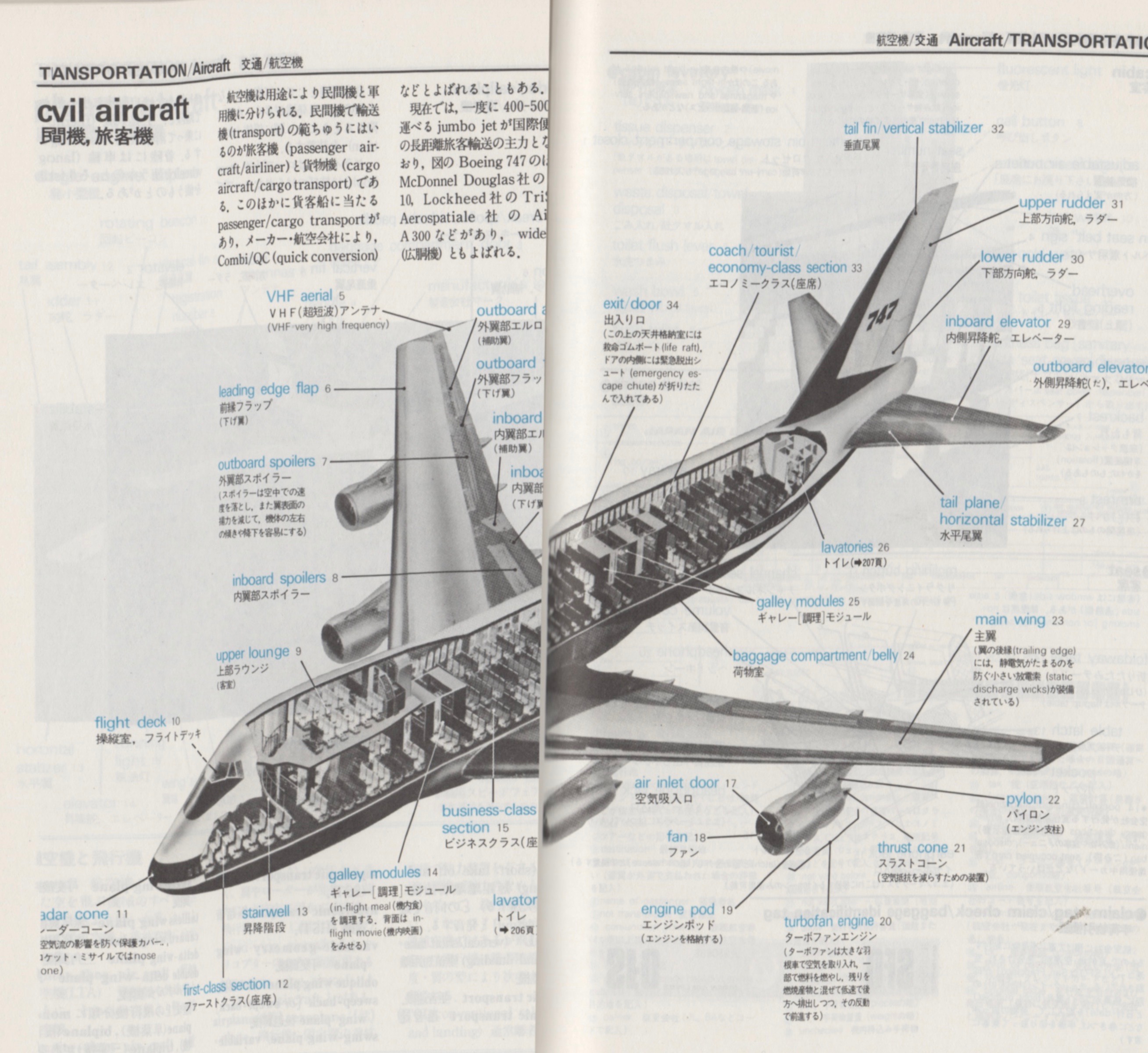
Image from What’s What, Japanese edition.
I acquired this edition on one of my Japanese adventures. In many ways it has proved a visual and linguistic delight.
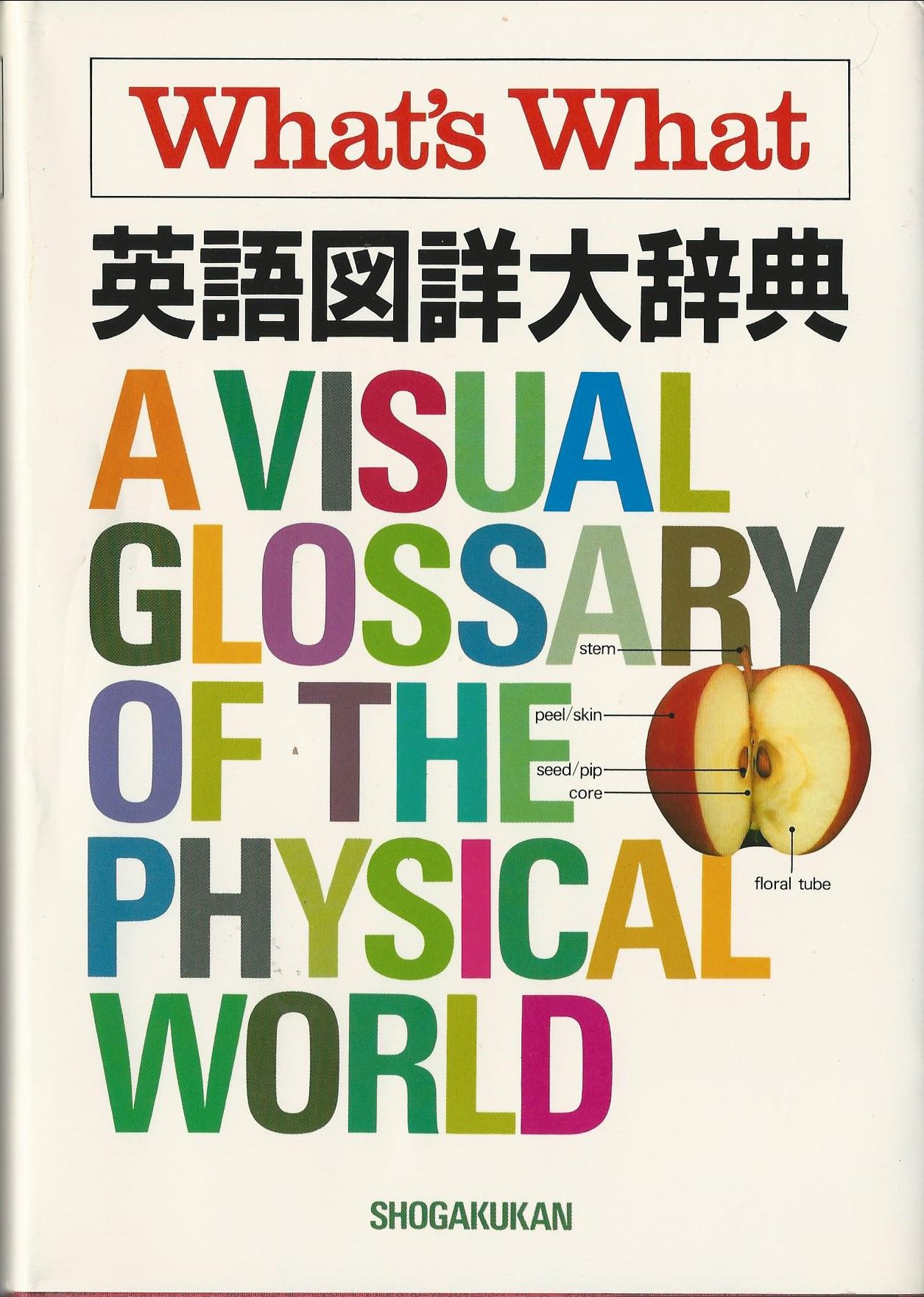
The Shogakukan edition.
The Japanese edition is a superb Japanese/English technical dictionary. All in good international cutaway fun. ds
© Dennis Simanaitis, SimanaitisSays.com, 2023
 Simanaitis Says