
Simanaitis Says
On cars, old, new and future; science & technology; vintage airplanes, computer flight simulation of them; Sherlockiana; our English language; travel; and other stuff
EVALUATING THE DE TOMASO PANTERA AND THE U.P. PART 2
YESTERDAY IN PART 1, R&T SHARED its evaluation of the 1973 De Tomaso Pantera, a Ford-engine exotic available at less than stratospheric price. Today, two women familiar to R&T readers, Dottie Clendenin and Ellida Maki, tour Michigan’s Upper Peninsula in one of these Italo-Americans that R&T called a bargain big-engine midship GT.
Dottie and Ellida Toured North. Back in the mid-60s, when Ellida Maki took a hiatus from R&T she recommended friend Dorothy Clendenin to take her place. Later Lida was to rejoin the staff and eventually continue in Dottie’s role as Managing Editor to Thos. L. Bryant. In the meantime, back in 1973 they borrowed a Pantera from the Lincoln-Mercury Division in Dearborn and headed north. Indeed, as far north as one can go and remain in the state of Michigan.
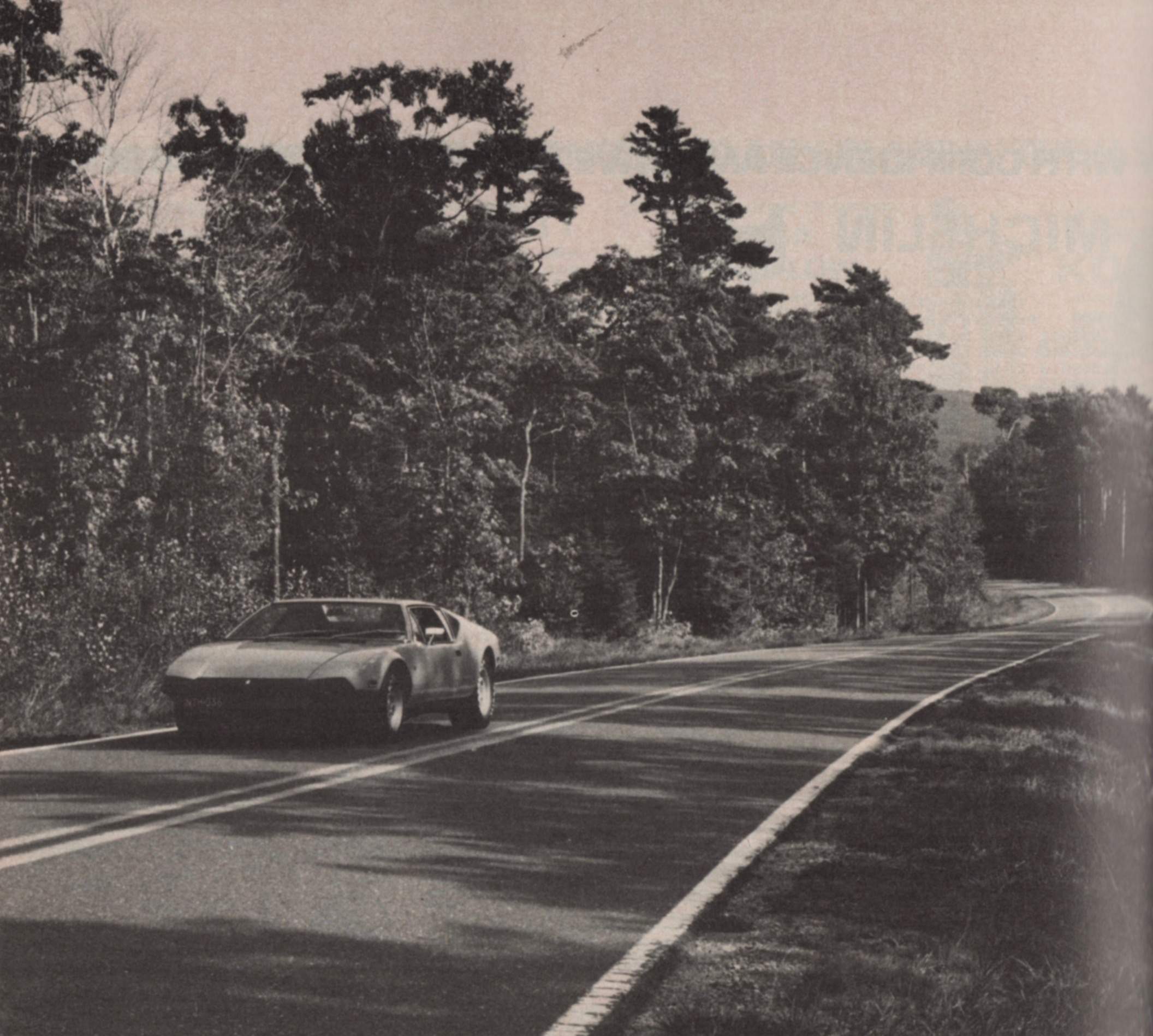
Lida is originally a Yooper, so she was a good driving companion in what Dottie said “might just as well be a crossing into a foreign country…. It is linked only tenuously to the lower peninsula of Michigan by the Mackinac Bridge. But its obscurity, sparse population, shore-to-shore trees and winding two-lane roads make it a natural haven for sports-car enthusiasts.”

Entering the U.P., they visited Mackinac Island where “Cars are banned… so one either walks, rents a bicycle or horse or takes one of many horse-drawn carriages passing by.” While on the island, they visited the Grand Hotel, “Built of Michigan white pine in 1887 to promote train travel. It’s the world’s largest summer hotel and has the world’s longest porch (more than 800 ft).”
I’ve never been, but recall the hotel fondly from the wonderful time-travel flick Somewhere in Time, 1980.
Diverse Cuisines. “The U.P charm,” Dottie wrote, “owes much of its charm to the native population. Scandinavians, Italians, Cornish, Indians, and French blend their old customs with modern life styles. Finnish sauna buildings (some of them built with logs) dot the landscape, and nearly every small town has shops selling Cornish pasties or Italian sausage sandwiches.”
My kinda touring.
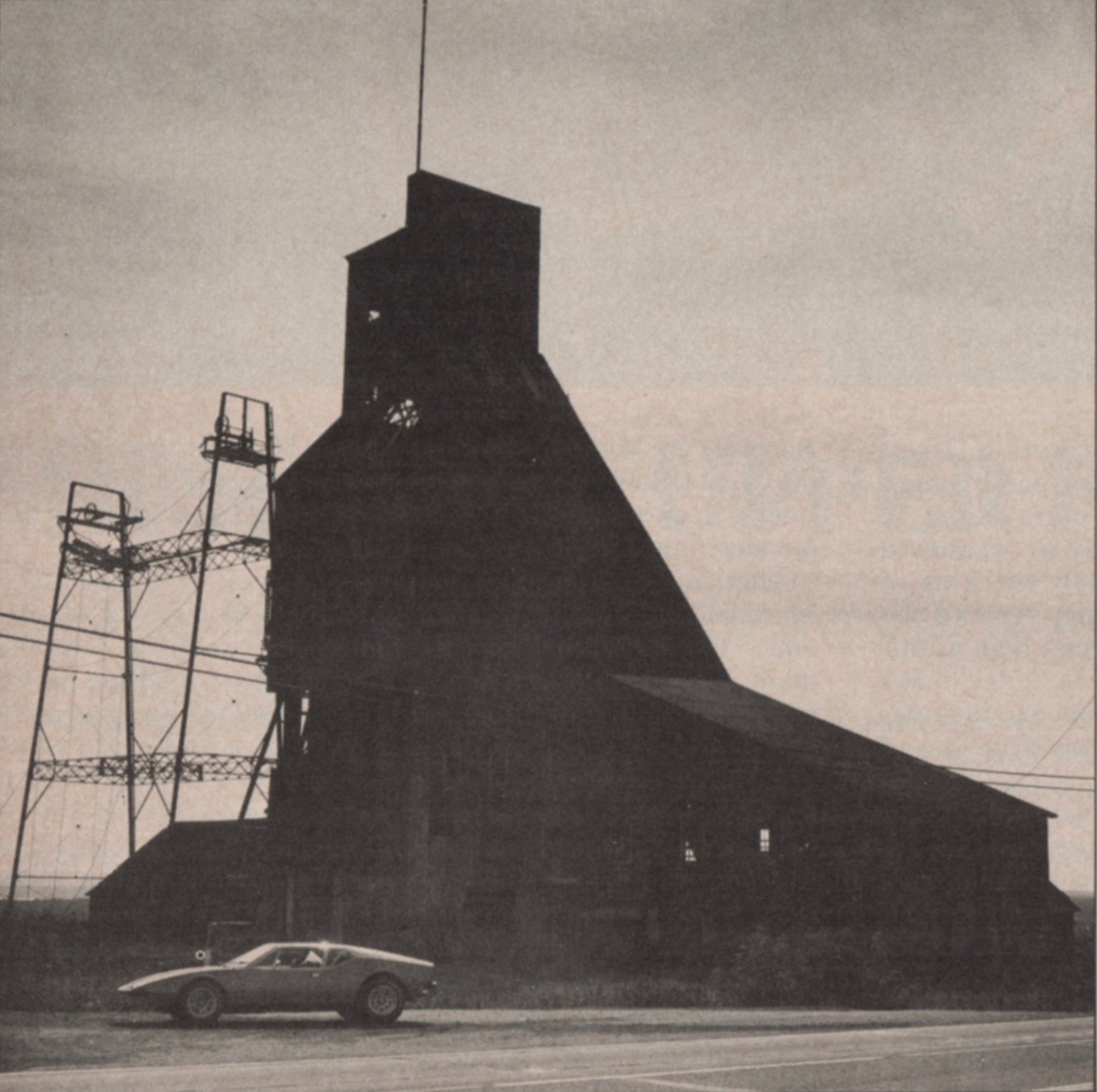
Enjoyable, Solitary Driving. “From any point in the U.P. you can be assured of miles and miles of good two-lane roadways which lead through endless woods by rivers and lakes.… I didn’t see any traffic enforcement, but the plethora of wild animals makes caution a must.”
A Memorable Bishop. “L’Anse is at the bottom of the Keweensay Bay (pronounced Key Waa Naw),” Dottie wrote, “and has a statue you simply must see to believe. Follow the signs to the Bishop Baraga Shrine; it (or he) is on a bluff above the bay.”

“Rising six stories in the air and supported by five arching beams set in modernistic cement teepees is Bishop Baraga in brass, standing on a stainless steel cloud with snowshoes (26 ft long) in hand.”
“Bishop Baraga,” Dottie said, “came to the U.S. in 1830 and devoted his life to helping the Indians of the Upper Great Lakes. He wrote a Chippewa grammar and dictionary…. I’ll never forget Bishop Baraga.”
Once an Editorial Associate, and then a Managing Editor, always an editor at heart.
A Real Driving Challenge. Dottie concluded her Sports Car Country story with “It would take a whole summer to visit every point. The best time to tour the area is, of course, during the summer and autumn months, but if you really want a driving challenge, try it in mid-January.”
Not, I would suspect, in a Pantera. ds
© Dennis Simanaitis, SimanaitisSays.com, 2023
 Simanaitis Says