
Simanaitis Says
On cars, old, new and future; science & technology; vintage airplanes, computer flight simulation of them; Sherlockiana; our English language; travel; and other stuff
A FATHER’S DAY GMAX INSPIRATION PART 2
THE FLYING CARPET OF Daughter Suz’s Father’s Day card inspired me to model the Cessna XMC (eXperimental Magic Carpet). Yesterday we looked at the real (single) XMC and (five of its related) Anderson Greenwood craft. Today in Part 2, we’ll examine the XMC’s GMax rendering.
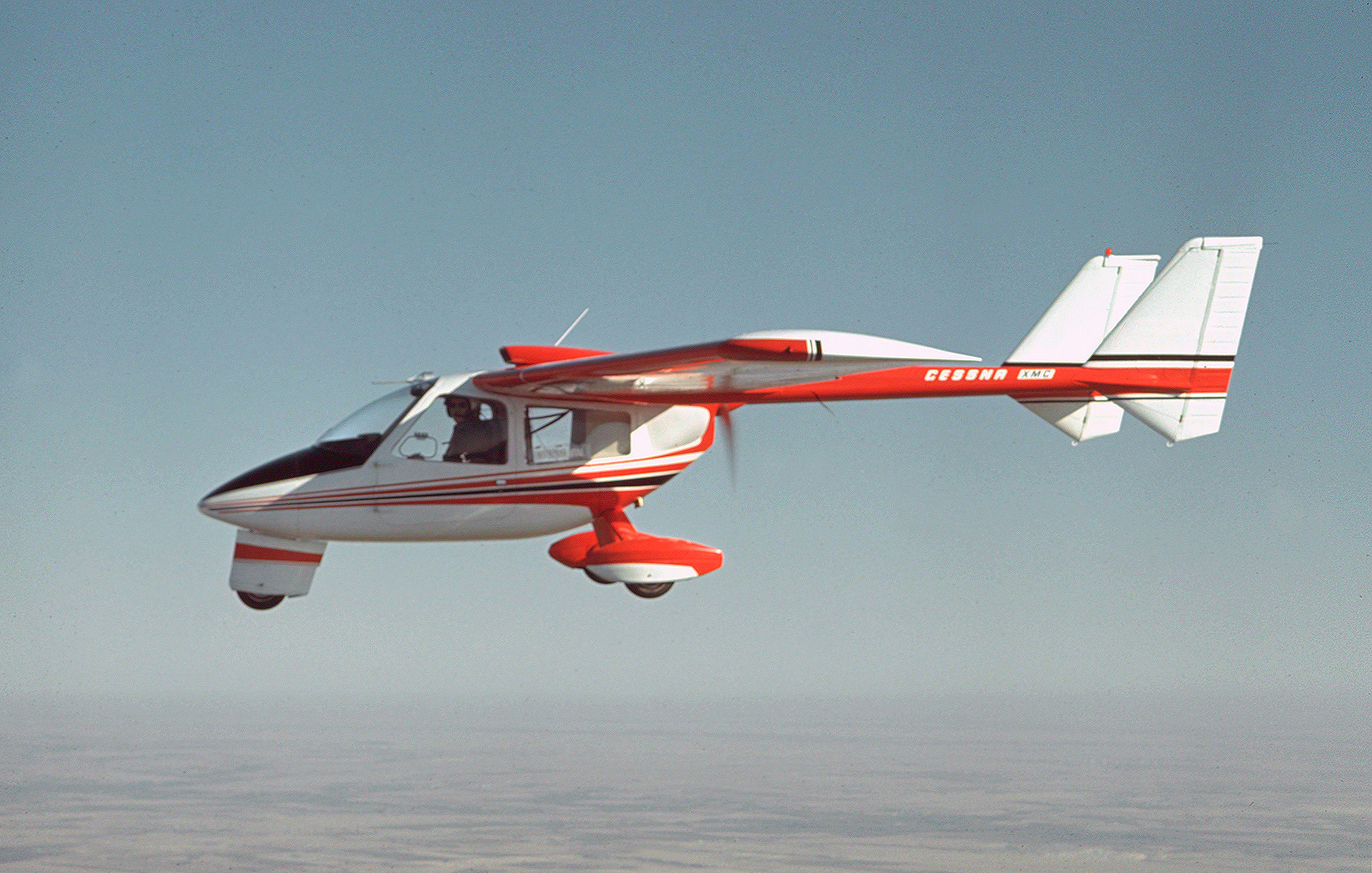
Above, the real Cessna XMC. Below, my GMax model at its Brooklands construction site (used for grass-field contact points definition).

A Complex Fuselage. The XMC’s sleek profile and extensive greenhouse proved a challenge to GMax’s Boolean operations. Typically A-B Boolean modeling is used for windscreen, windows, and other aircraft openings. But the operation isn’t especially amenable to heavily compound surfaces such as those displayed by the XMC’s fuselage.

The fuselage ended up being composed of several parts: windscreen/fuselage/doors/air scoop/engine cover/hatches/aft, with lots of patching and individual panel fabrication from GMax Box elements.

A Cessna Flying Carpet. The XMC was a two-seater arranged side by side, so both pilot and pal have controls. The aft portion of the cabin is devoid of details. I imagine the real craft’s experimental nature would have used this space for test hardware.

An XMC Flying Carpet.
The Continental O-200. Power for the XMC came from an engine familiar to many light planes, the four-cylinder opposed air-cooled Continental. I had excellent sources for this powerplant, albeit all in its usual tractor, not pusher, layout.
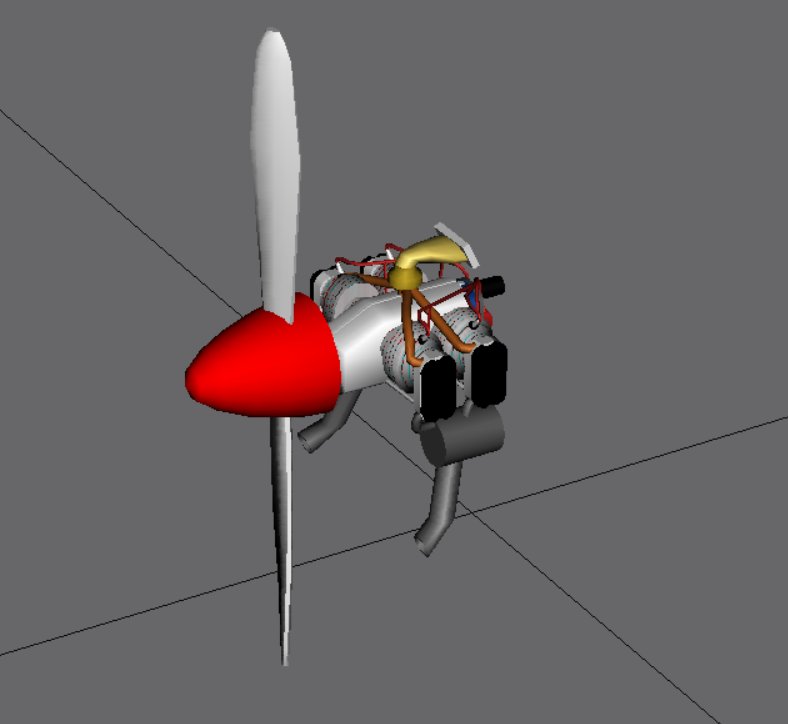
XMC pusher engine.
Typical tractor Continentals have their carburetion hardware below the block, with air intakes in the aircraft’s nose. Given the XMC’s wing-mounted air scoop, I remounted carburetion atop the block with its air cleaner a direct shot aft of the scoop. Also, I made a guess on the two engine hatches. (The Anderson Greenwood had a single one pivoting forward.)

Flight Dynamics. A Microsoft Flight Simulator craft’s flight dynamics reside in an xxxx.air file, which means it’s possible to endow a Piper Cub with a Lear Jet behavior (or, as I exhibited in an early tutorial, construct a flying brick).
The XMC’s flight dynamics are shared with the default Cessna 172SP’s. One essential difference is locating the engine’s response correctly aft.

My XMC is a sweet-performing craft. Of course, it behaves much like a 172, one of the world’s most popular private aircraft.
The Real XMC Test Program. Wikipedia notes a three-phase program for Cessna’s evaluating the XMC: January 1971, ground handling, flying characteristics, and visibility testing; May 1971, exploring methods of reducing weight and production costs for single and twin-engine Cessnas; and June 1972, use of a shrouded propeller to test improvements in propeller efficiency and reduction of noise.

The real XMC in ducted configuration.
My Ducted GMax Rendering. It was easy transforming my XMC into a ducted variant: Simply attach a suitably rendered GMax Tube element.

The GMax ducted configuration.
By the way, this craft is, in a sense, the third of my ducted renderings; the others being the Miller Texas Gem and, in something of a reductio ad absurdum, the Stipa-Caproni.
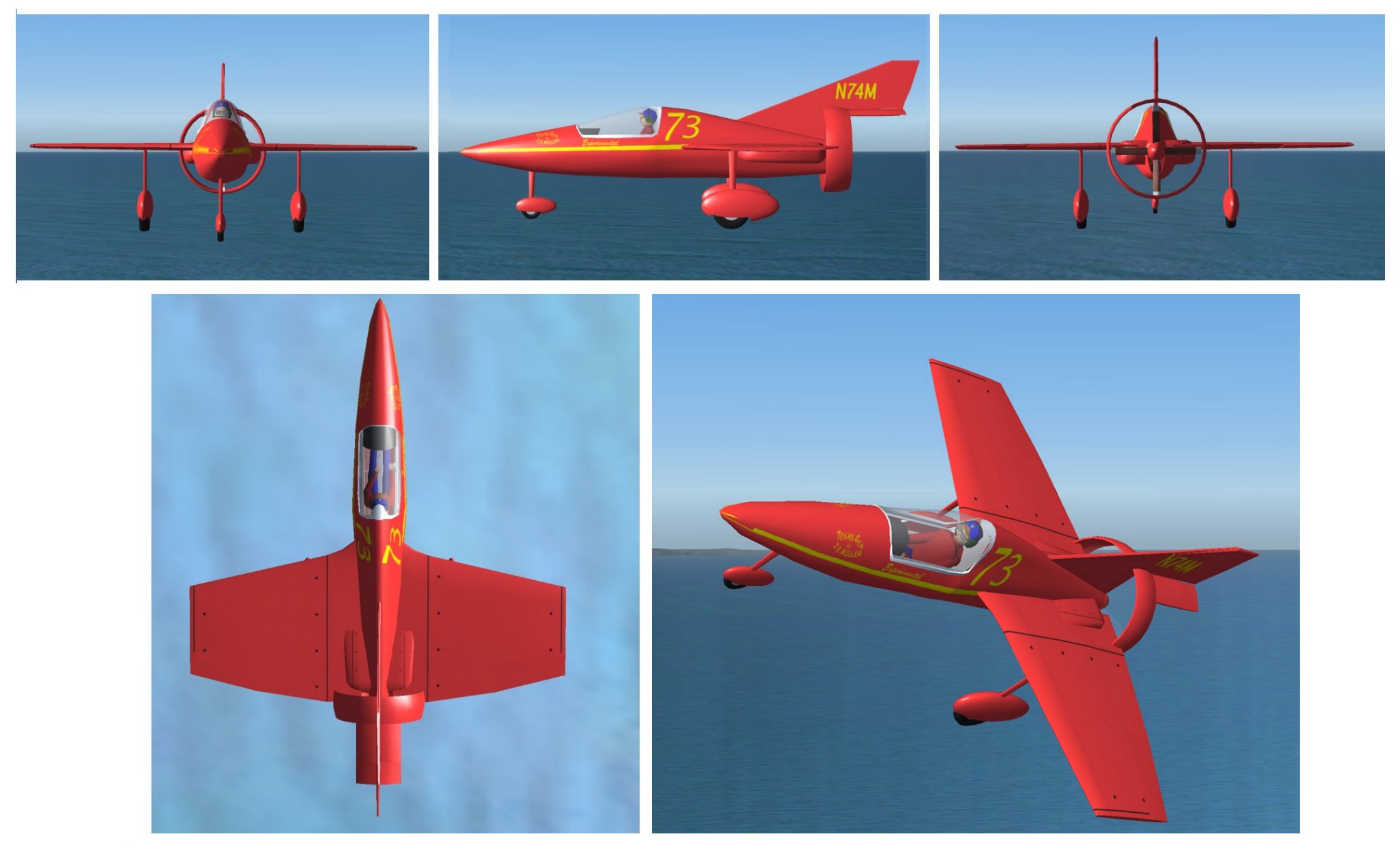
Above, the Miller Texas Gem. Below, the Stipa-Caproni.

All in good fun of GMax modeling. ds
© Dennis Simanaitis, SimanaitisSays.com, 2023
 Simanaitis Says
Thank reader Tom T. for catching my “tandem” snafu. Corrected now.