
Simanaitis Says
On cars, old, new and future; science & technology; vintage airplanes, computer flight simulation of them; Sherlockiana; our English language; travel; and other stuff
HE’S NO 007, BUT…. PART 1
IN HIS BOOK SIDNEY REILLY: MASTER SPY, author Benny Morris recounts, “Ian Fleming once said that ‘James Bond is just a piece of nonsense I dreamed up. He’s not a Sidney Reilly, you know.’ ”
However, in “Lives of Reilly,” London Review of Books, August 10, 2023, reviewer Thomas Jones says, “But it’s just as true that Sidney Reilly wasn’t James Bond: in Fleming’s novels (and even more in the films based on them), 007’s individual actions make all the difference. Bond’s secret missions save the world, or at least preserve the status quo. Yet even on Morris’s Reilly-centred account, it isn’t clear that the course of early 20th-century history would have run any differently if Sidney Reilly had never existed, or if Sigmund Rosenblum had never left Odesa.”

Here are tidbits gleaned from Jones’ LRB review on this singular personage, together with my usual Internet sleuthing.
The latter includes Wikipedia, which, pointedly, cites August 9, 2023, as its most recent update. Wikipedia’s extensive item includes 160 citations, 18 Online sources, and 41 Print sources. The arrival of another update is likely because neither Morris’s book nor Jones’ review is cited.
Talk about the latest scoop.
Birth of a Spy. Jones notes, “Sidney Reilly, the British spy who could charm almost anyone and talk his way out of (or into) almost anything, was born sometime in the early 1870s, probably in southern Ukraine (either Odesa or Kherson), probably with the name Sigmund Rosenblum.”
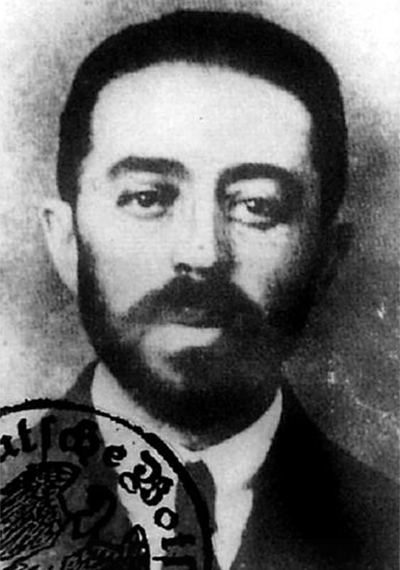
Youth. “By the time he was in his teens,” Jones writes, “Sigmund (or Shlomo or Salomon or Georgi) was living in Odesa with his mother and one of his sisters, his parents having separated…. They spoke German and Polish at home, rather than Yiddish, and he went to a Russian-speaking school. He also learned English and French. He later claimed to have studied maths and physics at Odesa University, though he also said he studied chemistry in Vienna, and there’s no record of his having done either.”
The Boole Affair. Jones picks up the trail: “In December 1895 he reappeared in Paris, where ‘he probably made some money by serving as an informant for the Okhrana [the Tsarist secret police].’ On Christmas Day, two anarchist couriers were robbed and murdered on a train to Fontainebleau. One of their assailants was said to have looked like Rosenblum.”
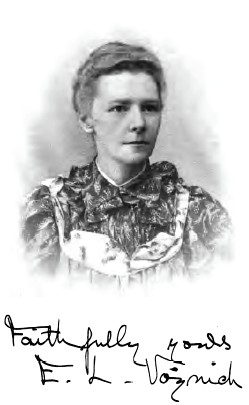
“A few days later,” Jones recounts, “he was in London, with plenty of money to splash around. He took rooms in Lambeth, refreshed his wardrobe and found work as an art dealer with Wilfrid Voynich, a one-time Polish-Lithuanian revolutionary who had escaped from Siberia in 1890…. In 1902 Voynich married the novelist Ethel Boole (daughter of the mathematician and logician George Boole), but they were already living together in 1895. ‘It is likely that Ethel and Reilly became lovers,’ Morris writes, and the hero of her novel The Gadfly (1897) may have been based on him.”

The Thomas Affair, Briefly. Next, Jones describes, Rosenblum (his likely moniker at the time) “set up a couple of patent medicine businesses, flogging a range of ‘Tibetan remedies’ and various opium, cocaine or alcohol-based cure-alls. He was also still—or again—working for the Okhrana, who gave him the codename ‘Khimik,’ and he soon took up with the British security services too.”
Jones continues, “Soon afterwards he met Margaret Thomas, the much younger Irish wife of a rich Welsh clergyman. Reverend Thomas died in March 1898, leaving his estate to his pregnant widow. In August that year, no longer pregnant, she married Sigmund Rosenblum at Holborn Register Office. The following summer, in part to escape an investigation by the Russian authorities into a gang of ruble counterfeiters he was involved with, he got a British passport in the name of Sidney Reilly and presumably left the country, disappearing from the record until he resurfaced five thousand miles to the east, at Port Arthur, in 1901.”
Tomorrow in Part 2, we turn to Wikipedia for an expanded view of the Thomas Affair. ds
© Dennis Simanaitis, SimanaitisSays.com, 2023
 Simanaitis Says
You have me anxiously waiting for the next issue or reel to drop!
Thanks,
>
Thank you, Tom, for your kind words. Actually, my two-parters may be cliff-hangers, but mostly they’re because I sense my readers prefer short, to-the-point items rather than ambling articles. (I know that I do in my online reading.)
Great research Dennis. Reilly Ace of Spies is my fav video of all time.
Tom
Sent from my iPad