
Simanaitis Says
On cars, old, new and future; science & technology; vintage airplanes, computer flight simulation of them; Sherlockiana; our English language; travel; and other stuff
GROUND-SOURCE HEAT PUMPS
ISABELLA O’MALLEY’S ARTICLE describes “Little-known but efficient, a different way to heat and cool your house,” AP News, July 13, 2023. It’s about ground-source heat pumps, their function related to, but differing from, conventional air-sourced devices.

Here are tidbits gleaned from O’Malley’s article together with my usual Internet sleuthing and, this time, my own first hand experience.

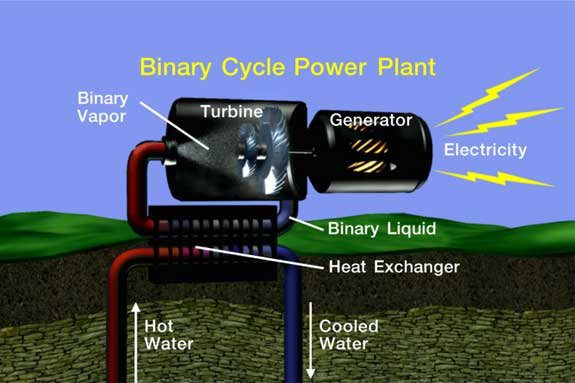
Iceland’s Geothermal Heating. The term “ground-source” reminds me of Iceland, the country exploiting geothermal energy for a significant portion of its almost totally renewable energy consumption. This North Atlantic country is located at the junction of the Eurasian and North American tectonic plates, favorably for extracting heat from underground thermal ponds. Reykjavik’s streets and sidewalks are kept ice-free through recycling of its hot-water home heating. The country derives significant electricity from geothermal means as well.
Air-source. O’Malley describes, “The units you see that look like box fans outside homes and businesses are the more common air-source heat pumps. They wring energy out of outdoor air for heat and soak up excess heat indoors and move it out when they’re cooling. Geothermal heat pumps use underground temperatures, instead of outdoor air.”
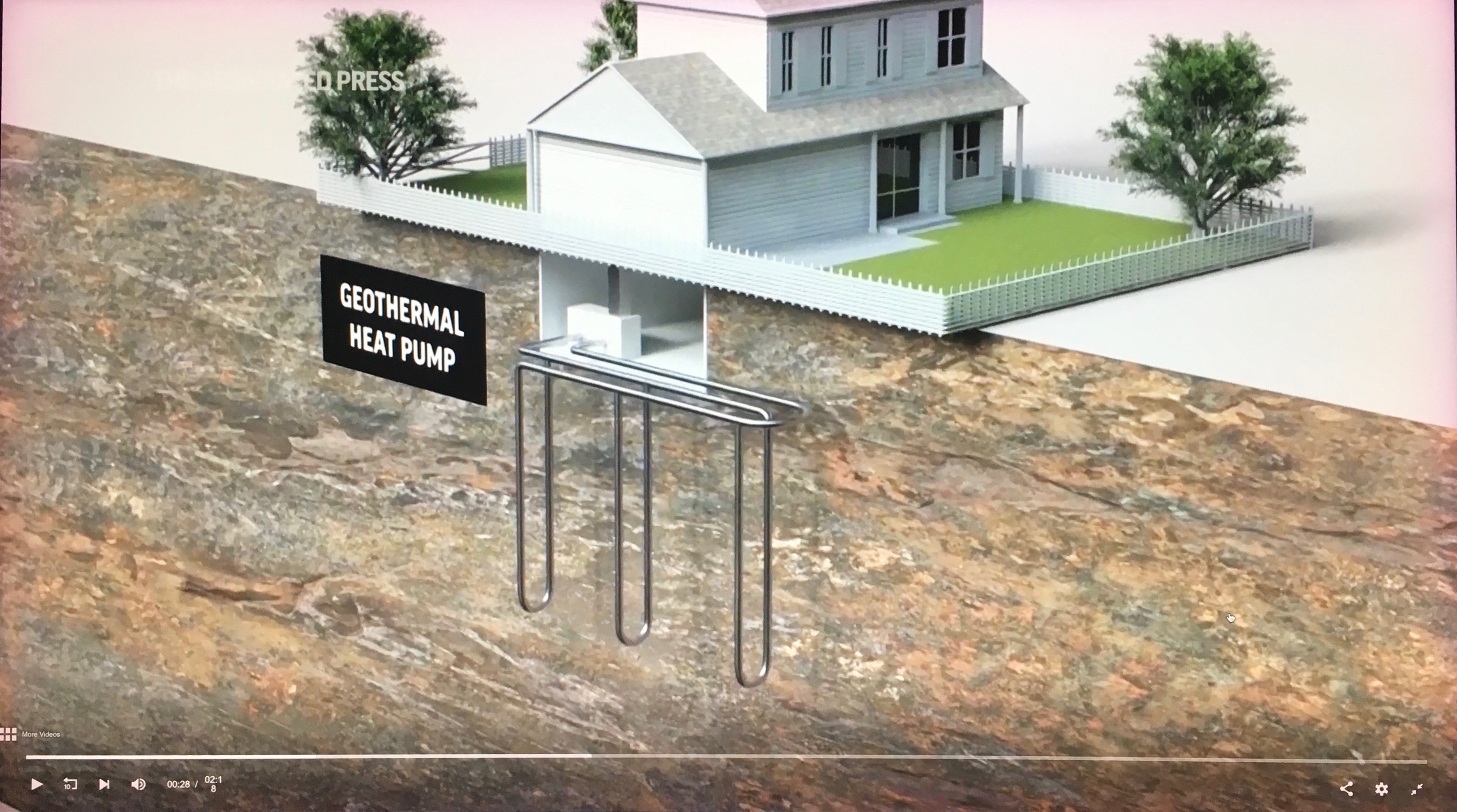
Ground-source. “To install ground-source systems,” O’Malley says, “contractors bring in heavy equipment and drill to bury a loop of flexible piping several hundred feet deep in your yard. Water flowing through the loop takes advantage of the underground temperature, a pretty stable 55 F.”
O’Malley continues, “Indoors, often in the basement, a unit contains refrigerant—a fluid that can easily absorb a lot of heat. In summer, the water in the loop dumps heat into the ground. In winter, it pulls heat from the earth with amazing efficiency and moves it indoors.”
O’Malley observes, “People who live in places with cold winters and hot summers reap the biggest savings. Still, leaders at three companies interviewed cited initial cost as a barrier.”
A Downside. Installation is a non-trivial endeavor: One builder told O’Malley that “systems can be put in yards as small as 15 by 15 feet…. But the drilling rigs can’t get in where homes are really close together.”

Sticker Shock, But Tax Credits. O’Malley cites, “The sticker prices for ground-source are higher than traditional systems. But in a stamp of approval for their efficiency, last year’s Inflation Reduction Act highly incentivizes them, with a 30% tax credit. So a customer purchasing a $30,000 system would end up paying $21,000. If someone doesn’t owe enough taxes in one year to benefit from that, they can carry it over to the next year. Nor is there any dollar limit on the credit, unlike for air-source units, which are capped at a $2,000.”
She also notes that some states, South Carolina, for example, offer sizable credits for ground-source installation.
Operational Savings. O’Malley quotes one specialist noting that “Ground-source heat pumps average about 30 percent less electricity use than air-source heat pumps over the course of the heating season.” An Ontario, New York, homeowner told her that cooling the house (“typically 69 or 70 F”) cost perhaps $10/month and, even in the coldest winter month, the highest heating bill was around $70.
Ground-source from the Get-go. Ground-source specialists are working on partnerships with home builders, the idea to install geothermal instead of natural gas at 100 or 200 homes at a time. A specialist told O’Malley, “We really feel like we’re on the right side of a megatrend.” ds
© Dennis Simanaitis, SimanaitisSays.com, 2023
 Simanaitis Says
Brilliant. Profound thanks for this. One of the downsides of our lives playing with vintage internal combustion cars are so many of our fellows pooh-poohing green efficiency–even seeing it as some threat — wanting to live in a past not as rosy as they imagine. I may revere Vivaldi and Chopin, but do not want to live in 1730 or 1830.
I may’ve mentioned in one of your hydrogen features talking with the president of a large US solar company a few years ago, who recounted visiting German engineers puzzled why we trail not just Spain, but cloudy Germany.
Sadly, spoilt by being on a huge continent still seen as inexhaustible cornucopia, Americans remain wastrels. Friends in a huge upscale apartment building are warned by the management not to hang clothes to dry on their balconies even at the rear of the building; apparently a declasse look to hybrid- and Tesla-driving yuppies.
We put 40 solar cells on the barn roof. Sunk a heat ex-changer the size of a truck in the pond next to the house.A large heat pump in the cellar fed by the pond. Told them no air condition. They said no choice. They were right.
Before taking the plunge you should check out “Bodge Buster”, a book designed to guide homeowners through the complexities of air source heat pump installations. It addresses the increasing issue of inadequate installations in the UK’s air source heat pump sector. This concern is significant in the field of renewable heating, where a rise in poor installations has led to discontent and skepticism about the reliability of this technology.
https://myhomefarm.co.uk/bodge-buster-heat-pump-guide-book
Think I told you that five years ago we put 40 solar cells 0n the barn roof. Have a large pond next to the house. Put a large heat exchanger in it. It feeds a heat pump in the cellar of our 1810 Federal farm house. Has worked fine. The heat pump does draw a lot of power. John