
Simanaitis Says
On cars, old, new and future; science & technology; vintage airplanes, computer flight simulation of them; Sherlockiana; our English language; travel; and other stuff
AIRPLANE DOUBLE FEATURES PART 2
GEE, THERE HAVE BEEN A BUNCH of good airplane flicks, whether viewed one by one or paired as double features. Here in Part 2, we serve a stint in World War II and then attempt some desert DIY.
Wartime Documentaries, of Sorts. A fine wartime double feature is both dramatic and instructive: The First of the Few describes development of the iconic Spitfire aircraft; Thirty Seconds Over Tokyo, America’s first bombing raid on Japan following the latter’s attack on Pearl Harbor.


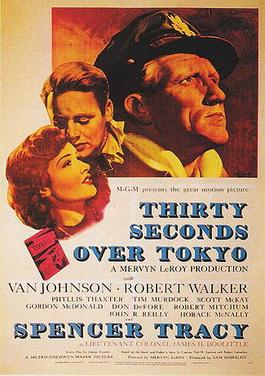
Apparently The First of a Few got its U.S. retitling Spitfire because Samuel Goldwyn feared Americans weren’t familiar with Winston Churchill’s stirring acknowledgement, “Never was so much owed to so many by so few.”
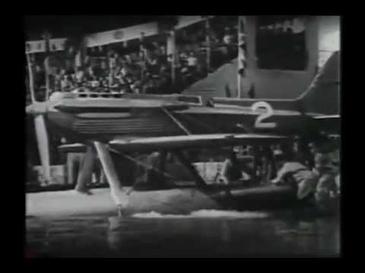
The First of the Few is rich with historical footage of the Spitfire in action during the Battle of Britain, of workers building the aircraft, and of the Schneider Cup Supermarine S.4 racer (its design predecessor).

The Mitchell, Another Wartime Hero. Already appearing here at SimanaitisSays, the North American B-25 Mitchell medium bomber was a “War Hero and Movie Star.”
The movie Thirty Seconds Over Tokyo describes America’s first retaliatory strike on Japan on April 18, 1942. Fifteen Mitchell B-25 bombers lifted off from the USS Hornet aircraft carrier to bomb Tokyo and four other Japanese cities. After this, they crash-landed in lieu of reaching recovery fields in China. Of 80 aircrew members, 69 survived and eventually made it back to American lines.
Wikipedia notes, “The film depicted the raid accurately and used actual wartime footage of the bombers.”
Another Double Feature Option. As described here at SimanaitisSays, there’s another double feature option with the B-25: Save Spitfire for another day, and watch instead the 1970 satirical antiwar flick Catch 22.
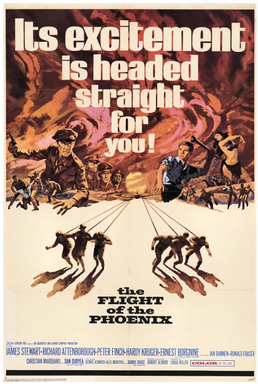
Getting Downright DIY. My final pairing is (The) Flight of the Phoenix in its two cinema renderings, with The in 1965, without it in 2004. The theme is a survival drama with fascinating bits of aircraft cobbling to break the tedium of being marooned. Both flicks are based on a 1964 novel by Elleston Trevor in which a transport aircraft crashes in the desert and its survivors attempt to save themselves.

In the book, the action takes place in the Libyan portion of the Sahara. Indeed, the 1965 version, Wikipedia notes, has a “ twin-engine Fairchild C-82 Packet cargo plane flying from Jaghbub to Benghazi in Libya.”
This flick was actually filmed entirely in Southern California. A filming tidbit: “The aerial camera platform was a B-25J Mitchell, N1042B, which was also used in the 1970 film Catch 22.”
Star Jimmy Stewart had been enamored of flight since a kid. As noted by Wikipedia, “Stewart became the first major American movie star to enlist in the United States Army to fight in World War II.” By war’s end, he had been promoted to colonel. Continuing in the reserve of the Army Air Force, Stewart was promoted to brigadier general in 1959, “becoming the highest-ranking actor in American history.”

The 2004 rehash puts the crash in the Gobi Desert of Mongolia (actually filmed in Namibia on Africa’s Southwest coast and fat lot of good it did it). Wikipedia notes, “The Namib Desert location caused problems: cameras and other equipment had to be constantly cleaned of sand, and a ‘couple of hundred people were employed as “dune groomers” ’ so that visual continuity could be maintained.” Among other challenges, one of the vehicles was inadvertently flipped, a ferry sank with a major bit of scenery, a film truck backed into the wing of one of the aircraft, and a crew member was seriously injured when an 800-lb. model plane bounced off a sand dune and crashed into his protective barrier.
For no particular reason, I am reminded of the one Swahili phrase I know: “Kiboko anaharibu kibanda yetu,” “A hippo is destroying our hut.” ds
© Dennis Simanaitis, SimanaitisSays.com, 2023
 Simanaitis Says
Hey, thanks for these pairings! I need to check out some of these films I haven’t seen. I love movies involving aircraft in any significant ways.
My dad, who flew B-25s in the Philippines in WWII enjoyed seeing all those bombers in Catch-22. He was amazed they were able to cobble together as many as they did for the filming. He also was quite interested in seeing The Flight of the Phoenix, as he had somewhat followed the filming, being that as Phoenix, AZ, residents we weren’t all that far away from the filming locations, including the fringes of Yuma.
I know he was really saddened when we heard the news of Paul Mantz’s death doing those pick-up shots. He had been very aware of Mantz and Tallman’s amazing movie stunt piloting work for many years at that point.
An interesting tidbit in the movie that hit home with Dad and me was when the Hardy Kruger character, an aeronautical engineer, starts explaining how they might be able to build a flyable machine from parts of the wreck.
When the others ask what his actual aircraft design experience is, and he reveals he works at a model airplane factory, they all immediately dismiss his expertise as essentially worthless. My dad had designed and built his own free-flight gas-powered model planes since childhood, and I learned from him to make my own small gliders.
We thought it rather strange that even pilot Jimmy Stewart’s character scoffs at the idea. If anyone would know that the aerodynamics are substantially the same for models as for full-size planes, it would have been him. Kruger points this out and adds, quite correctly, that model planes have to fly without a pilot!