
Simanaitis Says
On cars, old, new and future; science & technology; vintage airplanes, computer flight simulation of them; Sherlockiana; our English language; travel; and other stuff
MY FAIR 日本 LADY GETS A RELATIVE MEH FROM THE R&T TESTERS (PLUS A DATED COMMENTARY)
THE DATSUN SPL-310 WAS KNOWN as the Fairlady in right-hand-drive markets, the name linked to My Fair Lady, the fabulously successful Broadway show at the time. Indeed, Wikipedia notes, “To coincide with the 1964 Summer Olympics, Nissan established the gallery on the second and third floors of the San-ai building, located in Ginza, Tokyo. To attract visitors, Nissan started using beautiful female showroom attendants where Nissan held a competition to choose five candidates as the first class of Nissan Miss Fairladys, modeled after ‘Datsun Demonstrators’ from the 1930s who introduced cars.”
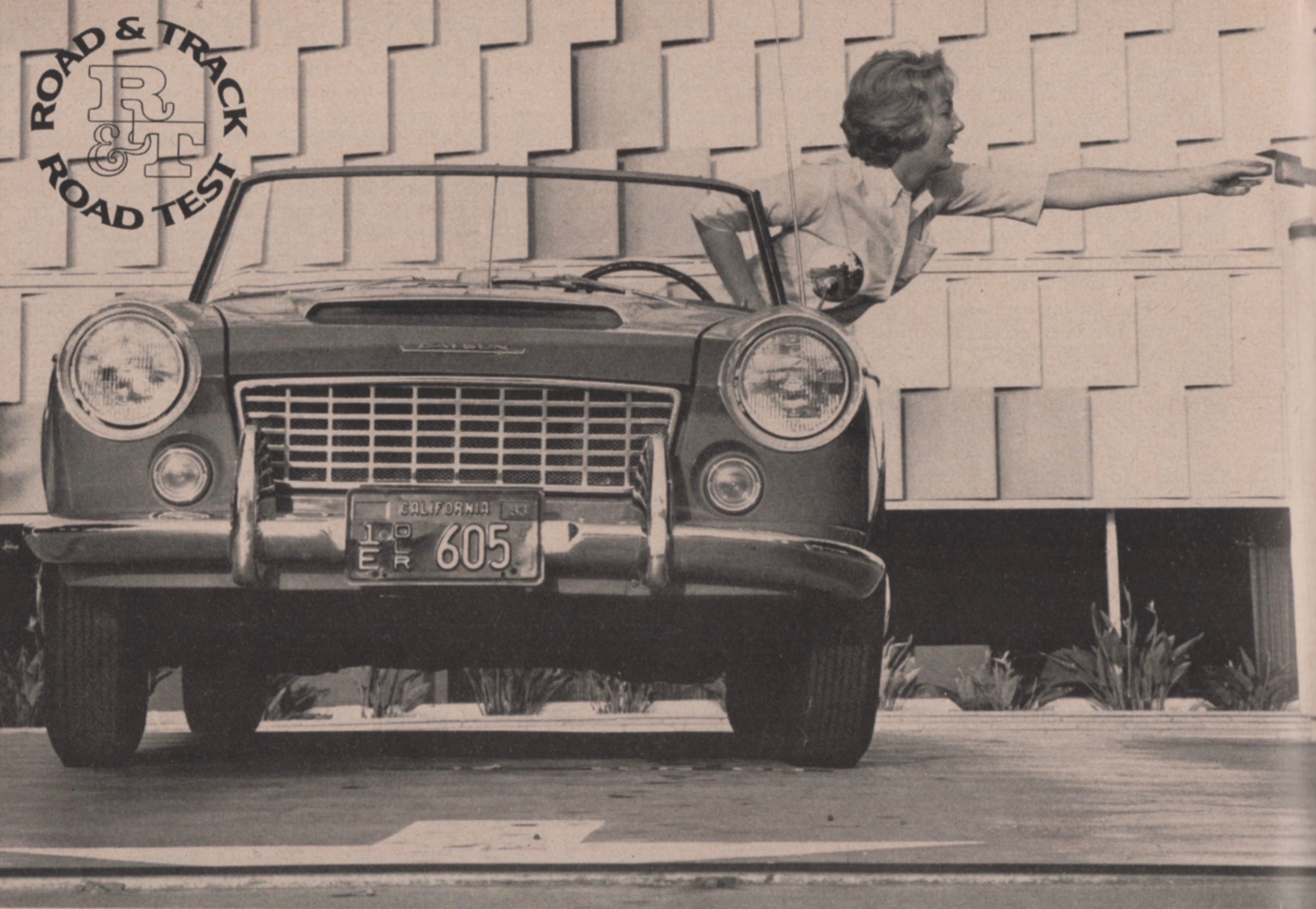
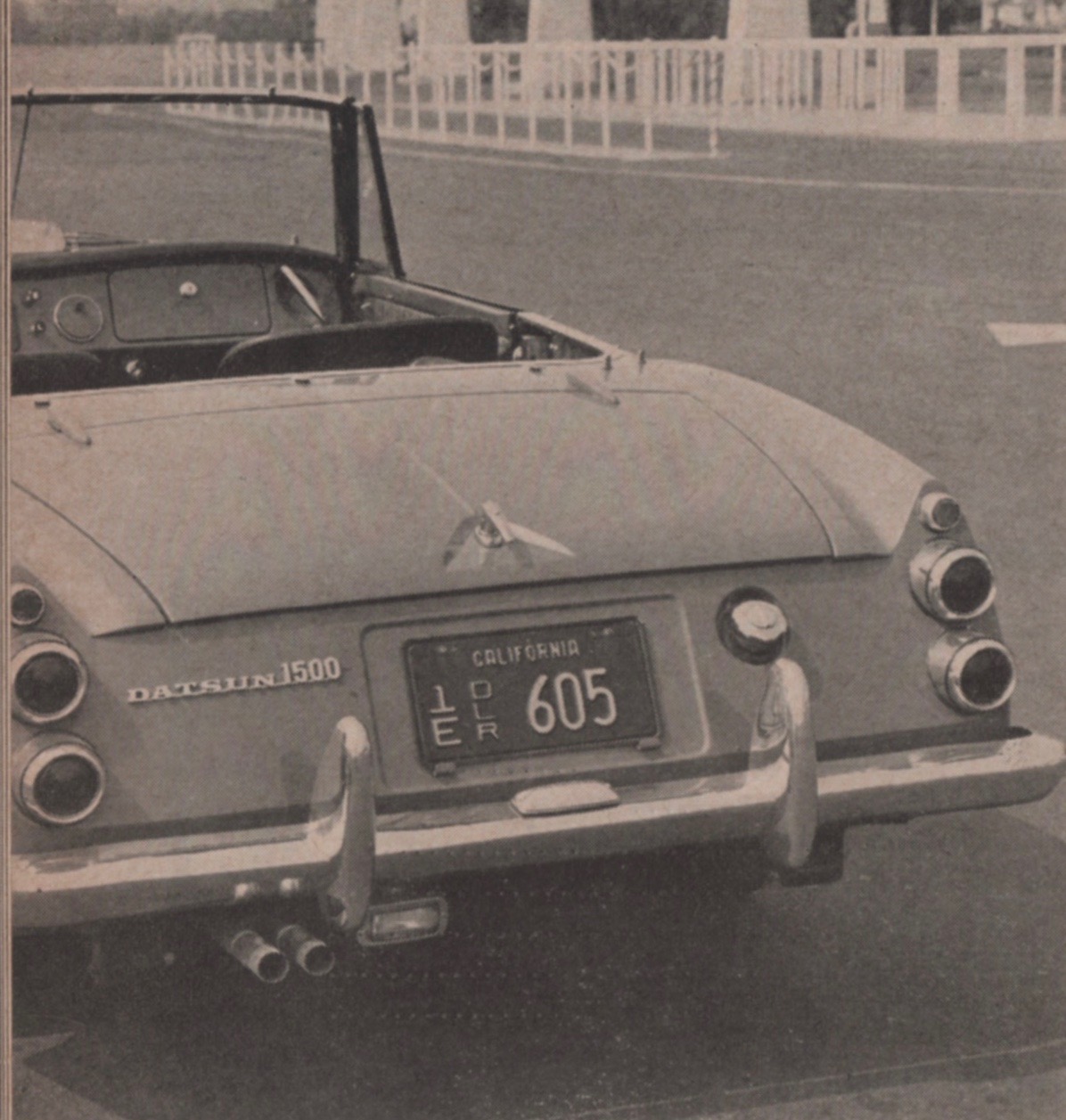
Japanese Derivatives? “The appearance of the SPL-310 is not displeasing,” R&T wrote, “even though most of the design features are reminiscent of other, more familiar marques. There are the half-buried headlights of the MB-B, the vertical rear fender line of the Fiat 1200, the stacked round taillight décor of the 1955-56 Buick, the grille shape of the Lancia Flavia, the roll-up windows and top of the Triumph Sports Six, and so on.”
“This theme of familiarity is not interrupted when the forward-tilting lid over the engine compartment is raised,” R&T continued. “There are two 38-mm side-draft carburetors that look for all the world like SUs and are actually a Japanese-licensed version manufactured by Hitachi, and the block-head-rocker-cover unit appears very similar to the more familiar MG or Volvo and the distributor, except that it’s marked with the Hitachi trademark, could have come straight from Lucas, complete down to the mounting plate marked in degrees for distributor advance settings….”

Questionable Syntax (and Worse). “The male members [ed: please reword] of the staff… were less enthusiastic. Their reactions were non-specific but for the most part all agreed that the car’s appeal suffered from its being almost completely derivative. By ‘derivative’ we mean that virtually everything about the car has been derived from the product of some other manufacturer (the typical complaint made against Japanese industry) and that it consequently offers nothing that is new, exciting, or different to the experienced sports car driver.”
Really? What about the next sentence’s “finish was good, the design not displeasing and that the construction seemed sturdy and solid”?
And it’s premature to recognize the achievements of “W. Edwards Deming—a Man of High Quality.”
What’s more, where’s the 1964’s equivalent of our day’s PC red pencil: “There is a third-seat feature that has been seen in sports-type cars before (the Mercedes 190-SL comes to mind as offering a similar arrangement). This seat, narrow but habitable for short-haul use, sits crossways behind the driver and passenger seat in the middle of the car over the driveshaft tunnel. The obvious jokes about the crossways seat in a Japanese car need not be repeated, even though they are perhaps inevitable to the bawdy and unmysterious American mind.”
Really now.
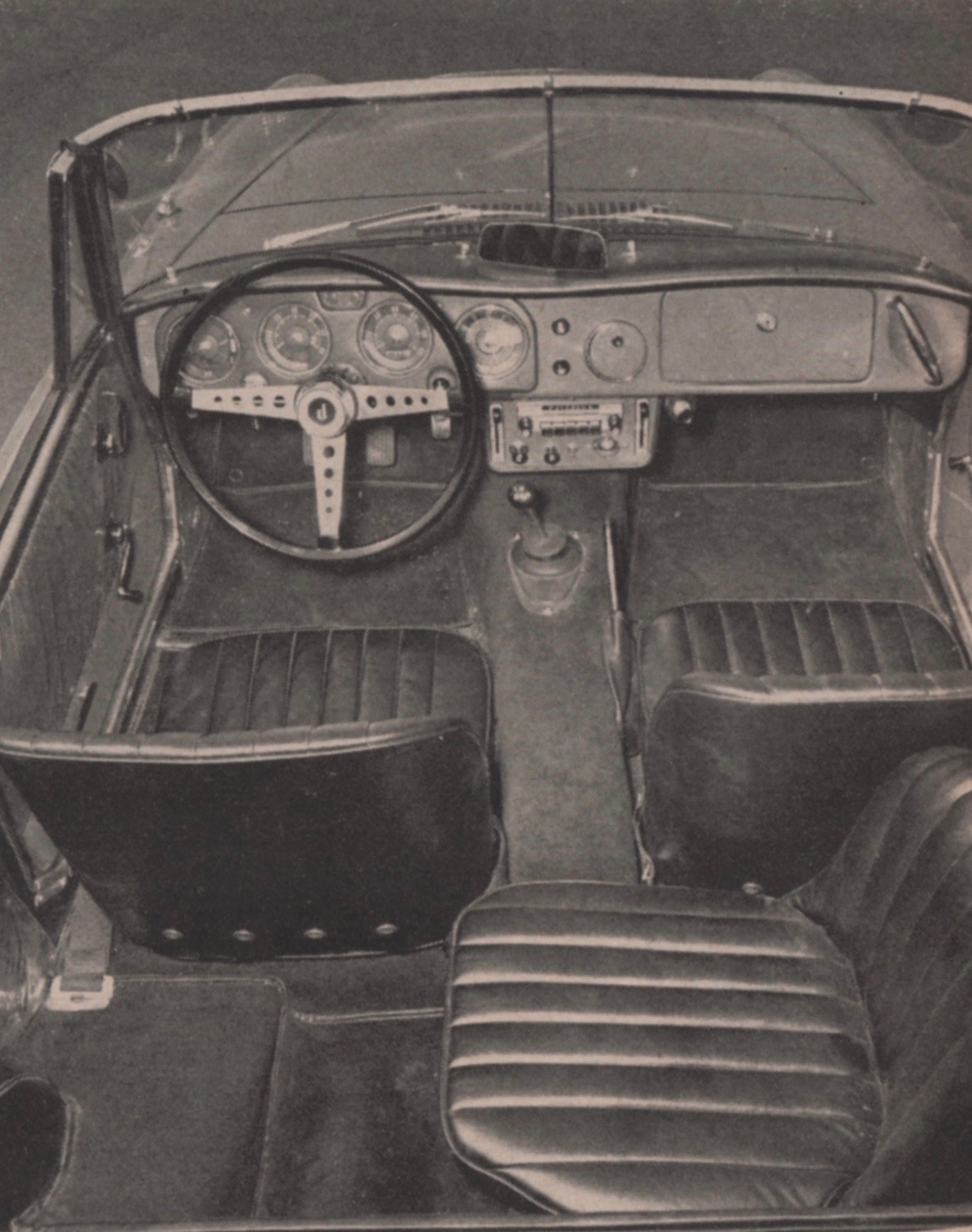
Accommodations. “The instruments are housed in four full-circle dials in front of the driver…. Mounted beneath the dashboard in the center of the car over the driveshaft tunnel is an accessory panel that includes all manner of conveniences and luxury touches—heater and vent controls, map light, cigarette lighter and a transistor radio. These are all standard equipment and are included in the quoted price.”

“In fact,” R&T finally sees something praiseworthy, “we have never seen a car that comes with so many extras at no additional charge. This impressive list includes not only those that have come to be expected on almost all cars (such as turn indicators, seat-belt anchors and ash trays) but also adjustable heater and vent controls for both passenger and driver, white sidewall tires, tonneau cover, outside mirror, back-up lights, safety belts, cigarette lighter and the radio.”
Some More Dated Thinking. “Because the SPL-310 is so easy and comfortable to drive, we invited several female members of the staff to try the car and, to a woman, they all agreed that it is easy to control and of a handy size. One of our test drivers’ wives, in fact, became enthusiastic about the SPL-310, pointing out the roll-up windows, the handy parcel space on either side of the crossways back seat (‘Just fits a big sack of groceries,’ she said), the nice radio and other civilized appurtenances.”
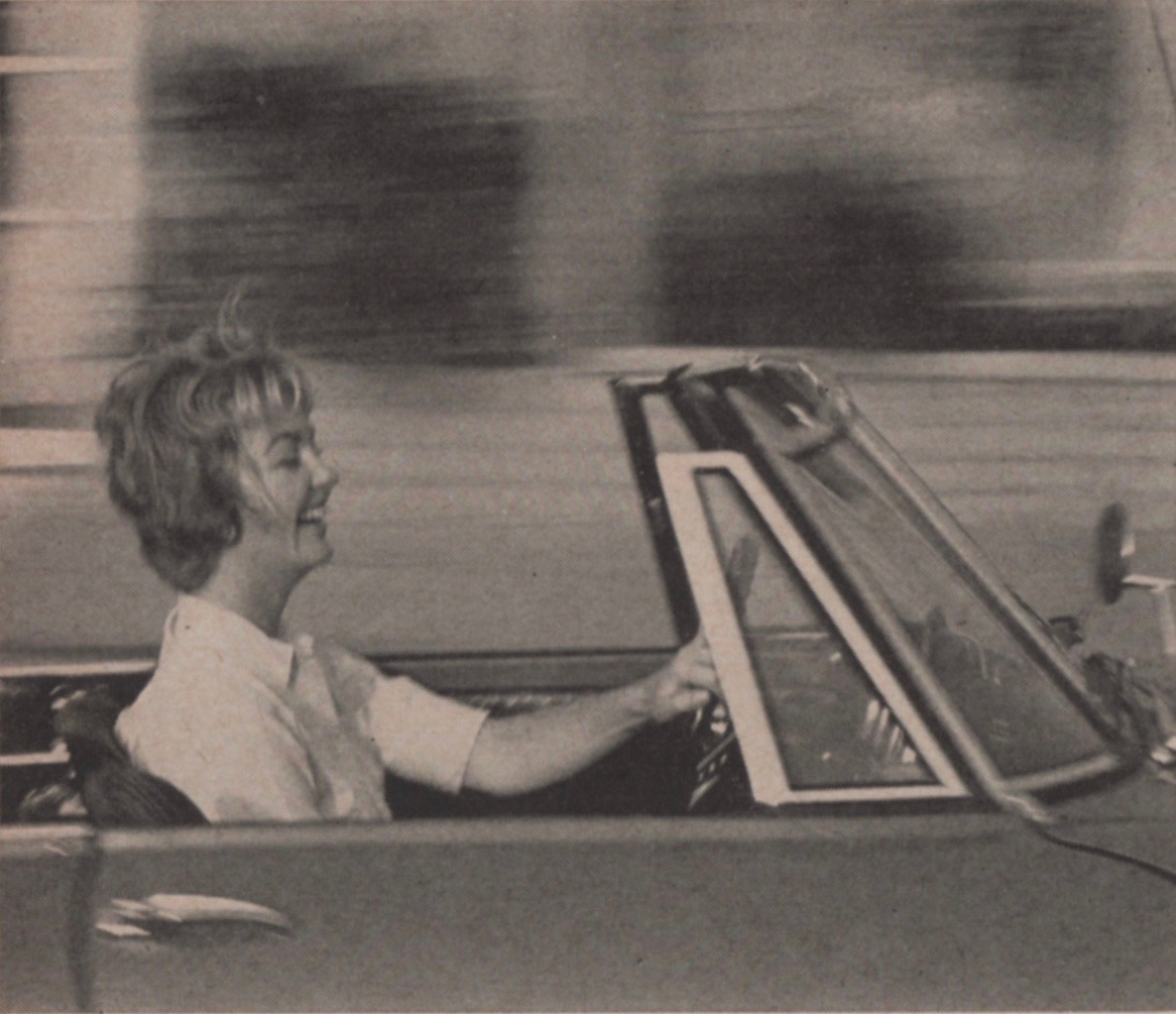
Come on, guys, It’s almost the mid-Sixties. Before 1964 is over, Dottie Clendenin will be joining the staff. ds
© Dennis Simanaitis, SimanaitisSays.com, 2023
 Simanaitis Says
As I ran a sports car repair shop at the time, my reaction was based on mechanical improvements rather than the basic components. Looking at the car on a lift, it was virtually identical to the contemporary MGB with one immediate tell tale.
While the MG hand brake ran two cables back to the brake lever, passing through a channel to change direction 90 degrees, the Datsun had a proper bellcrank. Besides the lack of friction, this didn’t accumulate road grime and salt, which quickly resulted in frozen or broken Leyland brake cables.
The advantages were simple but appreciated like better electrical connections, seat adjustment rollers, better access to change fan belts, location of fuel pump, etc. Most of all, when a fault was detected, it was corrected quickly in the production run … not waiting for the introduction of a new model as was British “tradition.”
All in all, for less money, you got a car equal to the competition with all their “extras” or aftermarket items coming as standard.
There seems an uncharacteristic whiff of racism in R&T’s otherwise thorough review, as tho’ it were acceptable for English sport car makers to crib from themselves and others, but somehow not for the Japanese to do so.
Dennis makes a terrific point, bringing up W. Edwards Deming. Deming’s lessons marked a turning point when Japan, Inc. started coming on strong just as Detroit fare became more egregious by the day.
Bob above’s right. My young stepmum, then a reporter, traded her MGA for a Fair Lady the better to make it to breaking stories. It was a good car, she showing me how to do a four-wheel drift when i was in the ninth grade.