
Simanaitis Says
On cars, old, new and future; science & technology; vintage airplanes, computer flight simulation of them; Sherlockiana; our English language; travel; and other stuff
WILL E-FUEL OR H-FUEL EXTEND THE ICE AGE?
THAT IS, ICE AS IN “internal combustion engine,” h- as in hydrogen, and e- as in the latest research efforts for a carbon-neutral replacement for gasoline and diesel.

Richard Truett writes in Automotive News, July 7, 2023, “The lure of e-fuel is that, with no changes to the engine, fuel injectors, other components or emissions systems, it enables an internal combustion vehicle to run nearly as cleanly as an EV.” Here are tidbits on this tantalizing concept.
Water + CO2 + Energy = E-fuel. As detailed in Automotive News, July 7, 2023, “The production of e-fuels is a multistep process.” The energy comes from the element hydrogen, preferably derived from renewable-sourced electrolysis of water. The carbon dioxide can be a captured byproduct of power-plant fossil fuel burning or other industrial processes. Then, “hydrogen molecules are combined with carbon dioxide to create the e-fuel in liquid form that can be stored or transported like gasoline or heating fuel.”
Automotive News notes, “E-fuels are different from biofuels, which are generated from biomass such as sugar cane, corn, algae or waste.”
Why Not Just EV It? Automotive News identifies a profit motive behind this (no surprise): “Domestic automakers in North America are relying on the hefty profits generated by supersize pickups and SUVs to fund the electrification of the rest of their lineups. But a battery-electric powertrain in such big trucks—other than niche vehicles—is a nonstarter because it can’t deliver the same kind of towing and hauling capability and driving range on a charge as piston-powered drivetrains.”
What’s more: “In Europe, automakers such as Porsche and Ferrari are looking at e-fuel to preserve the character and performance of the sports cars and exotic cars they have perfected over decades — vehicles for which heavy battery packs, short driving ranges and long recharging times would erode their appeal.”
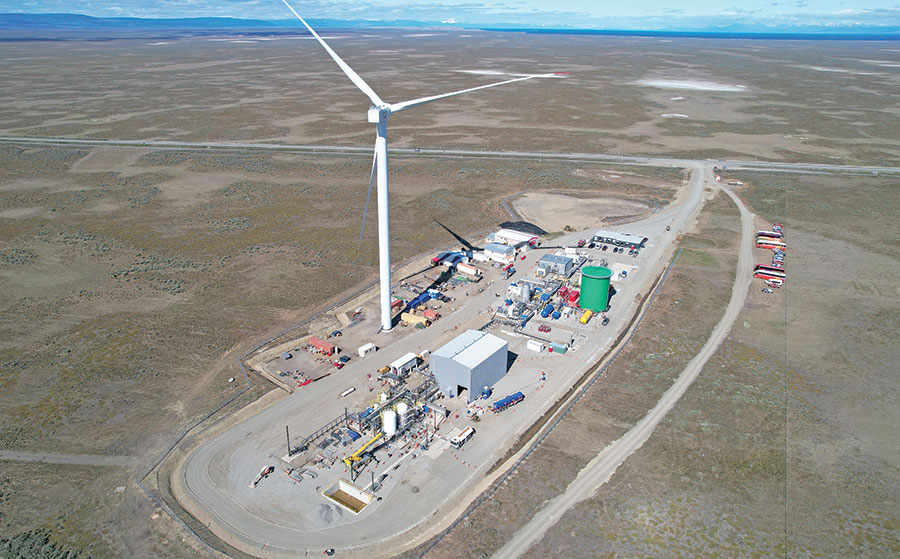
But Not Any Time Soon—If Ever. Automotive News reports, “While automakers say e-fuel works in today’s engines, refiners have to figure out how to manufacture it at a cost close to gasoline. E-fuel could cost more than $11 per gallon if it were available now, according to a recent study by the International Council on Clean Transportation. Shell, Exxon, Aramco and several smaller refiners are developing e-fuels.”
What’s more (though it’s buried 18 paragraphs deeper in the Automotive News article): “Using e-fuel in a gasoline or diesel car requires about five times more renewable electricity than running a battery-electric vehicle, according to a 2021 paper in the Nature Climate Change journal, Reuters reported.”
This is one helluva costly means of keeping high-profit fuel-guzzling pickups or exotics in the marketplace.
What About H-fueled ICE? Internal combustion engines can be modified to burn hydrogen as their fuel. Back in 1977, Roger Billings drove his hydrogen-fueled Cadillac Seville in Jimmy Carter’s Presidential Inaugural Parade.

The problem with hydrogen ICE is at least threefold: NOx emissions, the challenges of onboard hydrogen storage, and the paucity of its energy content compared to that of gasoline or diesel.
Another H Option. Automotive News quotes Dan Nicholson, GM’s vice president of global electrification, controls, software and electronics, at SAE International: “We believe the fuel cell is going to win out in the end. GM has homegrown technology in both fuel cells and battery-electric technology. We think [fuel cells] work in the over-8,500-pound class for towing applications. It makes sense in three-quarter-ton pickups for a lot of customers who need towing applications.”
And even more so in exotics (but for the whirr replacing the roar). ds
© Dennis Simanaitis, SimanaitisSays.com, 2023
 Simanaitis Says
“(e-fuels, maybe H2)…ICE run nearly as cleanly as a EV…”
Nearly, from a CO2 standpoint. Not so much otherwise.
If you’re burning something with carbon in it, you’re still emitting HC, NOx, and exhaust particulates that have to be controlled in the normal (and incomplete, though pretty good these days) way. And CO2, though in theory with e-fuels the circle closes in (hopefully much) less than thousands of years.
If you’re burning H2, the carbon issues go away (except for: how are you making and distributing the H2?), but there’s still NOx since you’re creating combustion (high) temperatures in air that contains a lot of nitrogen.
That means local and regional air pollution issues remain, that go away with full EVs (i.e. remote emission vehicles, which are as clean as the power supply is).