
Simanaitis Says
On cars, old, new and future; science & technology; vintage airplanes, computer flight simulation of them; Sherlockiana; our English language; travel; and other stuff
VIENNA—THE MOST LIVABLE CITY IN THE WORLD PART 2
YESTERDAY, WE CELEBRATED WITH SMITHSONIAN magazine’s reporting the Economic Intelligence Unit’s choice of Vienna as the world’s most livable city. Today in Part 2, we travel back to old Austria, by way of two Badaeker’s.
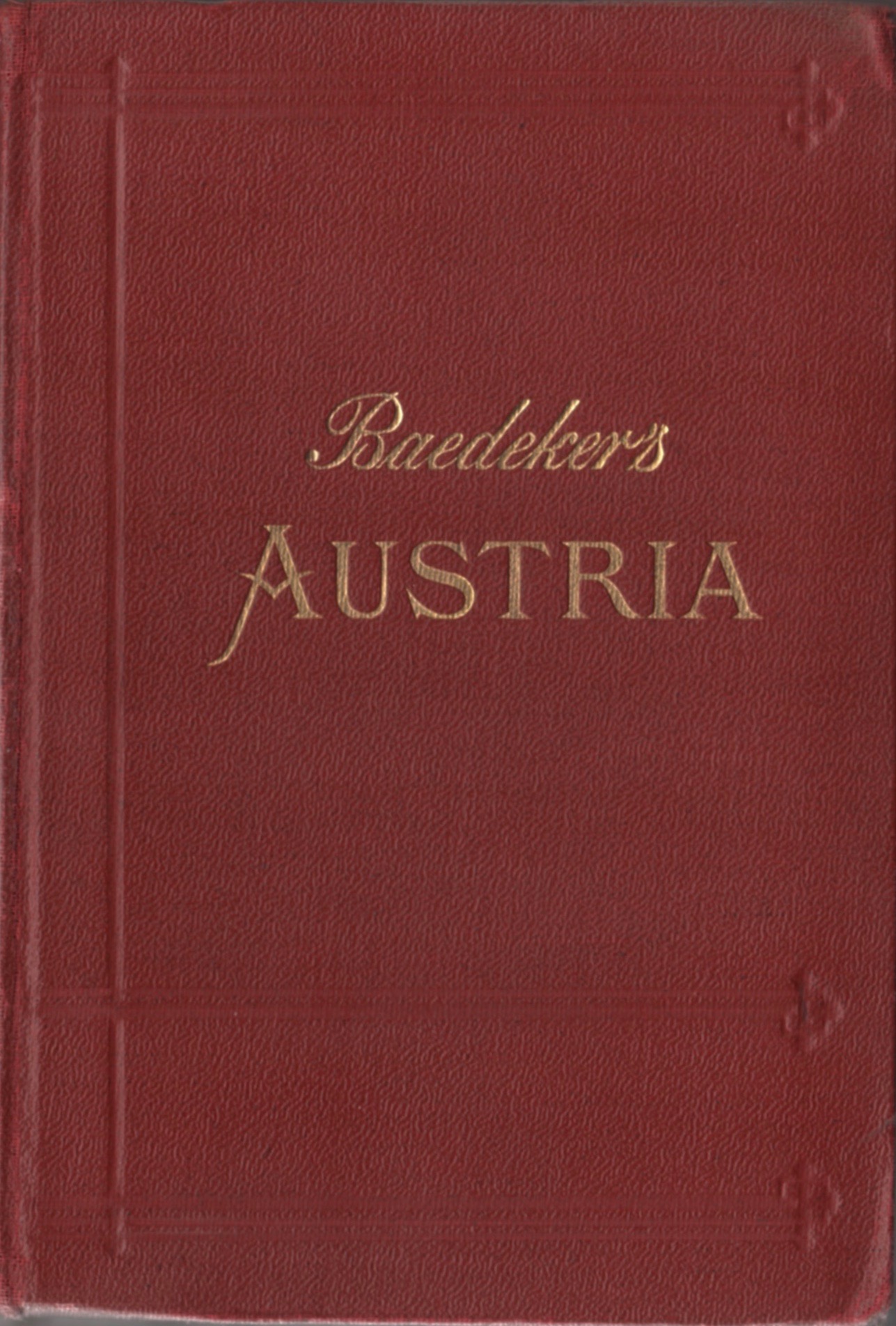
Back to (Old) Vienna. Two of my old guidebooks describe Vienna 24 years apart: Baedeker’s Austria-Hungary, 1905, and Baedeker’s Austria, 1929.

The Austro-Hungarian Empire was to dissolve in 1918; Austria was to be annexed by Nazi Germany in 1938. Wikipedia notes, “After its liberation in 1945 and a decade of Allied occupation, the country regained its sovereignty and declared its perpetual neutrality in 1955. Austria has been a member of the United Nations since 1955 and of the European Union since 1995.
The prominence of Vienna is particularly evident in the 1929 edition of Baedeker’s: It occupies 154 of 518 pages. The Austro-Hungarian 1905 devotes 82 pages of its 468. Both are rich in describing visitor details and cultural attractions of the city.
1905 Peculiarities. Baedeker’s 1905 observed, “Vienna local time is 5 min. in advance of Central European time, which is observed by the railways.” See “Have You Got The Time? But Where??”
“Custom House formalities,” Baedeker’s said, “are now almost everywhere lenient.” However, “At the Austrian frontier playing-cards, almanacks, and sealed letters are liable to confiscation. Tobacco and cigars, the sale of which in Austria is a monopoly of government, are liable to a duty of about 12 K. per pound. According to the strict rule, one ounce of tobacco and 10 cigars only are exempt from the duty.”

Getting Around. Baedeker’s described, “Diligences, called ‘Eilwagen’ or ‘Mallepostes’ in Austria, generally carry three passengers only, two in the inside, and one in the coupé. The latter affords a tolerable survey of the scenery, and should if possible be secured.”
Cycling Instead. “The roads of Austria-Hungary, on the whole,” Baedeker’s 1905 observed, “fall considerably short of English standard, for the steam-roller is unknown in that country. The best are those in Tyrol and Carinthia, which are about equal in quality to middling English roads.”
What’s more, Baedeker’s 1905 warned, “The rule of the road in Austria is somewhat complicated. In Styria, Upper and Lower Austria, Salzburg, Carniola, Croatia, and Hungary we keep to the left, and pass on the right on overtaking; in Carinthia, Tyrol, and the Austrian Littoral (Adriadic coast: Trieste, Gorizia and Gradisca, Istria and Dalmatia) we keep to the right and overtake left. Troops on the march always keep to the right side of the road, so whatever part of the Empire you meet them, keep to the left.”
Until 1918, that is; and then there was 1939. Today, as Smithsonian magazine and the EIU note, it’s much more pleasant. ds
© Dennis Simanaitis, SimanaitisSays.com, 2023
 Simanaitis Says
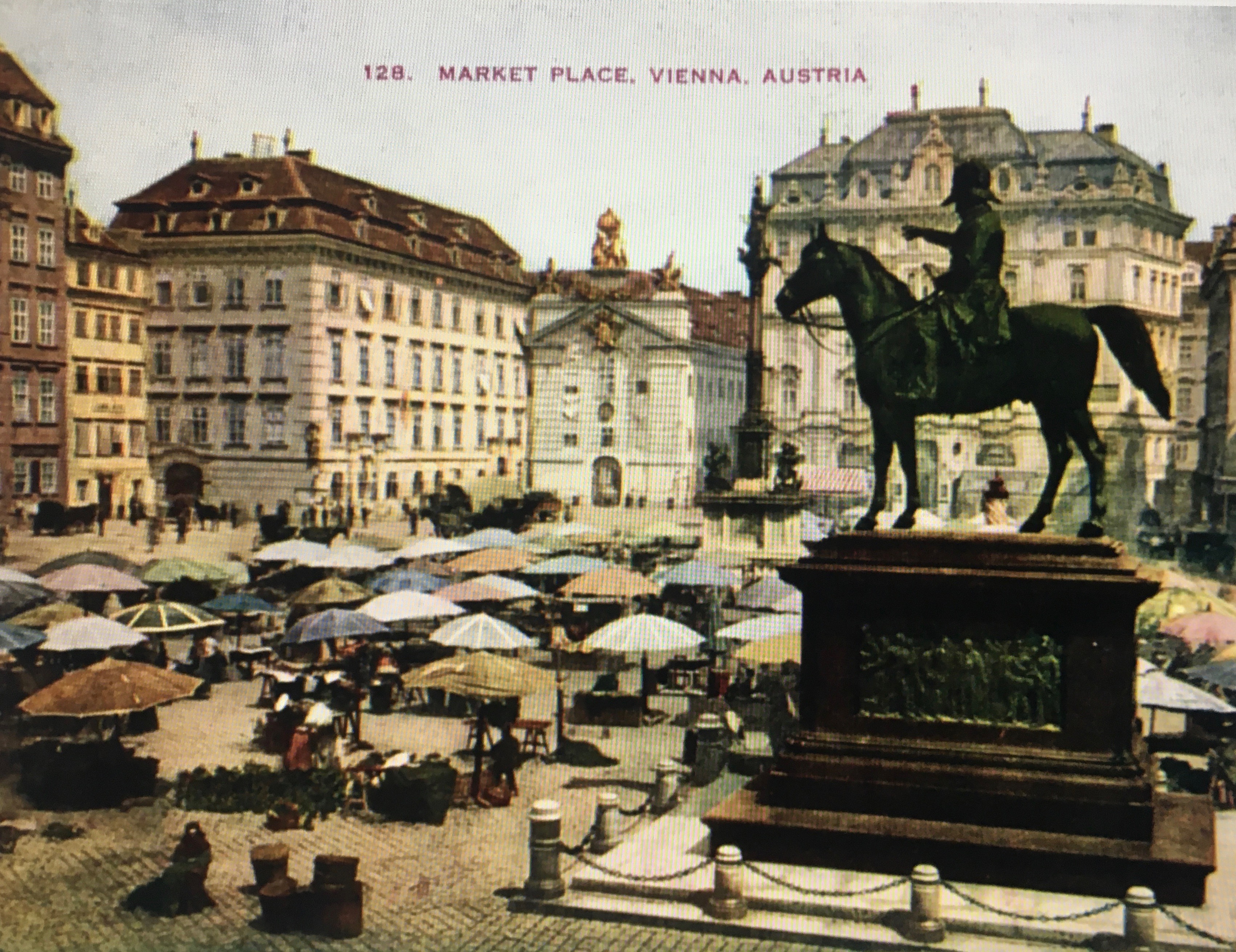
I recognize that courtyard in the picture from 1901. That is “Am Hof” Wikimedia has a photo from almost the same angle.
https://de.wikipedia.org/wiki/Am_Hof
Interestingly, the monument to that guy is no longer there. You inspired me to some internet sleuthing. That is the Radetsky Monument. I was moved in 1912 in front of the War Ministry. It is no longer the War Ministry but has several other ministries in it. Including the Social Security Ministry where my ex-mother-in-law (who I’m still friends with) worked. I was there many times before 2000.
Myth: Since the horse’s feet are on the ground, the guy did not die in battle or from wounds from battle. That is the story, but according to multiple web-sites, it is just a myth.
Interesting about horses’ feet.
Also, I recall Johann Strauss Sr.’s “Radetsky March,” seemingly never performed without the audience enthusiastically clapping in unison.