
Simanaitis Says
On cars, old, new and future; science & technology; vintage airplanes, computer flight simulation of them; Sherlockiana; our English language; travel; and other stuff
COOK’S TRAVELLER’S HANDBOOK HEALTH RESORTS PART 1
MY 1905 COOK’S HEALTH RESORTS is in the worst condition of any of my traveler’s handbook collection. What can we learn from this?

The red cover of my example shows signs of water damage. Several of its maps are detached. Its spine is separating. The handbook cost me €8, thus setting its purchase after January 1, 1999, when the euro replaced the former European Currency Unit (ECU). And, as it typical of Cook’s, unlike companion Baedeker’s, the handbook is replete with interesting advertising of the era. Here in Parts 1 and 2 today and tomorrow are tidbits, and I sincerely hope the handbook’s original owner fared in better shape over the years.
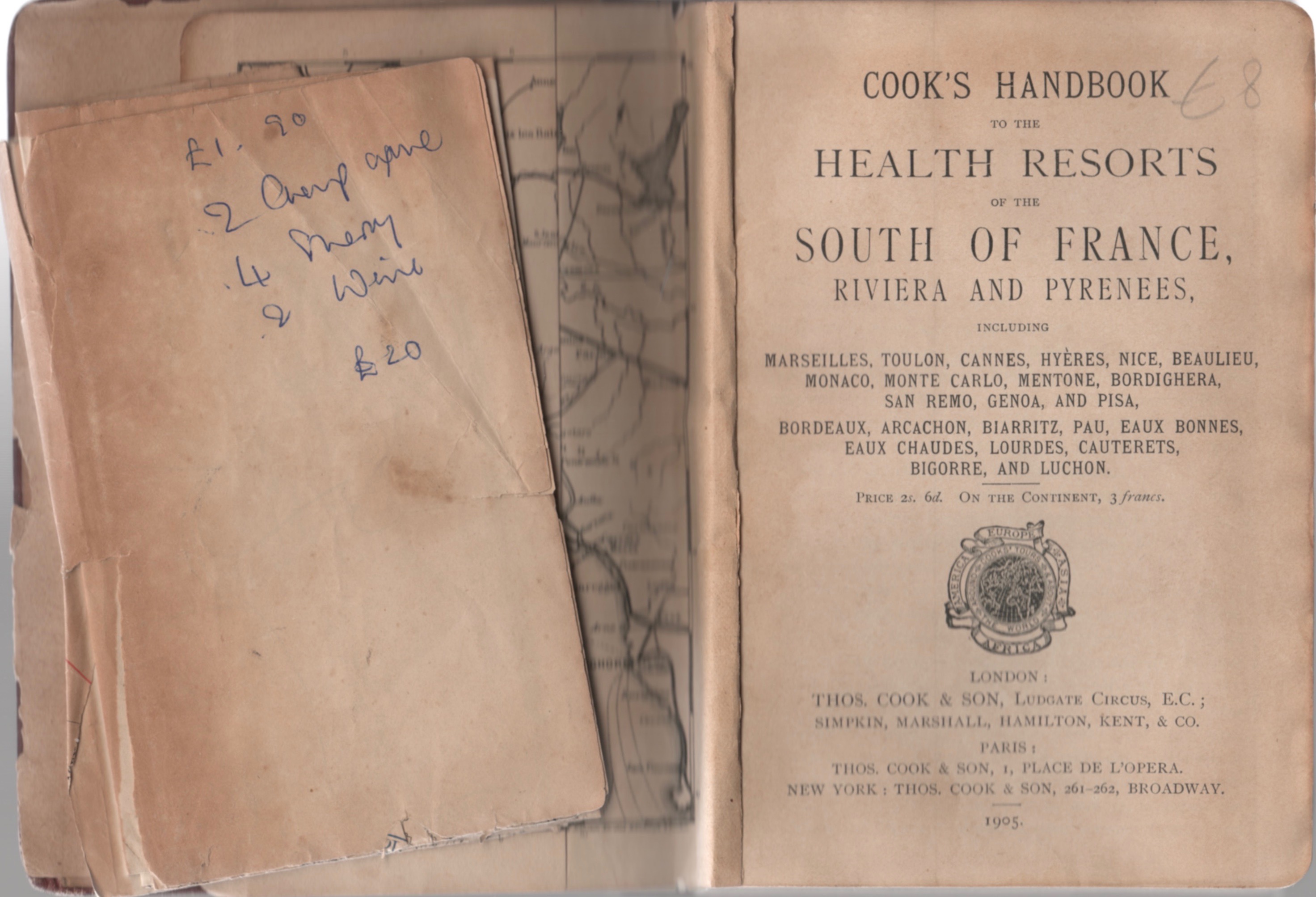
A Good Many Locales. Its title page lists 23 resorts ranging from Marseilles, Toulon, and Cannes, to Lourdes, Cauterets, Bigorre, and Luchon. “Every Autumn,” the handbook’s Preface reads, “at the first approach of frost, there sets in a general migration, like that of the swallows, from the colder lands of Northern and Central Europe to the sunny shores of the Mediterranean…. in short, to enjoy to the full the thousand charms and attractions of an earthly paradise.”

How to Get There. “Express trains now run, during the season, from London to Cannes in twenty-seven hours, to Nice in twenty-eight hours, to Monaco or Mentone in twenty-nine hours and to Bordighera or San Remo in thirty hours. Not only do the chief express trains contain sleeping cars, salon-lits, or fauteuil-lits but certain trains are entirely compose of these luxurious adjuncts to comfort in traveling.”
“Sleeping Cars,” Cook’s defined, “are divided into compartments of two and four berths each; providing beds (which are converted into seats during the daytime), also lavatory, w.c., etc.”
The handbook continued, “Lits=Salon Carriages… are rather larger. The whole compartment of three places must be reserved if from Calais, but single places can be reserved from Paris.” And “Fauteuil=lits has armchairs for three persons—no separate toilet. Single places can be reserved.”
Thermometer. Cook’s noted, “While the Fahrenheit scale is generally used in England, that of the Centigrade and Réaumur are the measurements of temperature on the Continent. The following comparative table will be useful:—”

Today’s Wikipedia notes, “The Réaumur scale was used widely in Europe, particularly in France, Germany and Russia, and was referenced in the works of Thomas Mann, Dostoyevsky, Flaubert, Joyce, Tolstoy, and Nabokov…. While living in Paris, George Orwell mentions ‘translating Réaumur into Fahrenheit’ even in 1929. Its main modern uses are in some Italian and Swiss factories for measuring milk temperature during cheese production, and in the Netherlands for measuring temperature when cooking sugar syrup for desserts and sweets.”

Réne Antoine Ferchault de Réamur, 1683–1757, French entomologist. Image from Wikipedia.
Cook’s said, “To turn Réaumur into Fahrenheit multiply by 2 1/2, and add 32.” However, it’s actually 9/4, not 5/2.
Upon Arrival. Cook’s advised, “The Hotels of the South of France and the Riviera are among the best in Europe…. Passports are not necessary for British subjects.”
I’m reminded of another handbook’s multiple translation of this passport phrase, no doubt to be repeated, loudly, heavily British-accented.
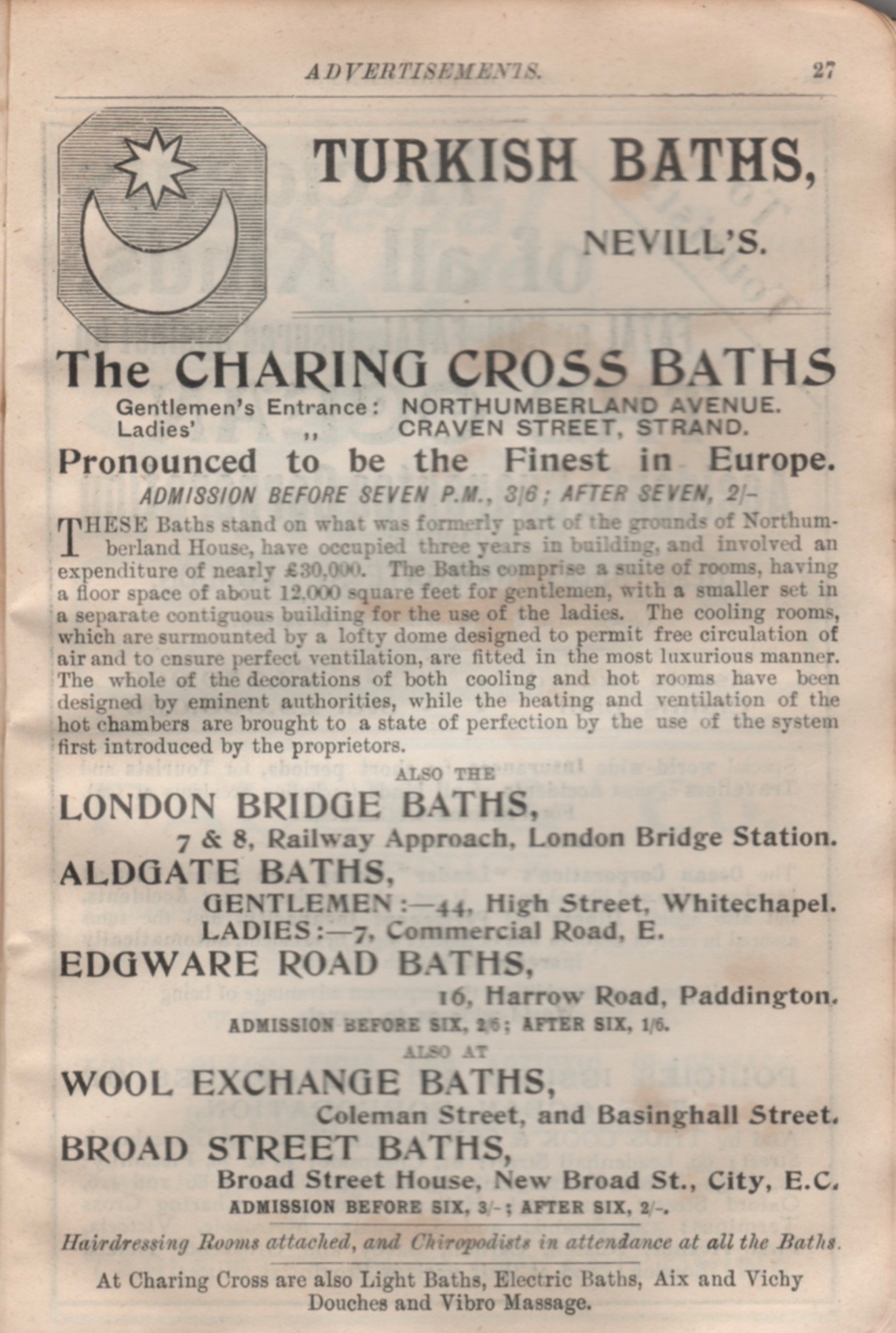
Tomorrow in Part 2, we’ll visit several of Cook’s locales, both in 1905 and rather more recently. ds
© Dennis Simanaitis, SimanaitisSays.com, 2023
 Simanaitis Says