
Simanaitis Says
On cars, old, new and future; science & technology; vintage airplanes, computer flight simulation of them; Sherlockiana; our English language; travel; and other stuff
JOHN W. BURGESS—MUSEUM CURATOR/ARTIST/DIRT TRACK RACER
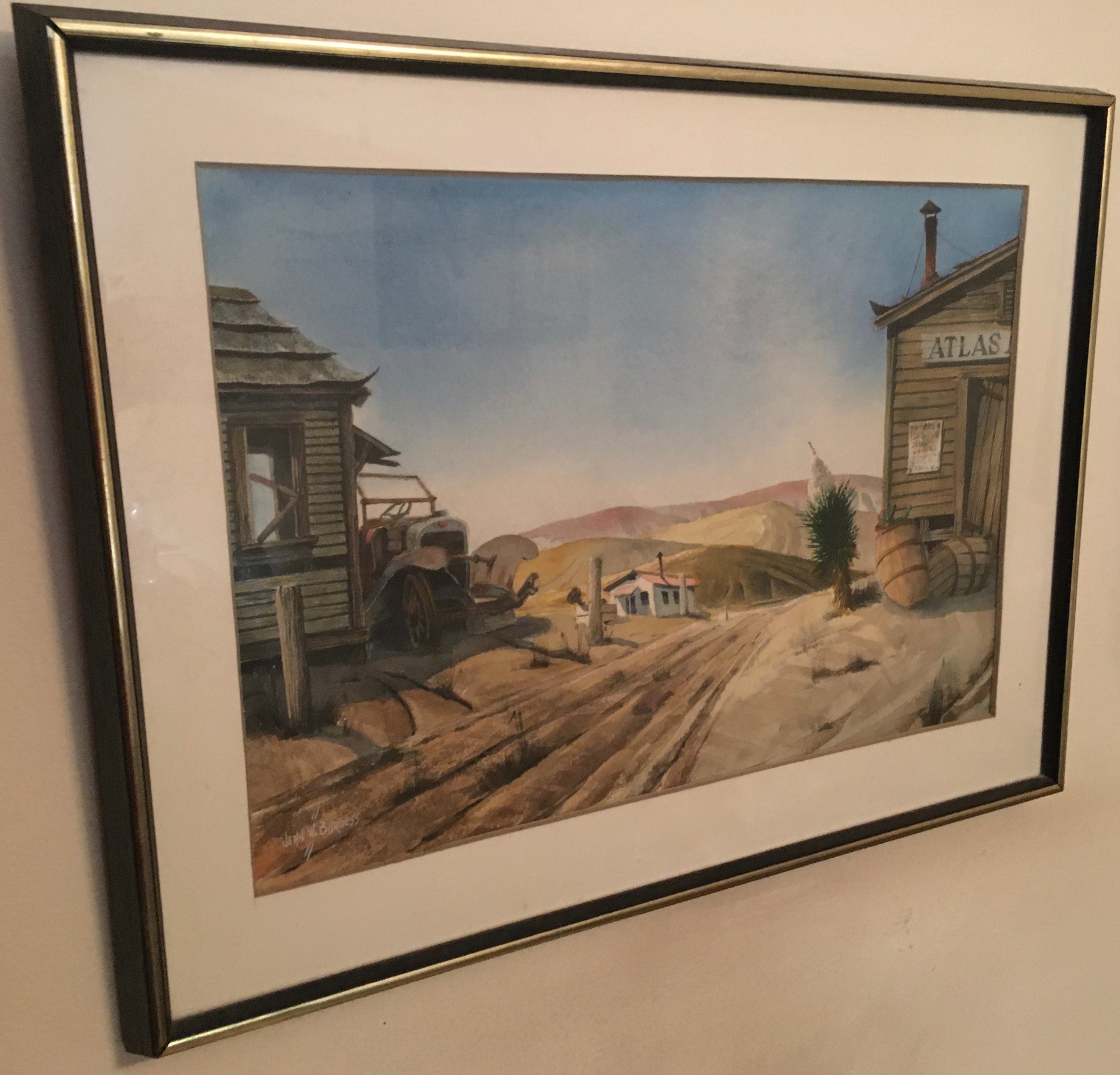
JOHN BURGESS KNEW AUTOMOBILES extremely well and also admired the American West. I have proof positive of this through his artwork and through knowing him as director/curator of Briggs Cunningham’s Automotive Museum here in Orange County, California. Here are examples of his artwork, together with tidbits gleaned about his life from various sources.
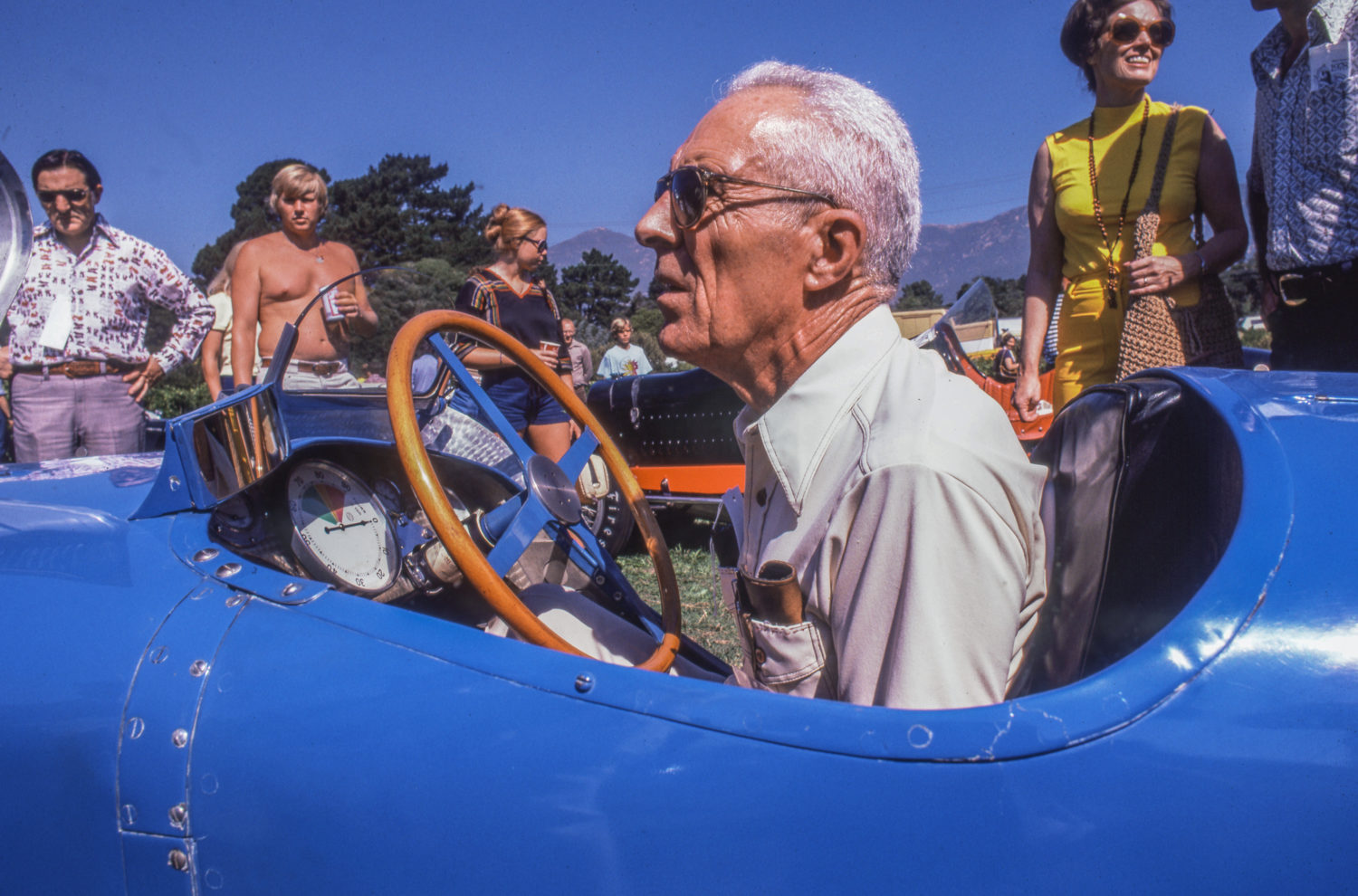
In a fine history of the Cunningham Automotive Museum, Kane Rogers describes how Burgess swapped work at Edwards AFB to join Briggs Cunningham in opening the Cunninghamy Automotive Museum in Costa Mesa, California, in 1966.
Desert Artist. John was director/curator of the museum until its closing in December 31,1986. During that time, Dottie and I got to know him through many interactions arranging the museum’s cars for R&T articles. What’s more, Dottie, El Centro-born, shared John’s evident love of the Southern California desert.
I’m guessing John was New England-bred, partly from his gentlemanly presence and partly from his profound knowledge of that region’s dirt track racing. In 1977, John gifted Dottie with two portfolios, one of them warmly inscribed, of The American Dirt Track Scene.
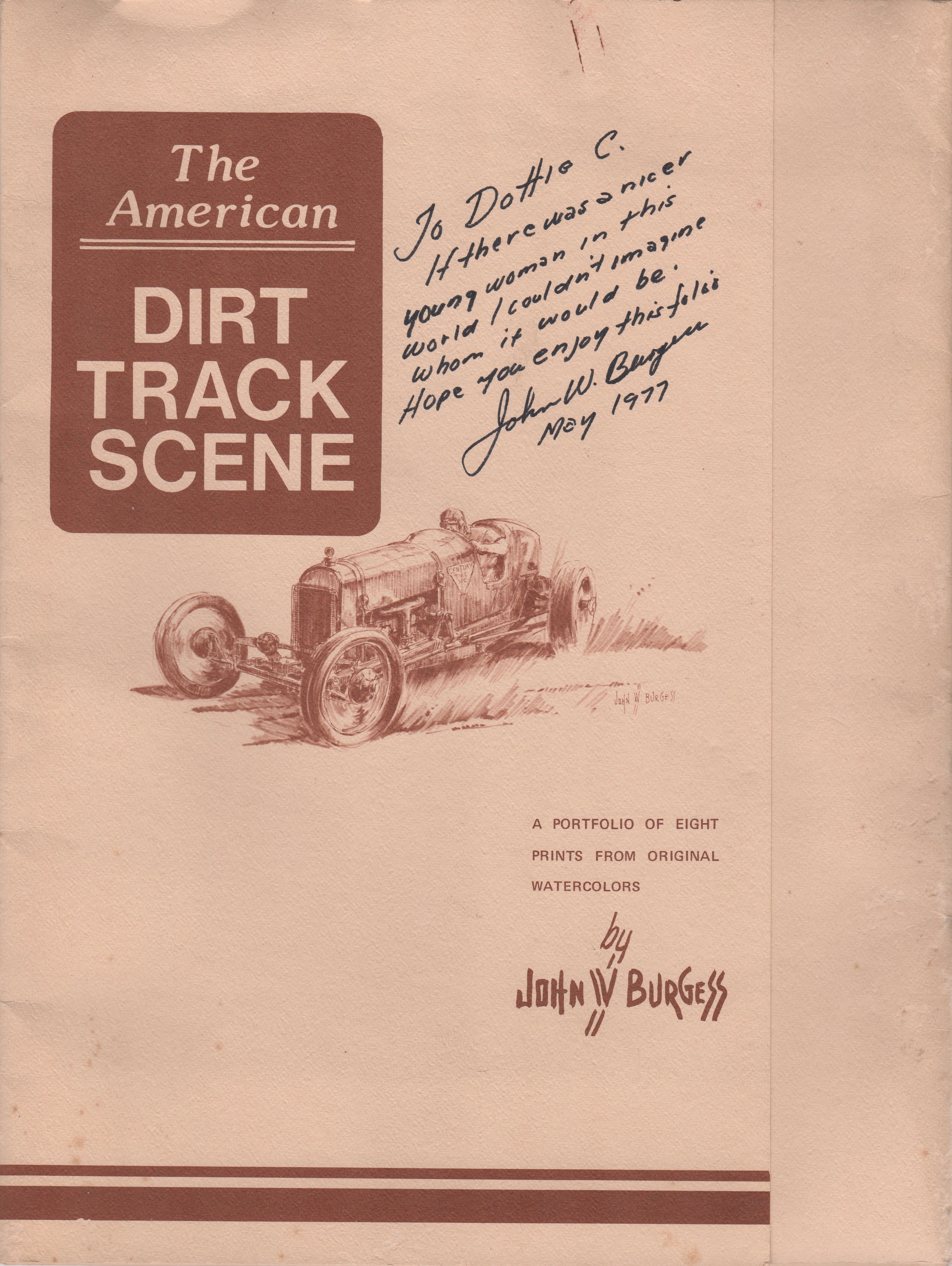
The portfolio inscribed to Dottie is a keeper. The other one seeks a sympathetic home. See rogallery.com for a single double-sided poster of these eight separate prints.
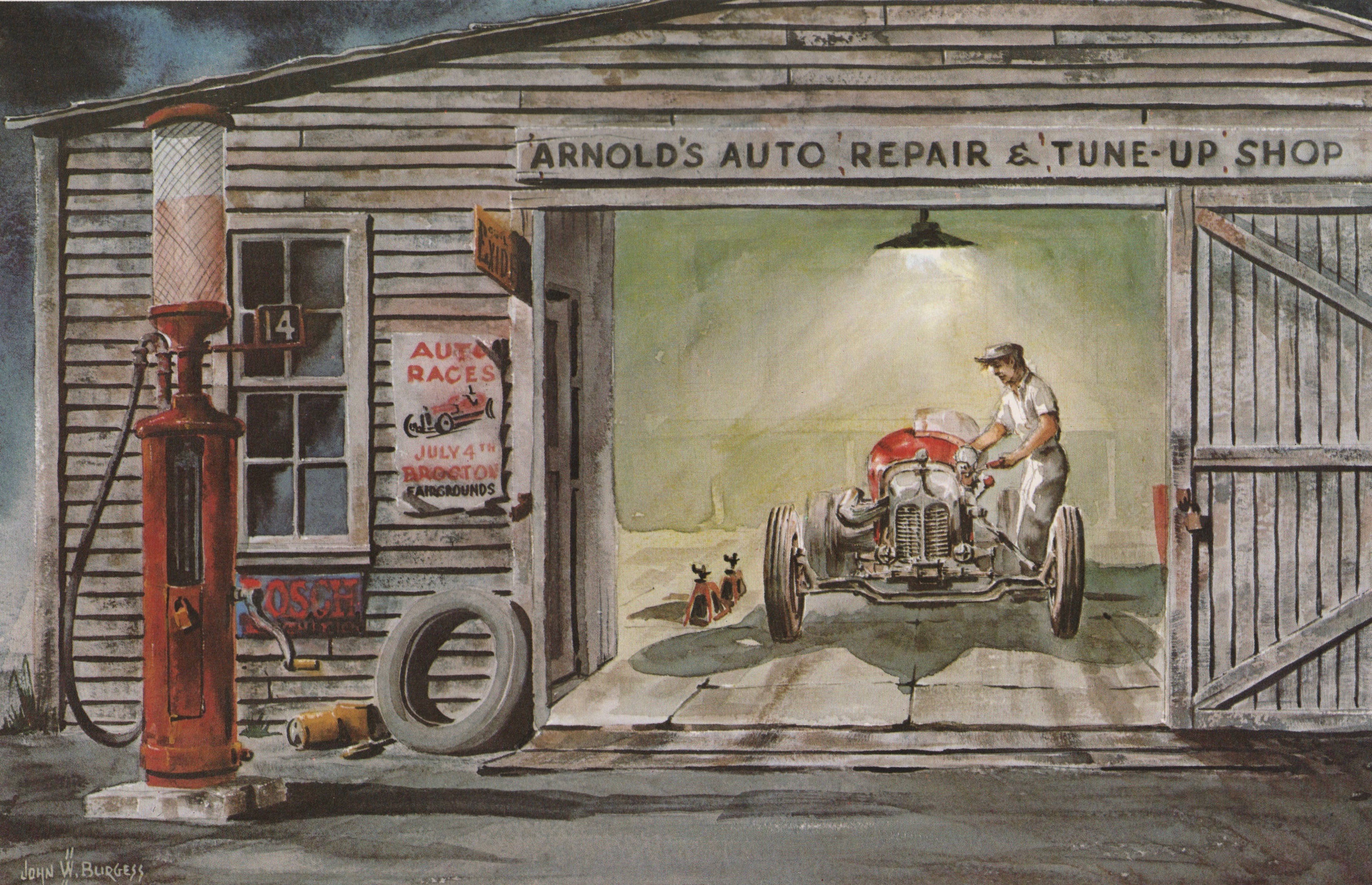
Each portfolio has eight prints from John’s original watercolors, 10 x 13 in. overall including 1-1 1/4-in. borders on fine art paper. There’s another sheet giving details of the paintings. Here are several favorites, with descriptions provided by John, in several portraying his own dirt track career.
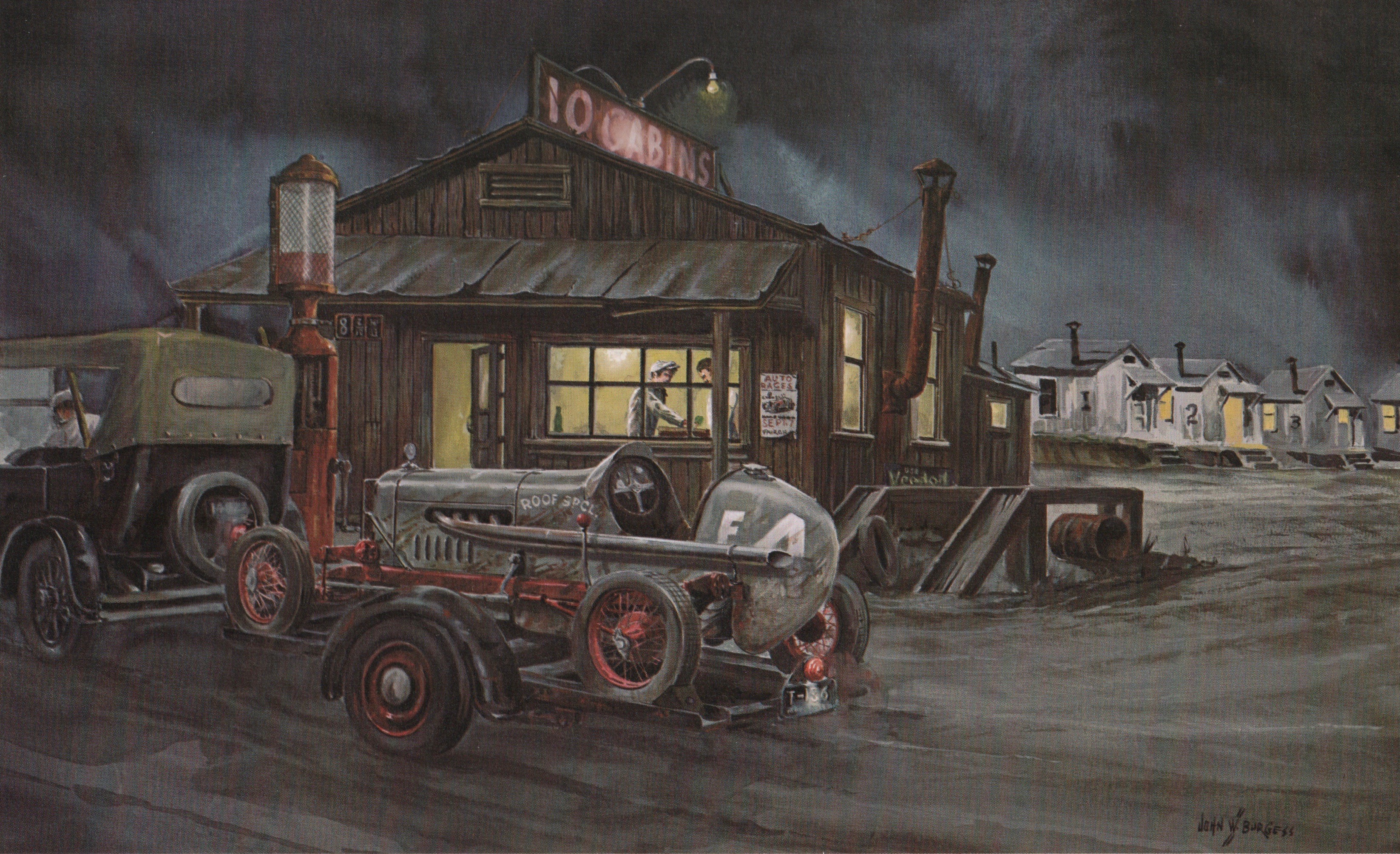
Burning the Midnight Oil. “The little roadside garage is illuminated by a single bulb lamp. Many drivers ran such shops, catering to the public by day and working far into the night to keep their beloved machines mechanically excellent.”
The Weary Racers. “The artist, then racer, is shown at a little store that rented cabins (before motels). Tired to the point of complete exhaustion, the mechanic companion likewise, the stop was a reluctant one as it cut down the time needed to get to, and prepare for, the next Fairground race. The year, 1931.”
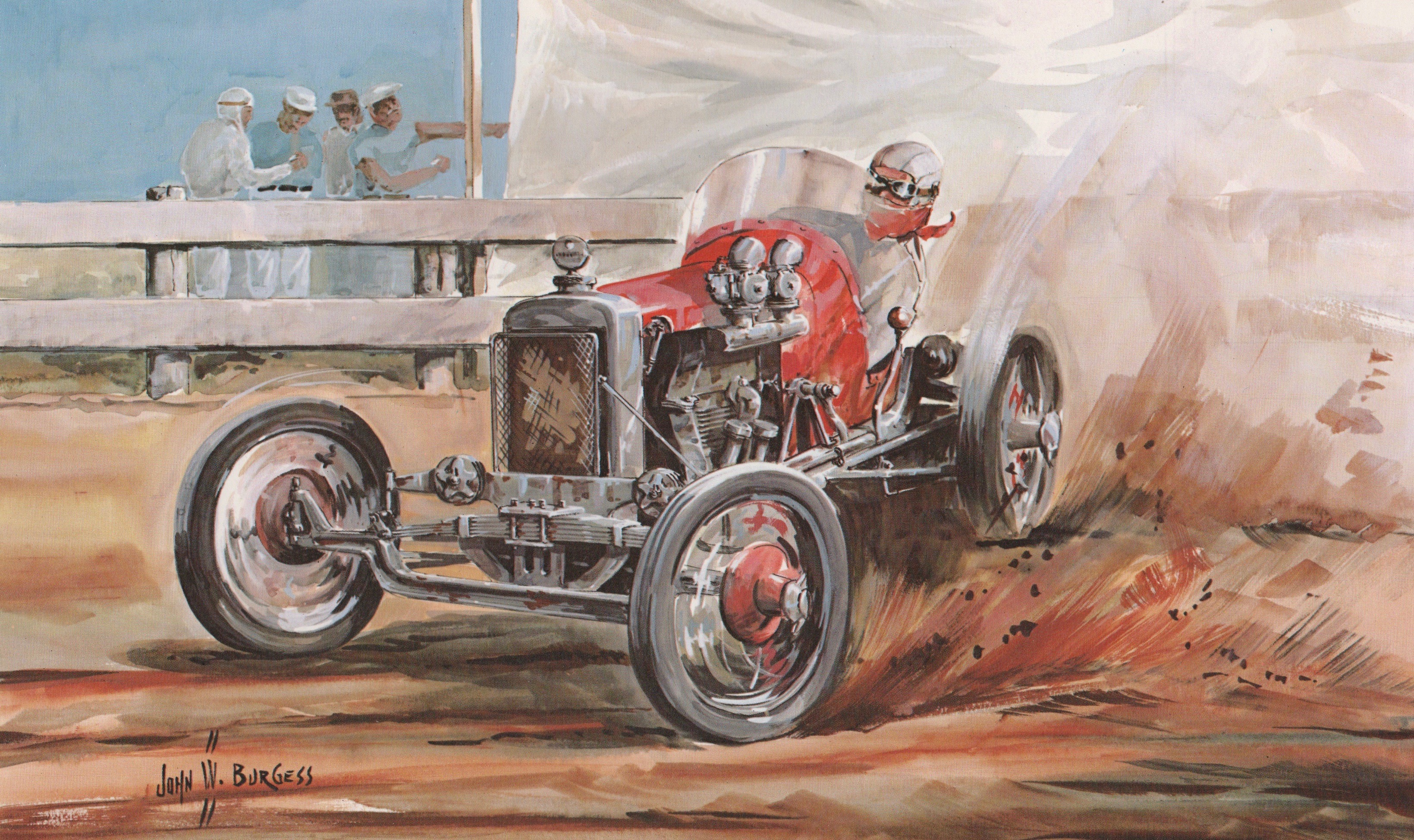
Time Trials. “Time trials were critical. Here we see a double overhead cam Fronty Ford qualifying; in the background are other drivers checking the time, partially hidden by the canvas used to keep the flying dirt off the Fairgrounds Midway.”
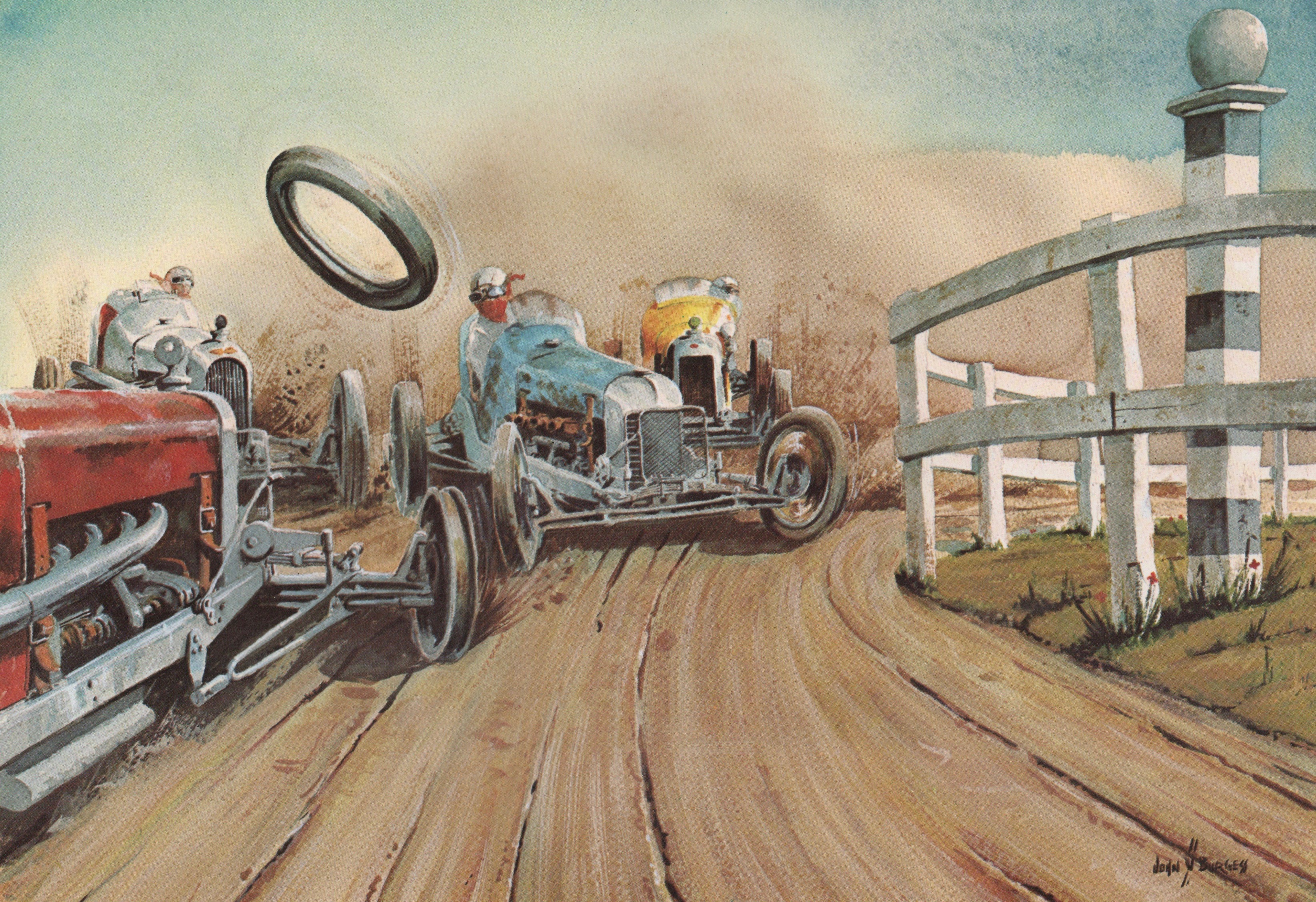
Trouble at the First Turn. “This is an incident that happened to the artist at the New England Fairgrounds half-mile track. Starting from the pole position in the main event, I got the Fronty Ford into the turn with about a good 60 to 70 ft. lead. At the apex I was probably a foot, possibly two, from the rail when a brand new right front tire ‘blew’ and I spun, facing the field. Everybody missed me, how I don’t know. A shiny penney nail, left by the carpenter who repaired the fence, had done the damage.”
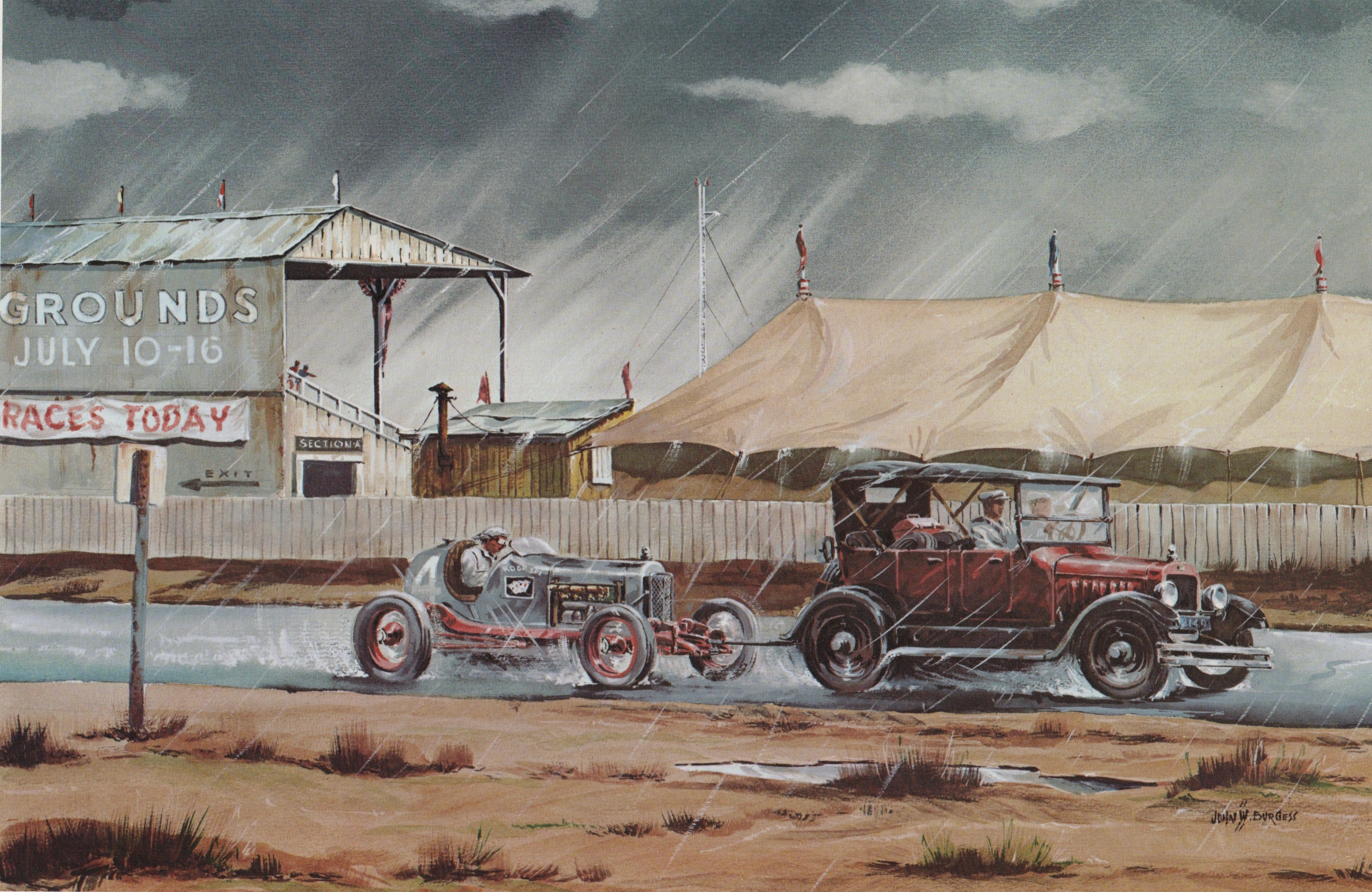
Rained Out. “Traveling from one Fairground race to another entailed many thousands of miles each season some of which were all in vain, due to the quirks of Mother Nature. This painting depicts the artist’s first dirt track car, a sixteen valve Roof, using an improved ‘C’ Head with 4 horizontal carburetors in a ‘T’ Ford block. The scene is the New England Fairgrounds at Worcester, Mass. in approximately July of 1931. The tow bars did not have automatic steering, and also the old Dodge towing had only two-wheel brakes; someone had to sit in the race car and get thoroughly soaked and freezing cold. A few hundred miles of traveling like this was enough to depress any driver and crew.”
However, evidently, it didn’t quell John Burgess’s enthusiasm for dirt track racing or for its artistic rendering. ds
© Dennis Simanaitis, SimanaitisSays.com, 2022
 Simanaitis Says
Wonderful images, conveying so much more of real racing than the usual racing ‘glory’ shots or the victory circle/trophy girl pix.
So nice to see Uncle Jack! My father, also John Burgess, loved him very much and spoke very fondly of him and his relationship with my grandfather, George.
The above is interesting, I have a copy of the Dirt Scene signed to Dottie. There must have been copies made.
Also I have a copy of John’s Captain Jack that I bought from him in 1991. It came with a sheet telling the story about the painting, but I lost it. Does anyone have a copy of it they would share?
my grand father was a very gracious man. I remember walking through his home and we would go from one painting to another every painting had story and was a real event that he had experienced he would explain it like you were there. Down to every detail. It was a great honor to call John Burgess my grandfather.
Indeed, John was a gentleman, in every sense.
hello I was gifted an original drawing of your grandfathers titled Memories it is so beautiful n is signed as well what a great artist he was indeed
Hi William! My grandfather was George Burgess Sr.
You should be proud, Molly. I only knew your grandfather briefly, but enjoyed the experience visiting the museum. I only later learned of his art, and found a treasured nautical original, fishing boats at wharf in a Pallisades curio shop. Dennis later gifted me with a folio of his depression era racing prints … another prized piece and I’ve assured both will be appreciated after my days are done.
Hello William: My mother-in-law worked with your Grandfather at GE many years ago. He painted and gifted her a 40″ x 26″ (including 1″ frame) seascape with sailboats that she kept until her passing in 1989. We have the painting (water color and tempera) and note from looking at his other works, it’s totally out of character – this is colorful and a seascape. Did he have others similar in theme and size in his collection at home. It is signed also and dated 1966. We also have a smaller landscape signed that is more in tune with his work that we have seen displayed both in theme and color. My husband is looking for some history on your grandfather, and this site seems to be the only one to offer any.
B. Sandberg
Sorry, but you have the wrong William, neither of my grandfathers ever worked
Hi Molly this is William Burgess and you do have the right William Burgess I have my Grandfathers work from GE all the way back to 1940
Shame on me, Molly. I meant “father.”
You met my father, John? Oh I’d love that.
My father died a few years ago and he loved his Uncle Jack very much. Talked about him all the time. My grandfather was George Burgess Sr, who was Uncle Jacks brother.My father is also John Burgess, named in honor of Uncle Jack. So Jack is my great uncle.
I don’t have any of his painting directly in my possession, but there’s a few interspersed among my aunts and uncles at the moment. My father loved the ocean, so I’m hoping to come across a nautical one in the future. It’d be a nice homage to both of them.
I’m also in Orange County, and was a docent at the museum in the 1980s, giving tours on the weekends to car clubs. Then I’d spend the rest of the day in John’s office, listening to his stories; I felt like the luckiest guy ever for his knowledge and friendship. I learned so much from him about the cars, racing (I was doing SCCA Formula Atlantic at the time), and about life; I don’t think a day passed that I didn’t learn something about one of our cars from someone in the audience, and learned something new from John. I still remember sitting in the F1 Maserati that Juan Fangio drove to his final world championship after John told me the incredible story, in his own captivating way. It had hard, skinny tires, a steering wheel like a bus, exposed transmission between my legs, and a barrel of gasoline strapped behind me; no belts, roll cage, fire system – and it was as fast as my modern car. I pictured going that fast in it in the race John had just described, and a wave of shivers passed over me.