
Simanaitis Says
On cars, old, new and future; science & technology; vintage airplanes, computer flight simulation of them; Sherlockiana; our English language; travel; and other stuff
OLIVER CROMWELL—PURITAN, LORD PROTECTOR, AND A REAL PIECE OF WORK PART 1
IT’S NOT OFTEN that I take a dislike to an historical figure. Hitler, yes. Mussolini, yes. But then I was born during the war years.
However, having read about Oliver Cromwell, I make an exception. As shown today and tomorrow, in Parts 1 and 2, this English military and political leader was a real piece of work. Here’s a telling vignette: Lord Protector Cromwell died in 1658 and three years later he was exhumed, chained, and beheaded by his ex-Protectees.
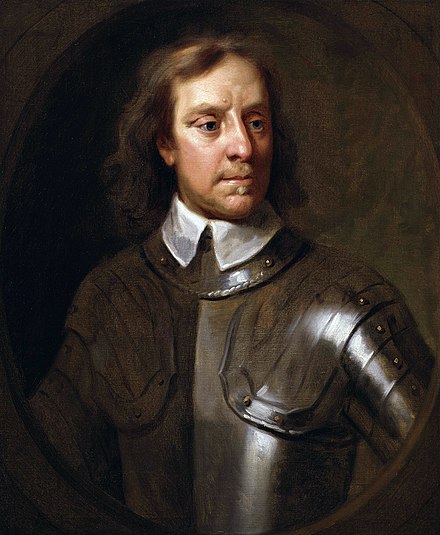
Oliver Cromwell, 1599–1658, English politician; some say regicidal dictator, others say military dictator, others say a hero of liberty. Portrait by Samuel Cooper, 1656.
Cromwell was born into the English middle gentry to a family descended from the sister of Thomas Cromwell, minister to Henry VIII. You might remember Thomas from Hilary Mantel and “The Royals—Old and New,” or from “Sycophants? Nail ’Em, One and All!” Both are earlier tidbits here at SimanaitisSays.
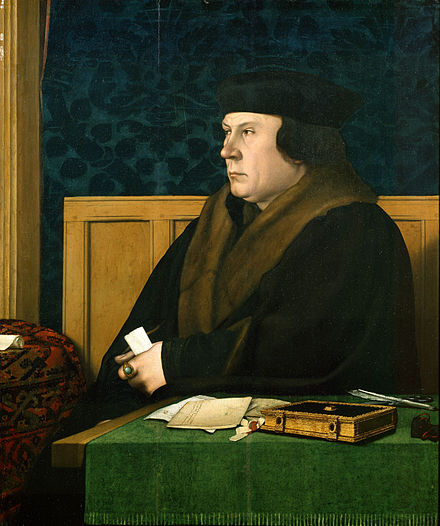
Thomas Cromwell, 1st Earl of Essex, c. 1485–1540, English lawyer, statesman, and chief minister to King Henry VIII. Court intrigue led to his beheading.
Apart from undergoing religious conversion to Independent Puritanism in the 1630s, Oliver Cromwell left little trace from his first 40 years. Then he made up for it.
Regicide In 1649. Cromwell was one of the signatories of the death warrant for Britain’s King Charles I. After this regicide, Cromwell found his mettle and became a dominant player in the resulting attempts at British government. There were several, including the Commonwealth of England, which ruled from 1649 until the 1660 Restoration of a proper king, Charles II.
They number kings to help keep track, like we do with 44 and 45.

Coat of Arms of the Commonwealth from 1649 to 1653. Image by Sodacan.
Cromwell and the Rump Parliament. The Rump Parliament was part of complex dealings that led to Charles I’s execution. This Parliament was so named in the sense of a remnant, a left-over, what we’d call a lame duck.
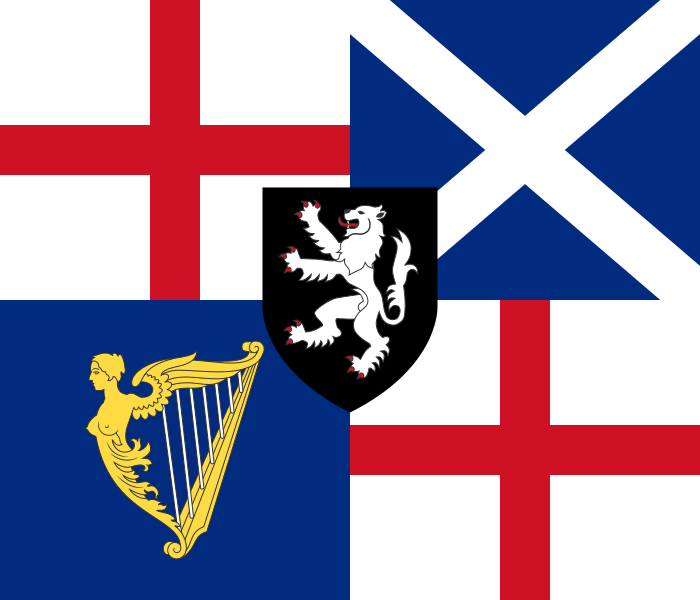
Banner of Oliver Cromwell. Image by TRAJAN 117.
At the behest of the Rump, Cromwell commanded military campaigns against Catholic dissidents in Ireland and Royalist supporters in Scotland. His actions in Ireland are particularly long remembered.
James Joyce wrote in Ulysses, 1922, “What about sanctimonious Cromwell and his ironsides that put the women and children of Drogheda to the sword with the bible text God is love pasted round the mouth of his cannon?”
Winston Churchill’s view in The History of the English Speaking Peoples: The Age of Revolution, 1957, is perhaps less artful, but succinct: “By an uncompleted process of terror, by an iniquitous land settlement, by the virtual proscription of the Catholic religion, by the bloody deeds already described, he cut new gulfs between the nations and the creeds…. Upon all of us there still lies ‘the curse of Cromwell.’ ”
Tomorrow in Part 2, we learn about Barebone’s Parliament, Cromwell’s Protectorate, and the whereabouts of his head. ds
© Dennis Simanaitis, SimanaitisSays.com, 2018
 Simanaitis Says
Upon Winston Churchill lies the curse of Cromwell after the disaster of Gallipoli, the carving up of the Middle East, and the firebombing of Dresden.
And don’t get me started on Blair!