
Simanaitis Says
On cars, old, new and future; science & technology; vintage airplanes, computer flight simulation of them; Sherlockiana; our English language; travel; and other stuff
BLOCKCHAINS AND CRYPTOCURRENCIES PART 1
WHAT WITH Bitcoin in the news regularly these days, I believe it’s appropriate to separate this and other cryptocurrencies (there are scads!) from the related topic of blockchains. Today, we’ll look at basics; tomorrow, innovative blockchain applications, including those outside the world of finance.
We touched on the subject several items here at SimanaitisSays: “Brother, Can You Spare a Bitcoin?”, its dark side at “The Bitcoin Saga Continues”, and other aspects “On the Virtues of (Highly Selective) Connectivity.” What follows here are brief summaries of these, other articles I’ve read recently, and tidbits from a must-watch “Cryptocurrencies” item on Last Week with John Oliver, March 11, 2018.

John Oliver’s “Cryptocurrencies” item, March 11, 2018
Briefly, I don’t trust cryptocurrencies. Somehow, that prefix “crypto” hints at a dark side of anonymity that helps money laundering while it hampers investigations of this practice or regulations against it. However, I have no fears of the blockchain concept.
Why The Distinction?

Cryptocurrency is defined by Merriam-Webster as any form of currency that exists only digitally. Unlike traditional currencies, there’s no central authority issuing or overseeing it. The issuance and transactions of this currency rely completely on cryptography; that is, of its online operations encoded to prevent counterfeiting and fraudulent transactions. The “crypto” refers not to any nefarious opportunities, but rather to these cryptographic aspects of the currency’s bookkeeping.
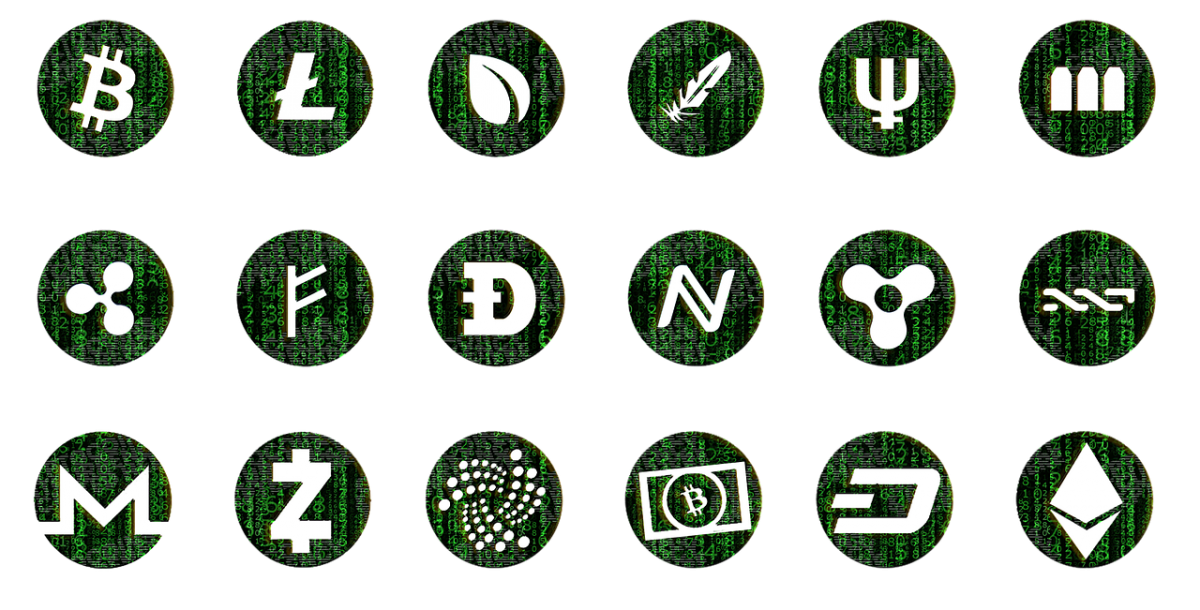
Bitcoin has plenty of cryptocurrency competitors. Image from the World Economic Forum.
The blockchain is the heart of this cryptographic protection. Think of blockchains as the motors propelling this medium of exchange from one entity, be it a person, company, or whatever, to another.
A not-completely-lame analogy lies in a dollar bill and its serial number, XXXXXX. This currency’s value could be identified by its serial number alone, perhaps properly encrypted “a&3%4$zz#” to prevent counterfeiting.
Furthermore, this value could be transferred from entity 1 to entity 2 by a related encrypted sequence, this one of the form “a&3%4$zz#//1//2.” When entity 2 wishes to transfer its value to entity 3, the new encrypted sequence becomes “a&3%4$zz#//1//2//3.” Indeed, each exchange may be time-stamped identifying when the transaction occurred.
This, in essence, is a blockchain. As defined by Merriam-Webster, a blockchain is “a digital database containing information (such as records of financial transactions) that can be simultaneously used and shared within a large decentralized, publicly accessible network.”

A decentralized, publicly accessible newtork is part of the blockchain concept. Image from Dreamstime.com.
With Bitcoin and other cryptocurrencies, their blockchains also encrypt the entities 1, 2, and 3, into something like “4daa2ff#,” “h2&&78#,” and “@q1kr7s#, respectively, thus shielding the spenders and receivers from the eyes of others, including government regulators.
Note, though, the concept is equally valid when the users of a blockchain are identified. In this case, the encrypted portion defines its value, but the transactors’s identities and maybe even that time-stamped proof of the transaction are not.
Those seeking to follow the money, rejoice!
Tomorrow, we’ll look at blockchain tradeoffs, as well as other innovative applications for the concept. ds
© Dennis Simanaitis, SimanaitisSays.com, 2018
 Simanaitis Says