
Simanaitis Says
On cars, old, new and future; science & technology; vintage airplanes, computer flight simulation of them; Sherlockiana; our English language; travel; and other stuff
JOHN FITCH’S 1952 MEXICAN ROAD RACE—PART 1
JOHN FITCH’S credentials were impressive indeed: American sportsman, yachtsman, fighter pilot, champion sports car driver, and safety advocate. A race report of the Third Mexican Road Race in R&T, February 1953, tells part of his tale, with subtexts aplenty. I’m splitting matters into background with today’s Part 1 and the actual race as tomorrow’s Part 2.
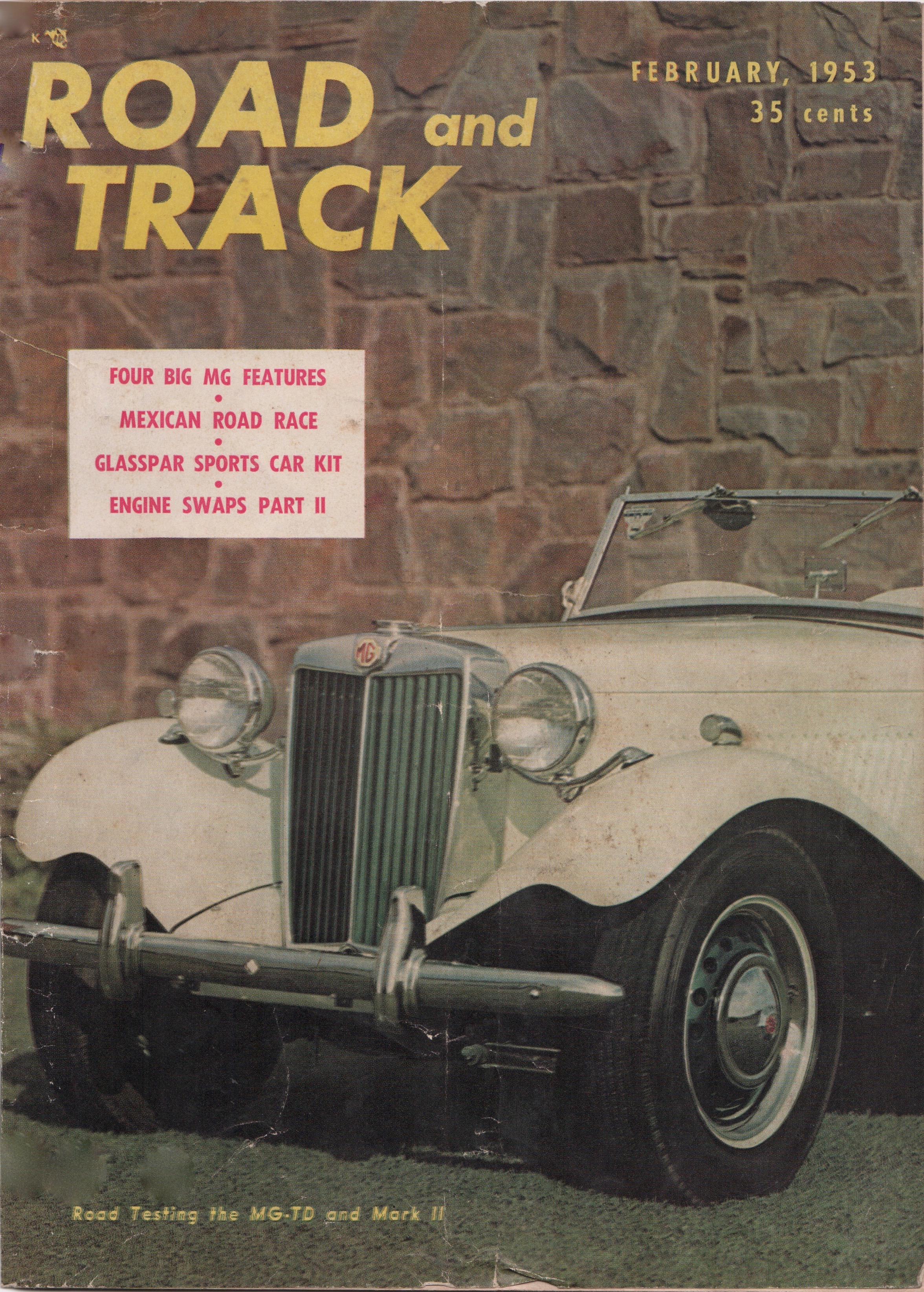
R&T, February 1953.
Even before John’s participation in what came to be known as the Carrera Panamericana, his life had been fulsome. In 1939, as part of an extended yachting adventure, John attended the last pre-war car race at Brooklands Circuit. During World War II, he flew Douglas A-20 Havocs and later North American P-51 Mustangs in the U.S. Army Air Corps. John was one of the few American pilots to shoot down a Messerschmitt Me 262 jet fighter. His wartime experiences included a two-month stint as POW.
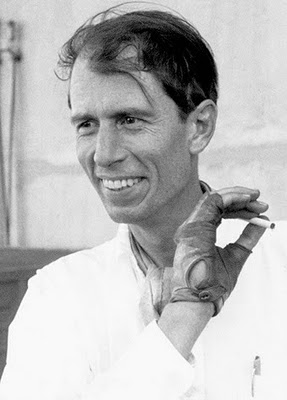
John Fitch, 1917–2012, American sportsman, race driver, inventor of the Fitch Barrier road safety device. A descendent of John Fitch, 1743–1798, who operated the first steamboat service in the United States.
After the war, John displayed prowess in sports car racing. In 1951, he won the Argentine Gran Premio de Eva Duarte Perón and earned a kiss from Evita. He also became involved with Briggs Cunningham’s attempts to win Le Mans.
At the 1952 Le Mans, Fitch was impressed with the Mercedes-Benz team, and vice versa: Mercedes’ legendary team manager Alfred Neubauer subsequently offered John a driving test at Nürburgring. John in turn persuaded Mercedes to enter a trio of its 300 SLs, two coupes and a roadster prototype, in the third running of the Mexican Road Race.
Back in 1950, Mexico had completed a 2178-mile portion of the Pan-American Highway, its contribution running from Ciudad Juarez, across the border from El Paso, Texas, to Ciudad Cuauhtémoc, at the Mexico-Guatemala border. The first Mexican Road Race, for five-place sedans only, celebrated the road’s completion with a north-to-south running.
Subsequent events through 1954 started in the south with a Juarez finish. The annual race became increasingly dangerous and deadly. At least in part because of the 1955 Le Mans disaster, the 1955 Carrera Panamericana was cancelled. A modern rally continues as a four-day event based in Chihuahua, in northern Mexico.
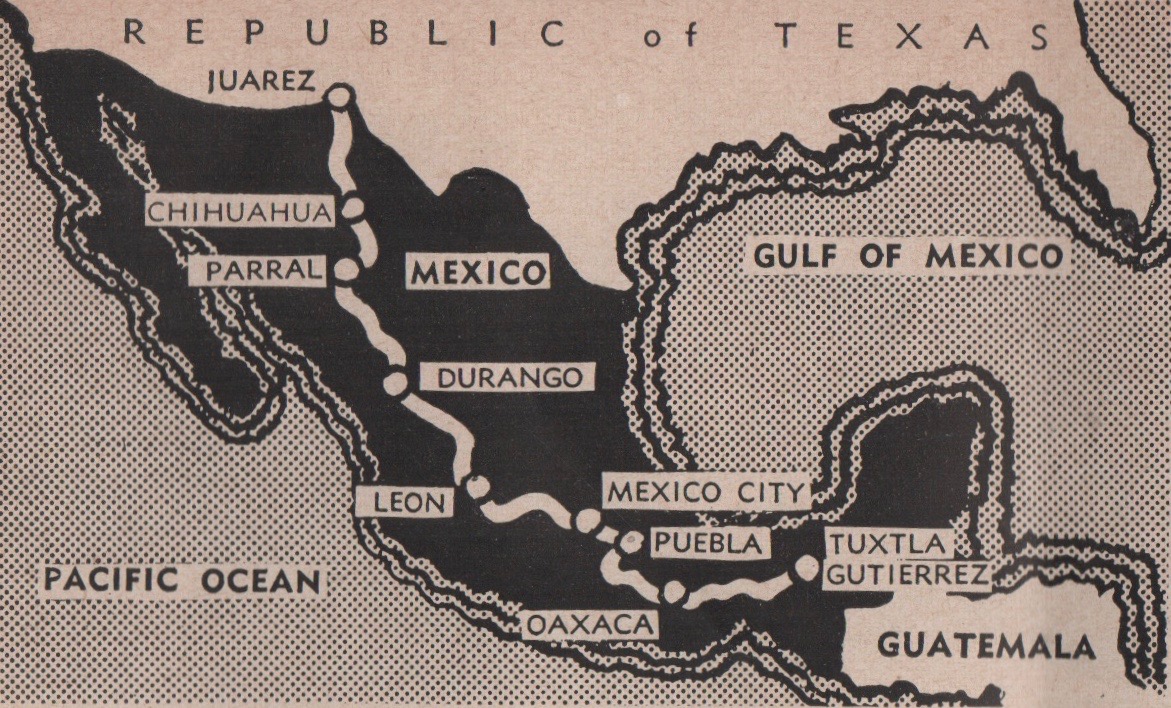
Course map from R&T, February 1953.
The Third Mexican Road Race ran for 1934 miles, from Tuxtla Gutierrez in the south to Juarez in the north. Its eight legs were run over five days, November 19–23, 1952. Twenty-seven sports cars and 68 stock cars, including potent Lincolns, participated. Front-running sports cars included the French Gordini, Italian Ferrari and Lancia, and German Mercedes-Benz teams.
What had begun in 1950 as a race for sedans had expanded into one of international stature for the finest of sports as well as stock cars. Tomorrow, we’ll see how John Fitch fared in such competition. ds
© Dennis Simanaitis, SimanaitisSays.com, 2017
 Simanaitis Says
John Fitch was a real gentleman, one of the most interesting and accomplished
people that a sports-car enthusiast could ever meet.
Agreed.