
Simanaitis Says
On cars, old, new and future; science & technology; vintage airplanes, computer flight simulation of them; Sherlockiana; our English language; travel; and other stuff
PREPARE FOR EUROPE ’06
WHY CONSULT A TRAVEL BOOK that’s already 10 years old? No, make that 110. I’ve just been armchair traveling with a woman named H.A. Guerber and I’m having a ball.

How to prepare for Europe: A handbook of historical, literary, and artistic data, with full directions for preliminary studies and traveling arrangements,
I knew I’d like Ms. Guerber right off, as she’s also the author of Stories of the Wagner Operas.

Rouget de Lisle singing the Marseillaise, by Isidore-Alexandre-Augustin Pils, The Louvre. This and the following images from How to Prepare for Europe.
This painting by Pils from the book’s frontispiece can’t help but recall Victor Lazlo’s rousing rendition of the same song in Rick’s Café; just change the garb.
The illustration is one of 114 photos, portraits and maps in the book. And, note, this is a handbook, not a conventional guide with info on hotels, restaurants and the like.
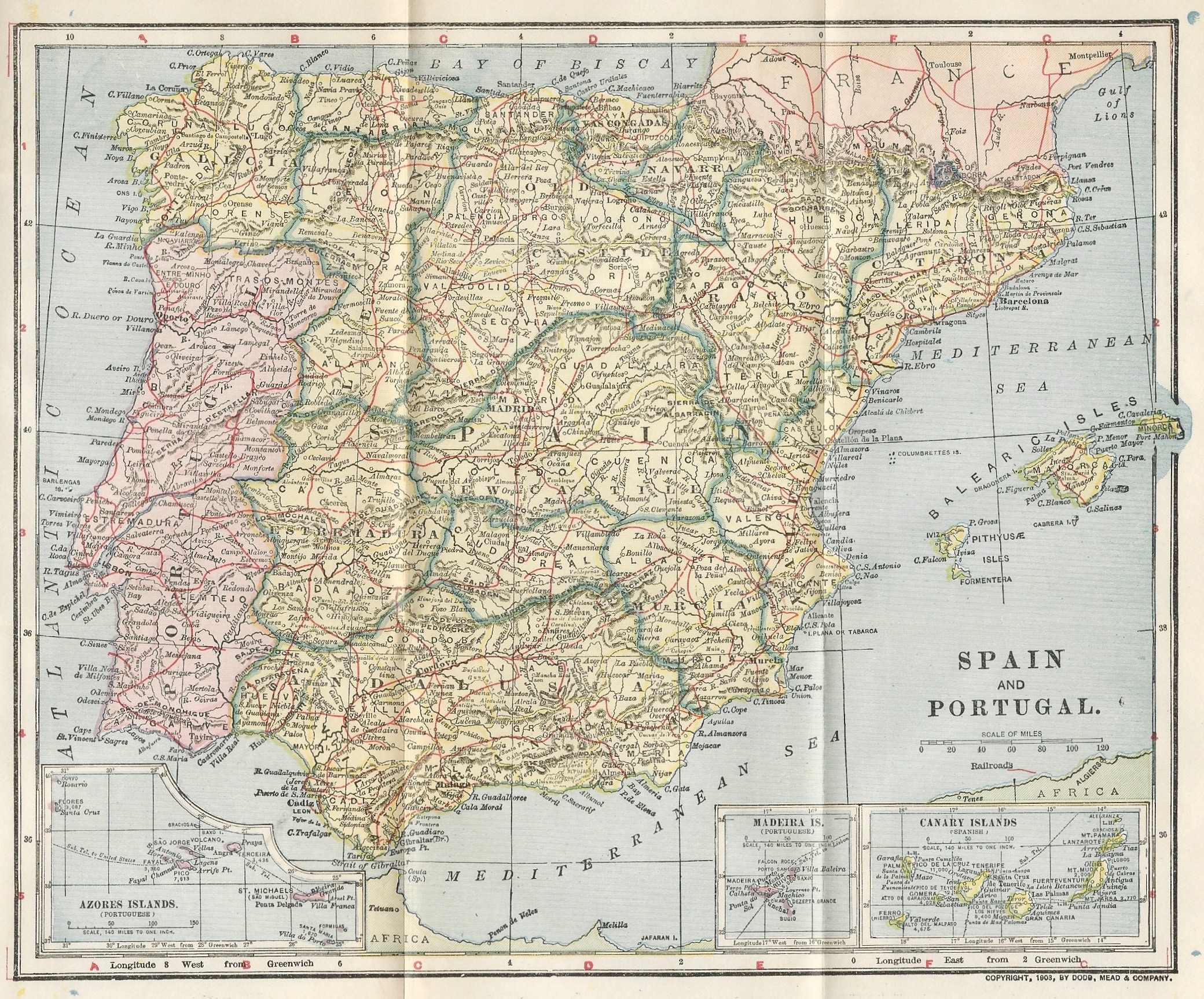
Each country or region gets a detailed map.
What’s more, true to its subtitle, the book is data-rich, in ways that are unlike any other handbook in my collection. For instance, to identify what you’re experiencing, there are alphabetical lists, with names, nationalities and dates, of European painters (15 pages of them!), sculptors and their works (21 pages), architects (16 pages) and composers (another 5 1/2 pages). How everything fits into 522 pages is quite amazing.

Italy’s Mount Vesuvius, as it was erupting in 1872, only 34 years before the book’s publication.
Early on, Ms. Guerber recounts a Vermont newspaper story about a commercial traveler who was invited to share his impressions of the Panama Canal at a local church: “The drummer accepted, and delivered the following concise lecture: ‘As I came into the church I noticed a ditch in the street, evidently for water pipes or something. Just image that ditch two hundred times as wide, two hundred times as deep, and forty-seven miles long. And there you are. Good-night’ ”
Guerber observes that her aims are different. Each country or region has a chapter on its history, with a multi-page chronology from earliest times to 1900, followed by a separate chapter on 1906 travel tips. Indeed, she ends with a Note: “The author intended to conclude this volume with a Comparative Chronological Table covering all the ground from the dawn of history to date. Owing to bulk, and because the majority of readers will be satisfied with the tables already given, it has been decided to publish this table separately.”

A Comparison of Thermometer Scales
Guerber does include a helpful Comparative Table of Thermometers. The English Fahrenheit and French Centigrade are familiar to me. Her German Reaumur scale calls for some research: In 1730, Frenchman René Antoine Ferchault de Réaumur proposed this scale, with water freezing at 0 and boiling at 80 degrees, respectively. According to Wikipedia, the scale is still used today in some Italian dairies making Parmigiano Reggiano and Grana Padano cheeses.
Guerber’s advice remains sound: “Good society is much the same all the world over, and good manners, like true politeness, start from the heart.”
On the other hand, she tells it like it is, er… was: “In the Latin countries you will doubtless find manners more courteous than in Teutonic regions, where, for instance, it often seems as if women were decidedly inferior animals, judging by the lack of ceremony with which they are treated by the lower classes, for, of course, cultured men are the same in all parts of the world.”
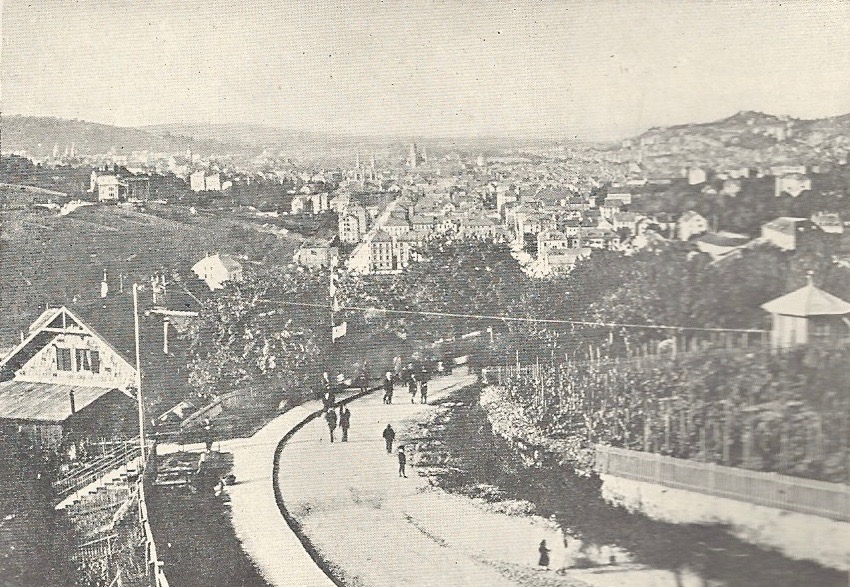
This view entering Stuttgart, Germany, would not be unfamiliar to those today.
Then she shares one of many anecdotes that make the book a delight: “… the ludicrous mistake which befell French and German boon companions, the national custom prescribing that one should fill his neighbour’s glass as soon as emptied, while good manners, according to the standard of the other, required that he should empty his glass as soon as filled.” Golly.
In the Ancient History chapter, Guerber writes of cuneiforms stamped on soft clay tablets and then fired. “In those days,” she conjectures, “books must have been hawked in Babylonian streets somewhat in this fashion: ‘Just baked, still hot, the latest work of So and so!’ ”
Then, to balance this witticism, she recounts a genuine archeological find, a cuneiform from circa 2200 B.C. bearing the earliest love letter on record: “May the sun of Marduk give thee eternal life…. Send me a message when thou wilt come, so that my heart may rejoice.”
I send a message across 110 years to Ms. Guerber: I enjoy our travels together. ds
© Dennis Simanaitis, SimanaitisSays.com, 2016
 Simanaitis Says