
Simanaitis Says
On cars, old, new and future; science & technology; vintage airplanes, computer flight simulation of them; Sherlockiana; our English language; travel; and other stuff
LIFE SPANS IN THE ANIMAL WORLD
DISCUSSIONS OF animal life spans include us too. There’s a Special Section on this topic in the December 4, 2015, issue of Science, published by the American Association for the Advancement of Science. Here’s a look at one of its articles, “Why We Outlive Our Pets,” by David Grimm. It’s a fascinating piece that confirms some things I thought I knew and dispels some myths as well.

As outliers in the data, Frenchwoman Jeanne Louise Calment lived to 122, the longest documented human age. By contrast, these days the average longevity for our species is 71. Creme Puff was a Texas cat that allegedly thrived on bacon, broccoli and heavy cream to a reported age of 38; the average feline life span, 15. Bluey, an Australian cattle dog, lived to 29, more than twice the average canine age.
In his Science article, Grimm quotes Daniel Promislow, an evolutionary geneticist at the University of Washington, Seattle, on animal aging: “A fascinating problem. It integrates behavior, reproduction, economy and evolution. If we can understand how to improve the quality and length of life, it’s good for our pets and it’s good for us.” Promislow is co-leader of the Dog Aging Project.

Lily, a long-haired dachshund, at 8 months, 2 years, 7 years and 15 years. This and other images from Science, December 4, 2015.
Animals age at different rates and, scientists suggest, for different reasons. Hypotheses in this regard get built up as well as torn down. For example, it was once thought that short-lived animals generate more tissue-damaging free radicals or have cells that stop dividing sooner. Further studies, though, suggest otherwise.
Another hypothesis was that the higher an animal’s metabolic rate, the shorter its life; in a sense, its body clock is racing. However, parrot hearts can beat as much as 600 times/minute, yet they outlive by decades plenty of species with slower hearts.
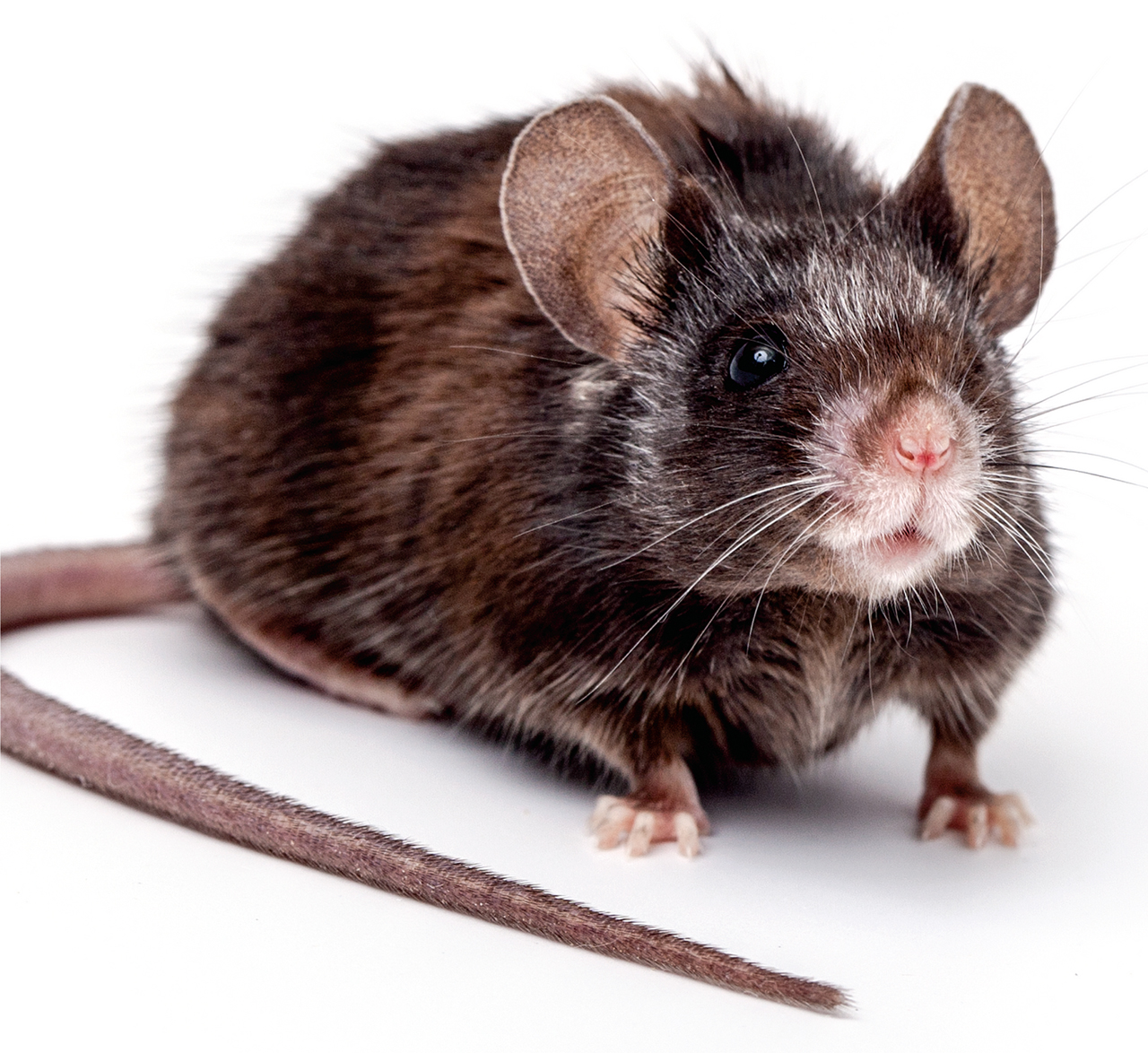
The life span of a mouse is perhaps two years.
Mice furnish a clue that environment is an important factor. Another article in the Special Section, “Death-Defying Experiments,” by Jon Cohen, cites a laboratory dwarf mouse that lived a record 1819 days, thus missing its fifth birthday by only a week. By contrast, many mice in the wild are victims of predators before they reach 2 years old.
Steven Austad is a biogerontologist at the University of Alabama, Birmingham. He has a theory on animal longevity as well as an interesting background: Austad used to be a lion trainer in the early 1970s until his leg was injured by one of the big cats. He then got a Ph.D. and, during a postdoc, studied opossum behavior in Venezuela.
Marsupial aging proved an excellent test study. Notes Austad, “They’d go from being in great shape to having cataracts and muscle wasting in 3 months.” What’s more, he also observed other opossums living free of predators on a nearby island. These opossums seemed to age slower and live longer than their mainland counterparts.

A fascinating hypothesis.
The hypothesis that longevity favors the big guys has more going for it than metabolic rate. Large animals tend to live longer because they face fewer dangers. Austad postulates it’s not merely survival, but also the result of evolutionary perks over millions of years.
On the other hand, with dogs there’s a rule of thumb that small breeds outlive large ones, and to a great extent this is true. A 150-lb. Irish Wolfhound is old at age 7, whereas a 9-lb. Papillion can outlive the large dog by ten years. Evolution isn’t involved, because all breeds are relatively recent products of human husbandry. One reason for the aging difference is inherent health problems of larger dogs, German Shepherds’ hip dysplasia, for example.
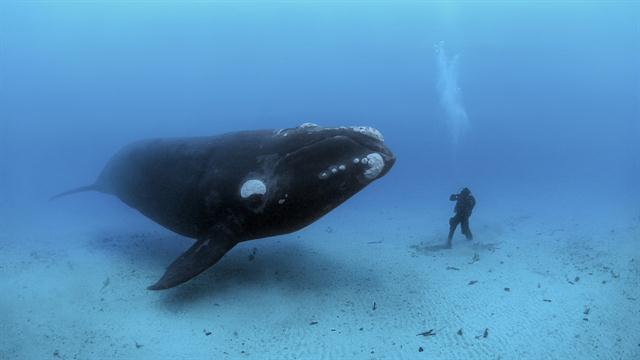
Bowhead whales can live to more than 200 years. Image and video from National Geographic.
The bowhead whale, almost wiped out in whaling days but thriving today, has been identified as one of the longest-living mammals. Neck blubber of one captured in 2007 contained a harpoon manufactured around 1890.
In 2015, scientists mapped the whale genome and identified genetic aspects that could be responsible for its longevity. The bowhead has two specific gene mutations that enhance its repairing of DNA, thus giving the whale a resistance to cancer. There may also be physiological adaptations, such as a lower metabolic rate compared with those of other mammals.
Austad observes that large animals with no predators can invest resources in developing robust bodies and hardy immune systems. By contrast, mice and other prey need to put their energy into growing and reproducing quickly. Austad says, “You wouldn’t put a $1000 crystal on a $5 watch.” ds
© Dennis Simanaitis, SimanaitisSays.com, 2016
 Simanaitis Says
Creampuff, the cat! ________________________________
So there is some hope I will make it to 150 with my slow heart rate, but I better gain some weight! 🙂
Philippe,
Some experts say there are humans alive today who will reach 150. Maybe you’re one of them? Me? I’m trusting in red wine. Either way, it improves the life remaining.