
Simanaitis Says
On cars, old, new and future; science & technology; vintage airplanes, computer flight simulation of them; Sherlockiana; our English language; travel; and other stuff
CENTURY-OLD SLANG
LADY MARY CRAWLEY of Downton Abbey uttered “Golly!” and that got me thinking. What were the slang terms of a hundred years ago? I dug into this with A Dictionary of Slang and Unconventional English

Lady Mary Crawley, as portrayed by Michelle Dockery. Original image from Vogue.
Golly. Lady Mary’s “Golly!” has a literary history tied in with her mother’s being American. James Russell Lowell, one of New England’s Fireside Poets, used the term in The Biglow Papers, 1848, as representative of a Yankee accent. The word’s origin is even older. According to A Dictionary of Slang, “by golly” was an African-American version of “by God.”
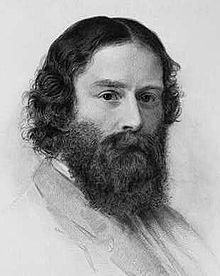
James Russell Lowell, 1819 – 1891, American Romantic poet, editor and diplomat.
Gee Whiz. Similarly, “gee” grew from a non-blasphemous version of “Jesus,” akin to “geez.” The “whiz” merely makes it more emphatic, as in “neat-o.”
Bimbo. Literally, “bimbo” is Italian for “baby.” To late Victorians (and to gender-conscious speakers of Italian), a bimbo was decidedly masculine, what we’d call a macho type today. Its English usage, c. 1880, may be related to bumbo, a concoction of rum, sugar, water and nutmeg. It was later, according to the Dictionary of American Underworld Lingo, 1950, that “bimbo” or “bim” took on a feminine connotation.

This is a rather more wholesome example of possible Google Images. Image from bakeryandsnacks.com.
Bank Closed. The term “Bank Closed” was a flapper term used by young ladies to signify “we stop now.” I wonder, was this any more romantic than today’s complex protocol of perfectly clear consent?
Chit. We use the word “chit” for a short note or voucher. However, to Victorians it described a young woman regarded as immature or lacking respect.
Etymology of the two English terms is utterly different. The chit involving money comes from the 17th century, a Hindi ciţţhī or note. The chit as a person traces to the 14th century, a Middle English word for a sprout or young of a species. By the 17th century, the word was synonymous with “brat.” The feminine chit evolved from this.
The French Disease. Victorians tacked on the word “French” to anything disingenuous or worse; thus, they referred to syphilis as the French Disease. However, calling it this was nothing new to the 19th century.
The latest thinking is that syphilis arose in the New World, with sailors of the Columbus crew introducing it to Europe. The 1494 – 1495 French invasion of Naples was claimed for spreading morbus gallicus, Latin for French disease. And perhaps it’s no surprise that the French have blamed the English, la maladie anglais; the Italians blamed the Spanish, la malattia spagnola; and the Russians blamed the Poles, польский болезнь.
The Vapours. All this talk of French matters would have been quite enough to give an Edwardian gentlewoman the vapours. Indeed, according to the OED, the belief that bodily humors affected moods traces back to 15th-century medicine.

By the 19th century, the vapours specifically described why women were known to faint dead away when confronted with surprise. Modern thinking is that tight corsets were the real reason.
A good test would be whether Lady Mary ever got the vapours once she entered her flapper phase. I doubt it. ds
© Dennis Simanaitis, SimanaitisSays.com, 2016
 Simanaitis Says
