
Simanaitis Says
On cars, old, new and future; science & technology; vintage airplanes, computer flight simulation of them; Sherlockiana; our English language; travel; and other stuff
THANKS FOR THE LIFT, GOODYEAR!
THE GOODYEAR blimp Spirit of America is being retired on Friday, August 15, 2015. She and The Spirit of Innovation, her Eastern U.S. sibling, are being replaced by the next generation of lighter-than-air craft, the Goodyear Wingfoot One being one of them.
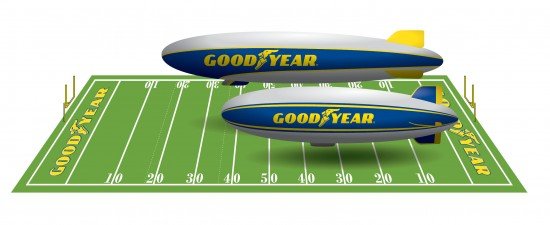
The GZ-20 series is being replaced by the larger and faster Zeppelin NT. An informative Goodyear website compares these two LTA craft, its video showing NT construction.
Previous Goodyear craft have been true blimps, their envelope without internal structure. In a sense, they’re shaped helium-gas balloons, with added “balloonet” air bags located for trimming.
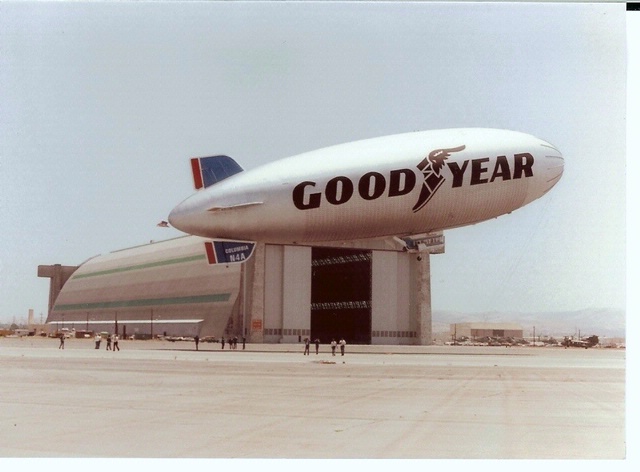
Goodyear’s Columbia in front of a World War II blimp hangar, one of two in Tustin, California. Image c. 1978 from the Smithsonian National Air and Space Museum.
The Spirit of America will be decommissioned at a Tustin, California, World War II blimp hangar, one of two on the site. An earlier member of the Goodyear fleet, the Columbia, was tested nearby at Orange County International Raceway by R&T in April, 1972.
By contrast with a blimp, a dirigible has a rigid skeleton supporting its bags of gas and air. The new Zeppelin NT is a hybrid, a semi-rigid design with internal structure of carbon fiber and aluminum.

Zeppelin NT structure. Image from ZLT Zeppelin Luftschifftechnik GmBH.
Though both blimps and dirigibles are termed lighter-than-air, in fact an LTA craft is ordinarily trimmed for just a tad of negative buoyancy. NT specifications list a nominal weight of just under 20,000 lb., a maximum static heaviness on take-off/landing of around 880 lb.; a maximum static heaviness in-flight of about 1103 lb.; and a maximum static lightness (i.e. buoyancy) of around -440 lb.
For an indication of an LTA’s trim on the ground, look at the deflection of its landing-gear tire(s). The GZ-20 has a single tire under the gondola; the ZT, an aft tire as well.
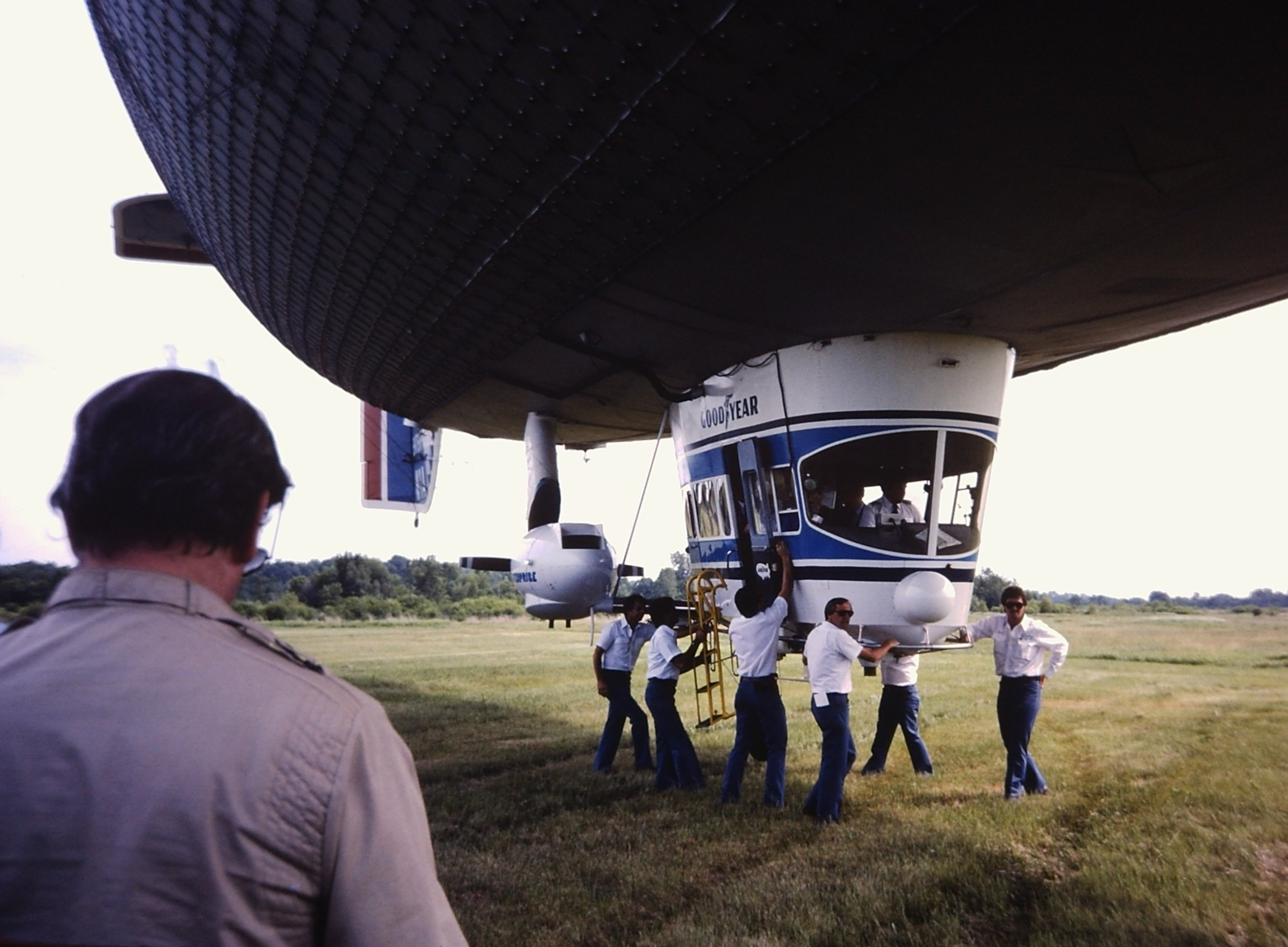
The Enterprise ground crew prepares for a passenger swap.
I had two flights in Goodyear blimps, one over Ann Arbor, Michigan, and the other out of Phoenix, Arizona. On the Ann Arbor flight of the Enterprise, my adventure even included the briefest stint in the pilot’s seat, given confidence by the fact that the pilot sat next to me.
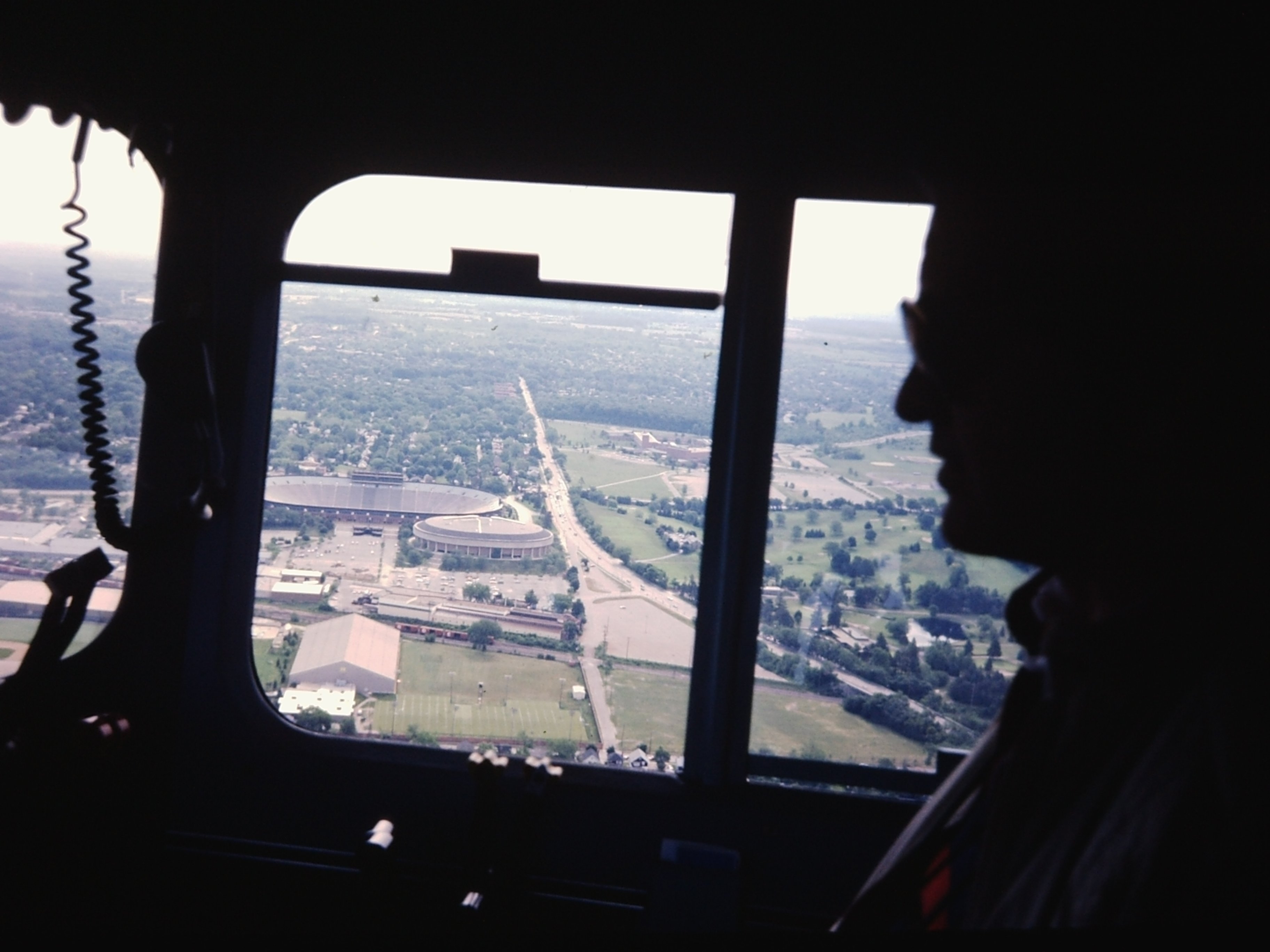
Go, Blue! We buzz the University of Michigan stadium.
Indeed, my piloting wasn’t as foolhardy as it might seem. The primary controls, apart from throttles and all-important trim toggles (clearly Do Not Touch), are rudder pedals for turning and a wheelchair-like wheel for climb or dive. There’s a decided lag in any input, thus giving the real pilot gobs of time to correct any inappropriate input.
I later spoke with automotive dynamics expert Bill Milliken about the experience. He had once transformed a Fifties’ Buick into a research vehicle that allowed variable degrees of response, time lag and feedback. He told me it could model “anything from the Queen Mary to, well, a Fifties’ Buick.”
Set for maximal response combined with maximal lag, the car did everything expected of it, but took its own good time. Just like the Goodyear blimp, Bill and I agreed. Or, like an experienced submariner told Bill, like a submarine.
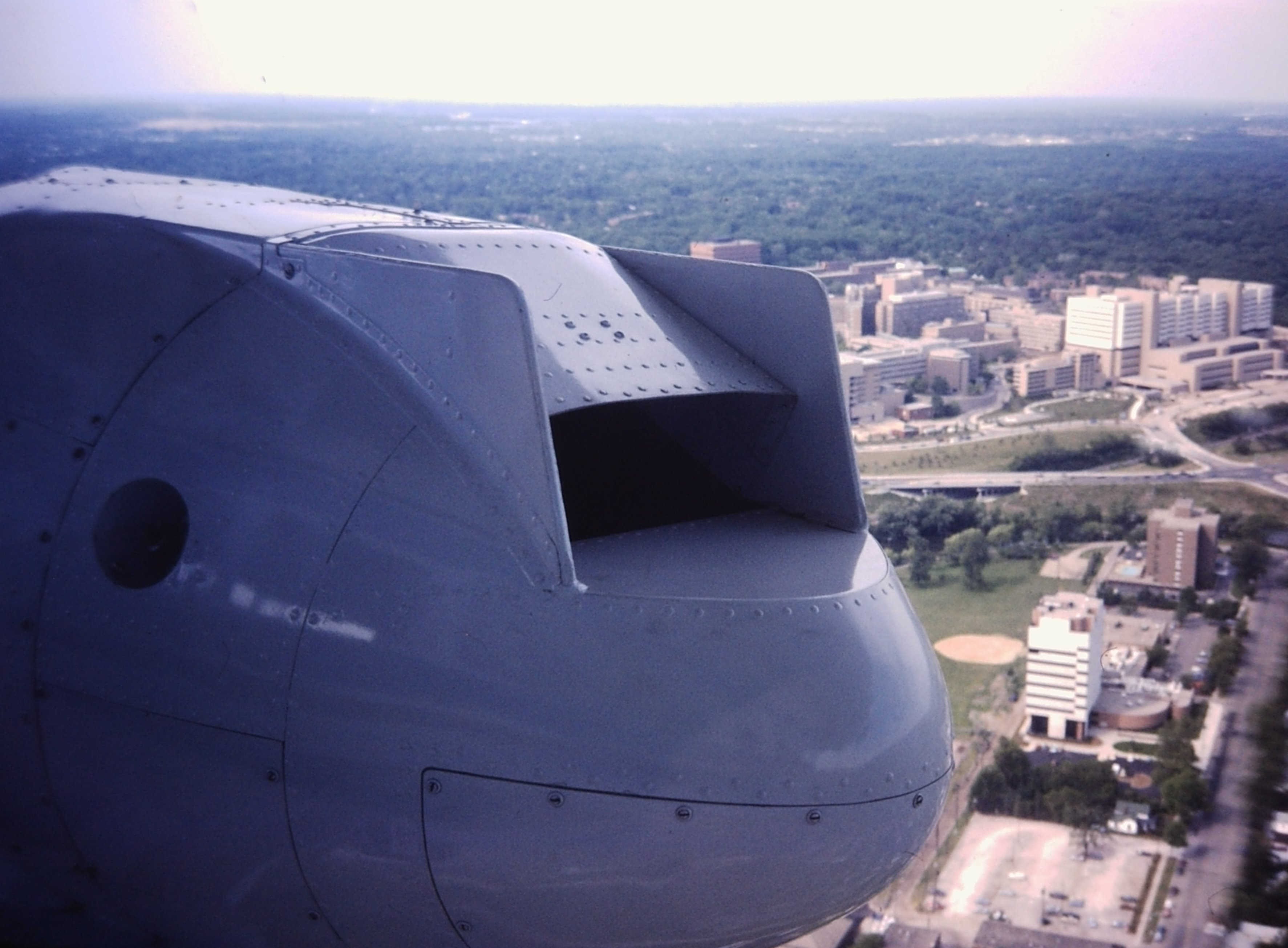
The engine nacelles of a GZ are nearby. I SAID THE ….
Like others of its GZ type, the Enterprise seats seven, plus pilot and copilot, in its gondola. Large windows give a great view. However, its pair of 210-hp pusher-prop engines are attached to the gondola and Goodyear specs cite a noise level of 110 decibels, about what’s experienced at an auto race track when the pack storms by.
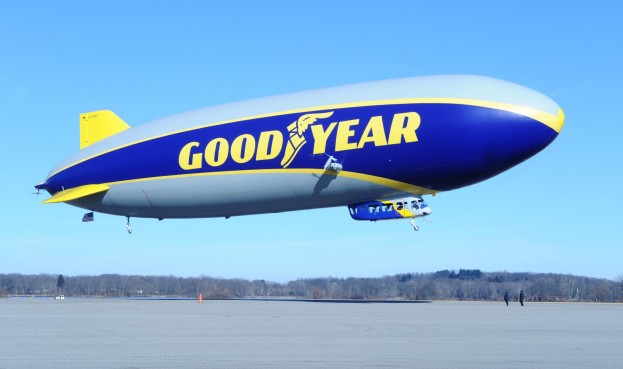
Goodyear’s Wingfoot One is now entering the fleet.
The larger Wingfoot One carries as many as 14 passengers, with cabin noise reduced to 64 dB. Her three engines are mounted on the gas-envelope structure, two on the sides above the gondola, the other at the tail. What’s more, these engines are directable for vectored thrust. Angled downward, they optimize the take-off path of the Wingfoot One to an almost vertical capability. Generally, an LTA craft depends on forward progress for lateral stability.
Our Ann Arbor landing displayed this. On final approach, the Enterprise encountered a touch of crosswind, nothing that would cause a conventional aircraft much bother. However, the pilot kept extremely busy with his wheel, pedals and throttles for a brief time there.

Above, the Enterprise on short final. Below, a crosswind gives her ground crew a workout.

All in a good day’s work for Goodyear and its marvelous machines. ds
© Dennis Simanaitis, SimanaitisSays.com, 2015
 Simanaitis Says
Way back in the late 60’s some guy wigged out on something or other tried to hijack the Goodyear Blimp from its tiedown spot in the Los Angeles area. The yarn was one of one of my first Associated Press bylines.
Amazing, Michael. And then there was the guy who buzzed her with his RC plane, finally crashing into the blimp and causing a 3-ft. hole. The blimp set down and they patched the hole before a lot of helium was lost. The guy did time.