
Simanaitis Says
On cars, old, new and future; science & technology; vintage airplanes, computer flight simulation of them; Sherlockiana; our English language; travel; and other stuff
IT’S GOOD TO BE HOME
“SHOW ME a person’s home,” someone or other must have said, “and I’ll tell you who that person is.” Homes can be modest or grand, elegantly traditional or jarringly post-modern. Even if mobile, a home is mankind’s striving for permanence.

The House Book, Phaidon, 2001.
Phaidon’s The House Book is a collection of 500 homes from across time and around the world, with photos and essays by 37 authorities citing the residences’ architects and cultural importance. It’s great for browsing.
Here are examples from The House Book, together with tidbits gleaned from additional research.
Airstream. Ever since the first Airstream Clipper in 1936, these streamlined aluminum-clad mobile homes have exemplified efficiency.

Airstream trailer, 1947. This and other images, unless otherwise indicated, from The House Book.
This 1947 promotional photo shows French cycling ace Alfred Letourneur, known as “the Red Devil” (and misidentified in The House Book as Monsieur Lafourneau).
In 1941, Alfred Letourneur pedaled to an amazing 108.92 mph on a modified Schwinn Paramount. His Schwinn had an oversized sprocket; a midget race car preceded him as a wind deflector.

Alfred Letourneur’s amazing 108.92 mph. Image from http://goo.gl/76BCr7.
Amsterdam Merchants. Amsterdam expanded in the 1600s through the building of concentric canals lined with multi-story merchants’ homes, workshops and warehouses.
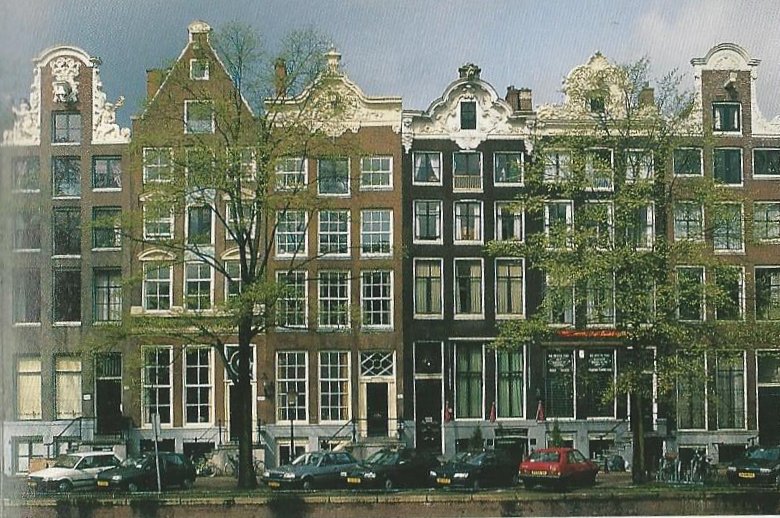
Prinzengracht, (Prince’s Canal), Amsterdam, The Netherlands.
Plots are narrow, often five times as deep as their frontage. Architectural differentiation came mainly in their gable ornamentation.
Inuit. The iglu (Webster: igloo) is an architectural marvel of Native American Inuits. Living in the extreme north, they had the good sense to use ice and snow for their residences.

A Native American Inuit iglu.
An iglu is constructed of spiraling blocks of snow and ice, starting with a 16-ft. diameter, decreasing inward and upward. The completed dome needs no other structural support.
A tunneled entry traps the coldest air from entering. Blubber lamps within can raise the temperature to 60 degrees Fahrenheit.
My sole experience in an iglu, of sorts, came in Hochgurgl, Austria. The Top Hotel Hochgurgl offered one for a Mercedes-Benz technical presentation (complete with warming schnapps).
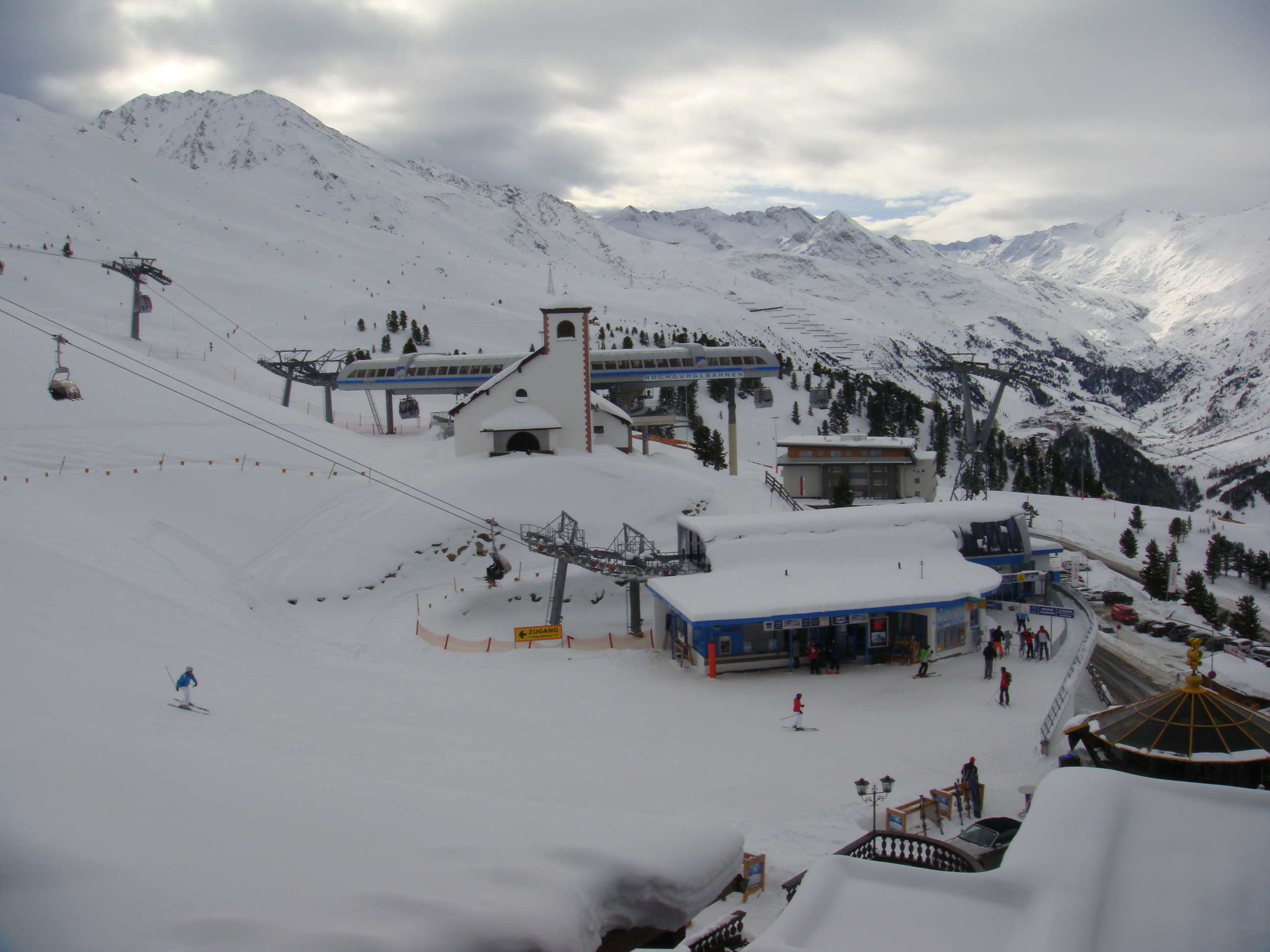
Hochgurgl, Austria, has no indigenous Inuit population, but plenty of snow. Image from the author’s collection.
Williams & Tsien. Offered a site previously occupied by two New York City brownstones, Williams & Tsien devised an open-format structure of steel and transparent glazings with ground level privacy of a limestone wall.
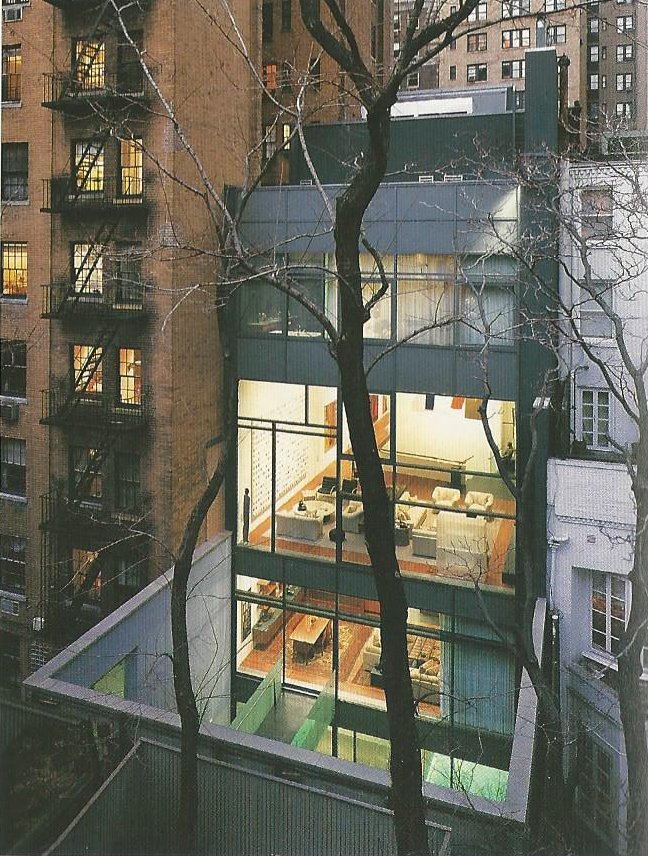
New York City townhouse by Williams & Tsien, 1994 – 1996.
Daylight enters laterally and also from a large skylight. There is a terraced garden at basement level.
Biltmore. Architect Richard Morris Hunt brought the grandeur of French chateaux to Asheville, North Carolina, when he designed the Biltmore residence for George Vanderbilt at the fin de siècle.
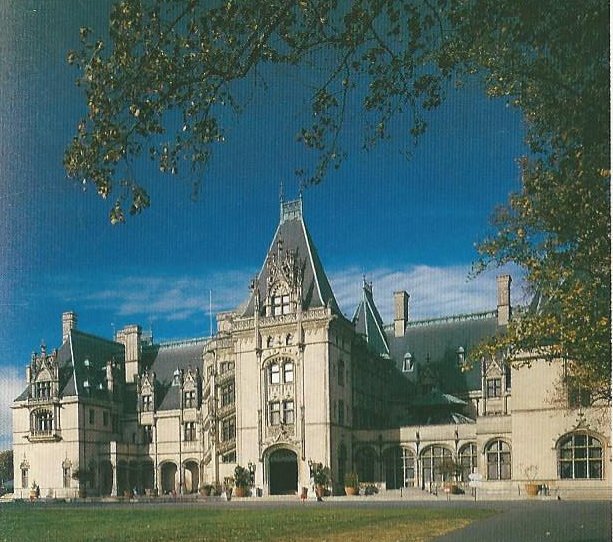
Biltmore Estate, Asheville, North Carolina.
The largest privately owned house in the U.S., the Biltmore occupies 178,926 sq. ft. and has 200 rooms, 34 of them bedrooms. When completed in 1895, it was one of the first residences to use electric illumination provided by Thomas Edison’s light bulbs.

When I drove my Austin Mini Moke cross-country in 1991, the Biltmore provided a photo op that couldn’t be ignored. Image from the author’s collection.
Taos Pueblo. The Tiwa Native Americans built these series of stepped-block houses long before sixteenth-century explorers called them “pueblos” (Spanish: villages). This particular community would have housed 1500 Tiwa.
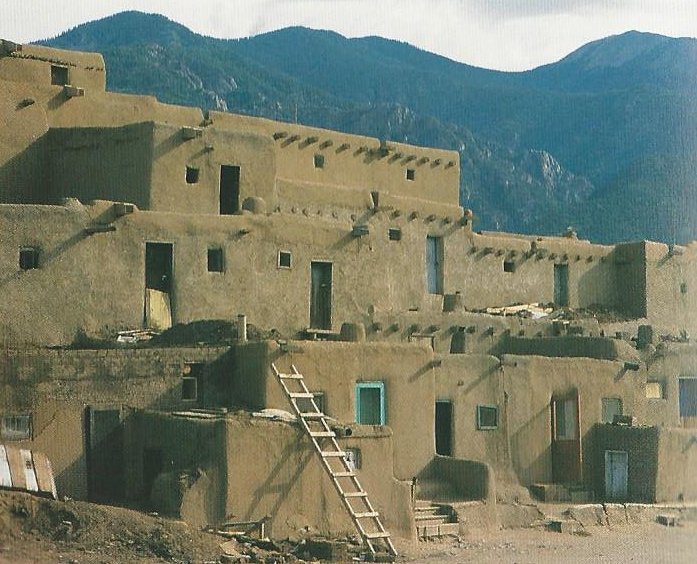
Taos Pueblo, Taos, New Mexico.
Rooms originally had access through openings in the roof, though doors and windows were added later. The spaces within were multi-functional, depending on seasonal needs.
Stahl House. Pierre Koenig designed this California residence in 1960 as Case Study House No. 22, part of a program posed by John Entenza, editor of Arts & Architecture. The site, a Los Angeles hillside, was a challenging one. The Stahl House has a welded steel frame cantilevered on massive reinforced concrete beams supported by caissons bored into the slope.

Stahl House, Los Angeles.
At one time I thought the Stahl House appeared in Alfred Hitchcock’s North by Northwest. However, that particular cantilivered residence overlooking Los Angeles is actually an elaborate movie set, the Vandamm House designed by MGM set designers.

The Vandamm House, as it appeared in the movie North by Northwest. Image from http://goo.gl/iWy4R6.
However, as I noted in California Cool, the Stahl House did have a movie role. It’s the home of Tim Allen’s character in Galaxy Quest. ds
© Dennis Simanaitis, SimanaitisSays.com, 2015
 Simanaitis Says