
Simanaitis Says
On cars, old, new and future; science & technology; vintage airplanes, computer flight simulation of them; Sherlockiana; our English language; travel; and other stuff
MORRIS BULLNOSE COWLEY
FROM TIME to time in period British recreations on TV or film, a tidy little roadster is seen. It stands out because of its rounded radiator, in marked contrast to the flat ones of Model T Fords (which made up more than half the world’s cars in 1924).
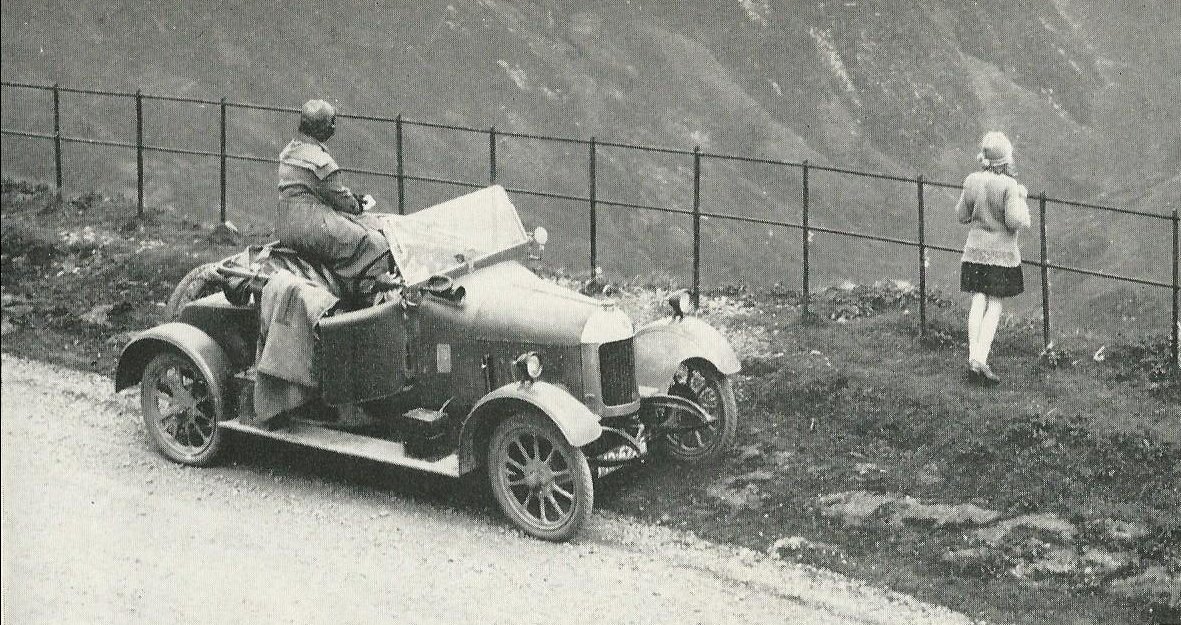
This 1921 Morris Cowley earned a “Gold” in that year’s London-Edinburgh endurance run. This and other images from Classic Cars in Profile, Vol. 3, Doubleday and Company, 1968.
The “Bullnose” Morris Cowley was produced in modest numbers, in total 154,244, between 1915 and 1926. More than 15 million Model T Fords were built, 1908 – 1927. Fame of the Cowley, though, is in its wresting Britain’s No. 1 position from the Model T in their later years of production.
As L.P. Jarman and R.I. Barraclouogh observe in their Classic Cars in Profile article, “The Cowley was to William Morris what the Model T was to Henry Ford, and both manufacturers believed that they had created the ultimate in cheap, reliable motoring.”
Morris Cars evolved from William Morris’s business of repairing, building (and racing) bicycles. In 1924, the name became Morris Garages, destined to be abbreviated M.G. in 1928.
Bicycle and motorcycle entrepreneur William Richard Morris set up WRM Motors Ltd in 1912. His first car, the Oxford, earned the original Bullnose nickname. The radiator shape and nickname continued in the larger Cowley, introduced in 1915 and continuing in production until September 1926.
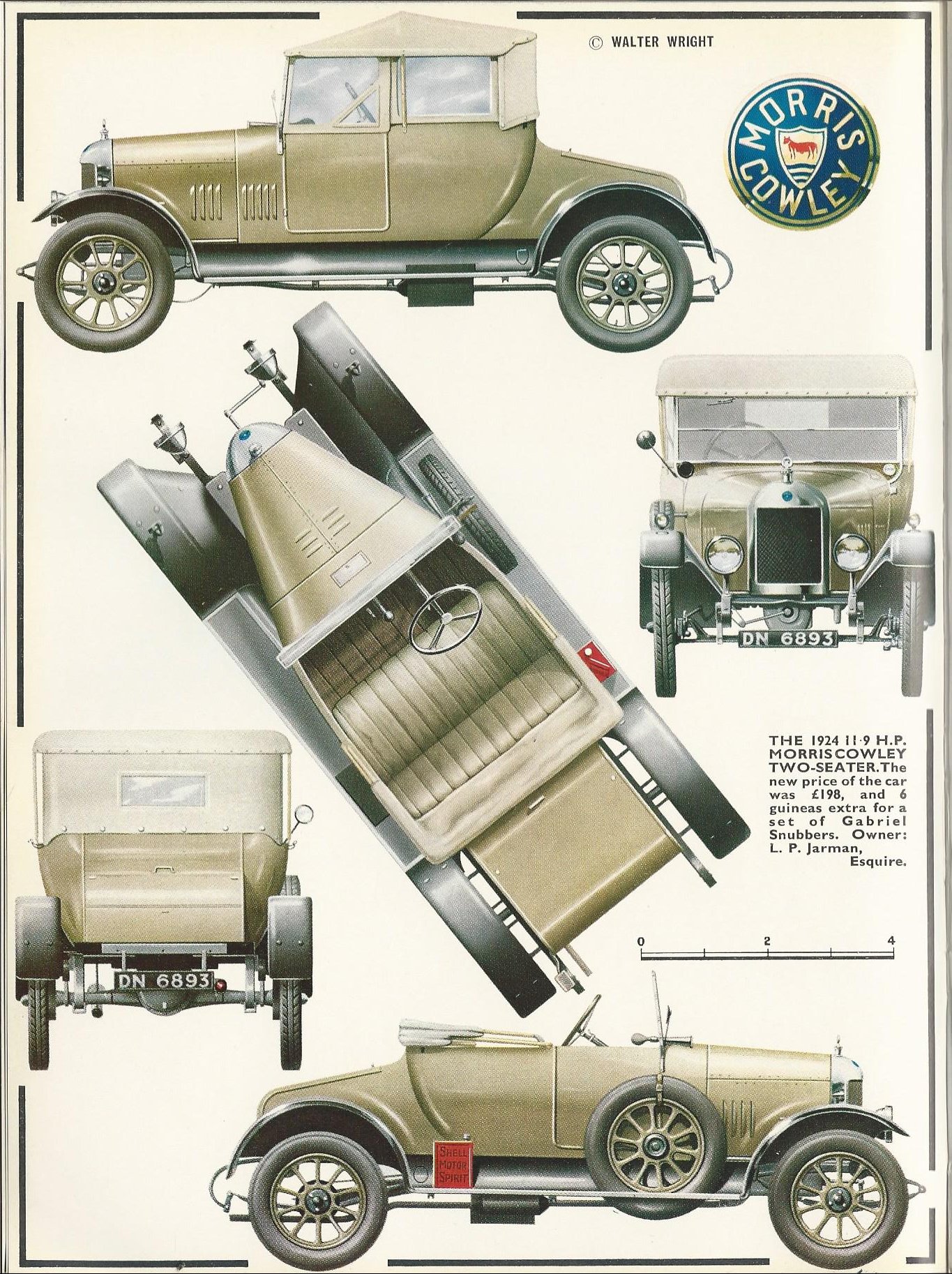
1924 11.9 H.P. Morris Cowley Two-Seater.
The Cowley (named for an Oxford neighborhood) incorporated bits and pieces manufactured elsewhere. For a long time, its engine, gearbox and axles were sourced from companies in Detroit, Michigan. The Cowley’s four-cylinder engine had an L head, side valves and, a novelty of the era, a dipstick for checking oil level. The engine had a displacement of 91.3 cu. in. (1495 cc) and produced perhaps 26 hp. Its taxable horsepower, or R.A.C. Rating, was 11.9 hp.
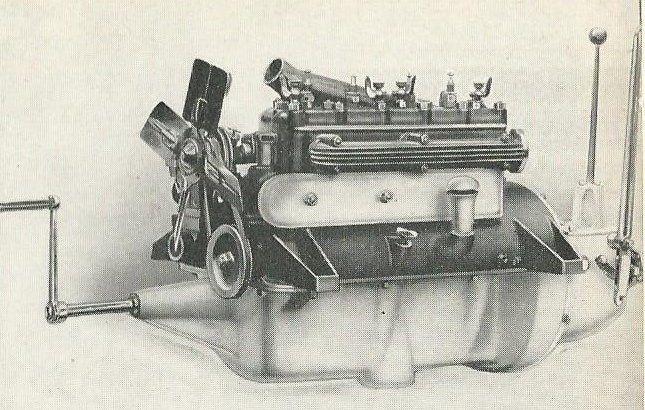
A Cowley powerplant, sourced from Detroit suppliers.
U.S.-sourced bits gave the Cowley a central gearshift and brake lever, whereas British practice of the time put these controls on the driver’s right. Of course, Cowleys had right-hand-drive.
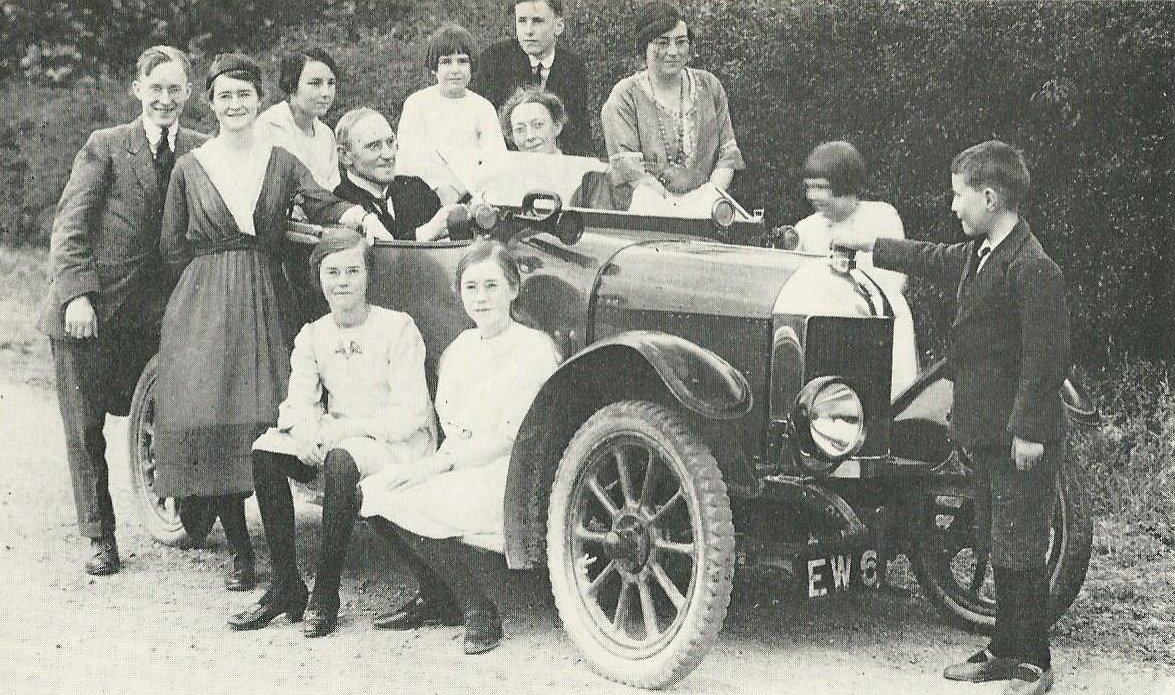
This Cowley poses with the family, not that they’d all fit, 1920.
In October 1915, a two-seater Cowley listed for 185 guineas, $777 at the time, about $18,000 in today’s dollar. The Cowley came nicely equipped, with diamond-pattern leather upholstery, nickel and mahogany trim, a set of five Lucas lamps and a driver’s door. (Other brands in this price range had a door only on the passenger side.)
Authors Jarman and Barraclouogh commend the Bullnose Cowley’s value: “Probably the best measure of its worth was that, just after World War I, it always commanded a higher second-hand price than any other light car.”
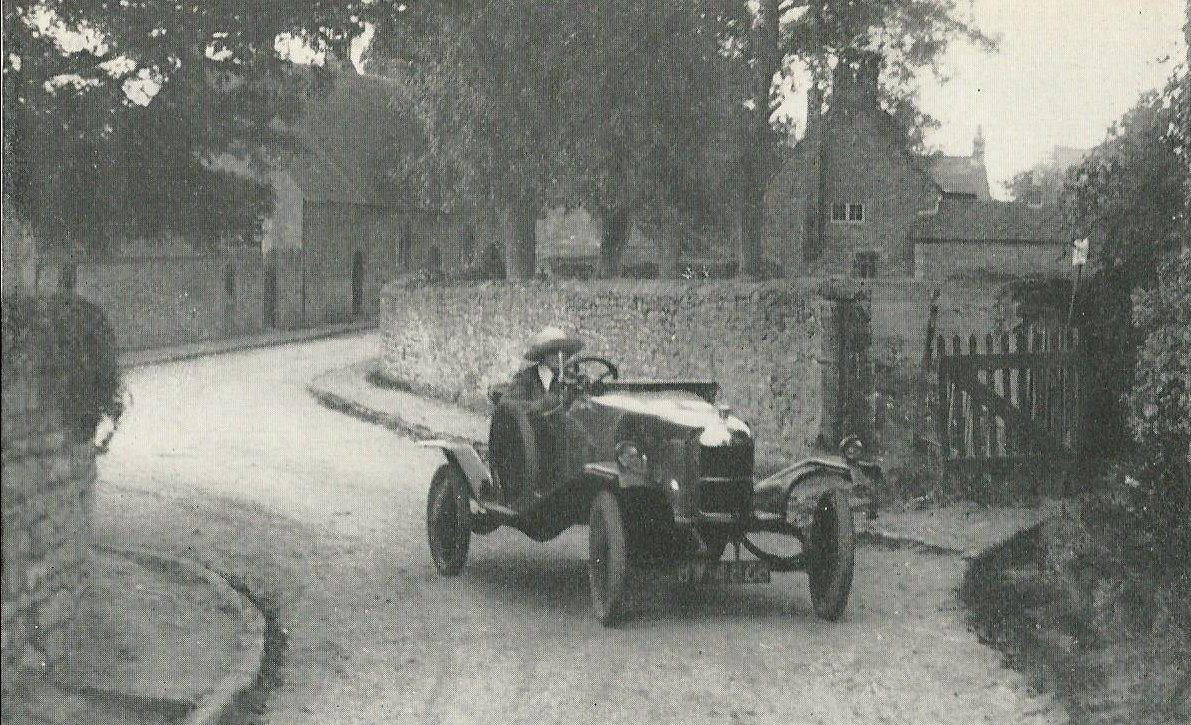
A wonderful period scene: A lady motors her Sports Cowley in rural England.
The Cowley was always more expensive than a comparable Model T Ford in Britain. On the other hand, it had fewer eccentricities (operation of the Model T’s epicyclic gearbox setting it apart from other cars). What’s more, though car prices rose initially after World War I, Morris began cutting them in 1921 and kept this practice going until 1926, when the model was replaced by a new Cowley, the radiator of which quickly earned it the nickname “Flatnose.”
The Cowley Flatnose was successful enough (more than 200,000 built between 1926 and 1931). To me, though, it lacks the charm of the Bullnose. I’ll have to look for a Flatnose around Bampton-in-the-Bush. ds
© Dennis Simanaitis, SimanaitisSays.com, 2015
 Simanaitis Says
Thank for this. Hope you’ll do an article on the t¿roubled Nissan LMP 1 car.