
Simanaitis Says
On cars, old, new and future; science & technology; vintage airplanes, computer flight simulation of them; Sherlockiana; our English language; travel; and other stuff
WATER, WATER, EVERYWHERE—AND PLENTY TO READ
THE DECEMBER 18, 2014, issue of London Review of Books features an article by Rose George titled “No Bottle.” It’s a review of three books, Drinking Water: A History by James Salzman, Parched City: A History of London’s Public and Private Drinking Water by Emma Jones and Water 4.0: The Past, Present and Future of the World’s Most Vital Resource by David Sedlak.

Rose George cites neat tidbits in each. For instance, Margaret Thatcher abolished English state-owned regional water authorities in 1989. Today, 11 of England’s 18 privatized water utilities are at least partly owned by foreign entities. (One region recently resisted takeover by a Kuwaiti oil fund.)
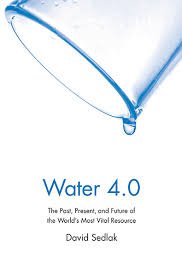
Water 4.0: The Past, Present, and Future of the Worlds Most Vital Resource by David Sedlak, Yale University Press, 2014.
Of the three books, Sedlak’s seems the most tantalizing. He uses computer jargon to categorize this most precious resource. Water 1.0 is the Roman model: a means of bringing water to users; another means of conducting sewage away.
As an example, the Pont du Gard of southern France was built in the first century A.D. Part of a 31-mile system carrying water from springs at Uzés to the Roman colony of Nemausus (Nîmes), it was in use for possibly 400 years.
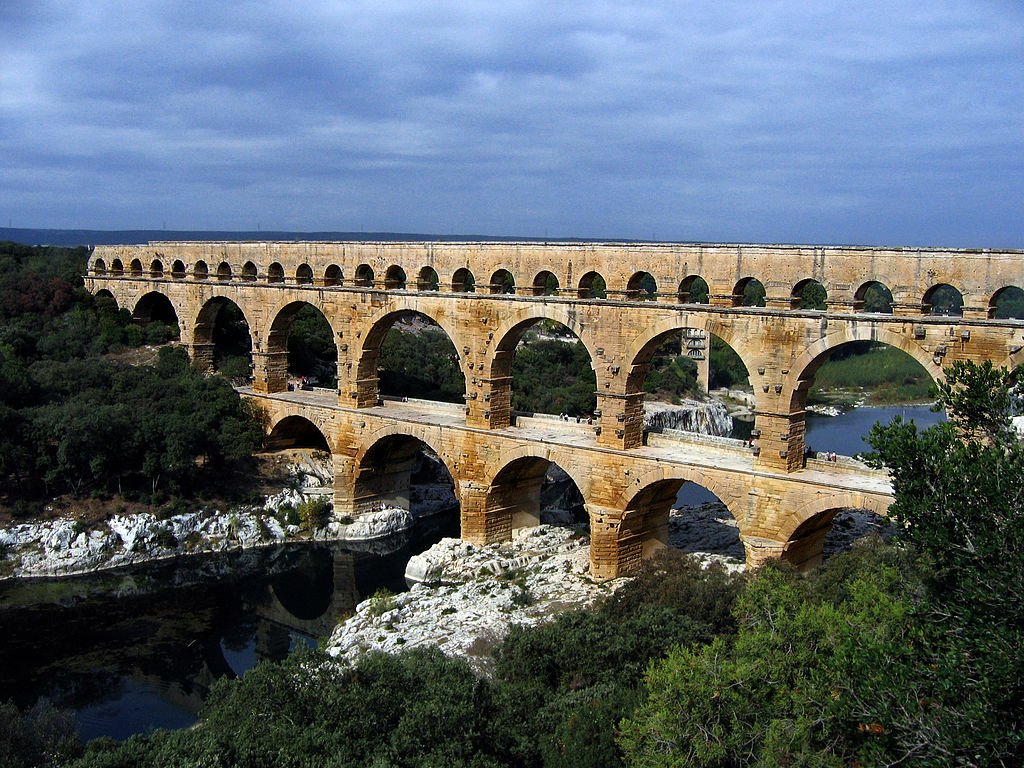
The Pont du Gard aqueduct in Vers-Point-de-Gard, southern France. Image by Benh LIEU SONG.
The elevated sections of Roman aqueducts are famous. However, these made up only 5 percent of their water supply infrastructure. Most of it was cleverly installed beneath the ground.
Alas, much of the world has yet to enjoy Water 1.0. Rose George notes that 783 million (of the world’s 7 billion people) now lack clean drinking water. An even larger percentage, 2.5 billion, lack adequate sanitation.
Water 2.0 is characterized by the treatment of drinking water. Before the problem was understood in Victorian times, tens of thousands in Britain died from cholera traced to dirty water.
Progress was slow. The Great Stink of 1858 had the Thames reeking next to the Houses of Parliament. Only then did legislation pass to isolate sources of drinking water from sewage outlets.
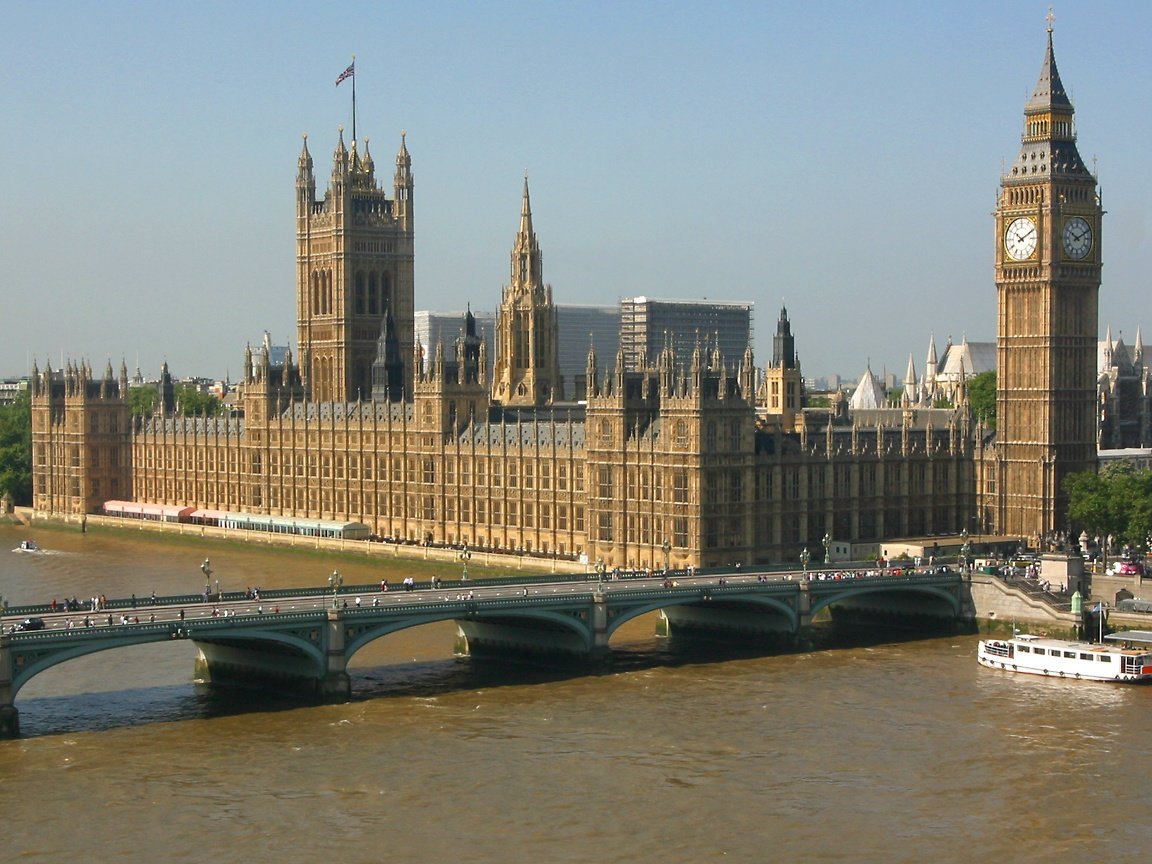
The Houses of Parliament, London, and (today) a neutral-smelling Thames. Image from www.London-sights.com.
Much of the developed world is still evolving into Water 3.0, the treatment of sewage. Hitherto, untreated waste has been simply piped to where it was thought to do less harm.
Sydney, Australia, is a case in point: Rose George notes, “Finding Nemo was set in Australia because it’s one of the few places a tropical fish could find its way to the ocean without being mashed in a wastewater treatment plant—until recently Sydney dealt with its sewage by shooting it along eight-mile pipes into the sea, with barely any treatment.”
Victoria, British Columbia, still continues this practice.
Water 4.0, the recycling of wastewater, is psychological as well as physiological. Astronauts drink recycled urine with no problem. Techniques such as reverse osmosis produce water that’s cleaner than most utilities supply. Yet, the idea of “toilet to tap” is unacceptable to many.
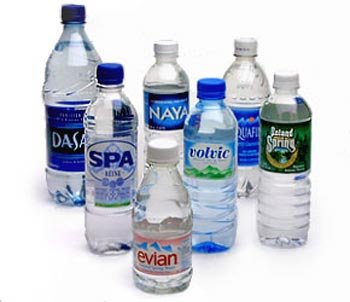
Bottled water is a huge business around the world. Image from http://goo.gl/LffExk.
The bottled water craze is another anomaly. Generally, public utilities have tighter standards, and more stringently regulated oversight, than the bottled water industry. Yet Rose George notes “Americans open 1500 litres of bottled water every second, and drink more bottled water than milk or beer, though tap water is often a 500th of the price.”
On a personal note, when I lived on St. Thomas in the Caribbean, Charlotte Amalie’s primary water supply was from rainwater caught in a huge paved hillside catchment basin. Away from town, our homes had cisterns for rainwater captured on their roofs. I recall our cistern water had no special treatment other than a mosquito deterrent strip changed periodically.
Sampled judicially at first, our stored rainwater presented no ill effects whatsoever for the years we lived there. ds
© Dennis Simanaitis, SimanaitisSays.com, 2015
 Simanaitis Says