
Simanaitis Says
On cars, old, new and future; science & technology; vintage airplanes, computer flight simulation of them; Sherlockiana; our English language; travel; and other stuff
PONO SOUND
THE WORD “pono” is Hawaiian for “righteous,” and a fellow graduate of Worcester Polytech has teamed with Rock and Roll Hall of Famer Neil Young to return righteous fidelity to music lovers.
In the evolving worlds of hi-fi, stereo, surround sound, golden CD and the rest, I confess that I’d rather listen to music I like on a Kenner Close ’N Play than music I don’t like on the finest rig. Nevertheless, Phil Baker, WPI ’65, and Neil Young get my attention with the PonoPlayer concept.
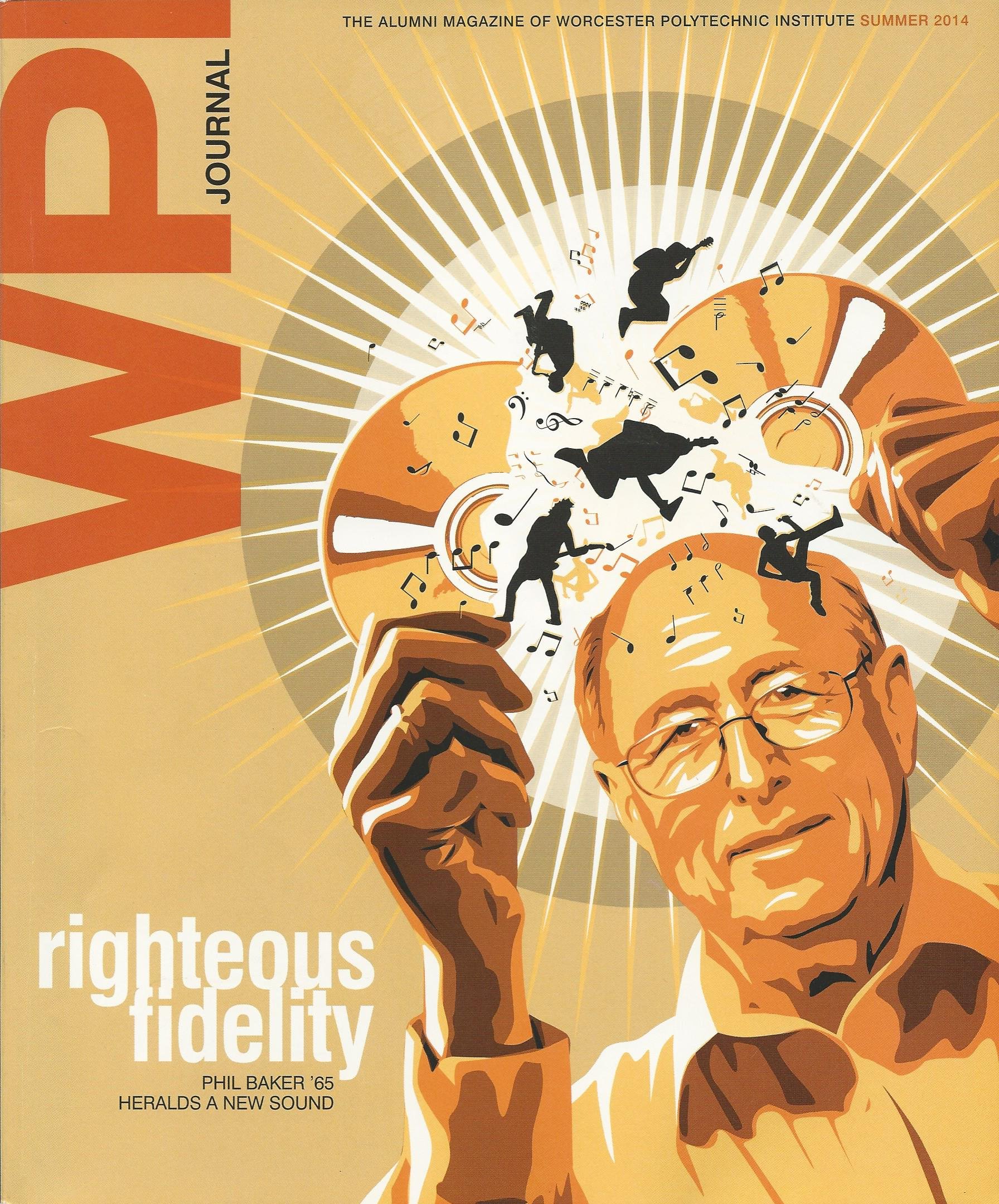
Briefly Pono audio avoids the digital finagling that’s part of today’s music reproduction. Baker makes an excellent point in the WPI Journal, Summer 2014, “Photography has improved as images moved from film to digital. Television has delivered images to our living room that are sharper, much more vibrant and more realistic, on displays that are 50 times larger.”
“But,” Baker laments, “music has gone backwards. It’s been compressed to much smaller files, just for the sake of convenience. An MP3 file, what most people listen to today, contains 5 percent of the original data recorded in the studio. A CD typically is 25 percent.”
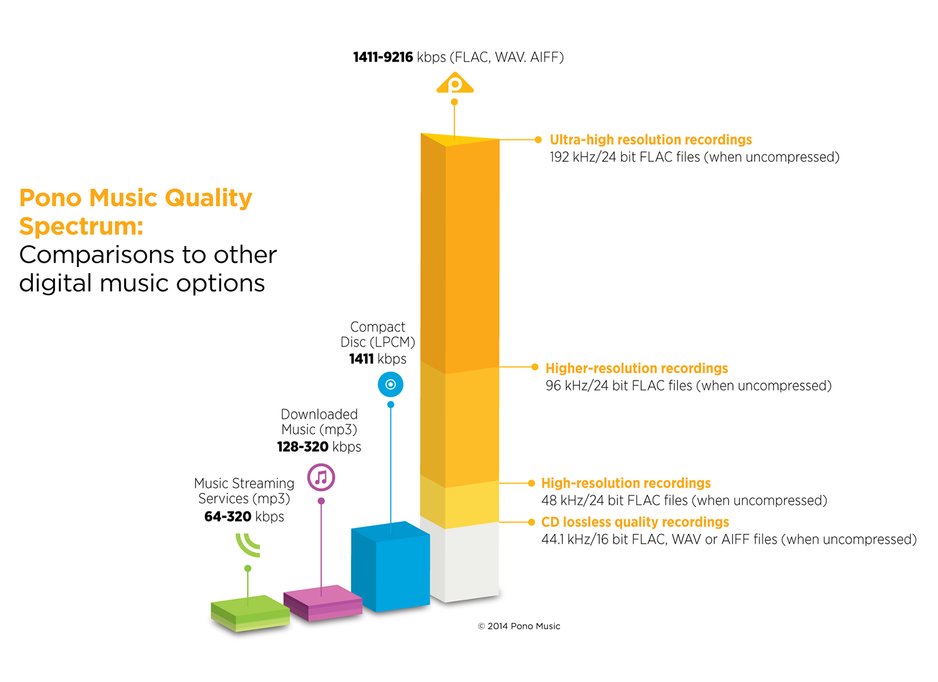
A comparison of digital music options. Image from http://www.ponomusic.com.
The benefit, of course, is being able to carry 10,000 tunes in your pocket. The downside is, to quote Phil, “an entire generation that has been raised on low-quality, compressed music.”
Young and Baker’s PonoPlayer is a portable music device that plays uncompressed files, music that hasn’t been stripped of its original depth. Expected to roll out in October of this year, a $399 PonoPlayer will have 128 GB of memory (by contrast, my iPhone has a capacity of 28.3 GB). This is enough for around 5000 CD-quality tracks or 800 of the ultra-high-resolution recordings.
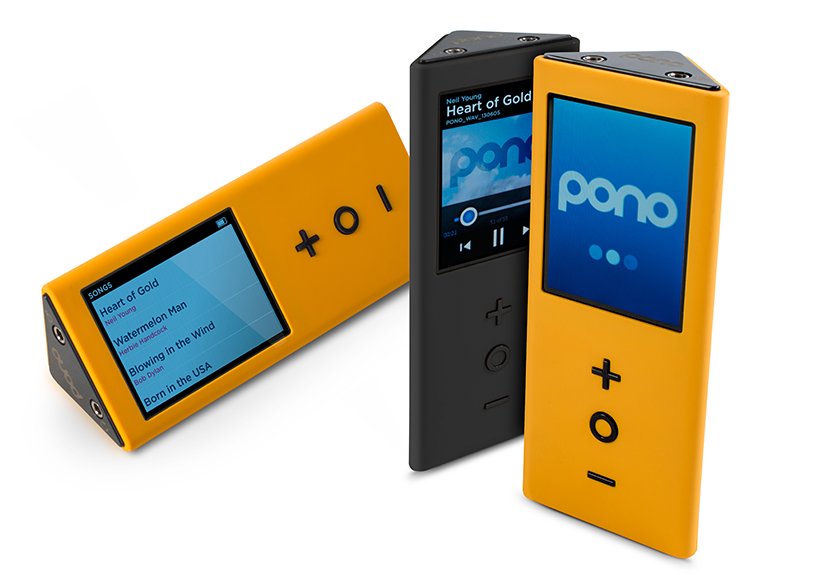
The PonoPlayer, expected in October 2014. Image from http://www.ponomusic.com.]
The gizmo will be able to play downloaded CD and other audio formats, but its best sound will come from PonoMusic albums containing sound similar to that of the original recordings, akin to what the studio engineers hear. PonoMusic albums are expected to cost between $15 and $25, not completely out of line with the upper end of today’s CD market. Each will contain from six to thirty times the amount of data as a traditional CD or MP3.
Unless you have a really killer stereo system, I’d guess high-quality headphones will be the best means of enjoying Pono-quality sound.
The business model for PonoPlayer and PonoMusic is an interesting one, originating with Neil Young having the Pono idea and phoning Phil for entrepreneurial advice. Phil, with his background in physics, engineering and an MBA, also confesses to being a Neil Young fan of long standing.
Venture capitalists didn’t see much future in the public’s hunger for better sound quality, but Kickstarter crowd-funding suggested otherwise. Young launched their Kickstarter campaign on March 14, 2014. In 34 days, 18,220 followers contributed $6,225,334, the third-highest-funded project in Kickstarter history.
The company, www.ponomusic.com, is working now to fulfill their Kickstarter promise of shipping 12,000 PonoPlayers in October 2014.
Success depends on how many record labels offer high-resolution audio for download and how many people appreciate this enhanced sound.
It’s a far cry from the Kenner Close ’N Play, but I’m ready for the audio spectacle of PonoMusic opera. ds
© Dennis Simanaitis, SimanaitisSays.com, 2014
 Simanaitis Says