
Simanaitis Says
On cars, old, new and future; science & technology; vintage airplanes, computer flight simulation of them; Sherlockiana; our English language; travel; and other stuff
UNIVERSAL DESIGN
THE PRINCIPLES of universal design offer utility to people with the widest possible range of abilities, operating within the widest possible range of situations.

Note, too, this isn’t just about the elderly, the physically challenged or those with cognitive impairments. It’s also about operating a car’s stereo while wearing gloves. Or viewing a display screen in bright sunlight. Or setting a destination on a car’s nav system.
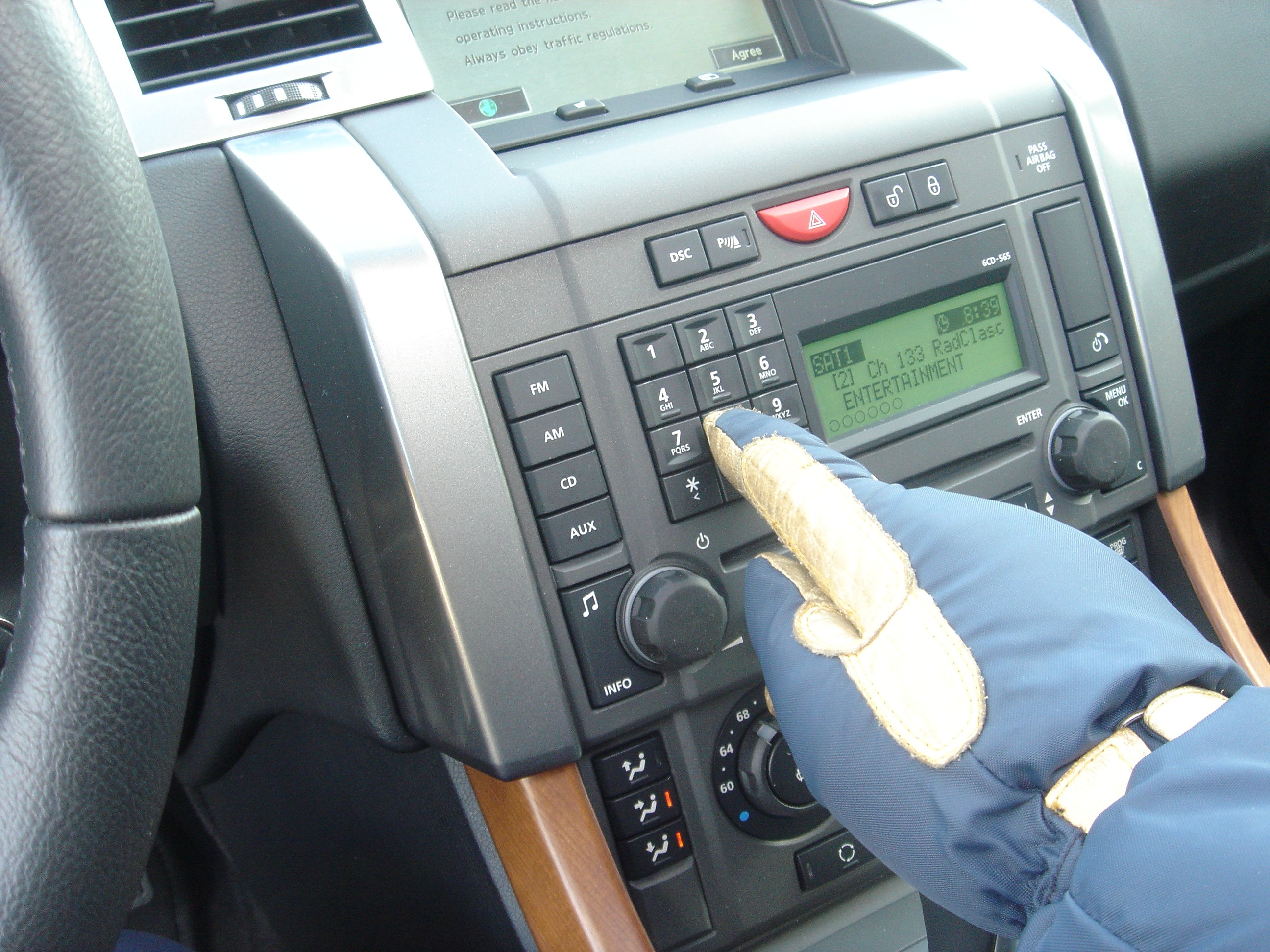
One of life’s challenges for those in frigid climes.
Universal design is a byproduct of human factors engineering fostered by the likes of industrial designer Henry Dreyfuss (see http://wp.me/p2ETap-2cl). For the latest thinking in this regard, see the website of the Institute for Human Centered Design, an international non-governmental educational organization, at http://humancentereddesign.org.
Here’s a summary of universal design principles.
• A universal design optimizes equal utility for all.

A curb cut.
Sidewalk curb cuts, for instance, offer access for wheelchairs, and they’re also useful for baby carriages, bicycles, skateboards and the rest of us.

At left, access as an afterthought. At right, with thoughtful universal design.
Universal design can be aesthetically pleasing as well as functional.
• A universal design is flexible in its operation. It’s left- as well as right-hand-friendly. It can be operated with gloved hands, or for those whose grip is challenged. Or with one’s hands full.
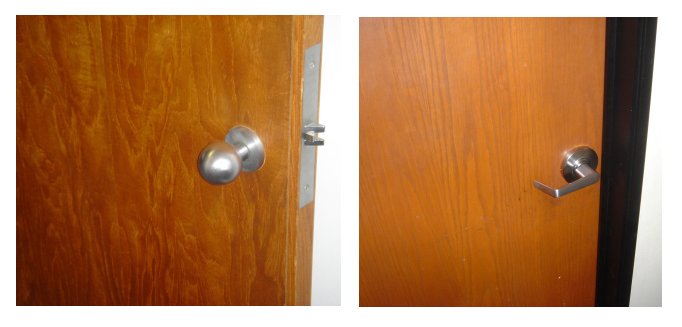
At left, a typical door knob. At right, a Euro-style handle.
How much more functional European door handles are than conventional door knobs.
• A universal design is simple and intuitive. For example, a symmetric key is simpler to use than a unidirectional one. And could there be anything more intuitive than press-and-hold for setting a button memory? (Yet there are stereo designers who resisted this for years.)

Tactile, visual or audible feedback (here, a click) confirms an action.
• A universal design offers perceptible information as feedback. The touch of a cellphone button, for example, can be confirmed by giving a reassuring click.
• A universal design has a tolerance for error.
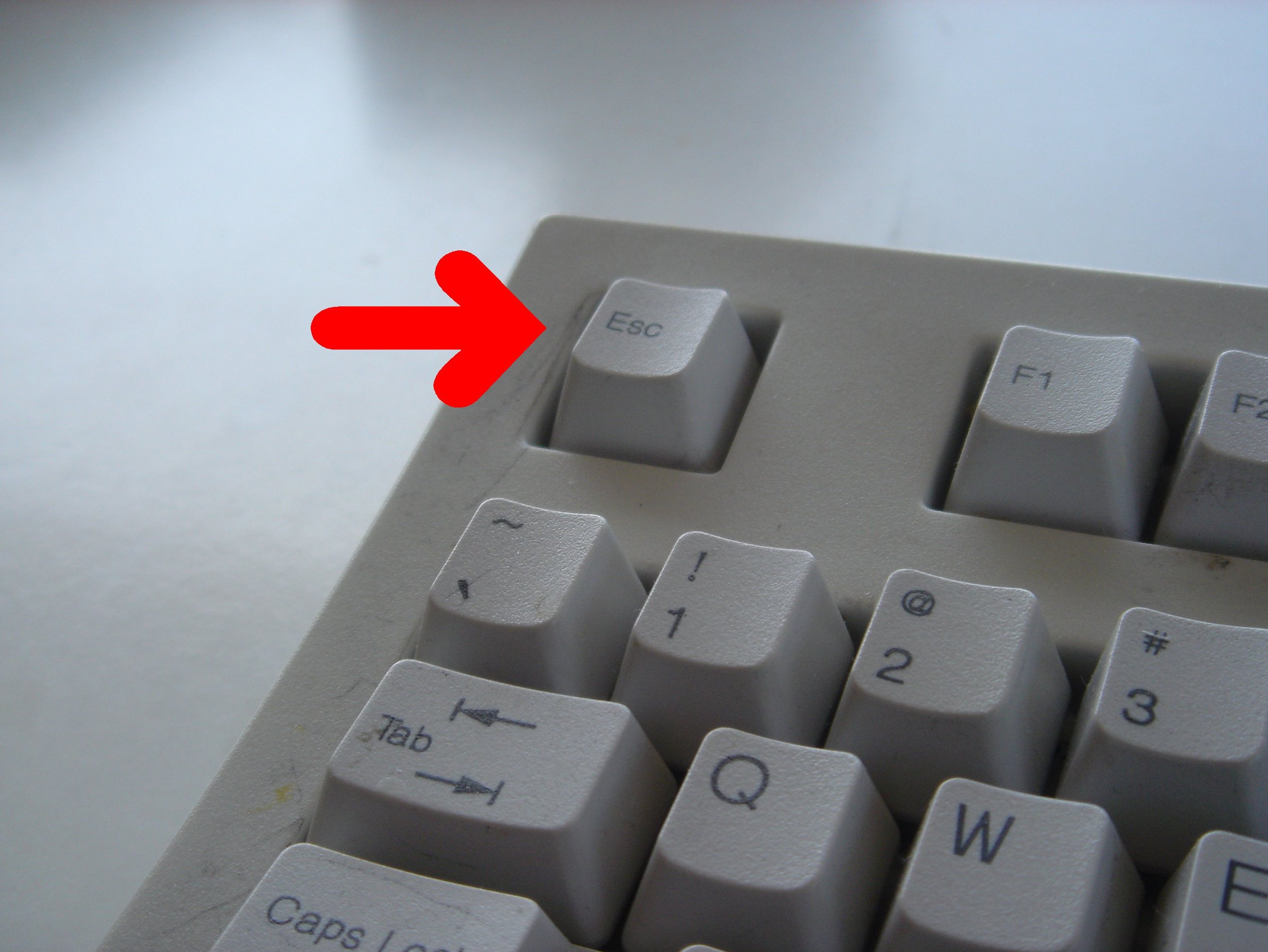
An Esc key can be more useful than Ctrl + Alt + Del.
Is there an ESCAPE option? Have dead-ends been eliminated in a menu-driven sequence?
• A universal design has reasonable requirements of physical effort.
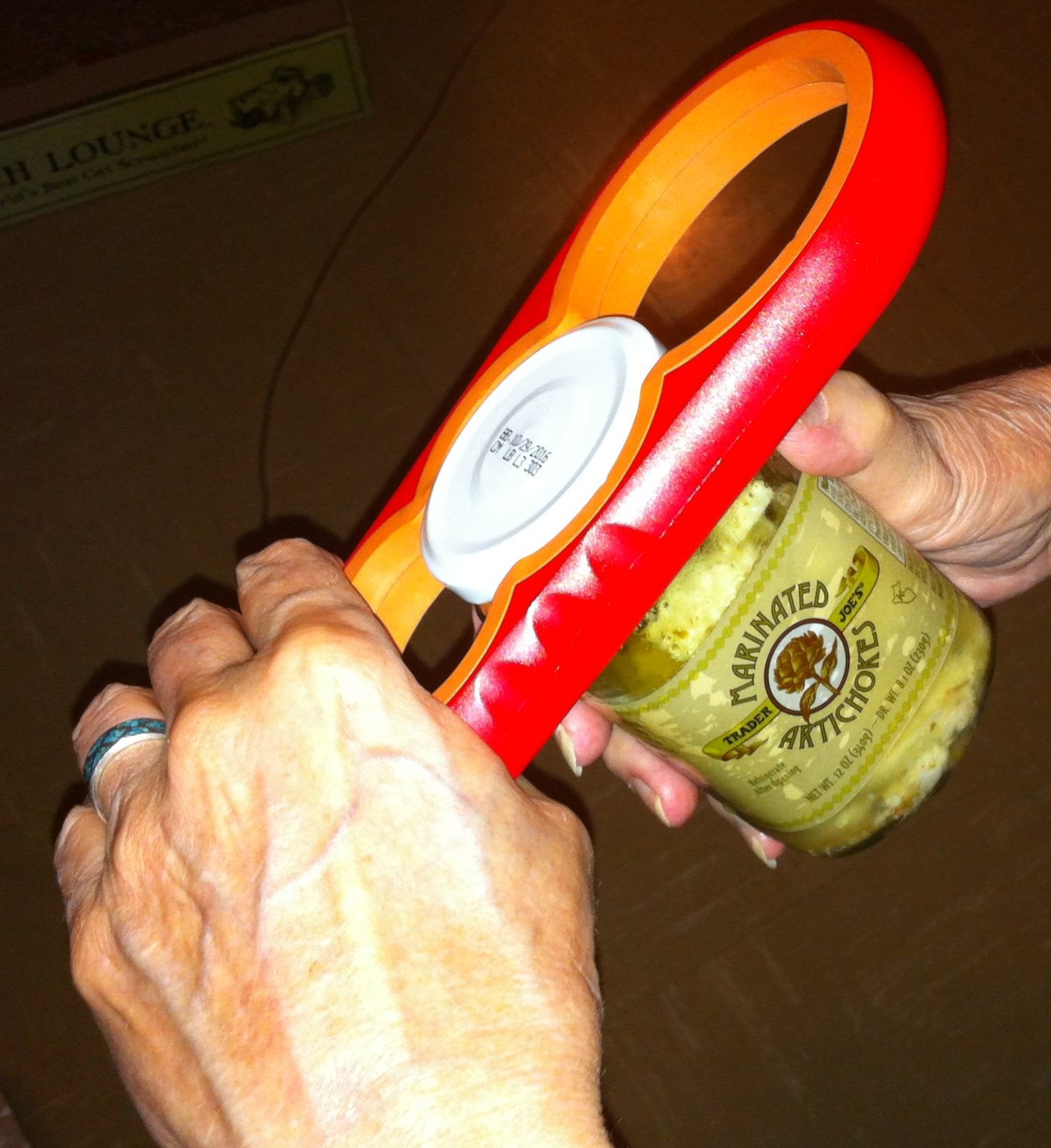
The tightest jar cap is no challenge.
Something as common as a kitchen gadget can help.
• A universal design is sized and located sensibly. For instance, designing the shelves in self-service sales can be challenging (especially in stores where the term “self” is emphasized).
The social and marketing benefits of universal designs are evident. However, there’s a curious twist in Old Geezer Marketing: Our society doesn’t exactly revere its elderly (though this is changing, now that Baby Boomers are entering the realm). Some marketers feel that universal design might be ridiculed by an edgy, influential young audience.
Full disclosure: As an Old Geezer myself, I beg to differ. I believe a design can be edgy as well as universally optimized. Just about any Apple product is an example of this.
Last, those who attended graduate programs of the Viterbi School of Engineering at the University of Southern California about ten years ago—and who have prodigious memories—might recall some of this item. Universal design was one of my topics in a talk, “Five Things I Neglected to Learn in Graduate School.” The other four were nanotechnology, fuel cells, fractals and their syntheses. ds
© Dennis Simanaitis, SimanaitisSays.com, 2014
 Simanaitis Says
Pingback: UNIVERSAL DESIGN | Simanaitis Says | Archetrove Magazine
A few weeks ago I read a piece about the contrasting “new” building codes in two different communities. One area requiring door levers rather than knobs, for more universal accessibility … and one requiring knobs to replace levers, to thwart accessibility by curious bears! It WAS an internet posting, but it SOUNDS plausible, to me. 😎