
Simanaitis Says
On cars, old, new and future; science & technology; vintage airplanes, computer flight simulation of them; Sherlockiana; our English language; travel; and other stuff
CAN YOU HEAR ME NOW? I FEAR NOT
IT’S NOT that football hasn’t enough problems with brain-addled players encouraged to use their helmeted heads as battering rams. Now NFL fans are vying to see which venue can cause the most ear damage by way of crowd noise.

Image by Steve Hebert for The New York Times, Sunday, November 17, 2013.
“GET LOUD” reads the electronic signboard at the Kansas City Chiefs Arrowhead Stadium. And fans respond by setting a [corrected, updated 11/21/13] record of 137.5 decibels—encouraged by a fan group called Volume 12.

The average volume of an NFL crowd throughout the game is in the mid-90-dB range, a level with a recommended exposure of only 60 minutes at a time. Football games, however, last a lot longer than this. And some guy screaming at 120 dB is likened to an ambulance siren.
The NFL isn’t exactly helpful either. An article by Joyce Cohen in The New York Times, Sunday, November 17, 2013, is titled “Ground-Shaking Noise Rocks N.F.L., and Eardrums Take Big Hit.” The article quotes NFL spokesman Brian McCarthy as saying, “Fans know they’re going to a football game and not searching out a book at the library.”
Yes, but as Ms. Cohen notes, “Fans accustomed to hollering may scoff at the warnings as nanny-state silliness. But to auditory experts, the danger is very real.”
Indeed, it shouldn’t take an audio expert to perceive this. My favorite sport has the prefix “motor” attached to it. And it has long been recognized that noise, while part of the attraction, also calls for mitigation and protection.
Earplugs have become fashion statements among spectators at the louder forms of auto racing. Headware of the hearing protection variety is de rigueur for those up close. (Drag racing is one of the loudest.)
There’s an interesting story concerning the David Clark Company, one of the major suppliers of what’s called circumaural hearing protection (the sort that surrounds the ear). It’s also an excellent parable about innovative engineering that leads to an evolving business model.

In the old days (founded in 1935), David Clark was a traditional New England manufacturer of bras and girdles; rows and rows of women operating industrial-grade Singer sewing machines. In 1941, the Worcester, Massachusetts, company transformed this expertise with woven and elastic garments into the first anti-g suits for pilots. These evolved into pressure suits and helmets for test pilots exploring high-altitude flight.
By the early 1960s, when I was in undergraduate school at Worcester Poly, David Clark was heavily into high-altitude suits and related hardware. I worked there part-time in the company’s NASA Development Group that fabricated space suits for Project Gemini, 1962-1966.

Project Gemini. Image from NASA.
David Clark’s military hardware contracts got it involved with communications headsets, the sort with a microphone integrated into earphones worn over the head. And, for clarity of communication, noise-attenuating materials are part of the earcup design.
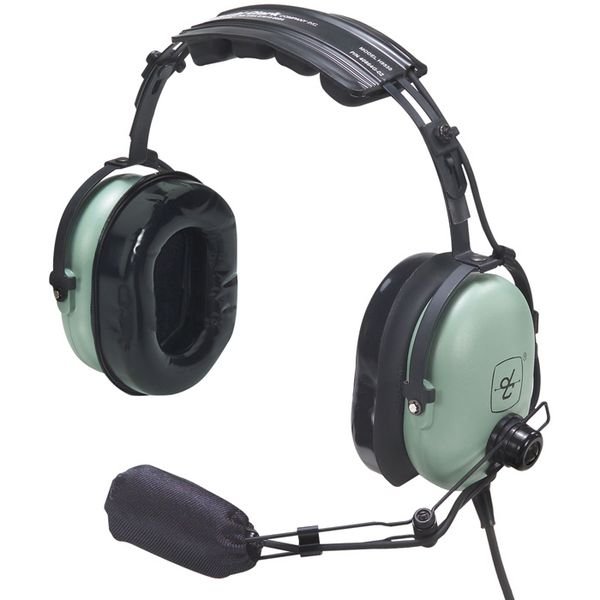
David Clark headphones.
Leave out the communication bits—the mic, earphones and associated wiring—and the rest makes for perfect hearing protection.
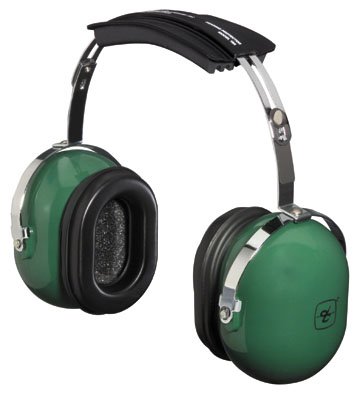
David Clark Hearing Protection.
To this day, David Clark Company manufactures all of the above.
If I were still working there, I’d suggest David Clark Hearing Protection hardware in official NFL team colors, for the fans as well as the team personnel. ds
© Dennis Simanaitis, SimanaitisSays.com, 2013
 Simanaitis Says