
Simanaitis Says
On cars, old, new and future; science & technology; vintage airplanes, computer flight simulation of them; Sherlockiana; our English language; travel; and other stuff
ALTERNATIVE FUEL GAME PLAN
SAE INTERNATIONAL has published a Technology Profile, Future Automotive Fuels and Energy, by Bruce Morey. A brief summary of it appeared in SAE’s magazine, Automotive Engineering International, October 1, 2013. I expand on several of its main points here.

There have to be compelling reasons for moving our transportation away from petroleum. Diesel and gasoline trounce other options in energy density, whether by weight or volume.
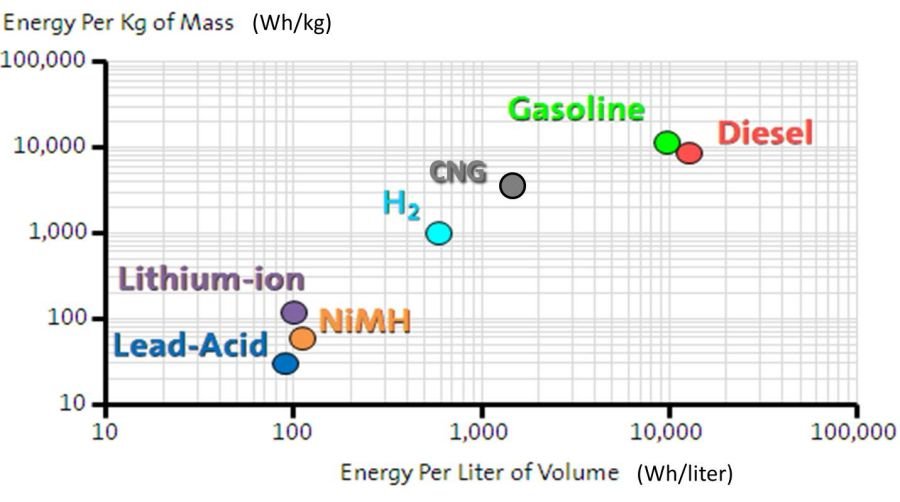
Whether it’s energy per mass or energy per volume, gasoline and diesel are formidable competition. Image and data originating at General Motors.
Also, being liquids, gasoline and diesel are easily distributed—and the distribution network is well established.
Of course, any fossil fuel is a finite resource. Are we running out of petroleum any time soon?
Not in the near term—proven oil reserves are growing. And innovative means of extraction continue to be developed.
Nevertheless, truck manufacturers are exploring compressed natural gas (and also dimethyl ether; see Volvo’s view on this at www.wp.me/p2ETap-1DY). And automakers are hellbent on electric vehicles, both battery-supported (BEVs) and fuel-cell (FCEVs).
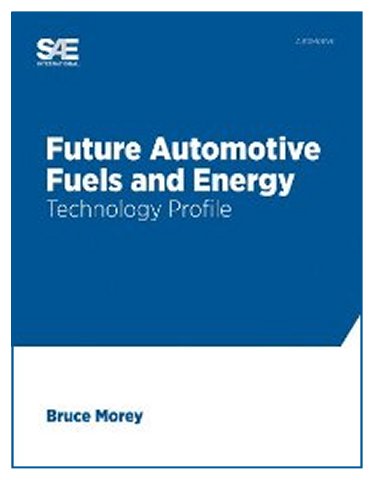
Future Automotive Fuels and Energy, a Technology Profile, by Bruce Morey, SAE International, 2013. SAE International Product Code T-128. Both www.abebooks.com and www.amazon.com list it.
The Automotive Engineering International article suggests four possible paradigm-shifting scenarios.
Demand outstripping supply. Worldwide demand for petroleum is currently about 85 million barrels per day. The International Energy Administration projects this will rise to almost 100 million bbl/day by 2035. What’s more, China, Brazil and India could expand their auto fleets at rates beyond the IEA projections.
Urbanization and local air quality. Cities—London for one—are establishing Low-Emissions Zones, where even today’s Super Ultra Low Emissions Vehicles are not permitted. BEVs and FCEVs seem a natural fit.
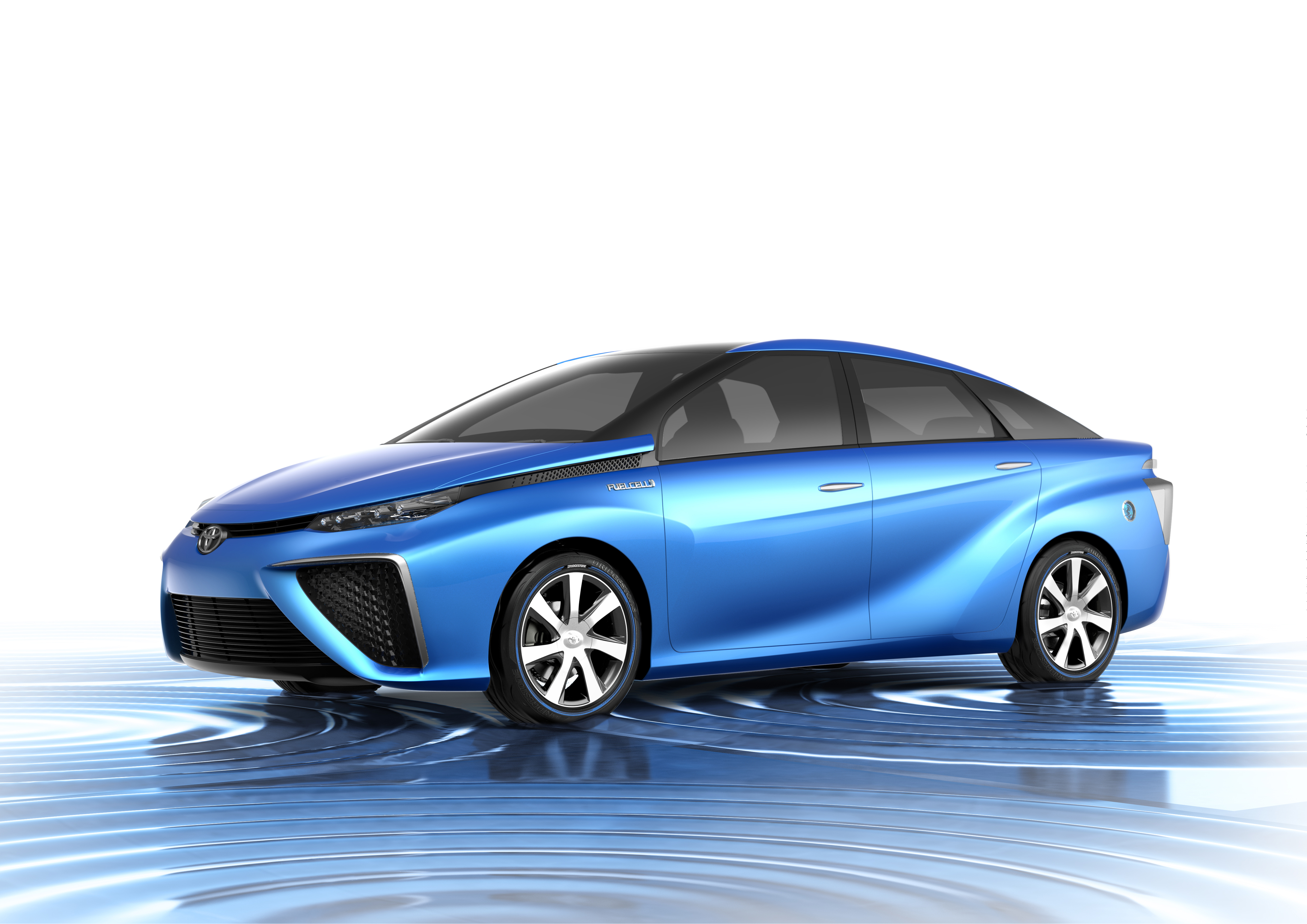
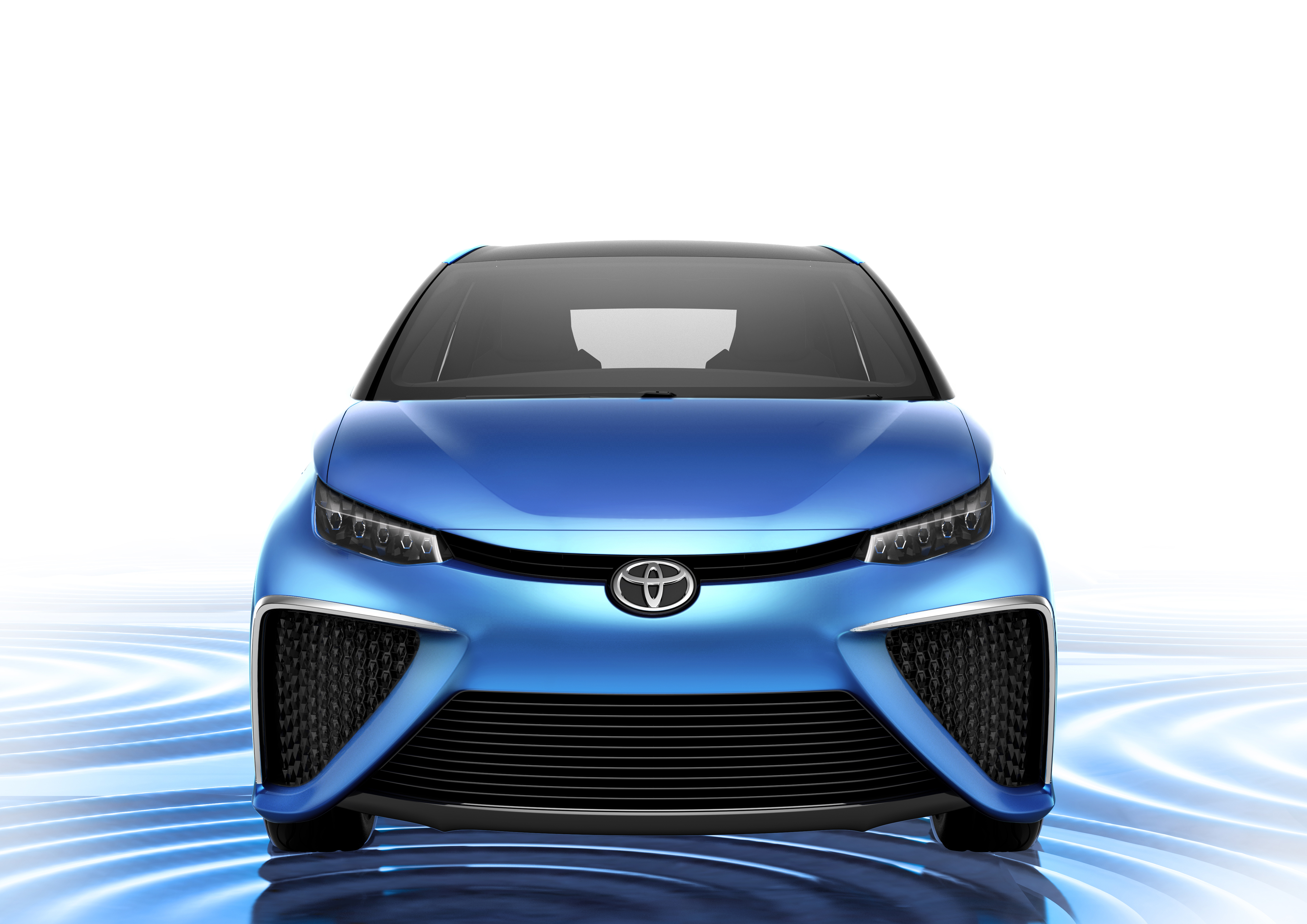
Stop the presses! The embargo has just been lifted on these photos of Toyota’s FCV to appear at the Tokyo Motor Show. While still termed a concept, it’s clear this is the production version of the fuel-cell vehicle coming in 2015.
Disruptions in the oil market. Petroleum is an international commodity, but there are choke points, geographically, politically and environmentally. The European Union, Japan, India and South Korea all import 70 to 90 percent of their oil (with heavy reliance on the Middle East). It’s logical that such nations would cover their bets by investing in alternative energy for transport.
By contrast, in 2012, the U.S. relied on net imports—imports minus exports—for only about 40 percent of its petroleum. (Since 2011, the U.S. exports more oil than it imports.) More than half of these imports came from the Western Hemisphere.
According to the U.S. Energy Information Administration, the top sources of U.S. petroleum imports are Canada (28 percent), Saudi Arabia (13 percent), Mexico (occasionally swapping places with Saudi Arabia, but currently at 10 percent), Venezuela (9 percent) and Russia (5 percent).
Breakthrough in batteries. BEVs are cost-efficient to operate, but—because of their battery cost—expensive to buy. Notes the Automotive Engineering International article, “If batteries could hold more, cost less, and charge faster…who knows?” ds
© Dennis Simanaitis, SimanaitisSays.com, 2013
 Simanaitis Says
For some reason that urbanization item jumped out at me. Dennis, isn’t it true that goods deliveries in London, and perhaps some other large cities, are only permitted at night? This does seem to make sense.