
Simanaitis Says
On cars, old, new and future; science & technology; vintage airplanes, computer flight simulation of them; Sherlockiana; our English language; travel; and other stuff
LANCIA LAMBDA
INDEPENDENT FRONT suspension, a stressed steel unitary chassis, a single overhead camshaft, light-alloy narrow-angle V-4 layout—all in 1922.
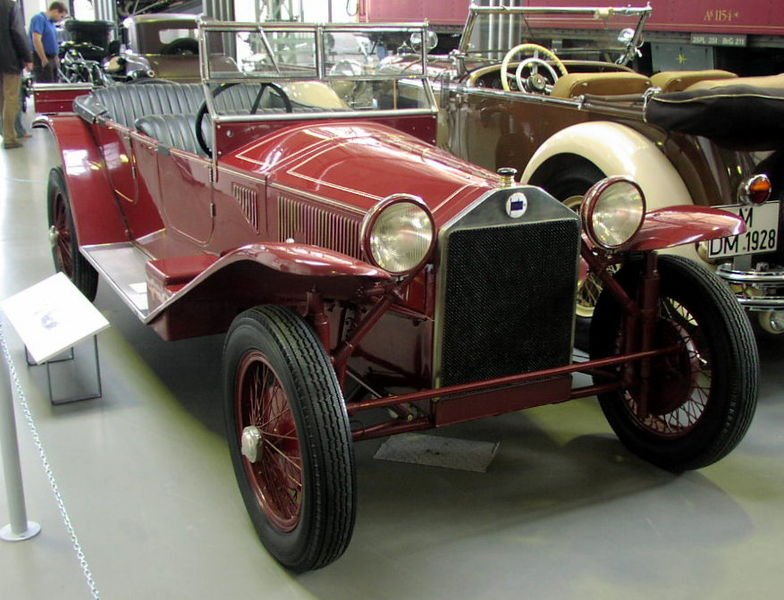
Lancia Lambda Torpedo, 1923. Image by MartinHansV.
The car was the Italian Lancia Lambda, built between 1922 and 1931. Its i.f.s., unibody construction, and sohc light-alloy engine are now ubiquitous. Other Lambda features devised almost a hundred years ago would be innovative even today.
Vincenzo Lancia was a Piedmontese working for FIAT in design, construction and testing. He even took a hand in racing, with a win at the Coppa Florio circuit, near Brescia, Italy, in 1904.

Vincenzo Lancia, 1881-1937, Italian automaker—and sportsman.
Lancia left his employer in 1906, the same year FIAT (Fabbrica Italiana Automobili Torino) became Fiat. Lancia took a lancia (Italian: lance) as his trademark and got his friend Count Carlo Biscaretti di Ruffi to complete the company badge.

Lancia. Image from Car Badges of the World, by Tim Nicholson, illustrations by John Stokes, American Heritage Press, 1970. This and Classic Cars in Profile, Volume 2, are listed at www.amazon.com and www.abebooks.com.
The Lambda wasn’t the first car with unitary chassis (two British marques, Lanchester and Lagonda, predated it). However, it’s likely Lancia’s idea of pressed steel pieces welded to form a stressed hull wasn’t influenced by these. He was granted an Italian patent for the scocca portante (stressed hull) in 1919.
Up until then, almost all cars had separate ladder chassis atop which coachwork was fashioned. The ladder layout was typically willowy; the wood bodywork did nothing to improve stiffness.
By contrast, the Lambda’s pressed steel hull got lateral integrity from box sections of its radiator frame, seat bulkheads and rear tonneau.
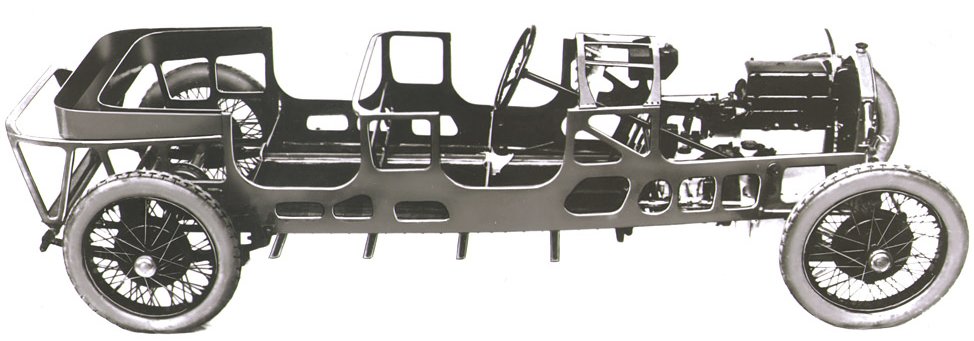
Lancia Lambda unitary chassis, 1922. Image below from Classic Cars in Profile, Volume 2, by D.B. Tubbs, general editor Anthony Harding, Doubleday & Co., 1969.
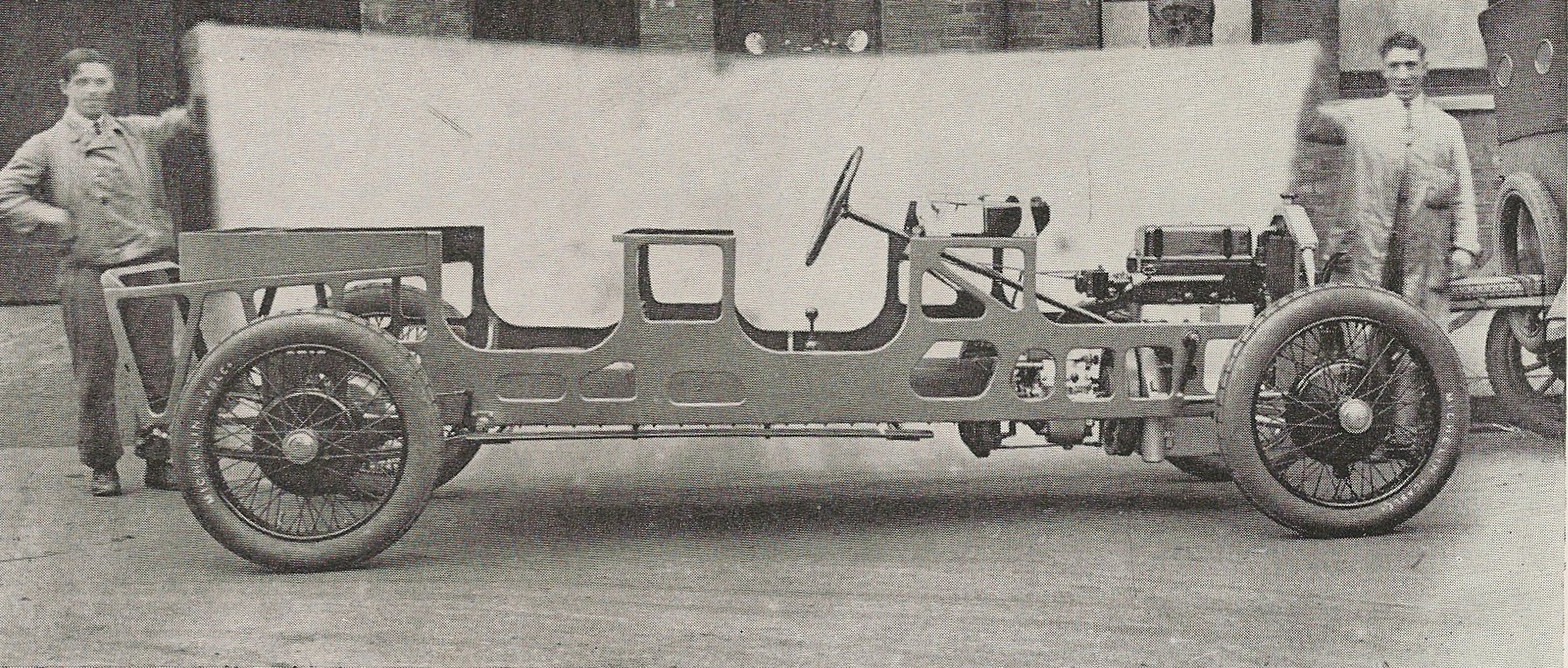
The rigidity of this unitary chassis offered an innovation only briefly offered by any automaker: the ability to transform an open car into a variety of closed designs by merely attaching the added coachwork.

Beneath the coachwork of this elegant 1924 Coupé de Ville lies a Lambda unitary chassis.
The Lambda’s independent front suspension also benefited from a rigid chassis. Lancia’s i.f.s. pays homage to that of the Christie, an American front-wheel-drive car of the era. Briefly, it’s a sliding-pillar design, something familiar to any Morgan enthusiast. (H.F.S. Morgan had similar thoughts in 1910.)
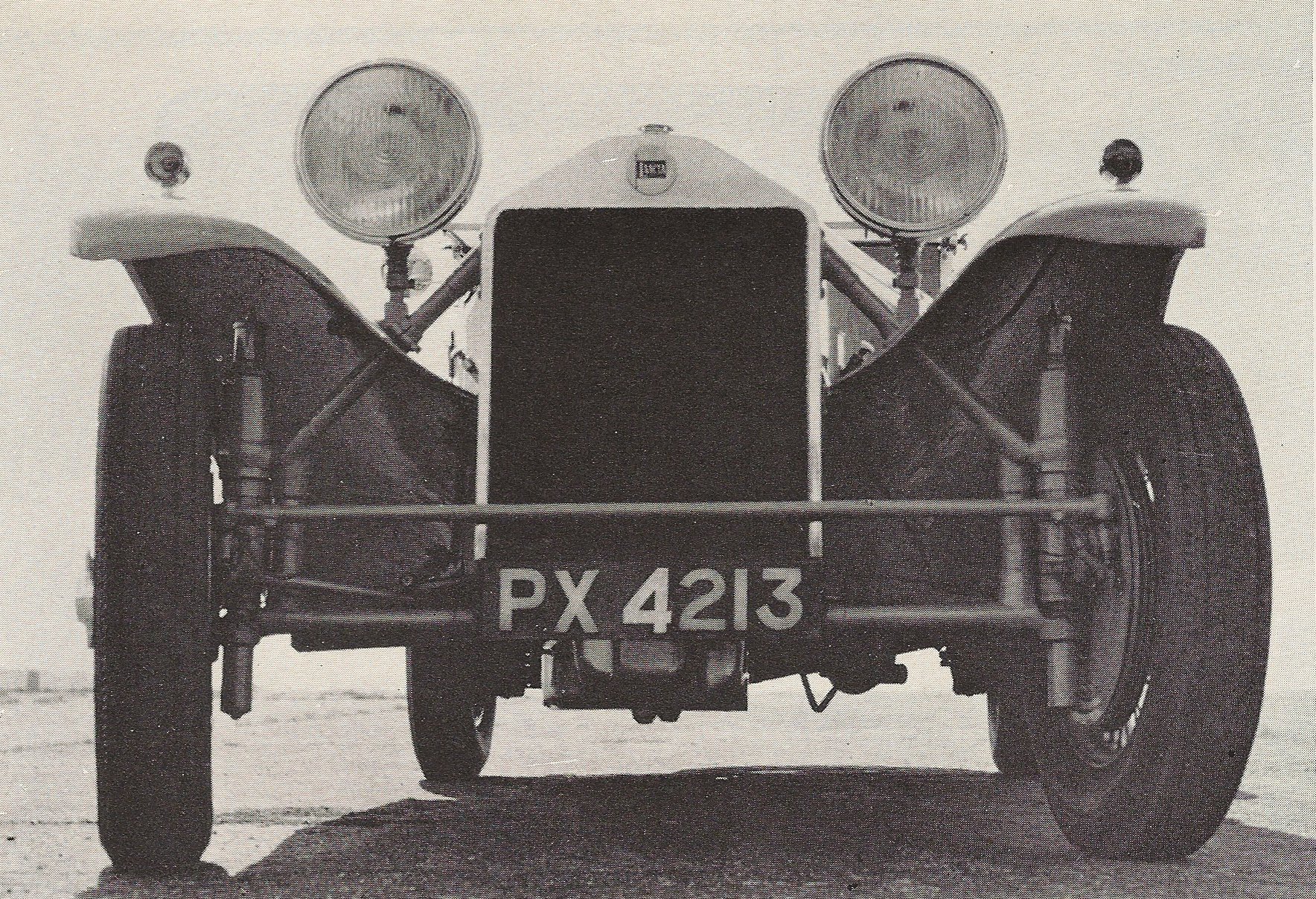
A 1926 Lambda’s trapezoidal sliding-pillar i.f.s. Image from Classic Cars in Profile.
Each front wheel is attached to a housing that slides on a pillar, the assembly forming a tubular framework of trapezoidal shape. Each pillar contains coil springs as well as a hydraulic shock absorber.
Beam front axles were long the norm until well into the 1940s. By contrast, an i.f.s. layout isolates action of one front wheel from the other, thus benefitting control as well as comfort.
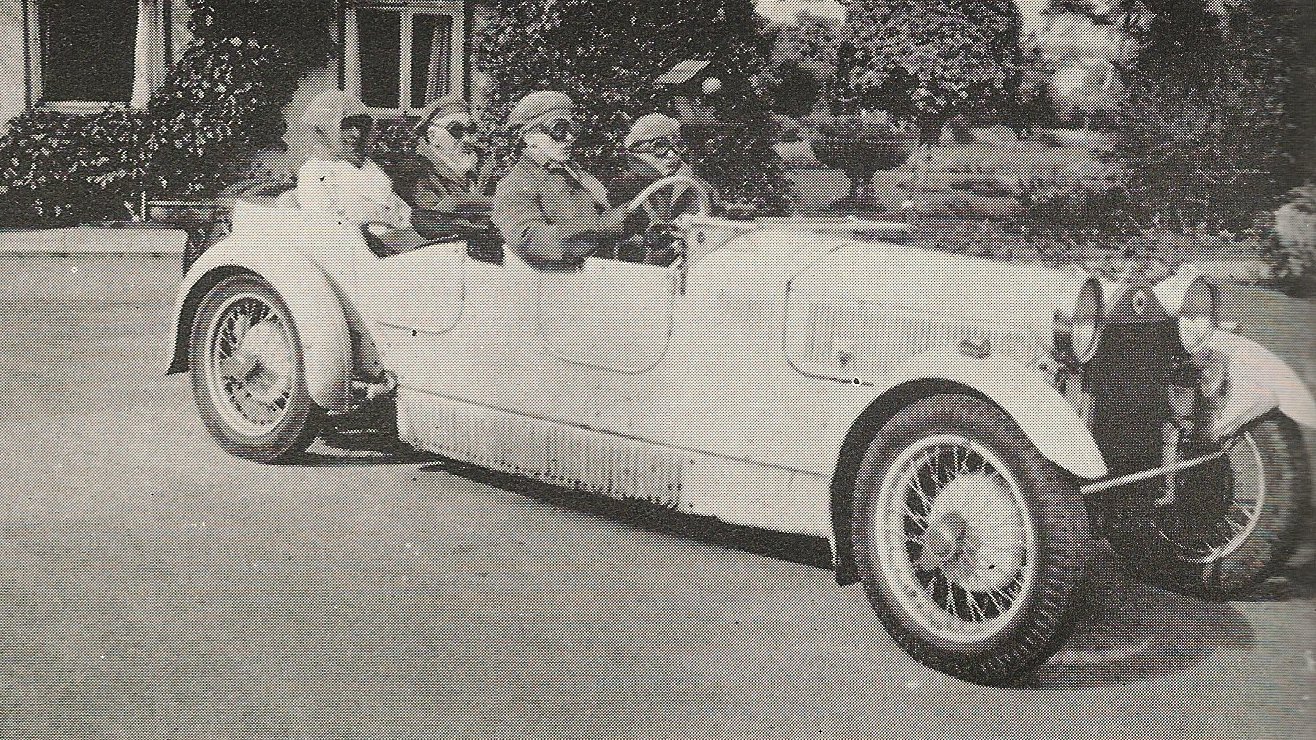
The Lambda was renowned for its supple suspension and road-holding—and evident sportiness. Image from Classic Cars in Profile.
The Lambda’s engine was a 2120-cc V-4 producing 50 hp at 3000 rpm, exemplary values for the era. It had a block of aluminum alloy, its cylinder banks at a narrow vee angle of 13 degrees that made for a particularly compact unit.
Proximity of its heads also allowed one overhead camshaft to function for both banks. This single overhead camshaft, driven by a bevel-geared vertical shaft, operated the V-4’s overhead valves through cam followers and rockers reaching out to each bank.
Lancia retained this sohc concept for more than 40 years. Its i.f.s. design was continued into the 1950s. And, of course, just about every car on the road today has a unitary chassis legitimized by the Lambda in 1922.
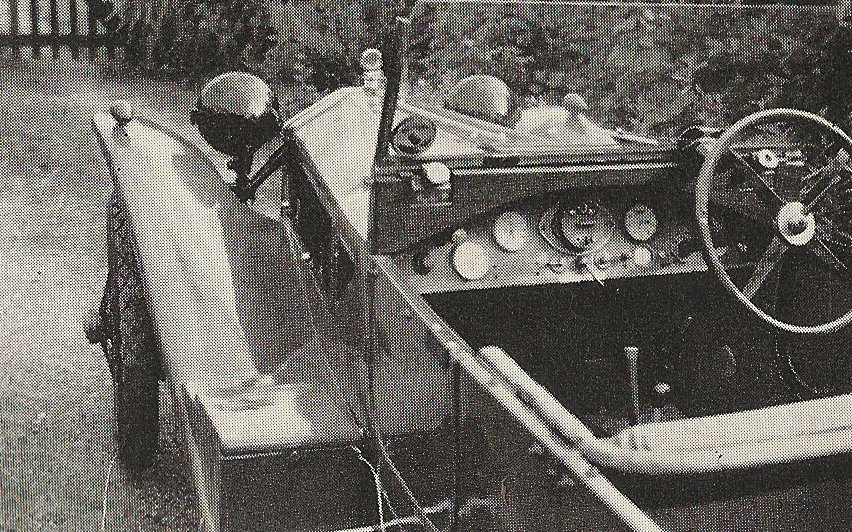
A vintage view: a 1925 Lambda. Image from Classic Cars in Profile.
Pretty good legs for a vintage car. ds
© Dennis Simanaitis, SimanaitisSays.com, 2013
 Simanaitis Says
I was interested in your comment of the Çhristie as being an American front-wheel drive automobile.i was always under the impression that the 1929 Ruxton and 1929 Cord L-29 were the first American front-wheel drive autos.