
Simanaitis Says
On cars, old, new and future; science & technology; vintage airplanes, computer flight simulation of them; Sherlockiana; our English language; travel; and other stuff
TOUR DE FRANCE AUTO
BRUCE MALE, car collector extraordinaire, vintage race driver and fellow Arizona Copperstate participant (www.wp.me/p2ETap-VS), offered me the codriver role in his Maserati A6G Zagato for the Tour de France Auto, April 26-29, 1995.

By its finish, we had driven blind at 90 mph, appeared on French national TV news and, maybe, seen an apparition.
A good adventure, this.

Place du Trocadéro, Paris, April 26, 1995. A total of 186 cars took part.
The annual Tour de France Auto (http://goo.gl/BTqwT6) has heritage dating back to the 1950s. The idea is an array of competitive automotive events throughout France interspersed with open-road transits (the latter, at enthusiastic pace).

The four-day 1995 event started at the Fountaines du Trocadéro, just across the Seine from the Eiffel Tower. Race circuits and special stages included Montlhéry, La Châtre, Mas-du-Clos, de Moyrazes, Nogaro and d’Ascain. The finish was in Biarritz, on France’s southwest coast.
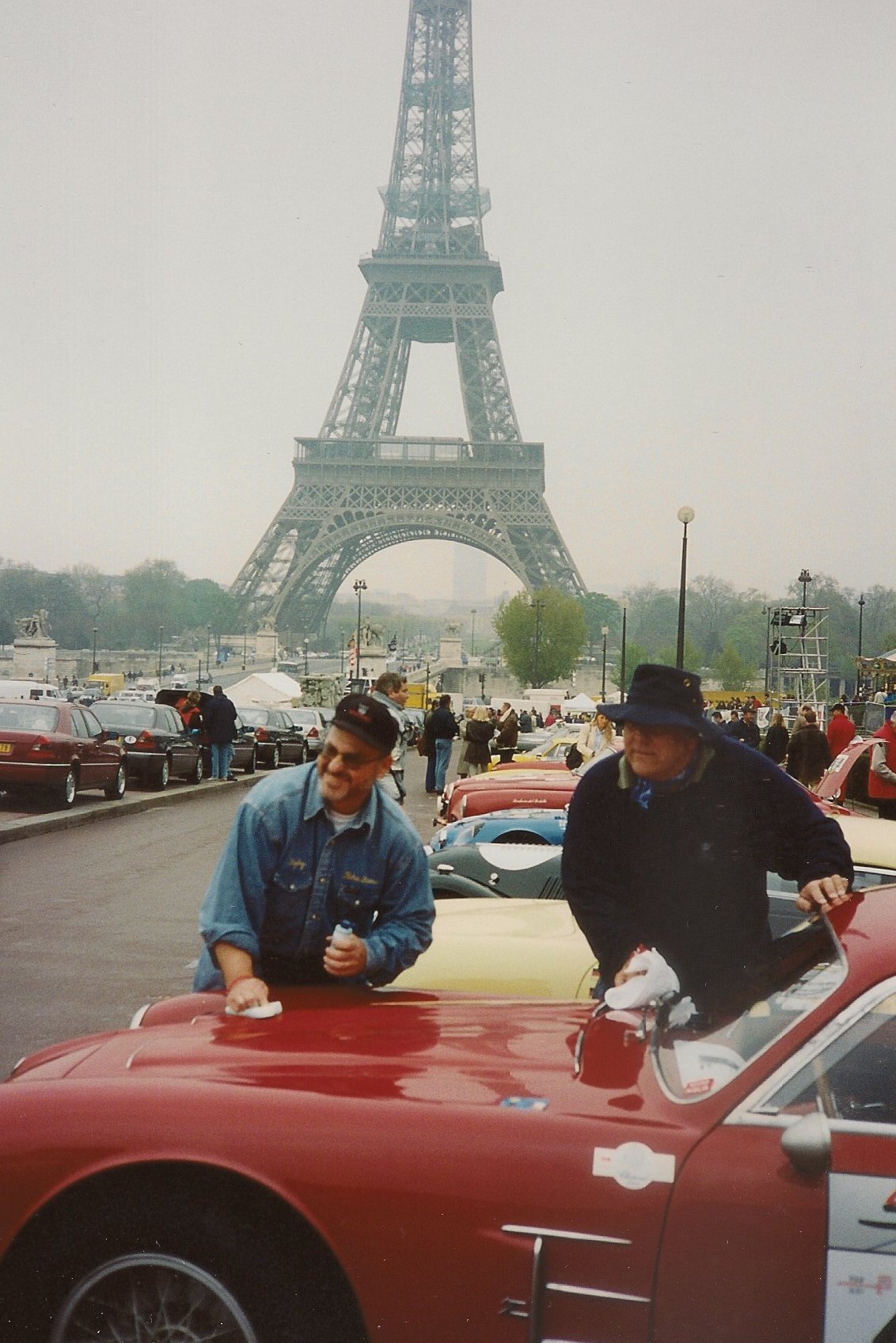
Bruce Male, left, and your author polish the Maserati prior to the start.
It rained our first day, but the high banking of the classic Montlhéry circuit still held magic.
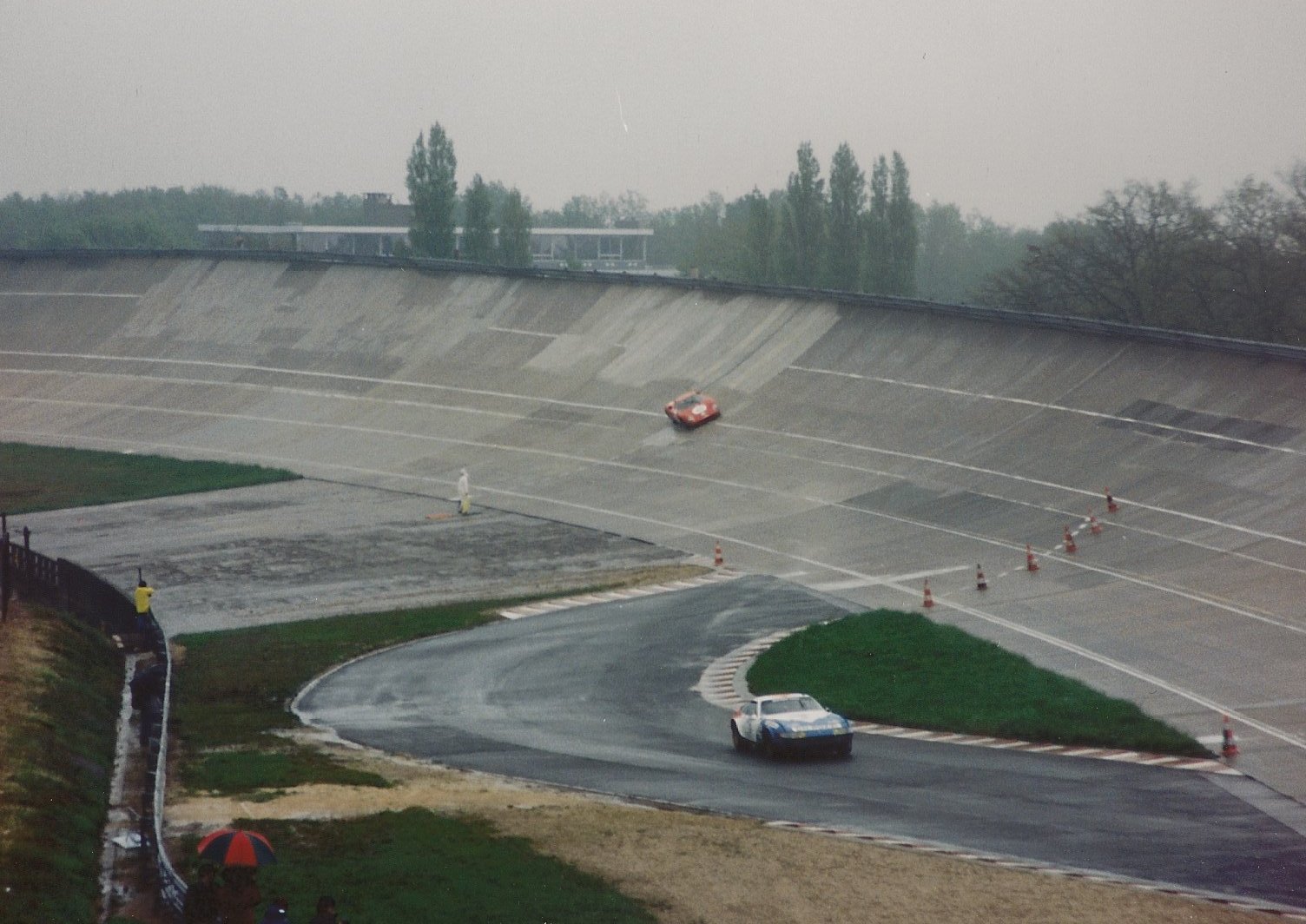
Montlhéry circuit, just outside Paris, has been used for record setting and racing since 1924.
Fortunately, the rain stopped the first evening. A good thing, too. Early the second morning, we were traveling about 90 mph, in the midst of passing a support vehicle and trailer. A flying stone turned the Maserati’s windscreen into an opaque mosaic.
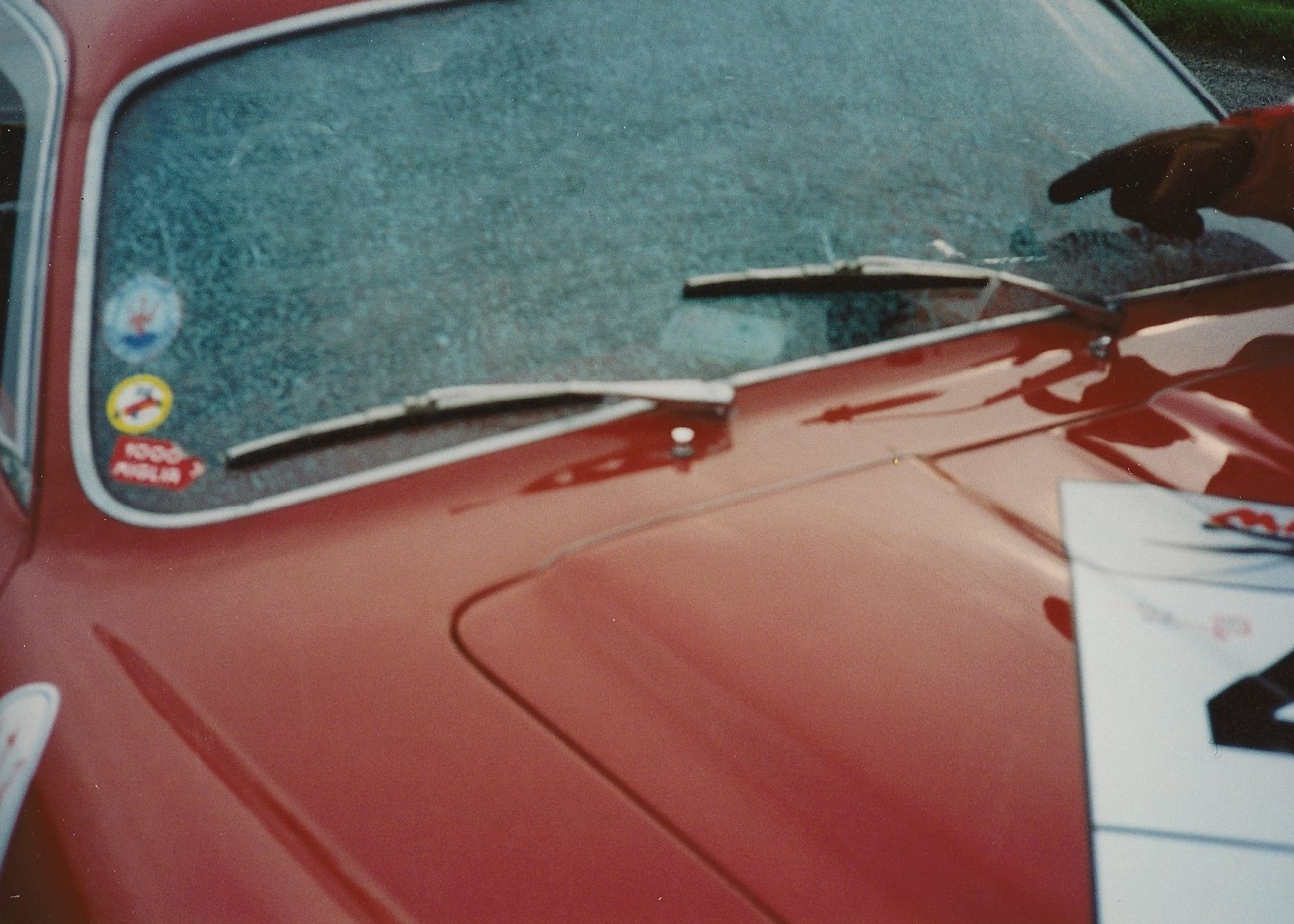
The Maserati’s safety glass did its trick: It broke into dull, tiny pieces.
We figured there was no Maserati dealership nearby, particularly one carrying parts for a 1956 A6G Zagato. So we punched out the windscreen, put on our helmets and continued on.

Your author handles windscreen disposal. There may be a tiny portion of rural French real estate still containing bits of Maserati. Image by Bruce Male.
From then on, it seemed perfectly natural to rise before dawn—after a late-night gourmet celebration—don a driving suit and helmet, strap oneself into an unmuffled coupé with no windscreen, and drive hell for leather across France.

The Maserati’s missing windscreen didn’t hinder our sightseeing. Image by Bruce Male.
The organizers, evidently enthusiasts of the highest order, inspected the car and passed it as fit to continue. In fact, checkpoint officials would whip out handkerchiefs and polish our imaginary windscreen. At one check-in, I got a thoroughly Gallic welcome by being kissed on both cheeks.
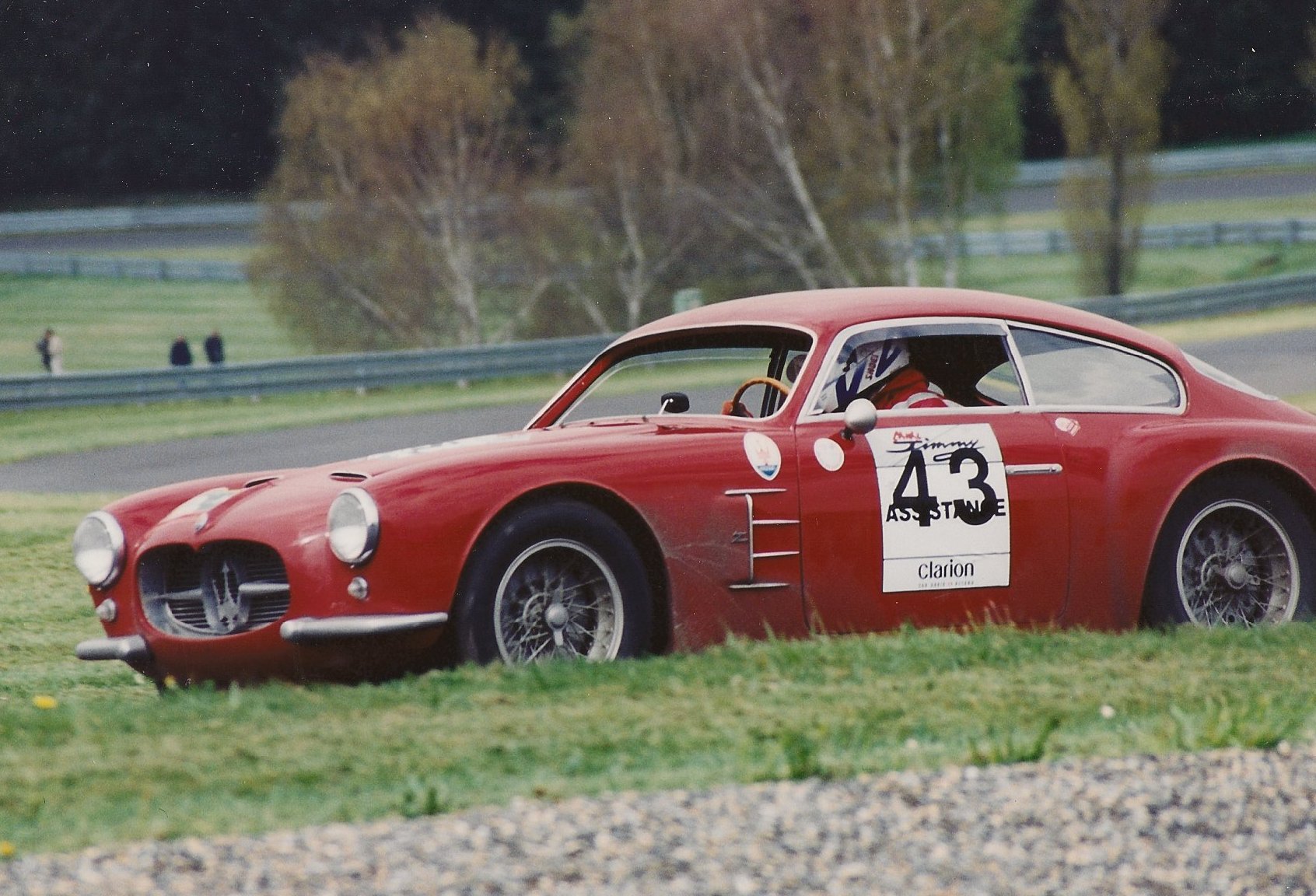
Bruce begins the competitive event at Mas-du-Clos. We had already determined what combination of window orientation gave the least buffeting.
That evening at dinner, Bruce and I were given a special award for “best displaying the true spirit of the Tour de France.”

Bruce and the apparition. Or maybe my camera was acting up.
This is when we came up with the idea of Equipe Banana. We had taken two bananas on which to snack en route—only to realize the absolute futility of eating a banana while wearing a full-face helmet.
On the other hand, the bananas made perfect windshield wipers, sweeping in unison as we rolled up to each checkpoint, the bananas’ automatic rest after three swipes carefully orchestrated.
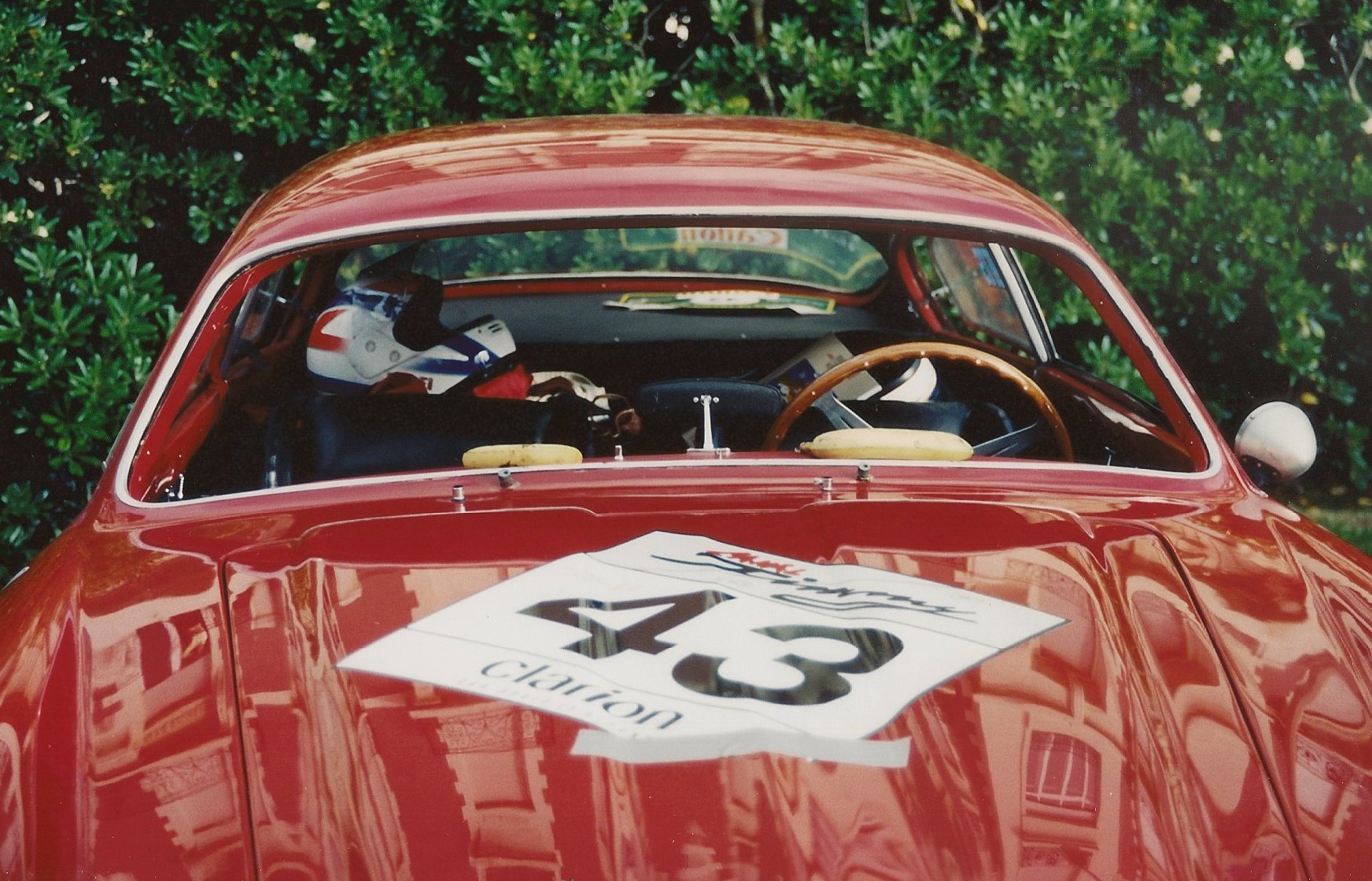
Equipe Banana, Hôtel du Palais, Biarritz.
The French—being Jerry Lewis fans, after all—loved the wipers. That evening, national TV news had a brief item on our specially equipped Maserati.
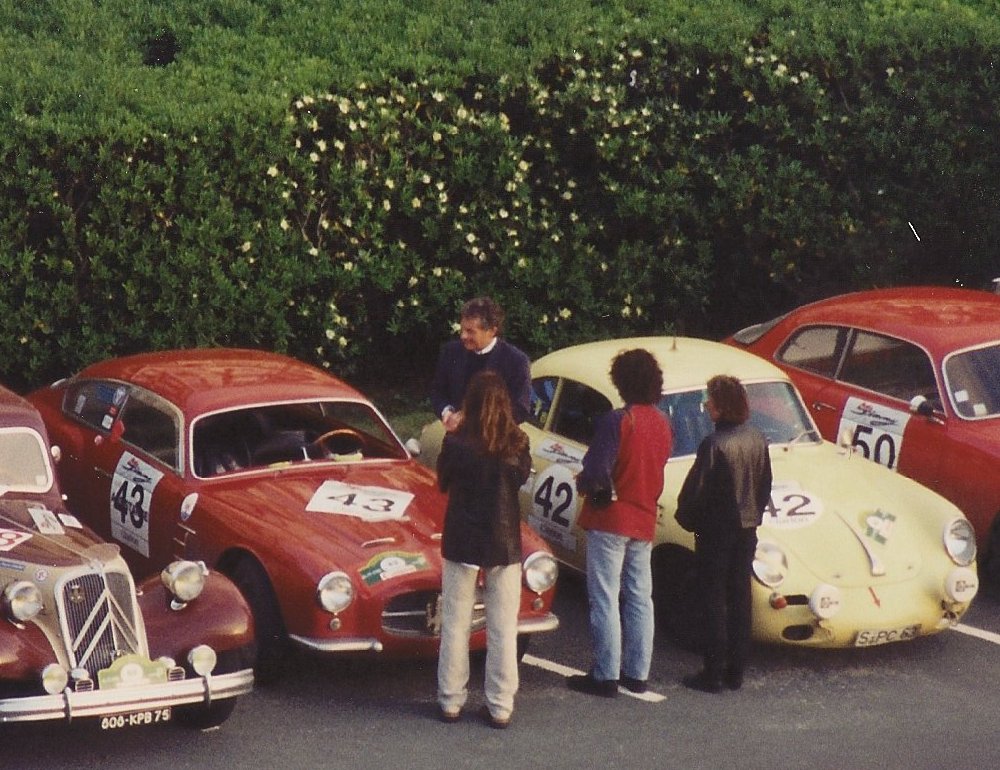
The Equipe Banana Maserati gathered spectators at Biarritz.
There was historical precedence for our Tour de France sans windscreen. In 1956, Fon Portago won the TdF after his Ferrari 250GT Berlinetta lost its windscreen to a flying stone.
Portago finished with a sheet of plastic screwed into the frame. I guess he couldn’t find any bananas. ds
© Dennis Simanaitis, SimanaitisSays.com, 2013
 Simanaitis Says
Lucky the first banana survived the collision with the face-mask, but how did you unpeel it?
Both cheeks, huh?
Dennis, a great story. Thanks for saving the memories and pic’s, and for bringing us along.
Ditto, Bill.
Dick Stewart