
Simanaitis Says
On cars, old, new and future; science & technology; vintage airplanes, computer flight simulation of them; Sherlockiana; our English language; travel; and other stuff
MY BOBSLEDS
BOBSLEDDING WOULD be my ideal sport. Run for only a short distance, hop into the bobsled, go like hell and have gravity scare the bejesus out of me.
Plus, I fashion myself in the getup, sort of race driver garb in Spandex.
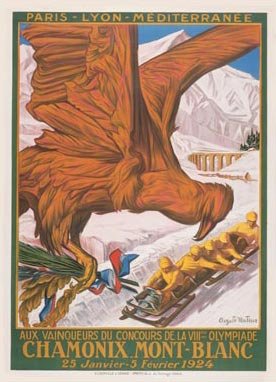
This poster celebrates the first Winter Olympics, held in Chamonix, France, 1924. See also www.wp.me/p2ETap-1hP.
Needless to say, bobsledding has been a life’s wish (death wish?) left unsatisfied. However, I’ve done the next best thing in assembling a modest collection of bobsled models. Plus, I had an adventure of my own in the ancestral home of bobsledding, St. Moritz, Switzerland.
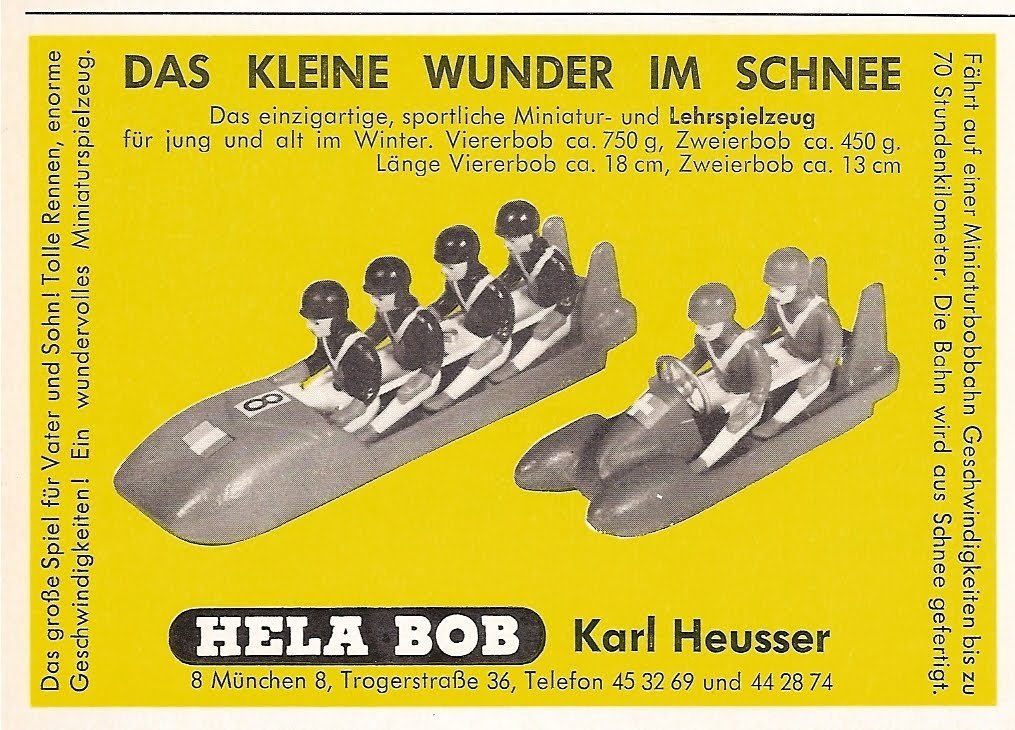
This advertisement for Hela Bob Karl Heusser, Munich, is circa 1967. Image from http://goo.gl/oMepF.
Two in my collection are cast iron models from Hela Bob Karl Heusser of Munich, Germany. An advertisement dating from 1967 calls the Hela Bob “the small wonder in the snow.”
“The great game for father and son,” no doubt reflecting the fact that women didn’t take part in bobsledding until demonstration runs in 1983 and full Olympic participation in 2002. To this day, there are two-women sleds, but no foursomes.
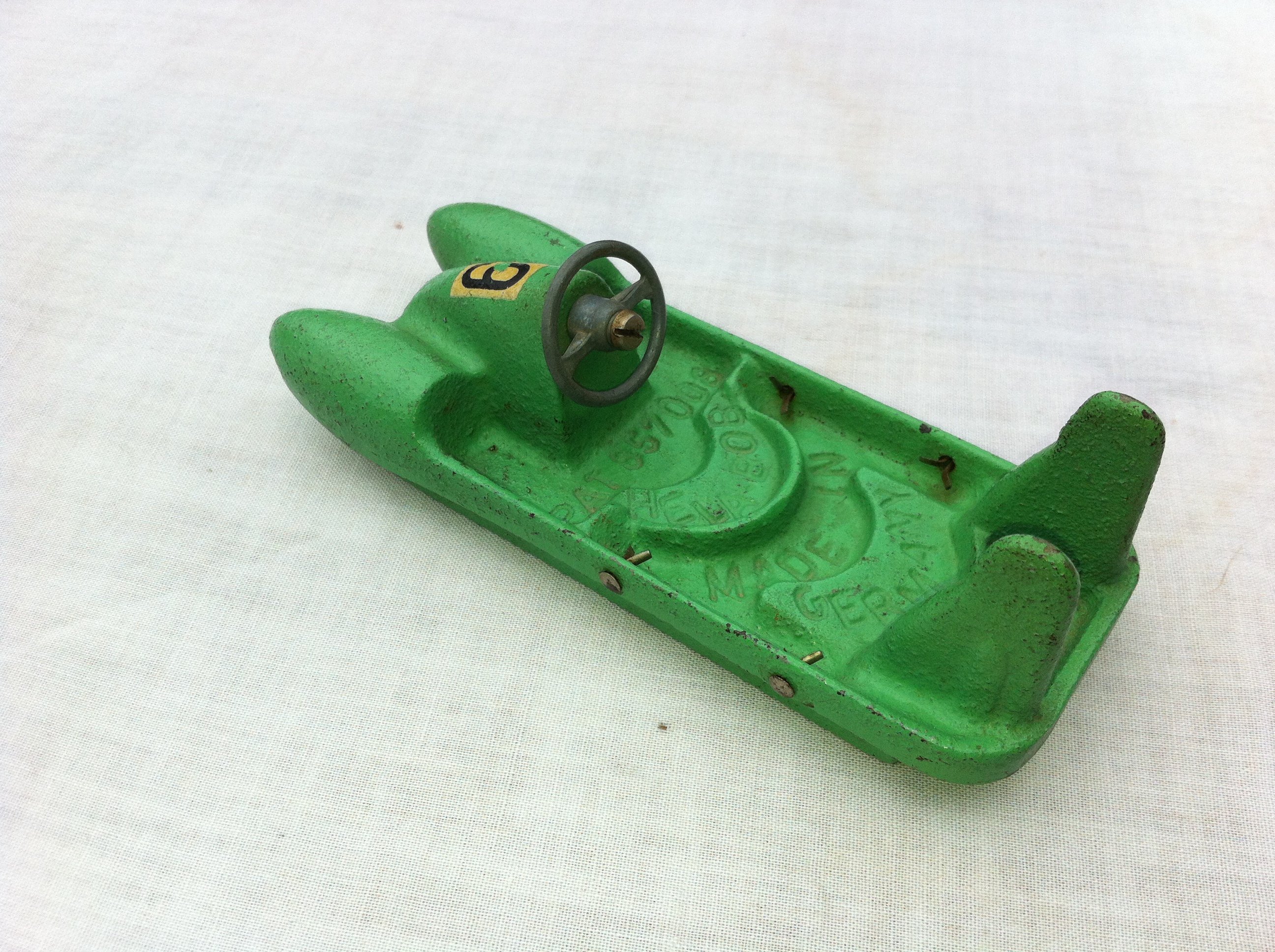
No. 9 is the earlier Hela Bob in my collection, c. 1950s.
Contemporary reports indicate the fittings on each side of my No. 9 bob held rubber bands used as seat belts for the driver and brakeman. Like the sled, these two figures were cast iron. And a fat lot of good the rubber-band seat belts did them; my No. 9 was crewless when I acquired it.
“Great racing, enormous speed! Wonderful miniature toys.” They certainly weren’t lightweights. The two-man Hela Bob weighs about 450 g/1 lb. and is 5 inches long; the four-man bob, 750 g/1.6 lb., 7 inches long.
In the real world, an Olympic bob and foursome have a maximum weight of 630 kg (1389 lb., just a tad less than a Formula 1 car/driver’s minimum of 1416 lb.) A two-man bob has a maximum of 390 kg (860 lb.); a women’s bob, 340 kg (750 lb.).
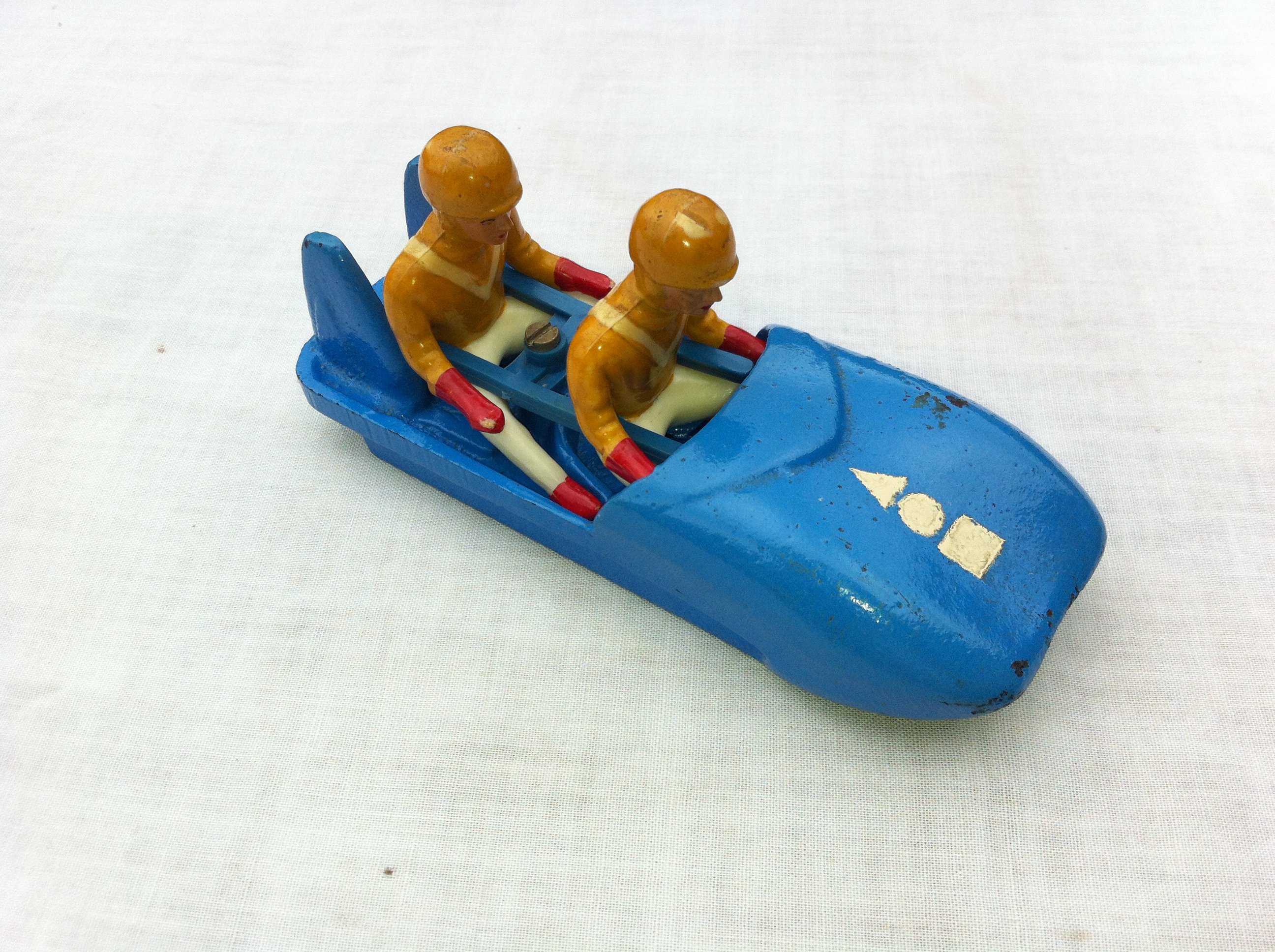
My blue Hela Bob’s plastic crew identifies its later vintage.
The plastic pair in my blue Hela Bob identify it as likely contemporaneous with the advertisement, around 1967. No longer depending on rubber bands, the crew is held in place by a plastic bracket.
The lack of steering wheel is canonically correct. From the very beginning, many real bobs were steered by rope and pulley. It’s said piloting a bob has more in common with steeplechase riding than with race driving.
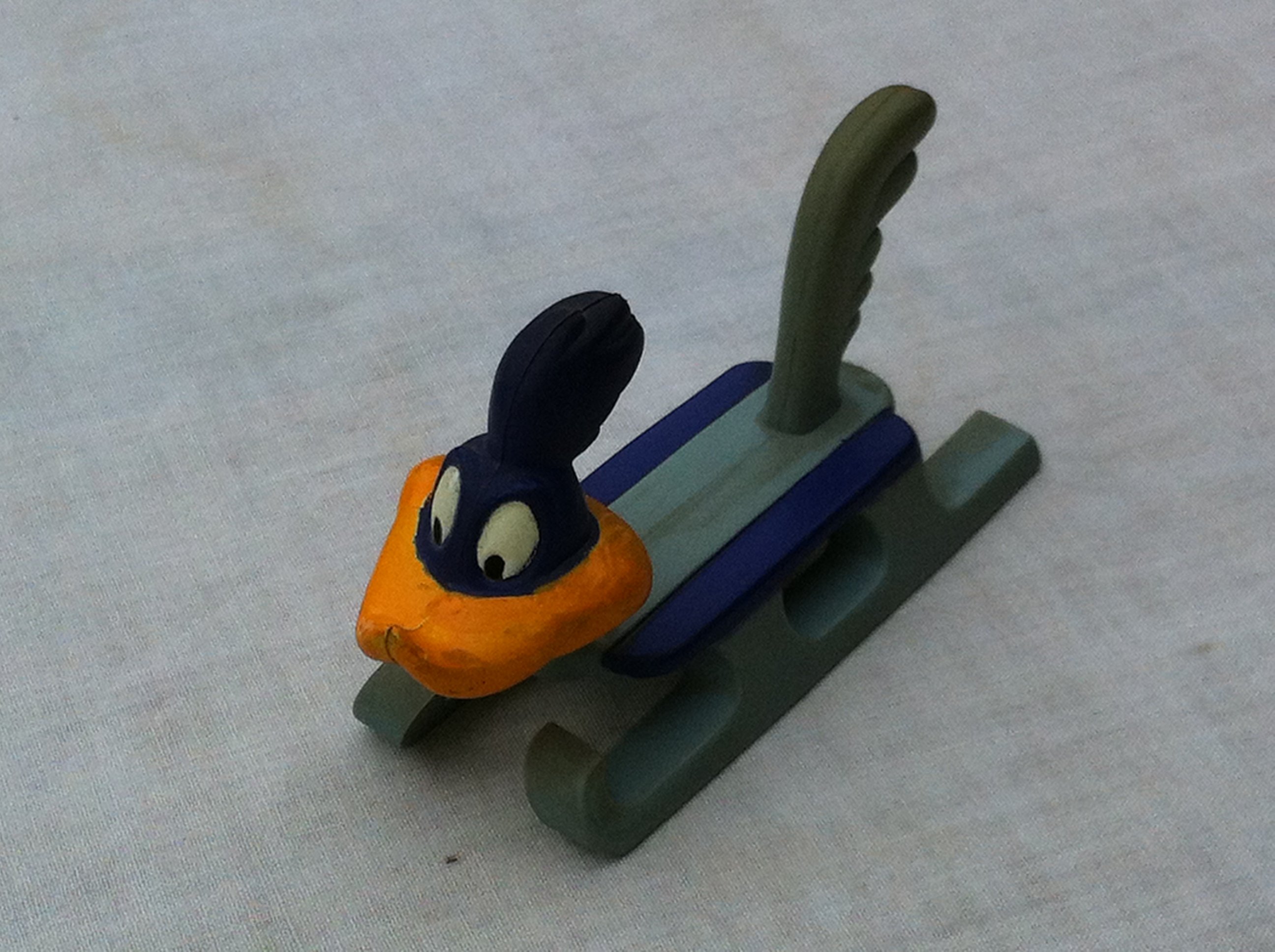
Roadrunner isn’t sanctioned by the FIBT (Fédération Internationale de Bobsleigh et de Tobogganing), but he is part of my collection. Source: Arby’s.
“Speeds up to 70 km/h,” promises the Hela Bob advertisement. And, of course, “the track is made from snow.” Real bobs can achieve 150 km/h (93 mph), with a claimed but undocumented 201 km/h (125 mph). Some curves subject crews to as much as 5 g.
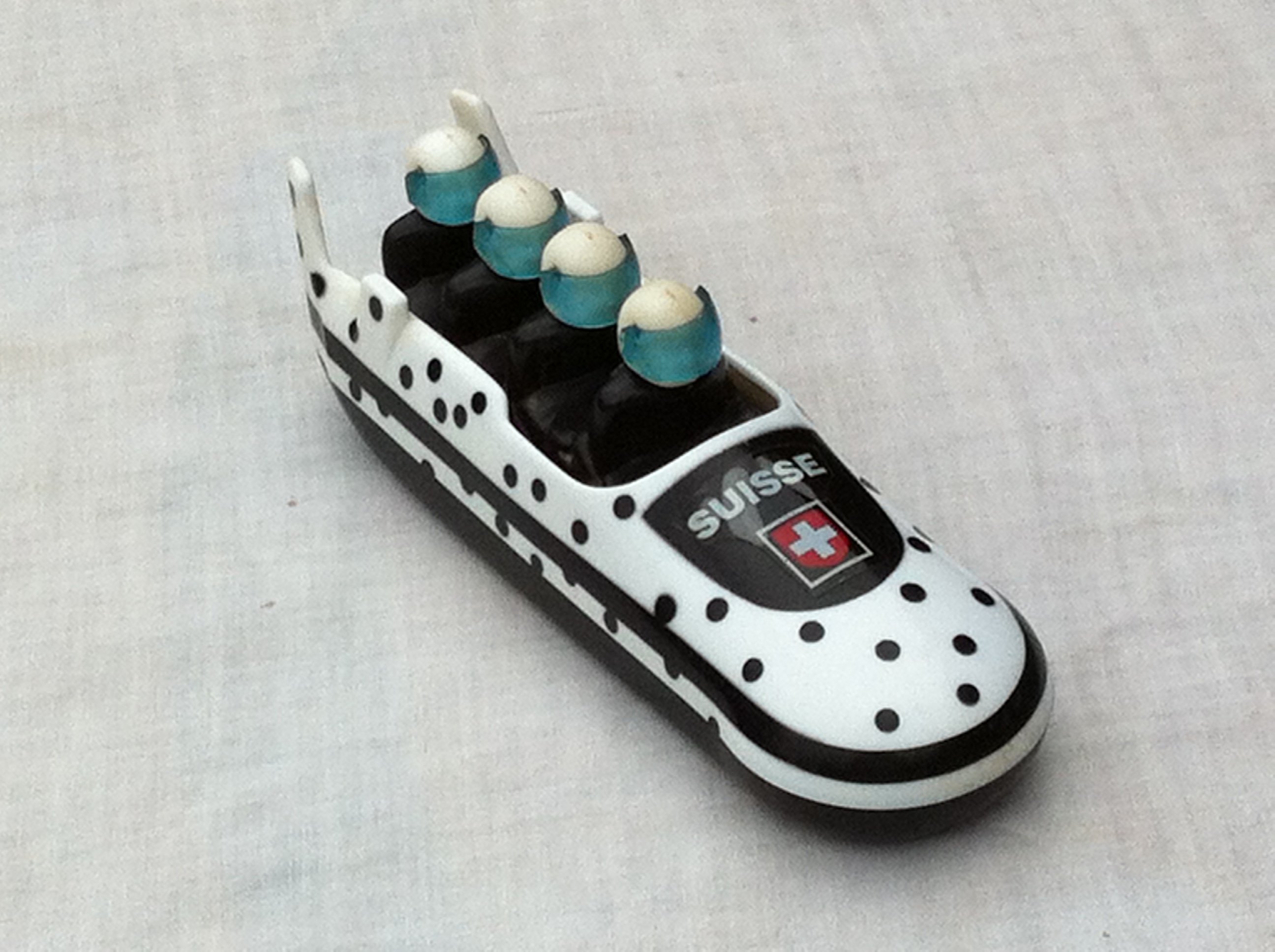
Most appropriately, my four-man bob is in Swiss livery. I bought it in St. Moritz (though full provenance traces to China).
In 1999, I went on a winter driving trip, courtesy of Goodyear, to St. Moritz, Switzerland. This is where bobsledding first gained popularity—and less hazardous off-street venues!—around 1900.
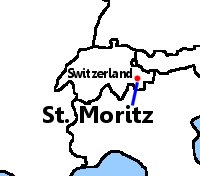
One of our dinners was at a chalet high overlooking St. Moritz, with a special treat promised at its conclusion: Outside the restaurant were wooden one-man bobs for an exhilarating trip down a twisty path back to town.
There was only one problem. By the time we were fully schnapps-fueled and ready to go, about six inches of soft snow has fallen. It was more than “tough sledding.” It was impossible sledding.
However, the sleds needed to be returned to their town location—and thus each of us had to drag a sled through the deep snow down that twisty path.
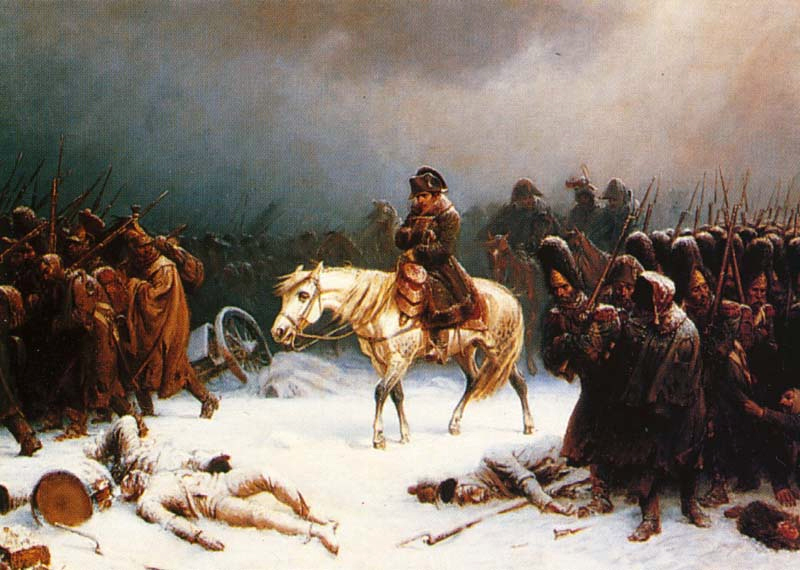
Napoleon’s Withdrawal from Russia, by Adolph Northen.
Thoughts of Napoleon retreating Russia came to mind. So did burning the sleds for warmth and gnawing colleagues’ forearms for nutrition.
But I did acquire that Swiss four-man bob. ds
© Dennis Simanaitis, SimanaitisSays.com, 2013
 Simanaitis Says
I have two blue Hela-bobs that are exactly like the one in your photo.