
Simanaitis Says
On cars, old, new and future; science & technology; vintage airplanes, computer flight simulation of them; Sherlockiana; our English language; travel; and other stuff
MARIENPLATZ
ONE OF my favorite European cities is Munich, in the south of Germany, not far from the Alps. Among other things that endear it to me, it’s the home of Marienplatz, Ludwig Beck, Dallmayr, Haxnbauer and the Bayerische Staatsoper.
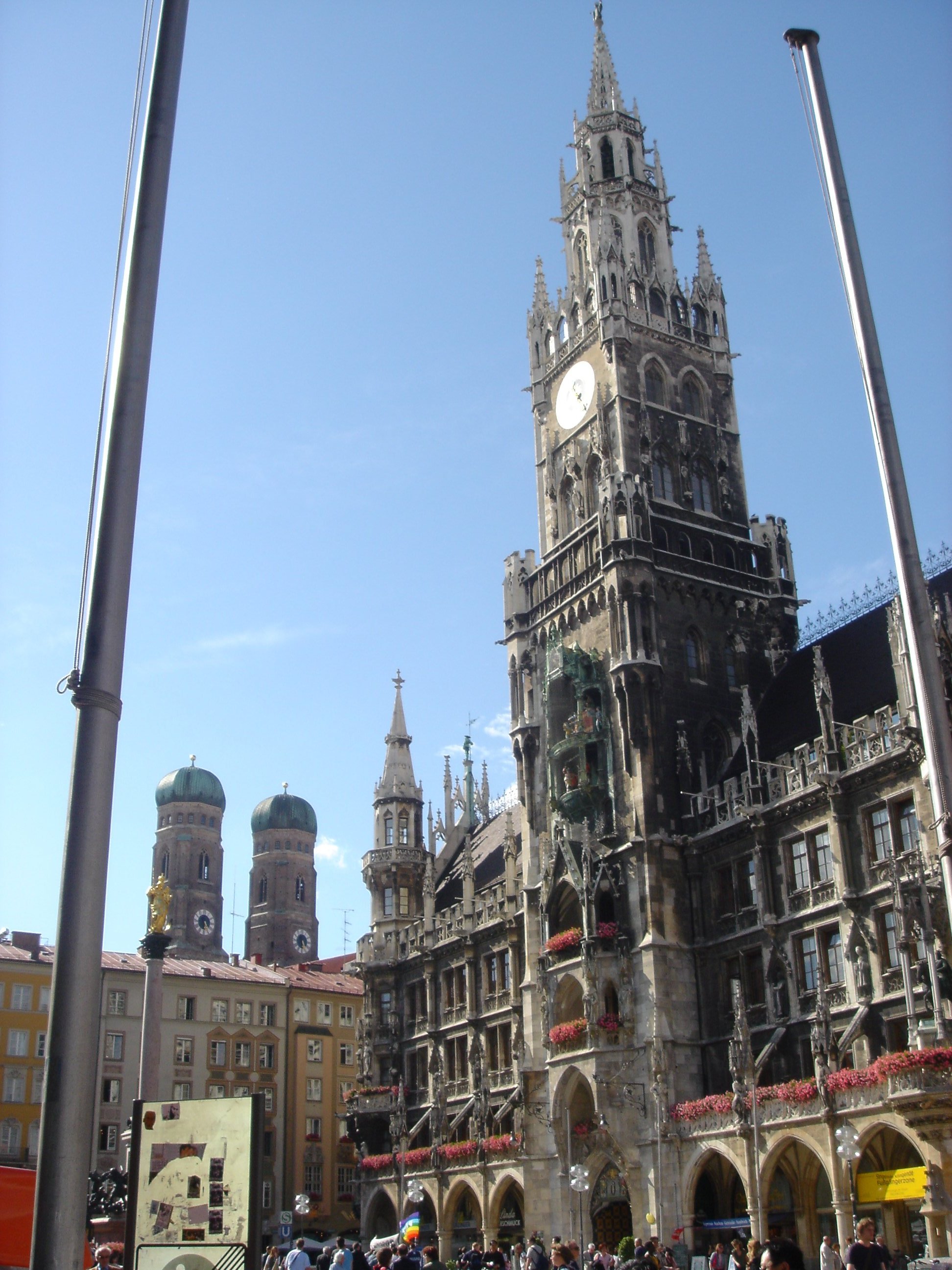
Munich’s New Town Hall is on Marienplatz. The twin spires of Frauenkirche are in the background.
The center of town, one of the main junctions of many U-Bahns (undergrounds, subways, metros) is Marienplatz. It’s part of a giant pedestrian mall stretching from Karlsplatz on the northwest to the Viktualienmarkt and beyond on the southeast.
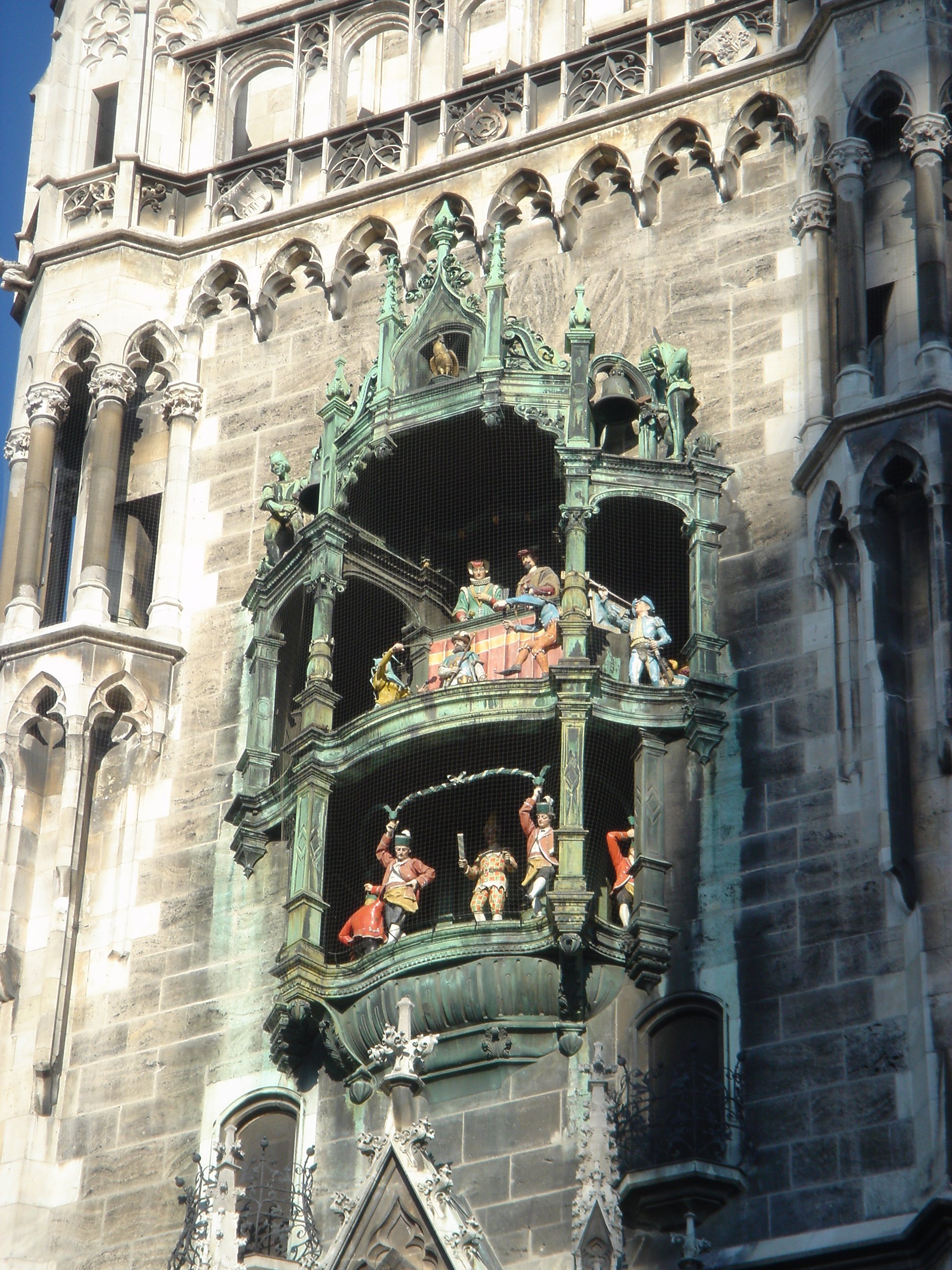
The Glockenspiel’s animated figures on the lower tier celebrate the end of the plague in 1517; those above, Duke Wilhelm V’s marriage festivities in 1568.
“Meet me at the New Town Hall,” the Neues Rathaus, is familiar to any Münchener. Its famous glockenspiel attracts a crowd at 11 a.m., plus noon and 5 p.m. in the summer. The glockenspiel’s spiel is described at http://goo.gl/jsDxK.
It’s also likely that Marienplatz will have several bits of performance art, including living statues, musicians, mimes and the like. And, unlike some other public gathering places in cities around the world, Marienplatz appears to be devoid of pickpockets or other bad guys.
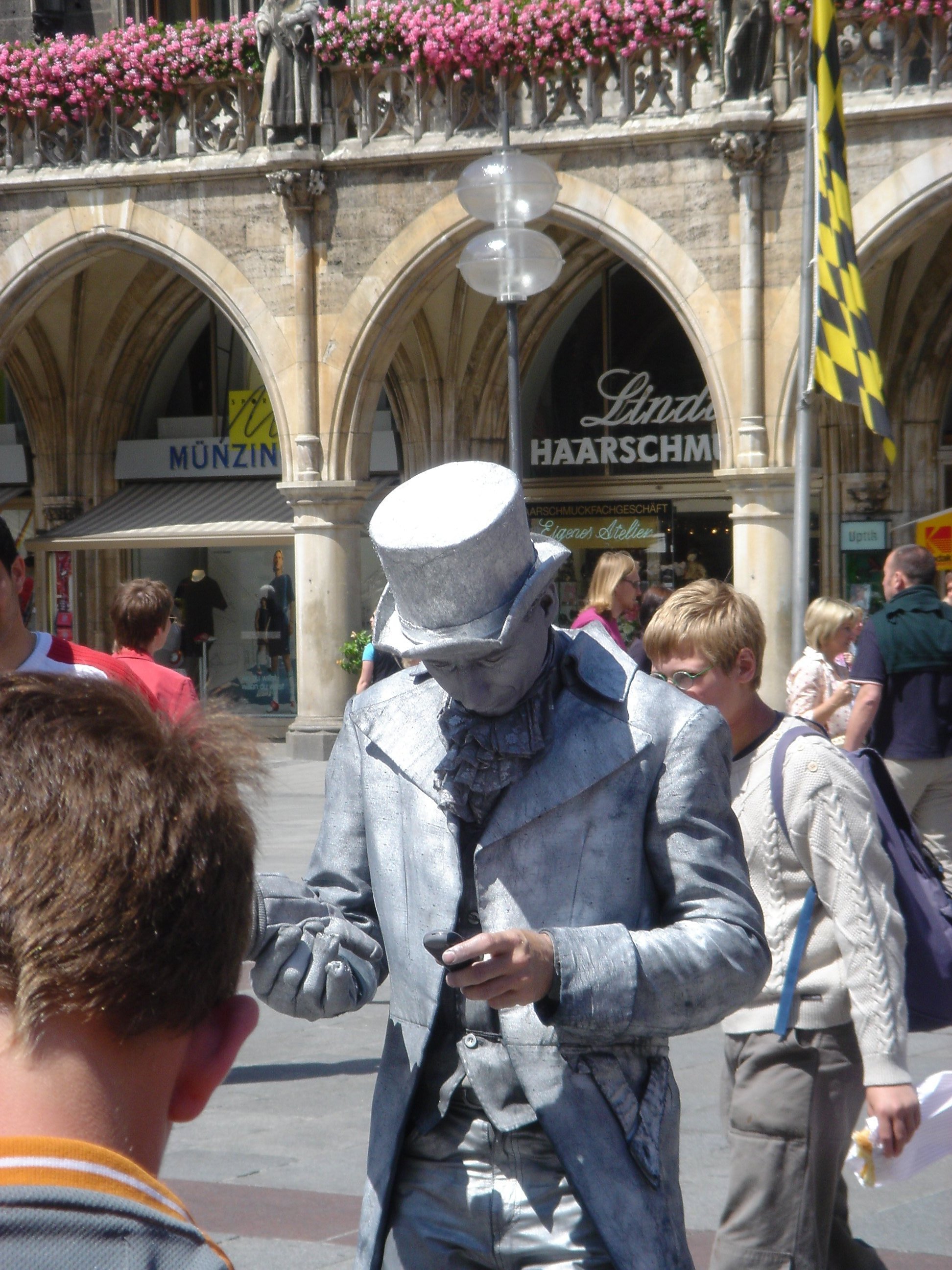
Like everyone else, living statues need to keep in touch.
West of Marienplatz is Kaufingerstrasse (“buyers’ street”), with one of Munich’s landmarks, Frauenkirche, north of this shopping street. The church was erected in 1468-1488, restored in 1858-1868 and, most recently, in stages ending in 1994. By law in 2004, its twin-spire height of 325 ft. will never be exceeded anywhere in Munich.
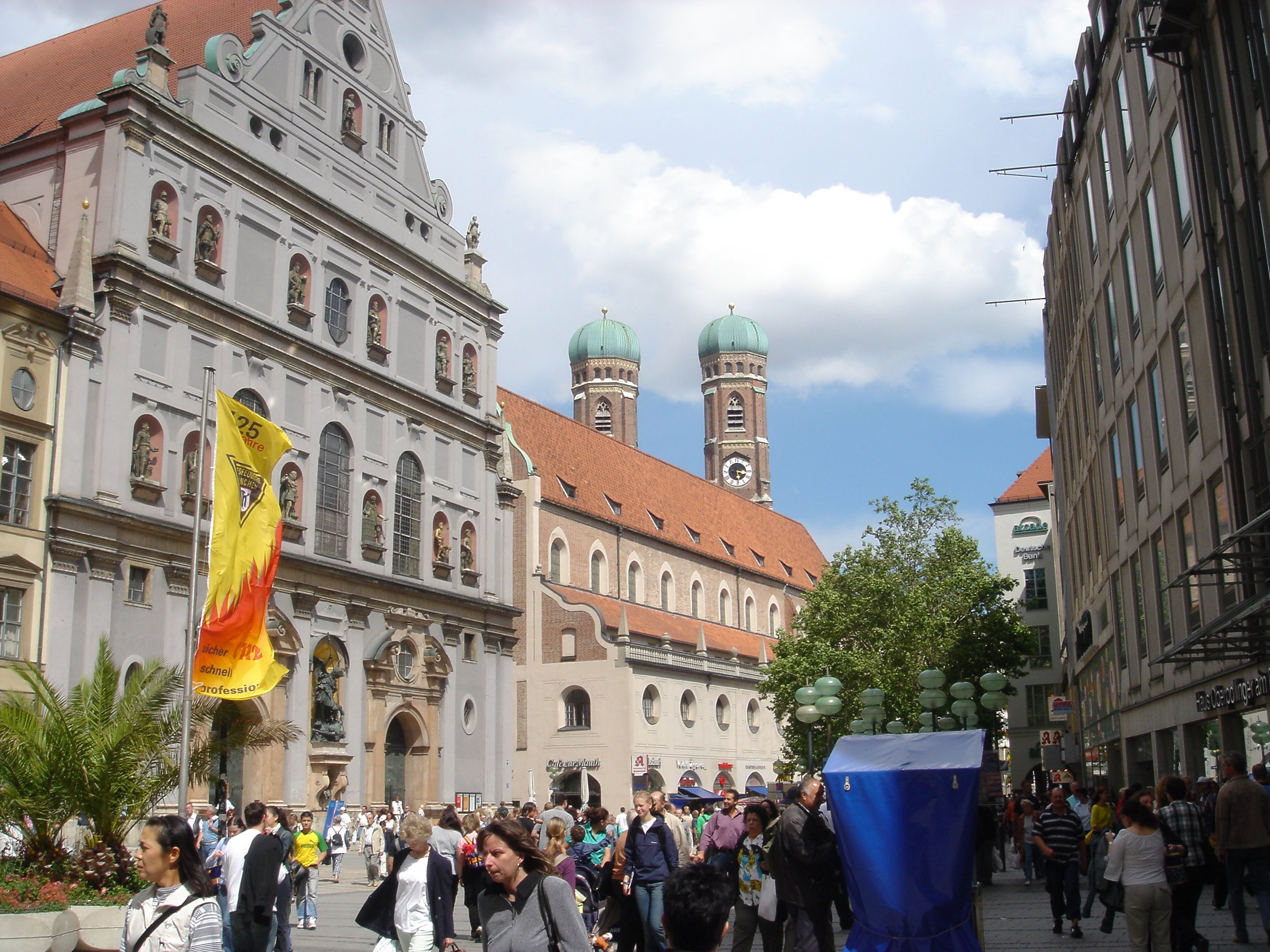
St. Michael’s Church on the left is one of the impressive sights along Neuhauser Strasse which turns into Kaufingerstrasse.
Immediately east of Marienplatz (to the right, if you’re facing the Rathaus), is Ludwig Beck.
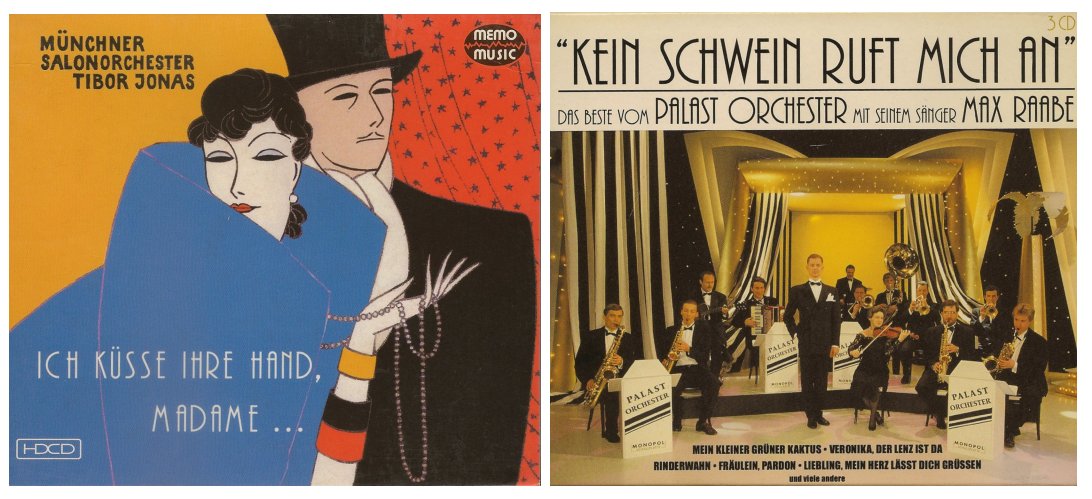
Two of my Ludwig Beck finds.
Every time I visit this vast department store, several CDs jump out at me, classical, big band, salon, jazz, many European labels not generally marketed in the U.S. I believe I found my first Rasputina there.
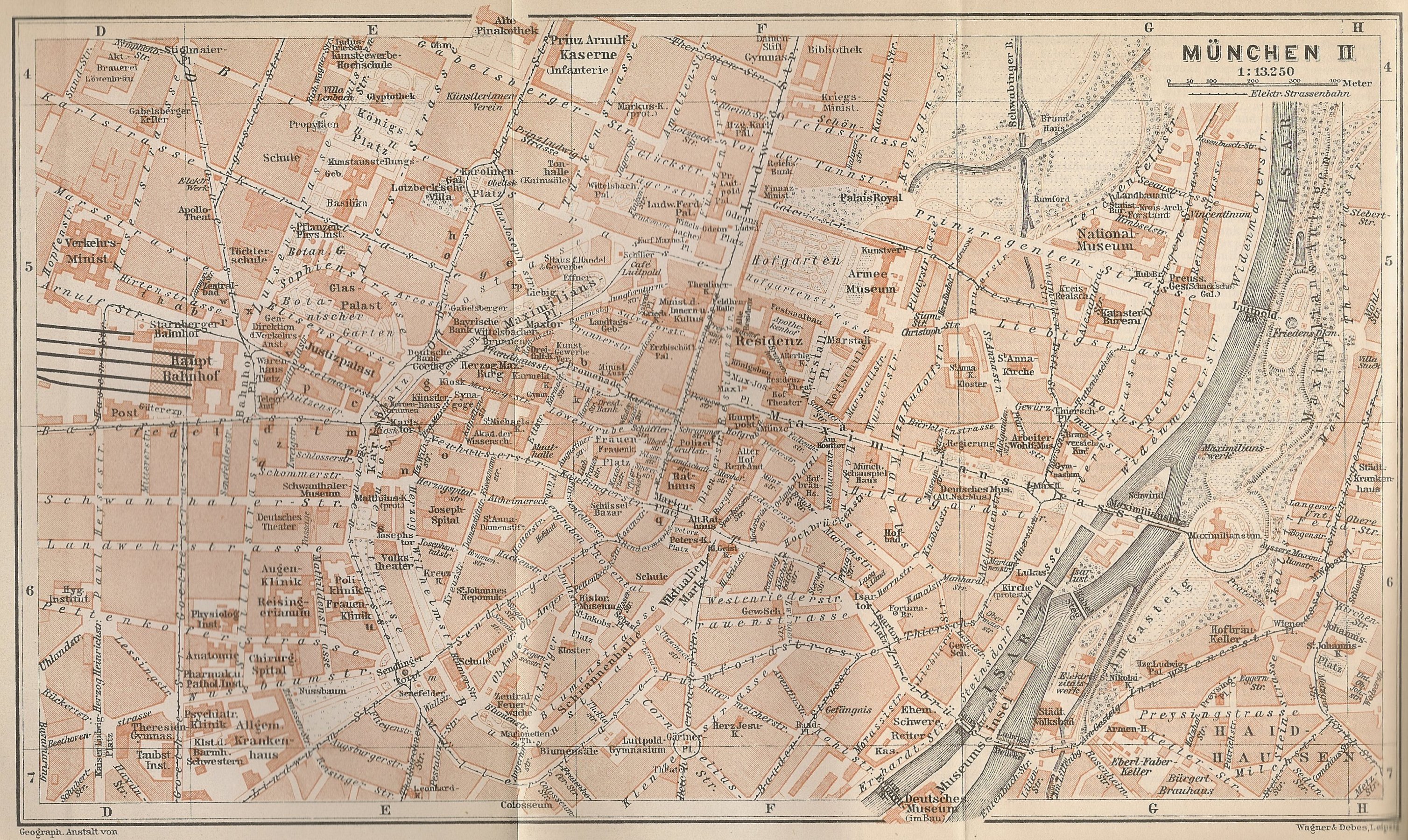
A perfectly useful map of Munich Alt Staat (Old Town). Image from Baedeker’s Southern Germany, Karl Baedeker, 1910. See www.wp.me/p2ETap-ki.
Walk north from Ludwig Beck to Dienerstrasse, 17, and you’ll come upon the Porsche Design Store, with treasures of another kind; and just a few doors away at Dienerstrasse, 14, is Alois Dallmayr, another wonderland, this one of confections and other delectables.
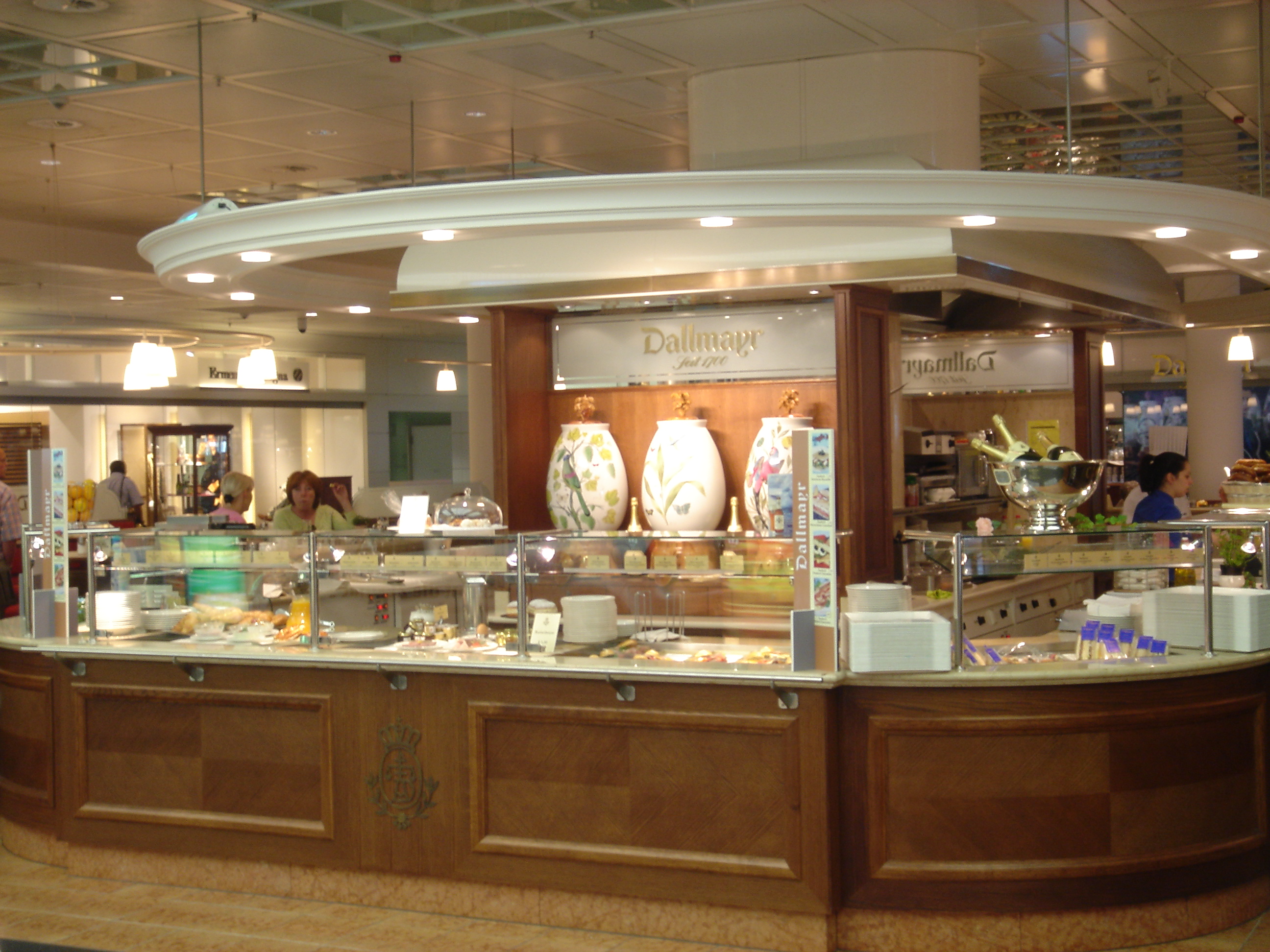
Alois Dallmayr (www.dallmayr.com) is a visual as well as taste treat.
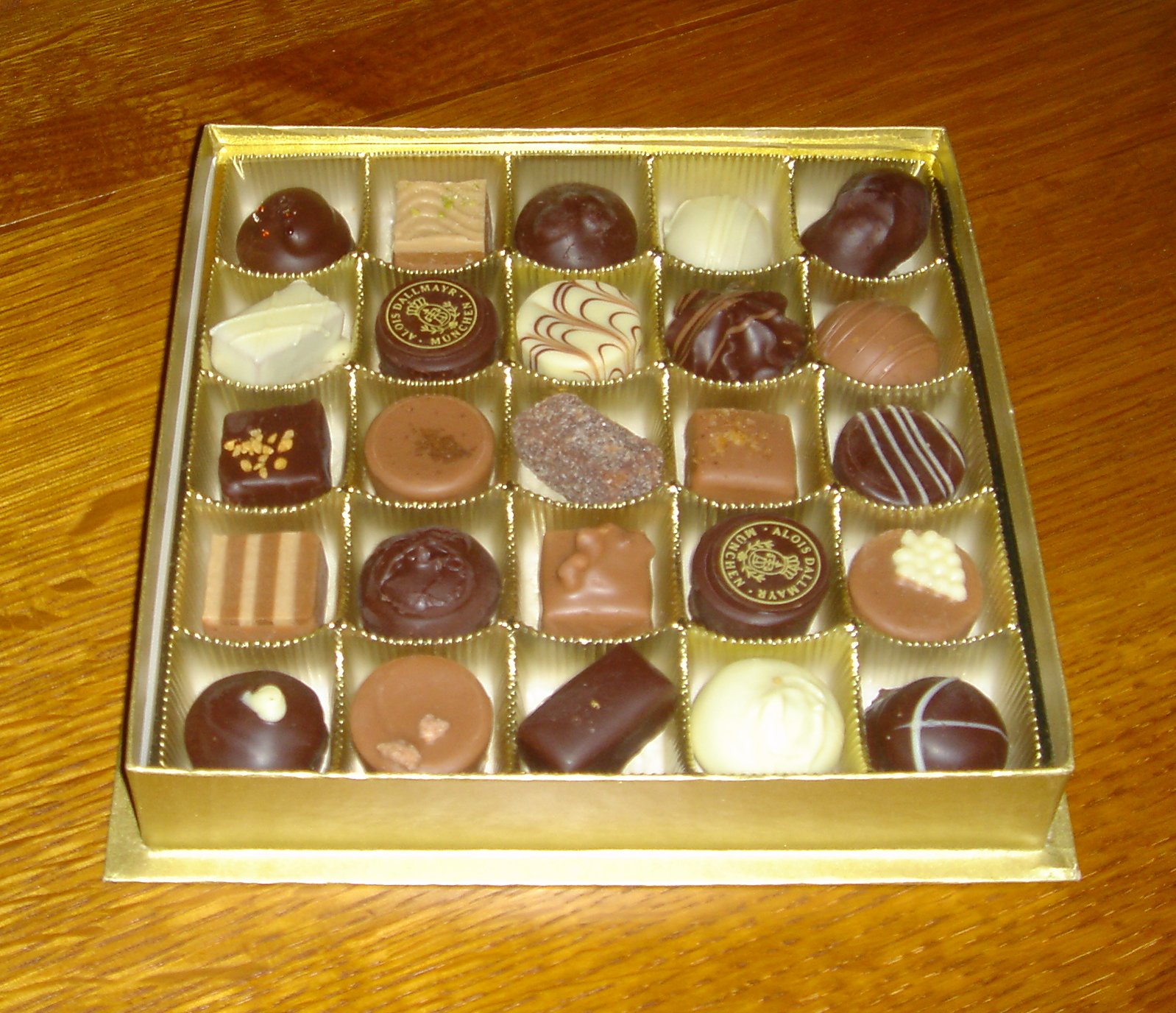
I am especially fond of its Bauernsenf (Farmers Mustard) and Honig (hint: bees produce it). Dallmyr chocolates are great as well.
For a hearty Bavarian meal (there is no other kind), zigzag a couple blocks easterly to Sparkassenstrasse and Haxnbauer’s, home of my favorite Schweinshaxe.
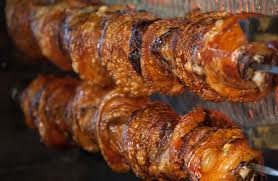
Haxnbauer’s Schweinshaxen. See http://goo.gl/Srh71 for details.
To call Schweinshaxe merely rotisserized pork knuckle doesn’t do justice to this crispy yet succulent bit of culinary heaven. Dine with friends so your party can choose its own selected haxe per 100 grams. To eat the entire thing—with appropriate Apfelblaukraut and Kartoffelknödel—might seem utterly piggish.
Another restaurant in the Kuffler München collection is Kuffler California Kitchen; the menu looks interesting, albeit familiar. I’ve never been to it, but know where it is: directly to the right of the Bayerische Staatsoper.
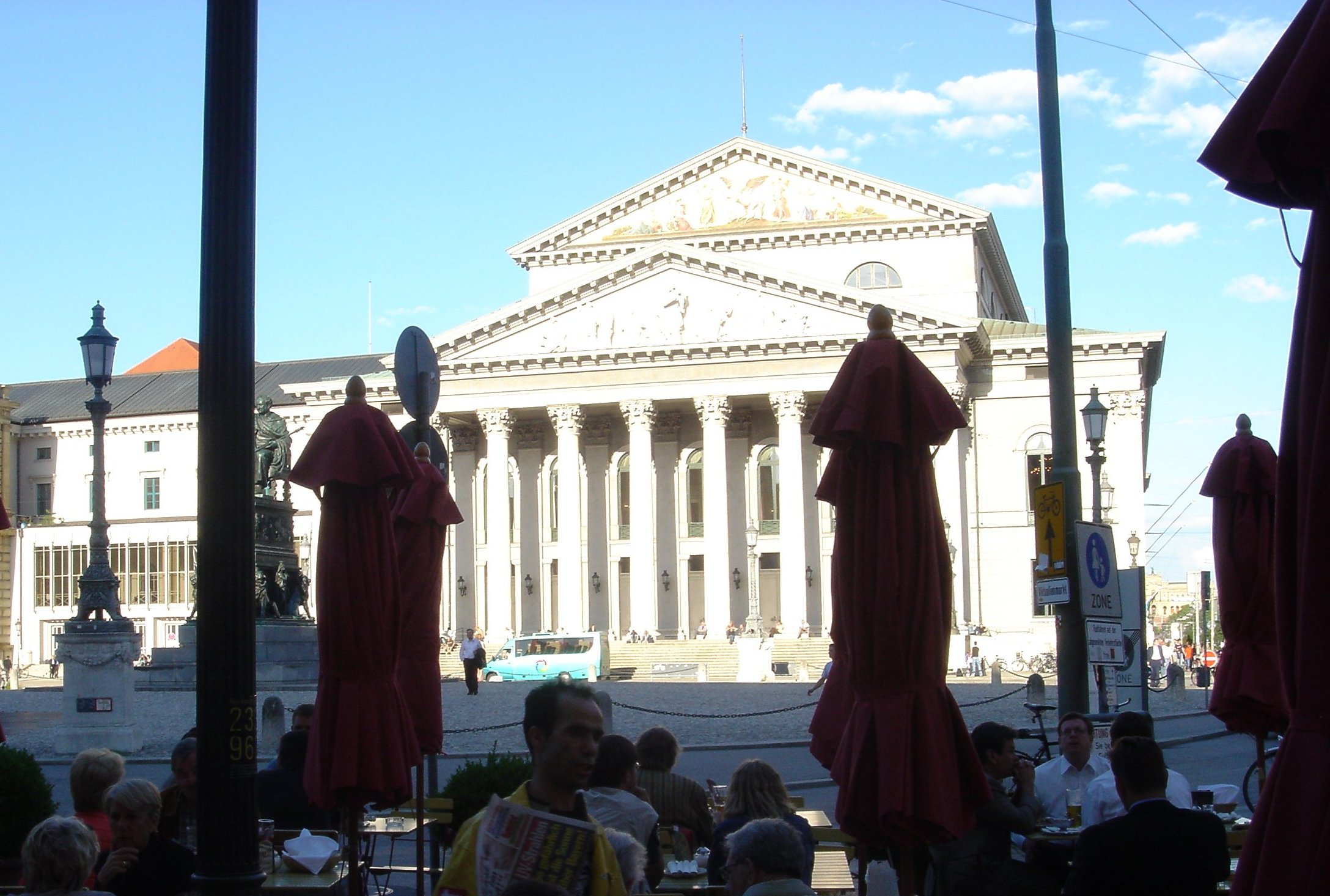
The Bayerische Staatsoper, as seen from a sidewalk cafe across the platz.
Not incidentally, this is the 200th anniversary of the births of Giuseppe Verdi and Richard Wagner. Apart from sharing a birth year and operatic profession, these two couldn’t have been more different. The Bayerische Staatsoper celebrates this in an unexpected manner at http://goo.gl/QFTcS. All in good fun. ds
© Dennis Simanaitis, SimanaitisSays.com, 2013
 Simanaitis Says
Thank you very much for your friendly comments on our munich based restaurants. Best wishes from KUFFLER in Munich