
Simanaitis Says
On cars, old, new and future; science & technology; vintage airplanes, computer flight simulation of them; Sherlockiana; our English language; travel; and other stuff
ARCHAEOLOGY, MARITIME STYLE
AVAST, YE—Them that dies ’ill be the lucky ones.
Now that I have your attention, I’ll share information on maritime archaeology as detailed in the 17 May 2013 issue of Science magazine, published by the American Association for the Advancement of Science. The article, “Troubled Waters for Ancient Shipwrecks,” is aptly named (see http://goo.gl/XJpoG for a brief summary).
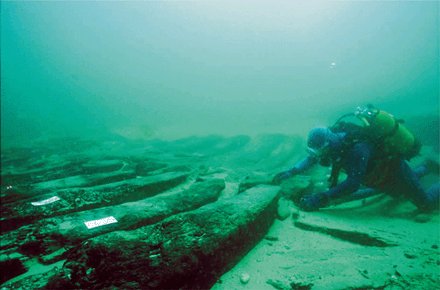
An environment that isn’t as tranquil as it may appear. This image and others from Science, 17 May 2013.
There are squabbles between archaeologists and treasure hunters. Treasure hunters and fishermen have conflicting interests. Governments get involved with matters of territorial waters and disposition of their naval shipwrecks. These all are intensified by improved technology, principally the advanced techniques of seeking out sunken craft.
Sophisticated imaging of the seafloor, undersea drones and other modern tools are expensive. Researchers figure $20,000 to $30,000 per day for extensive search and exploitation. Some techniques, propeller wash deflectors, for example, are hardly in keeping with painstaking dig-and-record archaeological practices.
One of archaeology’s success stories is the Peppercorn Wreck. In the seafloor near Lisbon, in only 40 ft. of water, archaeologist divers in 1993 found a mishmash of mud, old timber—and peppercorns. In researching maritime records, they identified the wreck as Our Lady of the Martyrs, which went down in 1606.

Trade route of a Portuguese Indiaman, circa 1600.
The ship was an Indiaman, a three-mast cargo vessel plying the trade route from Lisbon around Africa’s Cape of Good Hope, across the Indian Ocean to the Portuguese colony of Goa, India, and return. Her cargo of Indian peppercorns and Chinese porcelain indicated she sank inbound and tantalizingly near her home port.
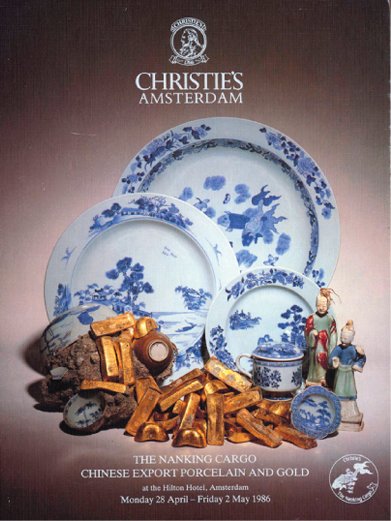
This Christie’s catalog shows the wealth of early international trade. See also www.wp.me/p2ETap-VI.
Researchers used carefully measured artifacts and Renaissance shipbuilding manuals to reverse-engineer Our Lady of the Martyrs. Computer models of the ship indicate that she was up to modern criteria for stability—but apparently not the weather conditions that sank her in 1606.
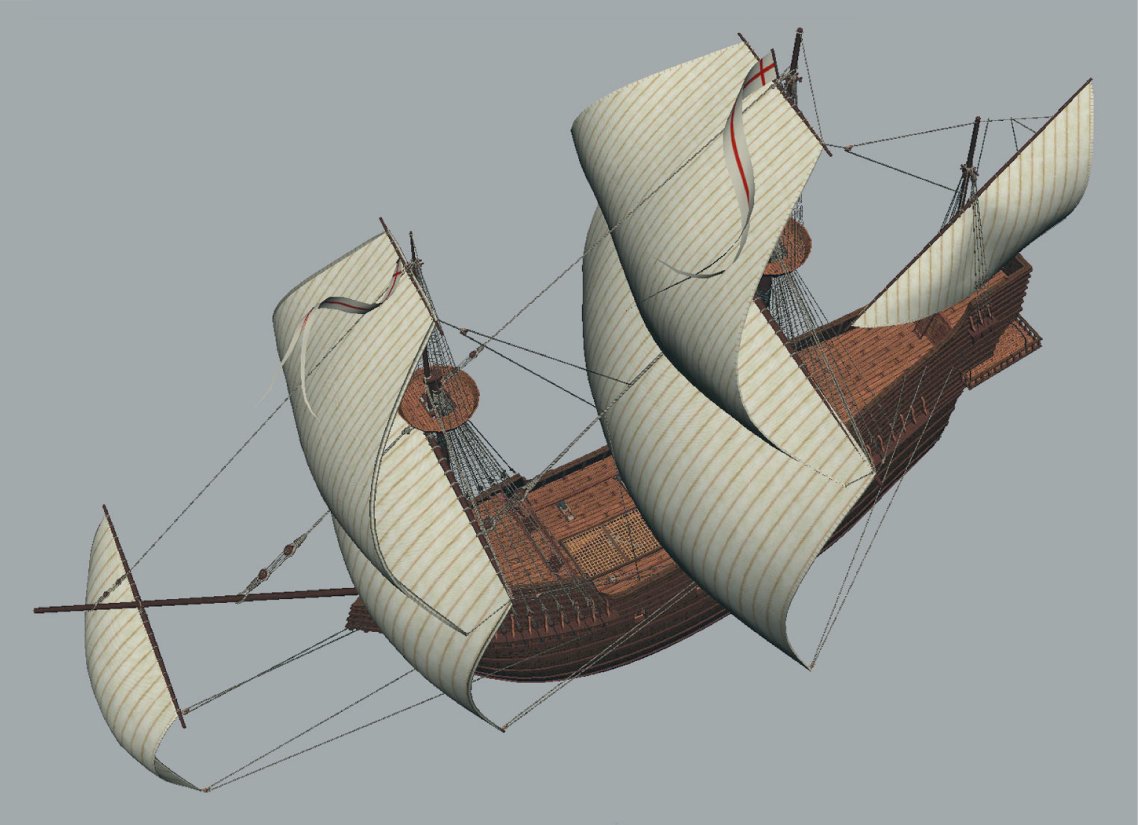
A computer simulation of Our Lady of the Martyrs suggests she was seaworthy indeed.
Wrecks such as Our Lady of the Martyrs reside in a murky world legally compared with those on land. In fact, precedents of maritime law have tended toward “Finders, Keepers.” National claims of territorial waters complicate matters, as do the differing motives of archaeological researchers and profit-oriented treasure hunters.
Only occasionally do all these interests cooperate, as with the UNESCO Convention on the Protection of the Underwater Cultural Heritage. Proposed in 2001, its recommendations came into force in 2009 after ratification by 20 countries. Now 42 nations have agreed to preservation in situ as a first priority.
Squabbles persist, at least in part because of governments and their navies. Both the U.S. and Great Britain hold claim to their submerged naval vessels—regardless where they reside. In strict interpretation of the UNESCO Convention and to protect sailors’ graves, the U.S. prohibits any salvage whatsoever.
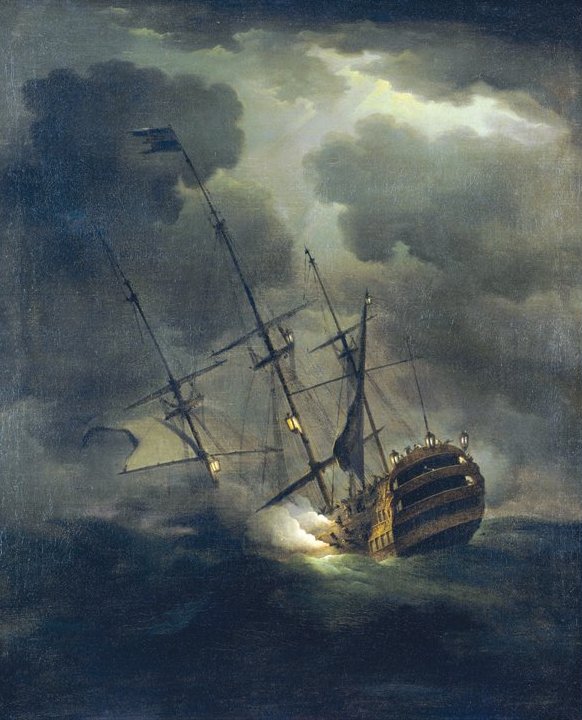
Almost 270 years after her sinking shown here, HMS Victory is again making maritime history.
In October 1744, His Majesty’s Ship Victory sank in a violent storm in the English Channel. (By the way, don’t confuse this with Admiral Horatio Nelson’s Victory launched in 1765; nor with the 1685 Royal James renamed the Victory in 1691.)
Today, this intermediate HMS Victory lies in the midst of a major quandary. In 2008, Odyssey Marine Exploration, an American salvage company, located the shipwreck beyond U.K. territorial waters. Odyssey published online archaeological articles arguing that looting and commercial fishing were damaging the wreck. The company termed itself a “salvor-in-possession,” despite HMS Victory being a naval vessel and hence British property.
Things got murkier than the water at her 246-ft. depth. In January 2012, the British government deeded Victory to The Maritime Heritage Foundation, a British charitable trust. In quick time, Odyssey issued a press release that it had signed an agreement with the foundation to excavate the wreck.
Archaeologists got all in a tizzy because of Odyssey’s controversial business practices, among them selling artifacts at its website www.shipwreck.net.
The House of Lords challenged whether the foundation had sufficient funds to pay Odyssey. The foundation’s end-of-year report for 2012 revealed a fund balance of £13,275, a bit more than $22,000—covering at best one day of Odyssey fieldwork.
Complicating all this are historical records: Notes the Science article, a Dutch newspaper from 1744 reported “people will have it that on board the Victory was a sum of £400,000 that it had brought from Lisbon for our merchants.” ds
© Dennis Simanaitis, SimanaitisSays.com, 2013
 Simanaitis Says