
Simanaitis Says
On cars, old, new and future; science & technology; vintage airplanes, computer flight simulation of them; Sherlockiana; our English language; travel; and other stuff
AVRO TYPE F
PILOTING—IN or out? This was a fundamental question during the first two decades of aviation. Some said a pilot needed intimacy with the air flow to optimize control. Others thought the pilot was better off when protected from the elements.
Englishman Alliott Verdon Roe was the first to demonstrate the efficacy of an aeroplane with an enclosed cabin. Others had exhibited designs of this type earlier, but A.V.’s Avro Type F actually took flight on May 1, 1912. In doing so, it also put paid to the arguments that an engine’s oil mist would obstruct the windscreen and its fumes would asphyxiate the pilot.
Not far behind was Igor Sikorsky’s extravagant 4-engine Bolshoi Baltsky, which first flew in May 1913. See www.wp.me/p2ETap-oj.

Here’s my model of the Avro Type F sharing Brooklands airspace with Sikorsky’s Bolshoi Baltisky, an occurrence possible only in Microsoft Flight Simulator.
The Avro Type F’s enclosed cabin wasn’t its only controversial feature. The Type F was a monoplane; this, at a time when designers were still arguing about the advantages of single versus biplane configurations.

The Avro Type F displayed innovation in its enclosed cabin, yet conservatism in its lateral control by wing warping. Image from Avro.
In other ways, the Type F was traditional, still employing wing-warping for lateral control and a central skid as landing gear, albeit with a pair of supporting “training wheels.”
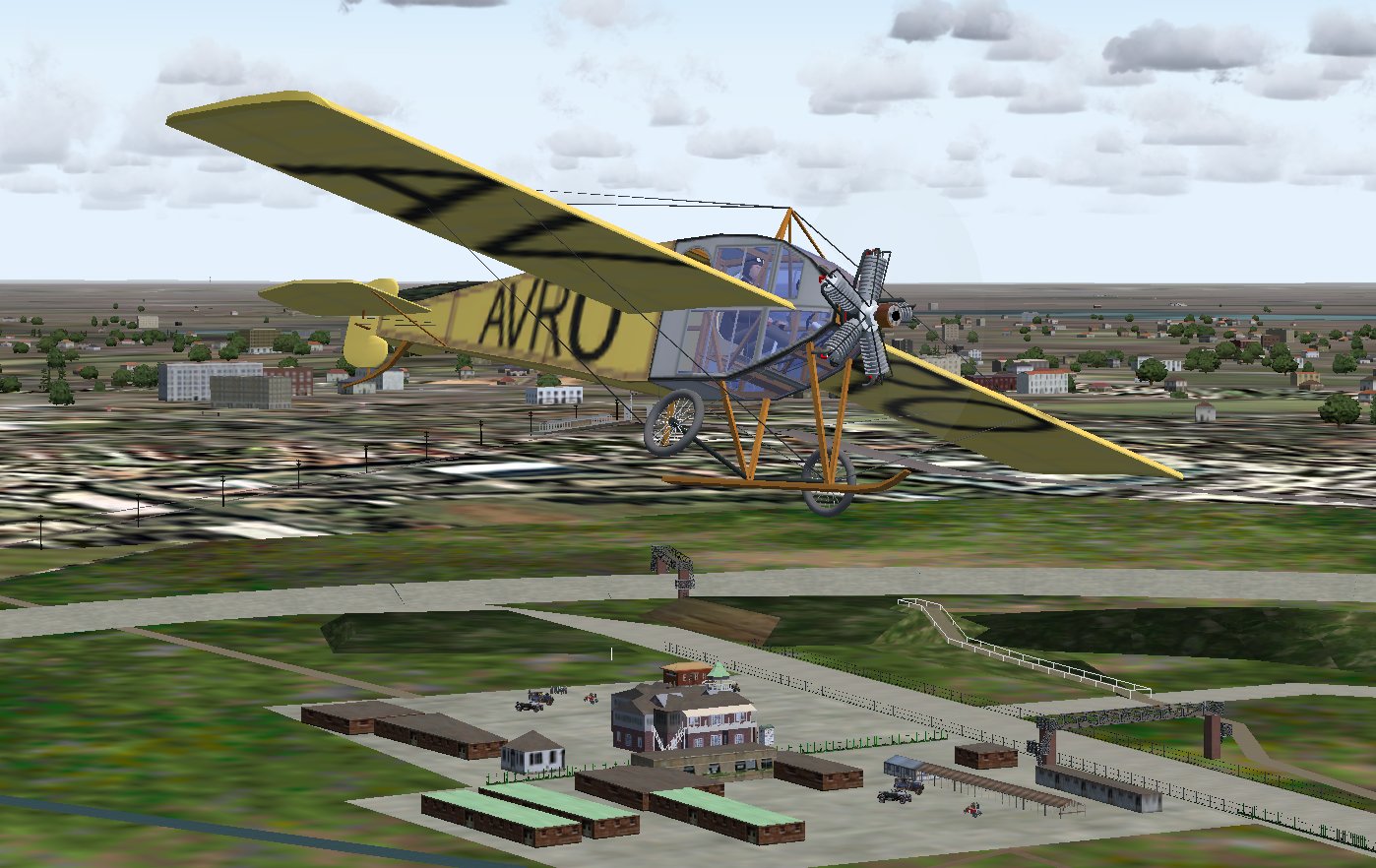
The Flight Simulation views reproduce the real Type F’s Brooklands venue.
The F-Type’s fuselage had a narrow (no wider than 2 ft.!) rectangular cross section, fabricated from four ash longerons reinforced with plywood stiffeners. Its forward portion was covered with aluminum panels; non-flammable celluloid provided the glazing. Aft of the wing, the linen fabric covering could be unlaced for inspection and disassembly.
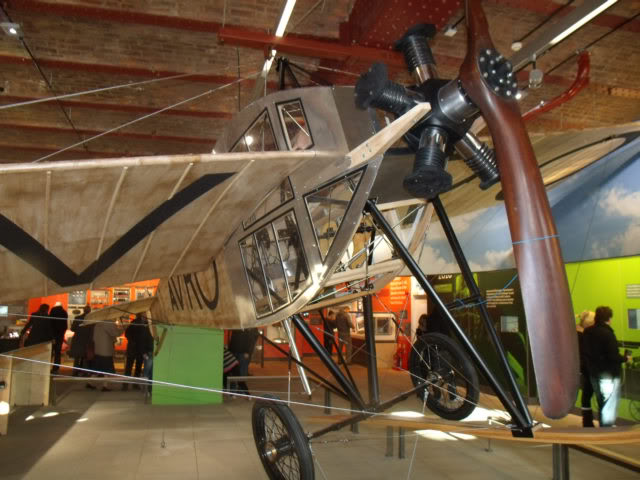
A recreation of the Type F resides in the Museum of Science and Industry in Manchester, England (www.mosi.org.uk). For a look at its fabrication, see Avro’s website, http://goo.gl/2EK8Q.
The Type F’s celluloid glazing was extensive, giving views forward, to either side, above and below. The round windows abeam of the pilot’s head were left uncovered—in an emergency, he could poke his head out! Access to the cabin depended upon a sheet-aluminum trapdoor in the roof.
The Type F’s engine, an air-cooled five-cylinder radial, hung out in front of the cabin. A Viale powerplant, of French origin, produced 35 hp and drove a two-bladed wooden prop.
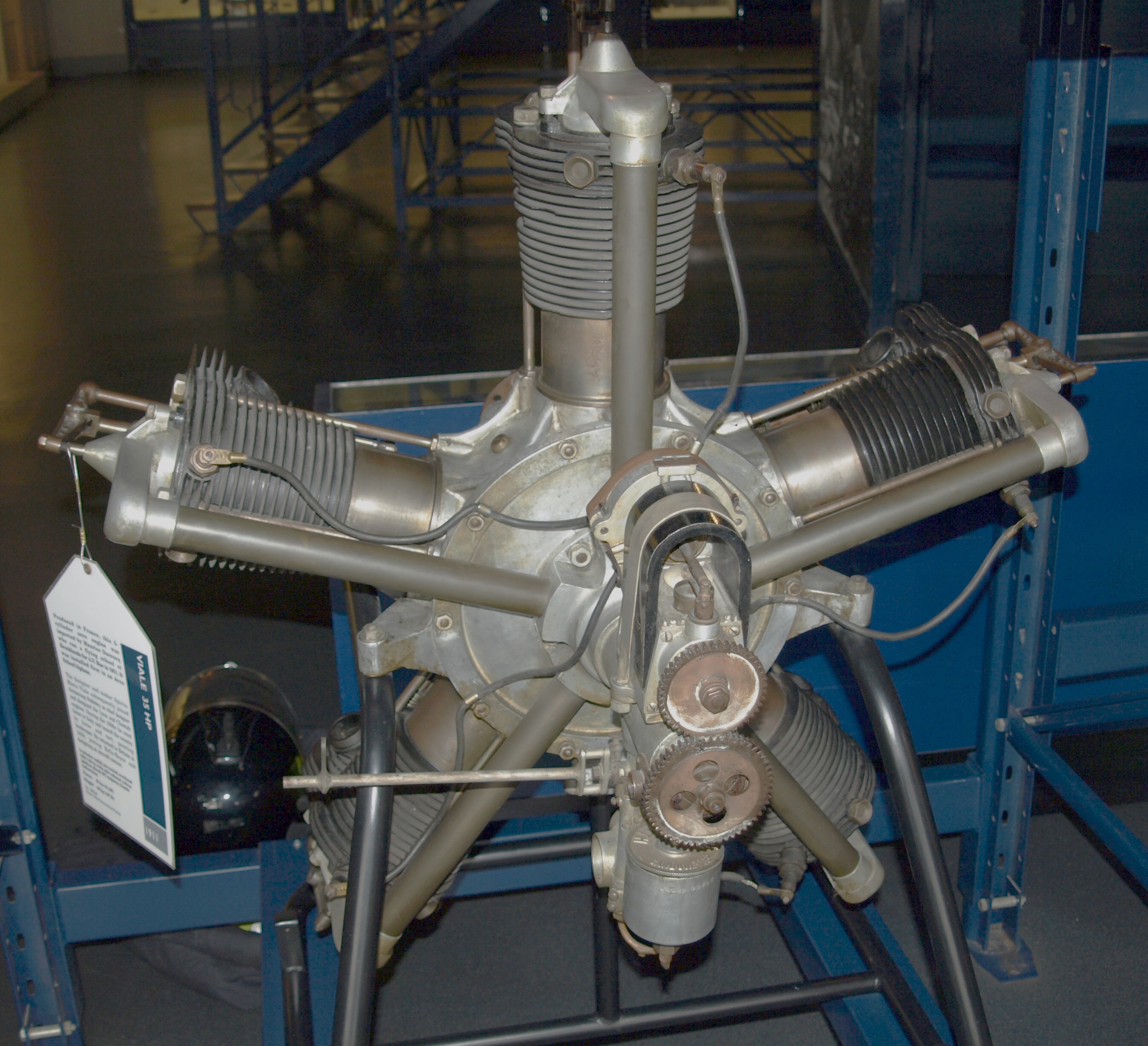
This Viale five-cylinder on display at the London Science Museum is said to be the one powering the Avro Type F (and, in subsequent use, the Bristol Babe prototype). Image by Nimbus227.
Roe built only a single Type F. His next effort, likewise a one-off, also had an enclosed cabin.

The Avro Type G was A.V.’s second effort with an enclosed cabin. It earned two other non-trivial honors in aviation. Image from Avro.
The two-place Type G biplane was built for the 1912 Military Trials. Like the Type F, it too deserves a place in aviation history: The Type G is only the second British aeroplane to recover from a spin, and the first to do so in front of witnesses. Also, on one flight, A.V.’s brother H.V. brought along a typewriter and composed the first typed letter aloft. ds
© Dennis Simanaitis, SimanaitisSays.com, 2013
 Simanaitis Says