
Simanaitis Says
On cars, old, new and future; science & technology; vintage airplanes, computer flight simulation of them; Sherlockiana; our English language; travel; and other stuff
CHARLIE CHAN AND CHANG APANA
JUST AS Sherlock Holmes owes much to Scottish doctor Joseph Bell, famed Chinese-American investigator Charlie Chan owes a lot to Honolulu police detective Chang Apana. I’ve enjoyed accounts of them all, and share information on the latter pair here.
Holmes, of course, had friend Dr. John H. Watson to compile his Sacred Canon, with Arthur Conan Doyle acting as literary agent. By contrast, Charlie Chan had a huge number of children (11? 12?), including trusty—but not always astute—Number Two Son, Jimmy. Given Jimmy’s occasional bewilderment (“But, Pop, how’s that possible??”), he could not be trusted to act as chronicler. Fortunately, though, there was American novelist and playwright Earl Derr Biggers.
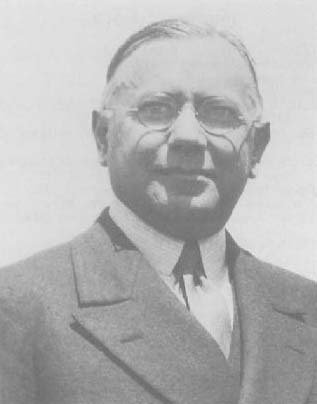
Earl Derr Biggers, 1884-1933, novelist and playwright, visited Hawaii in 1919, much to the eventual pleasure of readers the world around.
When Earl Derr Biggers visited the Territory of Hawaii in 1919, he had already written Seven Keys to Baldpate, a 1913 mystery/thriller novel that was destined to have seven film versions, a George M. Cohan stage play—and a Jack Benny radio presentation. [Note, reader and fellow journalist Ivan Berger corrected my original spelling of Mr. Cohan’s name. Thanks, Ivan.]
While in the islands, Biggers learned about the real heroics of Chang Apana, a Chinese-American detective in the Honolulu Police Department. When his new novel, The House Without a Key, appeared in 1925, it included its own Chinese-American detective, Charlie Chan.
Though he doesn’t make an appearance until Chapter 7 (of 23), Charlie is kind, astute and gracious in marked contrast to Fu Manchu (see www.wp.me/p2ETap-Vf) and other Chinese caricatures of this Yellow Peril era.
A year later, in The Chinese Parrot, Charlie arrives in Chapter 2 with a starring role. Four more tales followed, Behind That Curtain (1928), the Black Camel (1929), Charlie Chan Carries On (1930) and Keeper of the Keys (1932). No doubt more were envisioned, but Biggers died of a heart attack in 1933.
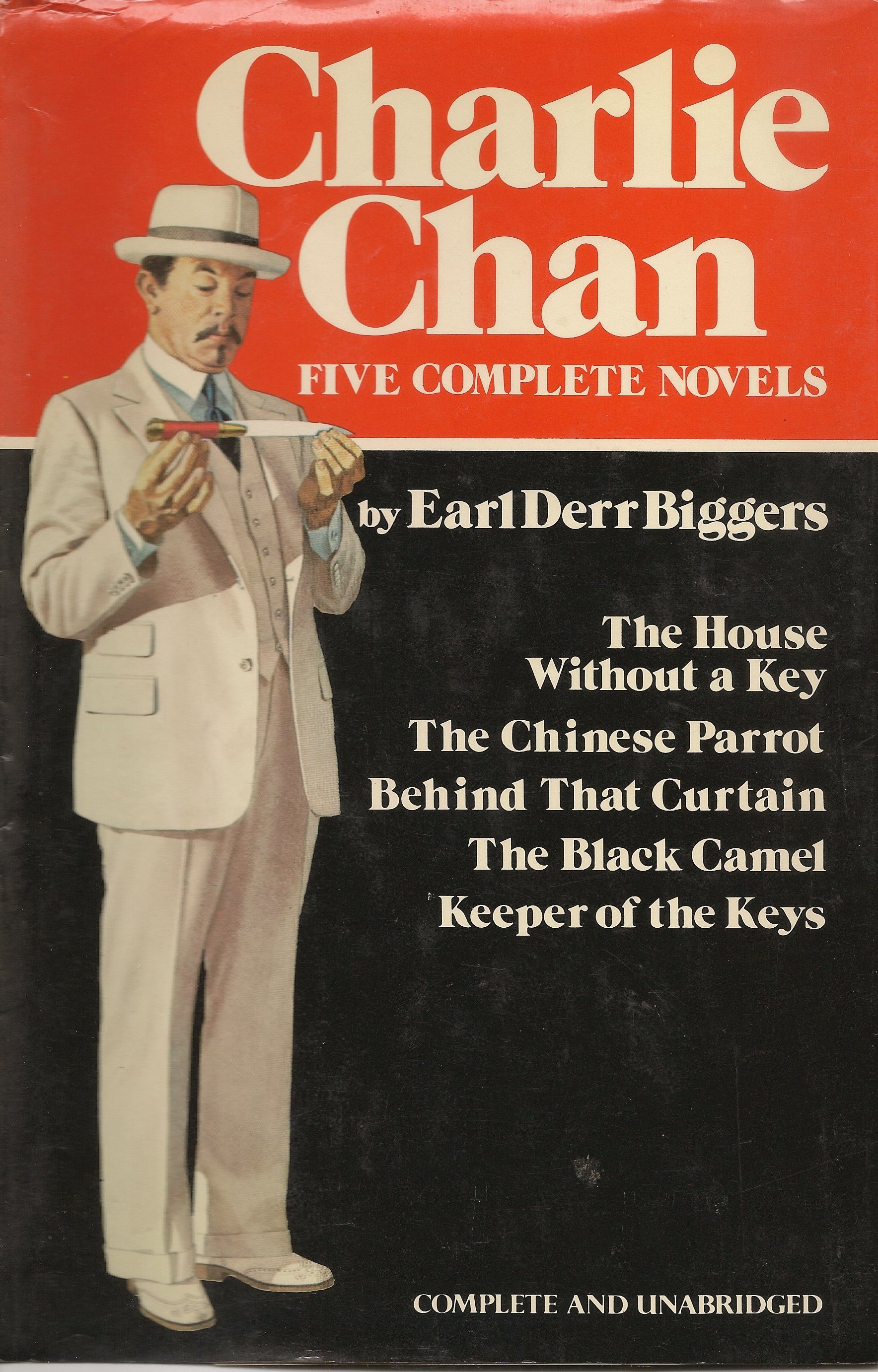
Charlie Chan: Five Complete Novels, by Earl Derr Biggers, Avenel, 1981. Though Complete and Unabridged, this one omits Charlie Chan Carries On. All these in several editions are listed at both www.amazon.com and www.abebooks.com.
The Biggers novels are all well crafted. As an example, a good portion of The House Without a Key sets a fine atmosphere of early 20th Century Hawaii (which came officially under the American flag only in 1898). Hawaii is also the setting for The Black Camel. A lot of the action of Charlie Chan Carries On takes place on a cruise ship out of Hawaii. The other three, The Chinese Parrot, Behind That Curtain and Keeper of the Keys, are set in California.
A total of 44 Charlie Chan films were made here in the U.S. between 1931 and 1949. Mexican/Cuban, Spanish and Chinese films were also produced. An excellent source of this and other lore is The Charlie Chan Family Home, http://goo.gl/qdCOu.
I’ve seen a good number of the movies, and have enjoyed the plotting, characters, humor and Charlie Chan fortune-cookie wisdom. (“Only very brave mouse makes nest in cat’s ear.”) True, there are times in Charlie Chan in Egypt when I wince at some of its black caricatures, even with Stepin Fetchit as an accomplished comedian—and there’s also a young Rita Hayworth to watch for.
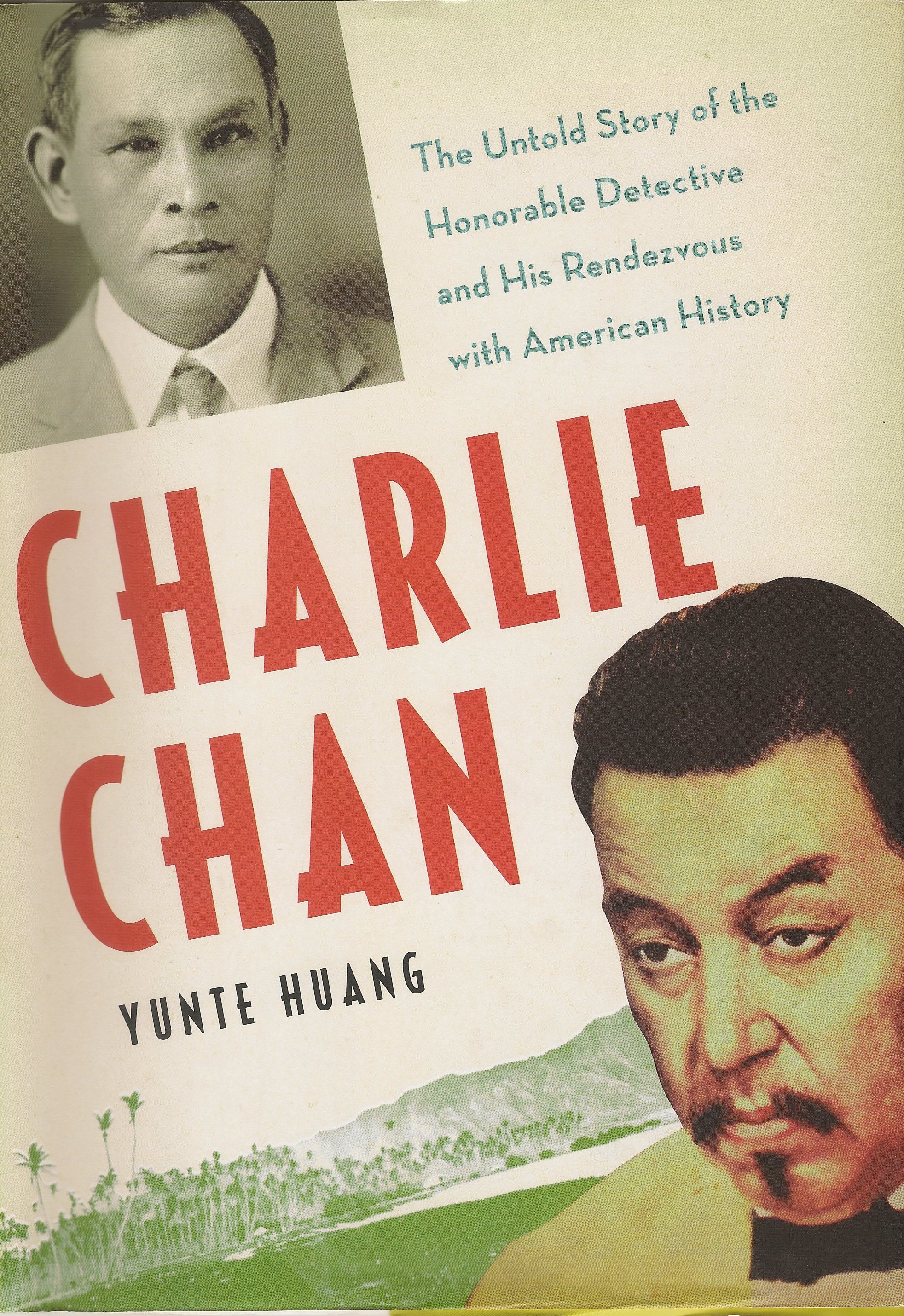
Charlie Chan: The Untold Story of the Honorable Detective and His Rendezvous with American History, by Yunte Huang, W.W. Norton, 2010. Both www.amazon.com and www.abebooks.com list it. That’s Chang Apana at the upper left; Warner Oland portraying Charlie Chan, lower right.
Yunte Huang is an American born in China, a professor of English at the University of California, Santa Barbara. His book, Charlie Chan, gives a full and entertaining account of the Honolulu Police Department’s Chang Apana, together with lots of insights into the cultural aspects of Charlie Chan in his various settings, novels and movies around the world.
There’s irony, for instance, in the fact that Chan’s U.S. film portrayers were invariably in need of makeup to achieve a pseudo-epicanthic eye fold: Warner Oland, a Swedish-American; Sidney Toler, of primarily Scottish heritage; and Roland Winters, born Winternitz.
There’s also a thoughtful celebration of two famed detectives, Charlie Chan and his inspiration, Chang Apana. ds
© Dennis Simanaitis, SimanaitisSays.com, 2013
 Simanaitis Says
It’s George M. Cohan, with an “a.” He used to say the name was good business, “because the Jews think I’m Jewish and the Irish KNOW I’m Irish.”
Hello, Ivan, Many thanks. It’s changed, with ref. d
Hello, Again, Ivan, What pops into my mind is an “Archie” line from Duffy’s Tavern about Mickey Rooney: “Yeah, he’s got problems in Hollywood. He’s too short for a lover and too tall for a producer.” All in good fun. – d