
WORDS GONE POLITICALLY AWRY
WE USED TO HAVE SPECIAL WORDS: “MUGWUMPS,” for example, were politicos who needlessly wavered, a marvelously illustrative word. These days, the MAGAs have been less imaginative lexicographically: They’ve taken words … Continue reading

ETYMOLOGY: VACCINE
MUCH ON OUR minds these days, the word “vaccine” has interesting etymology and important current usage. Here are tidbits gleaned from my usual Internet sleuthing. Dictionary Definition. Merriam-Webster says a … Continue reading
DOEST THOU HEAR A DOG WHISTLE?
WE LIVE IN an era of dog whistles, seemingly subliminal messages that are intended to alert some, yet be inaudible to the less enlightened. I say “seemingly” because who among … Continue reading
ETYMOLOGY: I AM APPALLED
BACK IN JANUARY 2018, I examined the word “embarrassed” in my series of Etymologies for our Times. Today, I add the word “appalled.” Indeed, as in “I am Embarrassed,” the … Continue reading

THE ATLANTIC REDUX PART 1
I’M IN A postpositive mood today. My topic and the word “redux” in the title are, according to Merriam-Webster, “placed after or at the end of another word.” In particular, … Continue reading
DICTIONARIES—DULL, DRY, AND MUSTY?
SAMUEL JOHNSON’s A DICTIONARY of the English Language, 1755, is anything but dull. Nor is Ambrose Bierce’s A Devil’s Dictionary, 1911, at all dry and musty. The tradition is maintained … Continue reading
ETYMOLOGY: CAITIFF, VARLET PART 1
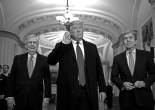
CAITIFFS! VARLETS! WHAT rare but appropriate words describing too many politicians these days. Merriam-Webster lists “caitiff” as an adjective meaning “cowardly, despicable.” It defines the noun ”varlet” as “attendant, menial; … Continue reading
ETYMOLOGY: TINHORN, TIN-POT
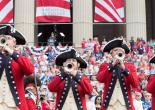
FOR A WHILE there, I thought I had completed my Etymology for Our Times series. (Google “SimanaitisSays Etymology” for a sampling.) However, on July 4, the bone-spur-challenged president’s reality TV … Continue reading

ETYMOLOGY: PEEVISH, PETULANT
“PETULANT” WAS the first word that came to mind when I heard Trump’s threat to dump immigrants into U.S. sanctuary cities. But then etymology furthered my enlightenment. According to Merriam-Webster, … Continue reading
MATHEMATICAL INDUCTION: DOMINOES OF LOGIC
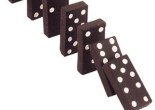
THE WORD “INDUCTION” has a whole bunch of meanings: Merriam-Webster starts with “the act or process of inducting (as into office),” which is sort of a definitional cop-out: What’s “inducting”? … Continue reading
 Simanaitis Says