

THE MAN IN THE MOON? IT COULD BE A WOMAN
“OF THE 1586 CRATERS on the Moon named after individuals, only 28 are named after women.” This, from Emily K. Gibson’s book review in Science, August 2, 2019, titled “The … Continue reading

DEMISE OF INTERNAL COMBUSTION—YET AGAIN?
PLENTY OF SAVVY people have predicted the swift death of the internal-combustion engine. T. Rowe Price, for example, made an ICE (Internal Combustion Engine) prediction for 2025: “… only 10-15 … Continue reading

REALITY A SIMULATION??
PHILOSOPHERS SURE POSE fundamental questions. In particular, metaphysics is the branch of philosophy that examines reality. How do we exist? What about the things around us? Preston Greene is an … Continue reading
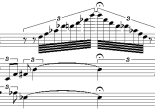
COMPOSERS’ CALLING CARDS
BACH’S MASTERFUL ART of the Fugue is based on a four-note theme: B flat, A, C, and B. In the musical notation of his time, this spells B-A-C-H. What a … Continue reading

EASTER EGGS—INCLUDING DAVIS, OKLAHOMA
THE EASTER EGGS I have in mind are computerized treats, proofs that programmers have a sense of humor. David Pogue described several examples in “The Secret History of ‘Easter Eggs,’ … Continue reading
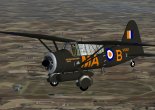
GMAX AND THE WESTLAND LYSANDER PART 2
TODAY, MY GMAX rendering of the Westland Lysander continues. As noted yesterday, the more documentation, the more to model. Modeling the Powerplant. The image in Cutaways, plus Internet research, prompted … Continue reading
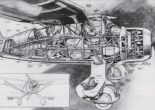
GMAX AND THE WESTLAND LYSANDER PART 1
IT ALL STARTED with my renewed interest in GMax. I hadn’t fooled with this freeware model-building for several years. In fact, in relearning its subtleties, I found myself researching online … Continue reading
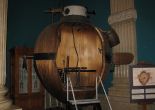
SUBMARINING—IN THE REVOLUTIONARY WAR PART 2
IT’S LIKELY THAT the Turtle was the world’s first submarine to attack an enemy ship. Or was this just American Revolutionary War propaganda? In either case, here in Part 2 … Continue reading

SUBMARINING—IN THE REVOLUTIONARY WAR PART 1
DAVID BUSHNELL’S TURTLE piloted by colonial patriot Ezra Lee has all the trappings of a proper war tale, complete with bravery, secrecy, opposing propaganda, revisionist theories, and even a modern … Continue reading
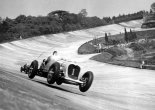
JOHN COBB AND HIS NAPIER-RAILTON
IT’S NOT EASY to work a high point of one’s career into everyday conversation, but it can be done. There I was leafing through the 1969 volume of R&T, prompted … Continue reading
 Simanaitis Says