

AS HARD-BOILED AS A SHAMUS’S SIMILE PART 2
YESTERDAY AT SimanaitisSays, we talked about the difference between similes and metaphors, defined the word “shamus,” and extolled mystery author Raymond Chandler as a master of all three. Today, I … Continue reading

AS HARD-BOILED AS A SHAMUS’S SIMILE PART 1
RAYMOND CHANDLER said hard-boiled literature of the 1920s and 1930s “made most of the fiction of the time taste like a cup of luke-warm consommé at a spinsterish tea room.” … Continue reading
ETYMOLOGY: BUNCO PART 2
YESTERDAY IN Part 1, I added the word “bunco” to my Etymology for our Time series. Today, getting involved are the Compact Edition of the Oxford English Dictionary, the Dictionary … Continue reading
ETYMOLOGY: BUNCO PART 1
FOR ONE REASON or another, the idea of a Mueller bunco squad came to mind. And this got me thinking about the etymology of the word “bunco.” I found some … Continue reading

TROTTIE TRUE—AN EDWARDIAN ROMANCE
THE COMEDIC NOVELS of Caryl Brahms and S.J. Simon, principally their Stroganoff ballet mysteries, were topics here at SimanaitisSays more than four years ago. Recently, I’ve read Trottie True, another … Continue reading

ON HANGING OF VARIOUS SORTS
THE WORD “HANG,” its various tenses and compounds have a multitude of meanings, some commonplace, some anachronistic, some all but forgotten. Merriam-Webster cites no less than eight different definitions for … Continue reading

GRIFTERS—IN POLITICS, ON OLD-TIME RADIO, AND AT THE MOVIES
A GRIFTER is one who obtains money or property illicitly, a confidence man. And, note, with few exceptions (see “Con Women—Balancing the Game), grifting seems to be a masculine endeavor. … Continue reading

WORDS ON MUSIC
“IF ONE HEARS bad music,” Oscar Wilde said, “it’s one’s duty to drown it in conversation.” Natural philosopher and polymath Gottfried Wilhelm Leibniz commented, “Music is a calculation performed by … Continue reading
ETYMOLOGY—KAKISTOCRACY, KLEPTOCRACY
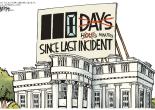
ALAS, WHAT an optimist I was back in April 2016! In what turned out to be the first of my Etymology for our Times series, the topic was ”Governing by … Continue reading

ON THE IMPORTANCE OF HISTORY
WE SEEM to be burdened at the moment with the least historically informed leader in U.S. history. I offer our president’s misdating the career of Andrew Jackson (“I mean, had … Continue reading

