

THE ATLANTIC REDUX PART 1
I’M IN A postpositive mood today. My topic and the word “redux” in the title are, according to Merriam-Webster, “placed after or at the end of another word.” In particular, … Continue reading

FROM TABLET TO SCROLL TO CODEX TO BOOK
WE THINK OF books as being on particular topics. Even anthologies have a common theme: mysteries, short stories, and the like. But it wasn’t always that way. Here are tidbits … Continue reading
DICTIONARIES—DULL, DRY, AND MUSTY?
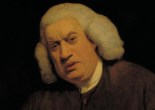
SAMUEL JOHNSON’s A DICTIONARY of the English Language, 1755, is anything but dull. Nor is Ambrose Bierce’s A Devil’s Dictionary, 1911, at all dry and musty. The tradition is maintained … Continue reading

☞ HURRAH FOR THE MANICULE! ☜
PERHAPS I GOT your attention today thanks to a pair of manicules bracketing the headline above. I hadn’t known their typographic name until reading about it in Keith Houston’s Shady … Continue reading

HENGWRT PINKHURST TIDBITS PART 2
THE HENGWRT CHAUCER is the oldest known manuscript of The Canterbury Tales. Yesterday here at SimanaitisSays, I shared several tidbits of Christopher De Hamel’s encounter with the Hengwrt at the … Continue reading
HENGWRT PINKHURST TIDBITS PART 1
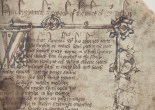
ADAM PINKHURST was a scribe during Chaucer’s time, the late 1300s and early 1400s. The Hengwrt Chaucer, c. 1400, is the earliest known example of Chaucer’s most famous work, The … Continue reading

THE PLAZA, AS RECOUNTED BY TINA BROWN
A BOOK REVIEW may inform. It may infuriate. It may even encourage a purchase. And, like Tina Brown’s “Theater of Dreams: A Tale of Boom and Bust at the Plaza … Continue reading
CARMINA BURANA REVISITED
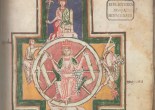
WHO ISN’T AWED by Carl Orff’s Carmina Burana? Its throbbing rhythm in O Fortuna/Velut luna/Statu variabilis (“O Fortune/Like the Moon/Changeable”). Its salacious lyrics composed for lusty 12th-century monks. And, for … Continue reading

JACOB REES-MOGG—ANOTHER BRIT, ANOTHER REAL PIECE OF WORK
THE NEW BRITISH prime minister, Boris Johnson has made Jacob Rees-Mogg leader of the House of Commons. I’d have thought a prime minister would be the leader, and historically often … Continue reading
 Simanaitis Says
THE ATLANTIC REDUX PART 2
YESTERDAY HERE at SimanaitisSays, Daniel Patrick Moynihan was quoted saying, “You are entitled to your own opinion, but you are not entitled to your own facts.” Today in Part 2, … Continue reading →