

WHEELS INSTEAD OF WINGS
E.L. CORD, of Auburn, Cord, Duesenberg fame, exhibited a special-bodied, aerodynamic Auburn Cabin Speedster at the 1929 Los Angeles Auto Show. Inspiration came from Charles Lindbergh who set more than … Continue reading
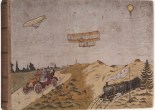
TRANSPORTATION ART, UTILITY, AND PLAY
EARLY TWENTIETH-CENTURY transport offered enhanced mobility in a multiplicity of ways. Balloons had been around for more than a century. Internal combustion gave them directionality despite whims of the wind. … Continue reading
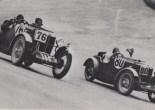
THE M.G. MIDGET M-TYPE
THE M.G. MARQUE evolved from Kimber Specials built by Morris Garages’ Cecil Kimber as early as 1923. The M.G. Octagon was registered as a trademark in 1924, and specials from … Continue reading

LEAVE THE DRIVING TO THEM
“GO GREYHOUND AND leave the driving to us” has been the company slogan since 1956. And, in 1969, R&T wrote, “As any Jaguar, Porsche, or Ferrari owner knows, Greyhound buses … Continue reading
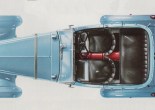
WOLSELEY HORNET SPECIAL
JUST AS RODNEY Dangerfield was famous for getting no respect, so it was with the Wolseley Hornet Special Decent Early Years. Wolseley Motors Limited had a respectable origin in 1901 … Continue reading
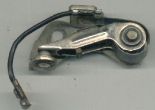
WHAT ARE BREAKER POINTS, GRANDPA?
“ARE BREAKER POINTS in tennis matches?” No, my little one, they have to do with pre-transistorized automotive ignition systems. “What’s a transistor, Grandpa?” Internal combustion requires something to ignite an … Continue reading

POETRY AND PROSE OF BENTLEY MOTORING
AUTOMOTIVE JOURNALISM of 100 years ago offered freshness, nay, romance. “A Test of a Three Litre Bentley” in The Autocar, January 24, 1920, is a wonderful example of this. The … Continue reading

CHAOTIC NON-SALE OF DR.-ING. PORSCHE’S TYPE 64
AUCTIONS OF HIGH-BUCK exotic cars are filled with excitement. How high will the bidding go? Who are the wealthy participants? Who’s on the other end of that incoming telephone bid? … Continue reading
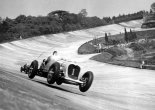
JOHN COBB AND HIS NAPIER-RAILTON
IT’S NOT EASY to work a high point of one’s career into everyday conversation, but it can be done. There I was leafing through the 1969 volume of R&T, prompted … Continue reading
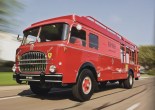
A TRANSPORTER OF OPERATIC GRANDNESS
THE ITINERANT PLAYERS in Ruggero Leoncavalo’s I Pagliacci are four in number: Canio, his wife Nedda, Tonio the hunchback, and Beppe. The only other role of note is Silvio, Nedda’s … Continue reading

