

CHEETAHS: SPORTS CAR FELINES
YOU’VE PROBABLY heard that the fastest animal in the world, with reported bursts of 70 mph, is the cheetah (Acinonyx jubatus). However, A.M. Wilson et al, reporting in Nature, 12 … Continue reading

FAILED DESIGNS
ENGINEERING HAS been defined as “doing a lot with a little.” But, of course, too little is not a good idea. This is the theme of To Forgive Design: Understanding … Continue reading
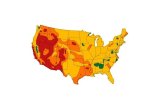
GEOTHERM ENERGY
THE U.S. could supply the world’s current energy needs for the next 30,000 years. Were we to tap only the most accessible of it, the energy obtained would be thousands … Continue reading
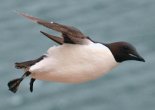
MURRES, MULTI-TASKING
QUESTION: DO polar bears eat penguins? Answer: Not usually, as the polar bear (Ursus maritimus) is native largely within the Arctic Circle of the Northern Hemisphere and the penguin (Sphenisciformes … Continue reading

KING’S BLOOD!
IT SOUNDS like a great Tudor English expletive: “King’s Blood!” But, in fact, it’s a bit of recent research reported in Science magazine, 24 May 2013, published by the American … Continue reading

ARCHAEOLOGY, MARITIME STYLE
AVAST, YE—Them that dies ’ill be the lucky ones. Now that I have your attention, I’ll share information on maritime archaeology as detailed in the 17 May 2013 issue of … Continue reading

NIKOLA TESLA
THE TALE of Nikola Tesla is one of advanced technology, high drama, eccentricity bordering on the barmy—and even modern crowdfunding. It’s almost incidental that Tesla has a car named after … Continue reading

PLATEAU’S BUBBLES
SOAP BUBBLES make for mathematical wonders and excellent physics. One of the principal proponents of this was 19th-century Belgian physicist Joseph Plateau, whose name is associated with these ephemeral objects. … Continue reading

GETTING THE COLOR RIGHT
AS REPORTED in Science magazine, 3 May 2013, researchers have solved a historical quandary with plenty of time to get things right by early 2015, the 150th anniversary of a … Continue reading
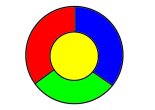
THE FOUR-COLOR PROBLEM
ARE FOUR colors enough to differentiate adjacent regions on any map? This question, for a long time called the four-color problem, came to mind with the death of mathematician Kenneth … Continue reading

