

NIKOLA TESLA
THE TALE of Nikola Tesla is one of advanced technology, high drama, eccentricity bordering on the barmy—and even modern crowdfunding. It’s almost incidental that Tesla has a car named after … Continue reading

PLATEAU’S BUBBLES
SOAP BUBBLES make for mathematical wonders and excellent physics. One of the principal proponents of this was 19th-century Belgian physicist Joseph Plateau, whose name is associated with these ephemeral objects. … Continue reading

GETTING THE COLOR RIGHT
AS REPORTED in Science magazine, 3 May 2013, researchers have solved a historical quandary with plenty of time to get things right by early 2015, the 150th anniversary of a … Continue reading
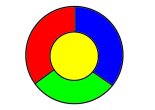
THE FOUR-COLOR PROBLEM
ARE FOUR colors enough to differentiate adjacent regions on any map? This question, for a long time called the four-color problem, came to mind with the death of mathematician Kenneth … Continue reading

IS ANYONE OUT THERE??
THERE ARE billions and billions of stars in the universe. Some of these stars likely have planets orbiting them. Some of these orbiting planets likely lie in what’s come to … Continue reading

CAUSALITY?
“THERE ARE lies, damned lies—and statistics!” And one of the damnedest lies—which, I hasten to add, shouldn’t be blamed on statistics—involves the confusion of “causality” with “correlation.” This shows up … Continue reading

WAR BY BITS AND BYTES
CYBER WAR: Does this describe the next major world conflict? Or is it merely electronic saber rattling of those hoping to profit from a non-threat? An item in 1 March … Continue reading

NANO BRIGHT
KEEPING GRANDMA’S silver tea service nice and bright has always been a pain—until now. Researchers in the University of Maryland’s Department of Materials Science and Engineering have applied nanoscience to … Continue reading

H2 PRODUCTION
THE WORD “breakthrough” can get overworked in science news, but Virginia Tech researchers may have a legitimate claim to it. They’ve discovered an efficient way to extract significant quantities of … Continue reading
LIKES TELL A LOT
EVERY TIME you click on a Facebook “Like,” you’re telling something about yourself—and a lot more than your preference for cat videos. This observation comes from a team of psychologists … Continue reading
 Simanaitis Says