
ELIZABETH CHUDLEIGH—A GENUINE PIECE OF WORK
EIGHTEENTH-CENTURY Englishwoman Elizabeth Chudleigh was a duchess, countess, bigamist, and exhibitionist. But then Georgians were always ones to talk, weren’t they? I encountered her a few days ago while researching … Continue reading

YOU WANT FAKE? I’LL GIVE YOU FAKE—PART 2
WRITING A novel isn’t usually a team activity. But when several writers share the work, the result can be fine satire. Add in the fun of a literary hoax, and … Continue reading

YOU WANT FAKE? I’LL GIVE YOU FAKE—PART 1
THESE ARE high times to celebrate satire. And in fact there’s a specialized branch of this genre: satirical novels. Taken one step further, there are satirical novels that satirize the … Continue reading

BUFFOON, BUFFOONISH, BUFFA
NOT ONLY does the word “buffoon” belong in my Etymology for our Times, there’s an operatic connection as well: Opera buffa is literally “comic opera” as opposed to opera seria, … Continue reading
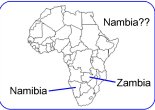
ON THE KINGDOM OF NAMBY-PAMBY
I OFFER today’s SimanaitisSays as amelioration of the U.S. President’s U.N. covfefeing of two African nations, Namibia and Zambia, into “Nambia.” Nambia? I researched this illusive place. The earlier kingdom … Continue reading

ČAPEK’S ROBOTS
ARTIFICIAL INTELLIGENCE is a controversial topic these days. Will its advancement be to mankind’s good or detriment? Czech author Karel Čapek’s play R.U.R. predicted the latter in 1920, though, in … Continue reading

COMPARATIVE MENDACITY 101
THE ENGLISH language is so amply endowed that there’s comparative mendacity. I never thought of this scale of dishonesty until I looked up “to equivocate,” the next in my ever-expanding … Continue reading

DECEPTION, TO DECEIVE, TO BE DECEPTIVE
TODAY I add the word “deceptive” to my etymological thoughts on useful political descriptors. Recent pronouncements concerning Charlottesville, tax reform, dreamers, not to forget continuing компромат, bring the word “deceptive”and … Continue reading

CLIMATE CHANGE, LANGUAGEWISE
THE TERM climate change has been all but eliminated from the Trump administration’s nomenclature. Thus, I guess, to some this means it doesn’t exist. As an example of this thinking, … Continue reading

ELEMENTAL HAIKU
A HAIKU, as is familiarly known, is a Japanese poem of a particular length and structure. It consists of three lines, the first and last having five sound units, the … Continue reading
 Simanaitis Says