
COMPUTATIONAL FLUID DYNAMICS COMES TO THE CONCERT HALL PART 2
ORCHESTRAL MUSICIANS TEND to occupy the same seating at each concert performance. However, this may be changing to enhance circulation of air (and aerosols) suggested by studies of computational fluid … Continue reading
COMPUTATIONAL FLUID DYNAMICS COMES TO THE CONCERT HALL PART 1
CONCERT VENUES ARE reopening, thankfully, through efforts including widespread vaccination. Enhancing this pandemic mitigation, science has demonstrated the effects of airborne transmission. It turns out that swapping orchestral seating and … Continue reading
REMBRANDT’S A.I. PALS
EVEN SEVENTEENTH-CENTURY ARTISTS can profit from Artificial Intelligence. An example is given in Nina Siegal’s “Rembrandt’s Damaged Masterpiece Is Whole Again, With A.I.’s Help” in The New York Times, June … Continue reading
BUILT LIKE A BRICK
THESE DAYS, E-tailing downplays the term “brick and mortar.” However, this building material duo has interesting aspects, as described in Arianne Shahvisi’s “Diary” piece “Life in a Tinderbox,” in London … Continue reading
$1.2 MILLION, EVENTUALLY, FOR LOSING A DEBATE WITH EINSTEIN
THIS IS A WIN-WIN story in the annals of theoretical physics. In 1905, Albert Einstein published the equation E = mc2, thus positing that energy and mass are essentially two … Continue reading
CAN YOU FEEL IT WITH ME NOW?
CELLPHONES ARE so reliable now that we rarely ask, “Can you hear me now?” However, Science magazine, April 28, 2021, reports that “New Google Effort Uses Cellphones to Detect Earthquakes,” … Continue reading

BEVS AT A CRITICAL JUNCTION
BATTERY ELECTRIC VEHICLES have hitherto been few and far between. But environmental goals around the world are increasing BEV presence and impact. True, these are clean-air vehicles, even with mixed … Continue reading

RETHINKING NEANDERTHALS PART 2
JOHN LANCASTER’S ARTICLE, “Twenty Types of Humans,” London Review of Books, December 17, 2020, got me thinking about the status of Homo neanderthalensis. In particular, perhaps they weren’t knuckle-dragging stocky … Continue reading
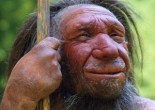
RETHINKING NEANDERTHALS PART 1
“OF ALL OUR human relatives,” John Lancaster wrote in the London Review of Books, December 17, 2020, “the closest in both time and genetics, the most compelling, and the best … Continue reading

“CAN YOU READ ME A FLOPPY, GRANDPA?” PART 2
YESTERDAY IN PART 1, we found that scads of 1s and 0s weren’t amenable to human memory. Stacks of punched cards had critical ordering. And cassette loading of programs was … Continue reading

